Today: 25 June 2026

Sky Is No Limit: Global Satcom Market Set to Soar Through 2035

Sky Is No Limit: Global Satcom Market Set to Soar Through 2035

The global space economy hit $415 billion in 2024, with commercial satellite activities making up $293 billion. Active satellites jumped from 3,300 in 2020 to over 11,500, driven by mega-constellations from firms like SpaceX and OneWeb. Government space spending reached $135 billion, with $73 billion for defense. Regulators are addressing space debris, tracking over 36,000 objects larger than 10 cm.
Unlocking the Sun: Inside NASA and ESA’s Daring Missions to Touch the Solar Inferno

Unlocking the Sun: Inside NASA and ESA’s Daring Missions to Touch the Solar Inferno

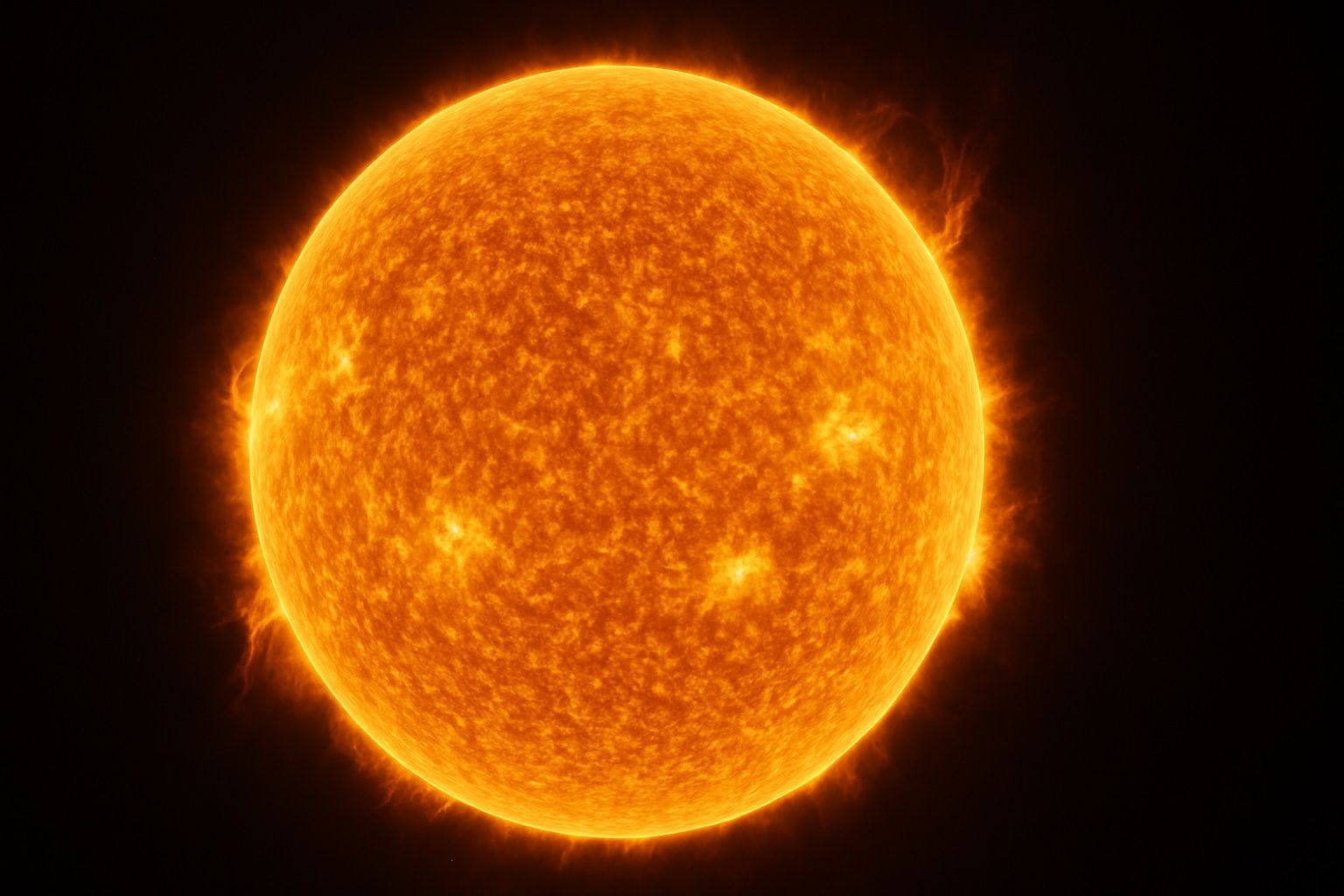
NASA’s Parker Solar Probe became the first spacecraft to fly through the Sun’s corona in April 2021, crossing the Alfvén critical boundary at about 4 million miles from the Sun. The probe travels over 430,000 mph, protected by a carbon-composite heat shield, and has detected magnetic switchbacks and a dust-free zone near the Sun. Solar Orbiter, launched in 2020, will image the Sun’s poles and carries ten instruments for solar observation.
Internet Access in Cuba: From Control to Constellations

Internet Access in Cuba: From Control to Constellations

Cuba’s first internet link launched in 1996 via a 64 Kbps Sprint connection. The ALBA-1 fiber-optic cable, installed with Venezuela’s help, became public in 2013. Mobile 3G internet began in December 2018; by late 2019, 7.1 million Cubans had some online access. In April 2025, Cuban customs seized about 20 illegal Starlink dishes as ETECSA retains its monopoly.
8 June 2025
Space-Weather Satellites: Earth’s Cosmic Early Warning System

Space-Weather Satellites: Earth’s Cosmic Early Warning System

SOHO, launched in 1995, became the first satellite to continuously observe the Sun from the Sun–Earth L1 point, enabling CME tracking and the discovery of over 5,000 comets. Missions including ACE, DSCOVR, STEREO, SDO, the GOES-R series, Aditya-L1, Parker Solar Probe, and Solar Orbiter have expanded solar monitoring and warning capabilities. ESA’s Vigil and NOAA’s SWFO-L1 are planned for launch by 2031.
8 June 2025
Côte d’Ivoire’s Internet Revolution: Fiber Optics, 5G Dreams, and Satellite Solutions

Côte d’Ivoire’s Internet Revolution: Fiber Optics, 5G Dreams, and Satellite Solutions

Côte d’Ivoire had 11.2 million internet users in early 2024, about 38.4% of the population, with urban usage at 50% and rural at 22%. Over 5,200 km of fiber has been laid, aiming for 7,000 km by September 2025. MTN launched 5G sites in late 2023, with commercial rollout set for January 2024. Starlink remains unapproved, while Orange leads mobile and fixed broadband market share.
8 June 2025
Eyes on the Infinite: The Next Generation of Space Telescopes Set to Rewrite the Cosmos

Eyes on the Infinite: The Next Generation of Space Telescopes Set to Rewrite the Cosmos

NASA’s Nancy Grace Roman Space Telescope is set to launch by May 2027 on a SpaceX Falcon Heavy, using a 2.4-meter mirror and a 300-megapixel camera for rapid sky surveys and exoplanet imaging. ESA’s PLATO will launch in late 2026 on Ariane 6 with 26 cameras to find Earth-sized planets. ATHENA, targeting X-ray astronomy, is planned for 2037. All three will operate near the Sun-Earth Lagrange points.
Cosmic Time Machine: The Jaw-Dropping Science Unleashed by the James Webb Space Telescope

Cosmic Time Machine: The Jaw-Dropping Science Unleashed by the James Webb Space Telescope

JWST launched December 25, 2021, aboard an Ariane 5 to the Sun-Earth L2 point, deploying a 6.5-meter segmented mirror and a five-layer sunshield. Within weeks, it detected water vapor on exoplanet WASP-96 b and later confirmed carbon dioxide on WASP-39 b. In 2023, JWST found methane and carbon dioxide on K2-18 b. The telescope has identified galaxies at redshifts z~12–14, less than 400 million years after the Big Bang.
7 June 2025
Hyperspectral Eyes in the Sky: How Space-Based Imaging Is Revolutionizing Earth Observation

Hyperspectral Eyes in the Sky: How Space-Based Imaging Is Revolutionizing Earth Observation

NASA’s Hyperion sensor, launched in 2000, captured 220 spectral bands from 400 to 2500 nm at 30 m resolution, enabling material identification by spectral fingerprints. Recent missions include Italy’s PRISMA (2019), Germany’s EnMAP (2022), and Carbon Mapper’s Tanager-1 (2024) for methane and CO2 detection. Commercial constellations like Pixxel and Orbital Sidekick offer higher band counts and finer resolution.
7 June 2025
Starlink Global Coverage and Availability Report

Starlink Global Coverage and Availability Report

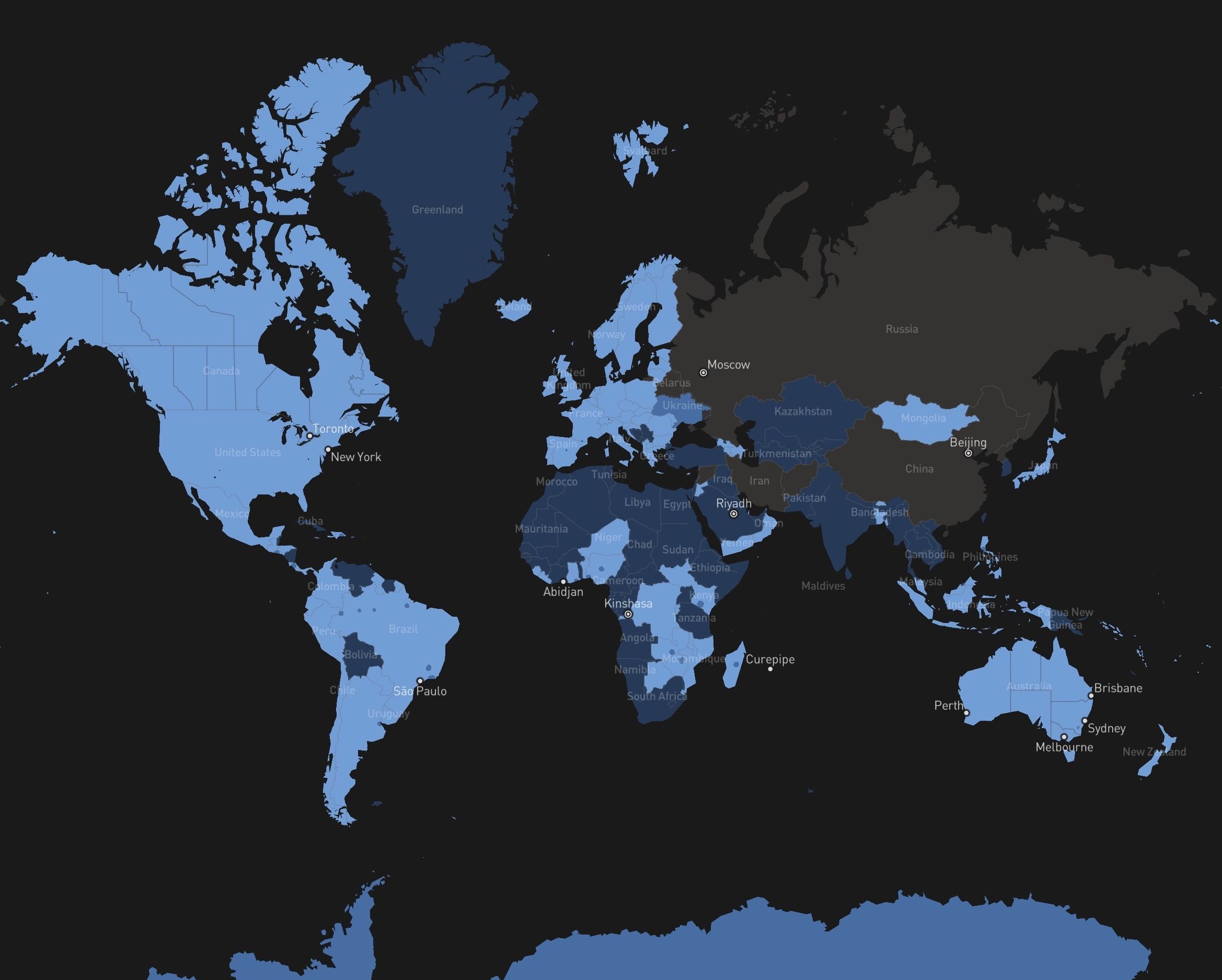
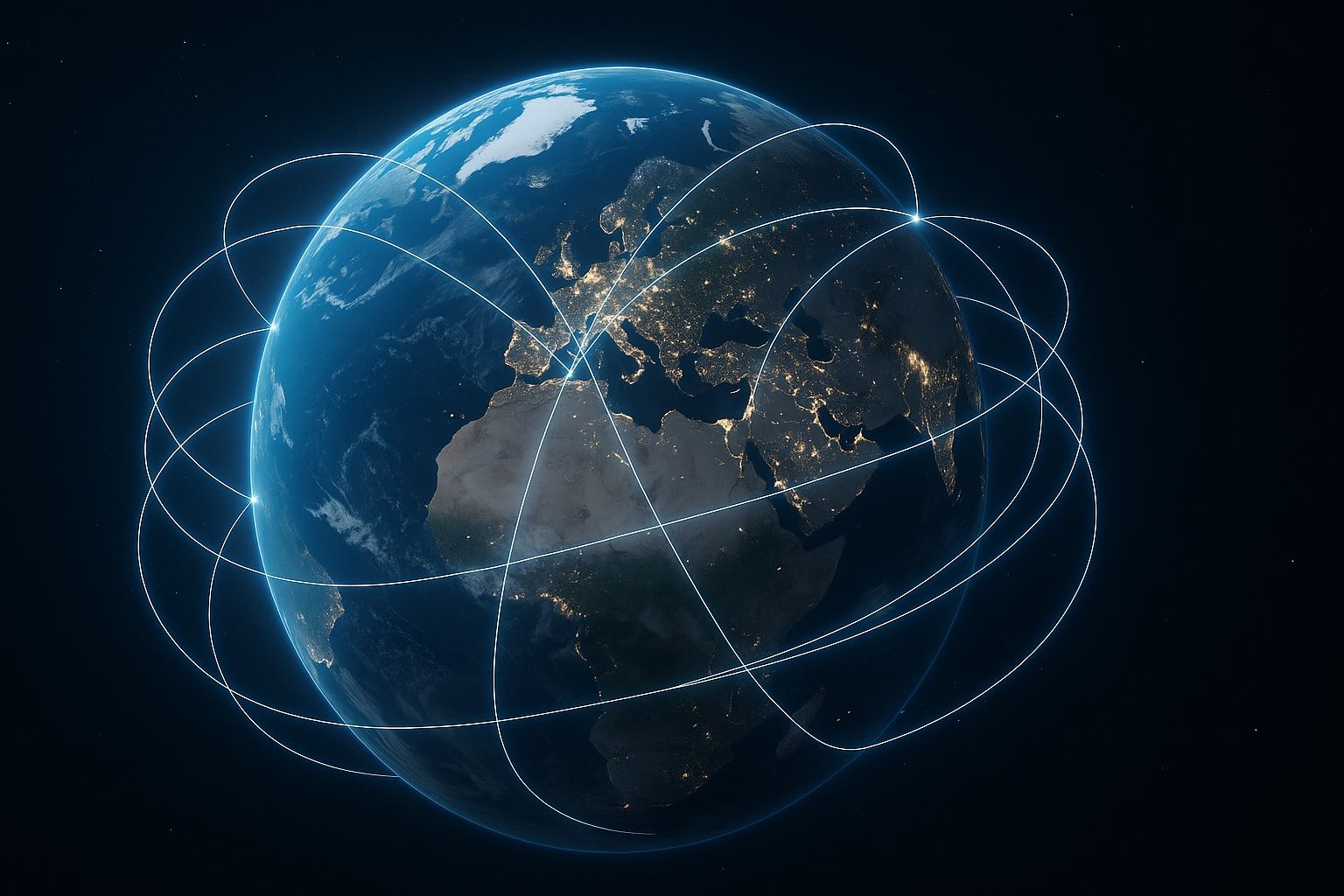
Starlink is available in over 110 countries and territories as of mid-2025, with more than 2.5 million U.S. subscribers and full coverage including Puerto Rico and the U.S. Virgin Islands. Canada, Mexico, the Bahamas, the UK, Japan, Nigeria, Australia, and Ukraine have launched service since 2021, with notable use in rural areas and emergency situations.
7 June 2025
No Signal: The Shocking Digital Divide in the DRC and the Race to Connect Millions

No Signal: The Shocking Digital Divide in the DRC and the Race to Connect Millions

About 27% of people in the Democratic Republic of the Congo used the internet in early 2024, leaving around 75 million offline. As of 2025, only 9,361 km of fiber had been installed, far below the 50,000 km target. In March 2024, the government secured $500 million from the World Bank and French Development Agency to expand access for 30 million more people. Orange DRC and Vodacom DRC plan to build up to 2,000 solar-powered towers by 2030.
Sky Scanners: How SAR Imaging Satellites Are Redefining Earth Observation

Sky Scanners: How SAR Imaging Satellites Are Redefining Earth Observation

About 75% of Earth is hidden from optical satellites by clouds or darkness at any time. Synthetic Aperture Radar (SAR) satellites like Sentinel-1, RADARSAT, TerraSAR-X, COSMO-SkyMed, ICEYE, and Capella Space provide high-resolution, all-weather, day-and-night imaging. ICEYE and Capella now offer sub-meter resolution and rapid delivery. NASA/ISRO’s NISAR mission is set to launch in 2025 with dual-band SAR.
fldksafljads

Satellite Phones: Comprehensive Global FAQ

Iridium operates 66 LEO satellites at 780 km, offering true global coverage and 0.1–0.2 second latency; its Extreme 9575 handset costs about $1,400. Inmarsat uses 3–4 GEO satellites for near-global service, with IsatPhone 2 priced around $1,000. Thuraya covers 160 countries with two GEO satellites; XT-LITE costs $650. Several countries, including China and India, ban or restrict satphones.
Starlink Satellite Internet FAQ

Starlink Satellite Internet FAQ

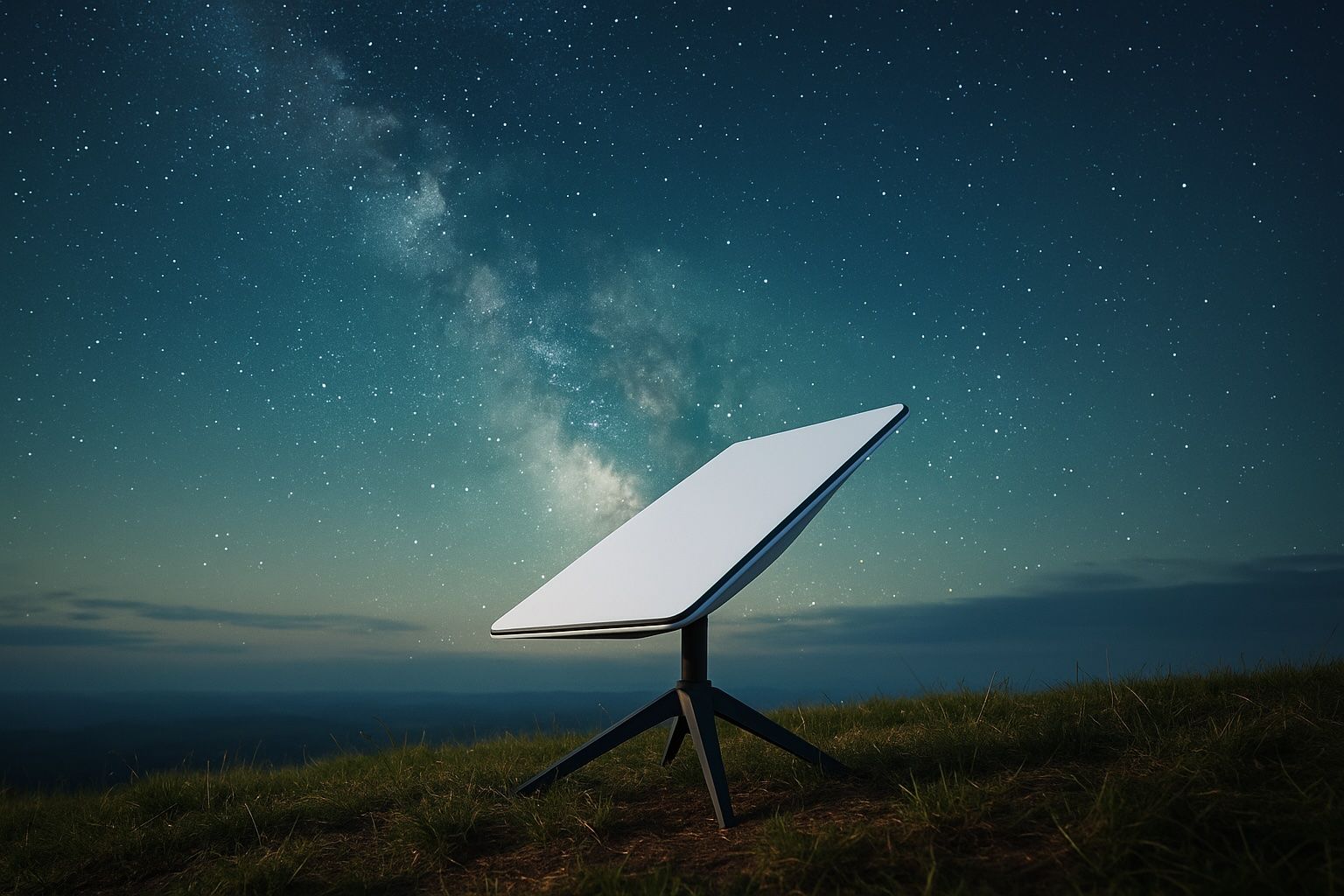
SpaceX's Starlink had over 7,500 satellites launched and 6,750 active in orbit by early 2025, serving more than 5 million customers in over 125 countries. Typical download speeds range from 50 to 200 Mbps with latency of 20–40 ms. Residential kits cost about $599, with U.S. promotions as low as $349. SpaceX targets 12,000 satellites by 2027 and is planning direct-to-cell service and a potential IPO.
7 June 2025
Satellite Internet FAQ

Satellite Internet FAQ

Traditional GEO satellite internet, such as HughesNet and Viasat, sends data 22,000 miles to orbit, resulting in 600–800 ms latency. Starlink uses low-Earth orbit satellites, offering 50–200 Mbps download and 20–40 ms latency. HughesNet and Viasat impose data caps; Starlink does not. Weather can disrupt service, though Starlink dishes may include heaters to melt snow.
Satellite Technologies FAQ

Satellite Technologies FAQ

Sputnik 1 became the first artificial satellite in 1957, followed by the U.S. Explorer 1 in 1958. As of 2025, more than 11,000 active satellites orbit Earth, with Starlink accounting for a large share. The first accidental satellite collision happened in 2009. Geostationary satellites remain fixed over the equator, while low-Earth-orbit networks like Starlink offer lower latency internet.

Stock Market Updates

Western Digital falls after AI-storage rally, investors look to Micron

Western Digital falls after AI-storage rally, investors look to Micron

25 June 2026
Western Digital (NASDAQ:WDC) shares dropped about 4% after a multi-week rally fueled by AI storage demand, as investors awaited Micron Technology’s earnings for new signals on enterprise storage spending; analysts cite a persistent hard-disk supply deficit that could support pricing into 2027, with Morgan Stanley raising its price target to $650.
BlackBerry falls with volume outpacing buyback plan ahead of earnings

BlackBerry falls with volume outpacing buyback plan ahead of earnings

25 June 2026
BlackBerry closed down 2.3% at $8.62 despite Stifel initiating coverage with a Buy and $12 target—39% above the close—while trading volume of 38.3 million shares far exceeded its entire buyback authorization, highlighting investor focus ahead of Thursday’s Q1 results and underscoring the limited impact of BlackBerry’s capital return plan.
Opendoor slides after landing in Russell 3000, liquidity and dilution concerns follow

Opendoor edges up before Russell 3000 move, soft housing numbers weigh

25 June 2026
Santos shares closed down 0.96% at A$7.24 after Brent crude slumped US$3.34 to US$73.74, cutting potential annual gross sales from its new Pikka project by about US$50 million at plateau rates; Pikka’s ramp to 80,000 barrels per day is key, as oil price swings now have a direct impact on Santos’ production-linked revenue and its US$2.5 billion net debt reduction target.
Oracle (NYSE:ORCL) stock slips as AI spending outpaces cloud infra sales

Oracle (NYSE:ORCL) stock slips as AI spending outpaces cloud infra sales

25 June 2026
Oracle plunged 4.62% to $157.53 after its annual report revealed fiscal 2026 capital expenditures soared to $55.7 billion—over three times cloud-infrastructure revenue—while free cash flow was negative $23.7 billion and restructuring costs surged, highlighting intensifying funding pressures despite a massive $638 billion backlog.
Go toTop