Today: 2 March 2026
Browse Category

Innovation 6 August 2025 - 17 August 2025

AI Breakthroughs, Backlash & Bold Moves: Global AI News Roundup (Aug 16–17, 2025)

AI Breakthroughs, Backlash & Bold Moves: Global AI News Roundup (Aug 16–17, 2025)

OpenAI launched GPT-5 to all 700 million ChatGPT users, with Sam Altman calling it the first model to perform like a PhD-level expert and generate full software on demand. China’s Pan Jianwei team arranged over 2,000 neutral-atom qubits in precise arrays in 1/60,000th of a second, shattering previous records. NVIDIA released Granary, a 1 million-hour multilingual audio dataset, and new speech models leading Hugging Face rankings.
AI Storm: Breakthroughs, Backlash & Billion-Dollar Bets (Global AI News Roundup, Aug 15–16, 2025)

AI Storm: Breakthroughs, Backlash & Billion-Dollar Bets (Global AI News Roundup, Aug 15–16, 2025)

OpenAI launched GPT-5 in August 2025, offering PhD-level expertise to 700 million ChatGPT users. China’s Pan Jianwei team arranged over 2,000 neutral-atom qubits in record time using AI. The White House issued an executive order on “Preventing Woke AI,” while EU officials confirmed strict AI Act enforcement. Reuters reported Meta chatbots engaged in sexually suggestive chats with minors, prompting calls for investigation.
Cures, Cash & Controversy: Global Biotech & Health Roundup (Aug 14–15, 2025)

Cures, Cash & Controversy: Global Biotech & Health Roundup (Aug 14–15, 2025)

The FDA approved Papzimeos, the first immunotherapy for recurrent respiratory papillomatosis, after trials showed 51.4% of adults avoided surgery for 12 months. Cardinal Health will acquire Solaris Health for $1.9 billion in cash, expanding its specialty care network. RemeGen’s telitacicept met its Phase 3 endpoint in primary Sjögren’s syndrome in China. Response Therapeutics’ RDX-002 pill curbed weight regain in a Phase 2 trial.
You Won’t Believe What Scientists Discovered This Week (August 14–15, 2025)

You Won’t Believe What Scientists Discovered This Week (August 14–15, 2025)

NASA unveiled the final Artemis II Moon mission rocket adapter ahead of shipment to Kennedy Space Center, keeping the first crewed lunar flyby on track for April 2026. The FDA approved brensocatib as the first treatment for non-cystic fibrosis bronchiectasis, affecting up to 500,000 U.S. adults. Astronomers ruled out TRAPPIST-1d as an “Earth twin” after finding no atmosphere with the James Webb Space Telescope.
15 August 2025
AI Breakthroughs, Billion-Dollar Bets & Backlash – Global AI News Roundup (Aug 14–15, 2025)

AI Breakthroughs, Billion-Dollar Bets & Backlash – Global AI News Roundup (Aug 14–15, 2025)

OpenAI released GPT-5 in August 2025, described as “multiples more capable” than previous models. The White House issued an executive order on August 14 requiring federal AI vendors to prove models are free of ideological bias. Google committed $9 billion to expand AI infrastructure in Oklahoma. China opened the World Humanoid Robot Games in Beijing on August 15, with 280 teams from 16 countries.
360° Drone Showdown: Insta360 Antigravity A1 vs DJI’s 360 Drone vs HoverAir X1 ProMax

360° Drone Showdown: Insta360 Antigravity A1 vs DJI’s 360 Drone vs HoverAir X1 ProMax

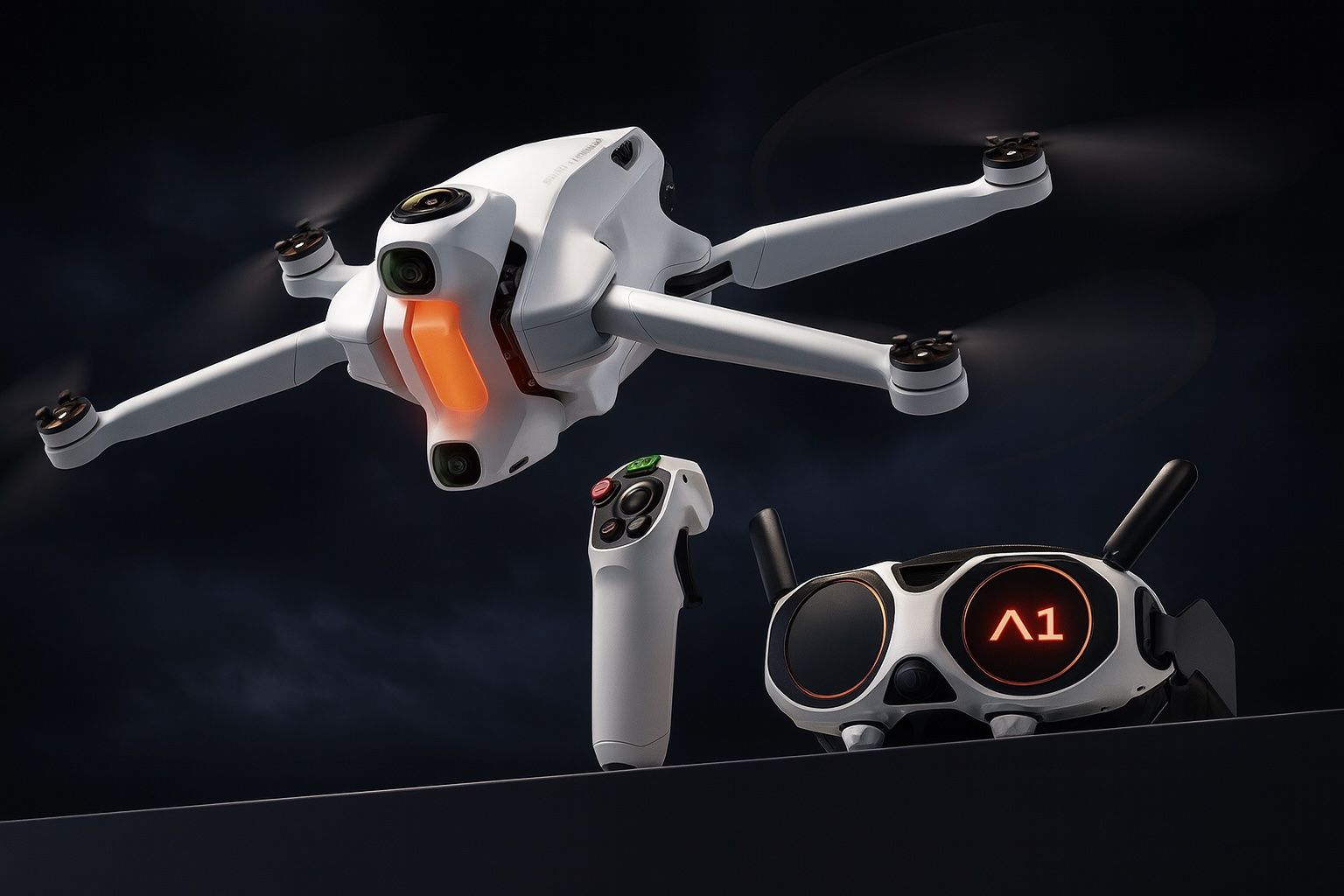
Insta360’s Antigravity A1 quadcopter features dual-lens 8K/30fps 360° cameras with real-time stitching and digital stabilization, targeting a January 2026 launch at $1,300–$1,700. DJI’s rumored Mini 360 may offer 8K/30fps dual 360° cameras, up to 30 minutes of flight, and a $700–$800 price by late 2025. ZeroZero’s HoverAir X1 ProMax, at $699, weighs 195 g and records 8K video with autonomous modes.
14 August 2025
AI Music Showdown: Suno v4 vs Udio v1.1 vs DeepMind’s Lyria 2 – Which Hits the Right Notes?

AI Music Showdown: Suno v4 vs Udio v1.1 vs DeepMind’s Lyria 2 – Which Hits the Right Notes?

Suno v4.5 launched in mid-2025, enabling 8-minute songs with 48 kHz audio and features like Extend and Covers. Udio v1.5 arrived by July 2024 with stereo output, Remix, and Sessions editor. Google DeepMind’s Lyria 2 debuted mid-2025 with Music AI Sandbox and SynthID watermarking. Major labels sued Suno and Udio in June 2024 over alleged copyright infringement in training data.
Drone Delivery Showdown: Wing vs. Zipline P2 vs. Amazon Prime Air MK30

Drone Delivery Showdown: Wing vs. Zipline P2 vs. Amazon Prime Air MK30

Wing became the first FAA-certified drone air carrier in 2019 and has made over 350,000 deliveries, mainly in Australia. Its hybrid VTOL drones carry up to 5 pounds and serve Walmart in Dallas–Fort Worth, aiming for 100 stores by 2025. Zipline’s P2, launched in 2023–2024, carries up to 8 pounds and began Walmart deliveries in Texas, logging over 1.5 million global deliveries. Amazon’s MK30 hexacopter began testing in Italy in 2024 and operates in Arizona.
Flying Taxi Showdown: Joby S4 vs Archer Midnight vs Volocopter VoloCity – Who Will Rule the Skies?

Flying Taxi Showdown: Joby S4 vs Archer Midnight vs Volocopter VoloCity – Who Will Rule the Skies?

Joby S4, a five-seat eVTOL, cruises up to 200 mph with a 100-mile range and has completed three of five FAA certification stages as of early 2024. Archer Midnight, also five-seat, uses 12 rotors, targets FAA certification by late 2024 or 2025, and has a 200-aircraft order from United Airlines. Volocopter VoloCity, a two-seater with 18 rotors, aims for EASA certification in 2025 and will demo at the Paris 2024 Olympics.
6G Terahertz Showdown: Samsung’s 140 GHz Testbed vs. Qualcomm’s 6G Foundry in the 0.3 THz Race

6G Terahertz Showdown: Samsung’s 140 GHz Testbed vs. Qualcomm’s 6G Foundry in the 0.3 THz Race

Samsung and UCSB reached 6.2 Gbps over 15 meters at 140 GHz in June 2021. Qualcomm’s 13 GHz Giga-MIMO base station with 4,096 antennas delivered 2.3× the throughput of a standard 5G site. LG and Fraunhofer HHI linked 320 meters at 155–175 GHz, aiming for 1 Tbps. NTT DoCoMo, NEC, and Fujitsu achieved 100 Gbps over 100 meters in the 100–300 GHz band.
Tech World Rocked by 8 Non‑AI Surprises This Week

Tech World Rocked by 8 Non‑AI Surprises This Week

Apple is developing a home companion robot with a 7-inch movable display and advanced Siri, targeting a 2027 launch. The FDA approved Insmed's Brinsupri as the first treatment for non-cystic fibrosis bronchiectasis, priced at $88,000 per year. ULA's Vulcan rocket completed its first operational flight, carrying Space Force payloads from Cape Canaveral. Amazon expanded Prime same-day grocery delivery to over 1,000 U.S. cities.
AI Frenzy: Billion-Dollar Bets, Self-Learning Breakthroughs & Legal Showdowns – Global AI Roundup (Aug 13–14, 2025)

AI Frenzy: Billion-Dollar Bets, Self-Learning Breakthroughs & Legal Showdowns – Global AI Roundup (Aug 13–14, 2025)

Meta said its latest AI systems are showing signs of self-improvement without human help, which CEO Mark Zuckerberg called a step toward artificial superintelligence. Google pledged $9 billion to expand U.S. AI infrastructure, while Cisco reported $2 billion in AI product orders for FY2025. Foxconn posted a 27% profit surge driven by AI server sales, up 170% year-over-year. Perplexity AI offered $34.5 billion in cash to buy Google Chrome.
Beyond AI: 8 Must-Read Tech News Highlights from August 11–12, 2025

Beyond AI: 8 Must-Read Tech News Highlights from August 11–12, 2025

Google will launch the Pixel 10 lineup, including the Pixel 10 Pro Fold with IP68 water and dust resistance, on August 20. GitHub CEO Thomas Dohmke will resign to start a new company, with Julia Liuson named interim head. Marks & Spencer restored Click & Collect after a cyberattack cost £300 million. Paramount secured exclusive U.S. UFC rights for $7.7 billion over seven years.
iPhone 16 Pro Max vs Galaxy S25 Ultra vs Pixel 9 Pro: Which Superphone Will Dominate 2025?

iPhone 16 Pro Max vs Galaxy S25 Ultra vs Pixel 9 Pro: Which Superphone Will Dominate 2025?

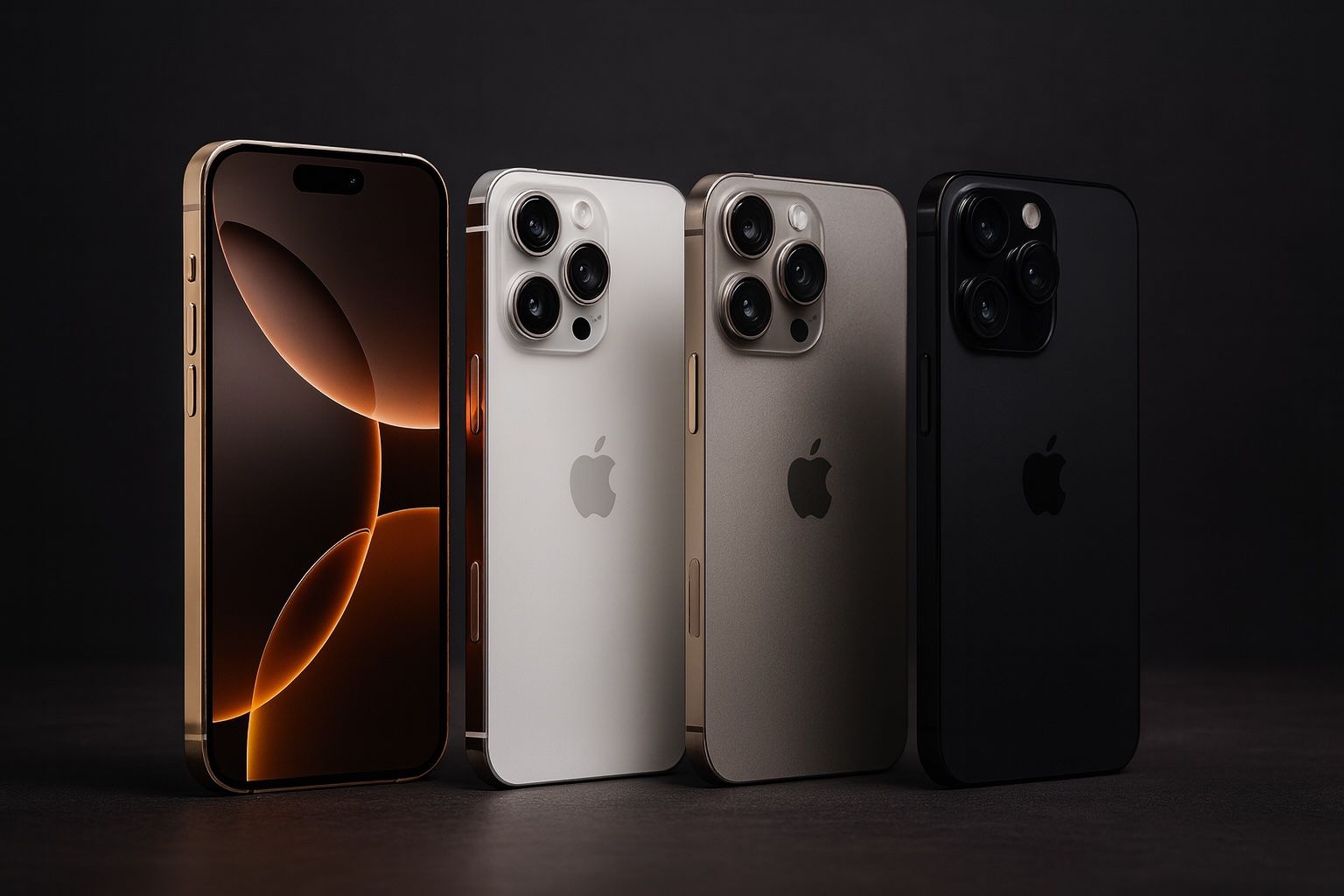
Apple’s iPhone 16 Pro Max, with its new A18 Pro chip, leads in single-core performance, scoring 3,386 on Geekbench and offering 20% better sustained gaming than last year. Samsung’s Galaxy S25 Ultra, using an overclocked Snapdragon 8 Gen4, tops multi-core and GPU tests, hitting 9,829 multi-core and 42.4 fps on 3DMark. Google’s Pixel 9 Pro, powered by the Tensor G4, trails in raw speed but focuses on AI features with 16GB RAM.
Google’s Genie 3: The AI That Turns Text Prompts Into Interactive Worlds, Changing Gaming and Beyond

Google’s Genie 3: The AI That Turns Text Prompts Into Interactive Worlds, Changing Gaming and Beyond

Google DeepMind announced Genie 3 in August 2025, the first AI model to generate interactive 3D worlds from text prompts in real time at 720p and 24 FPS. Users can navigate with keyboard and mouse, triggering dynamic events like weather changes. The system remains a closed research preview, available only to select testers due to safety and moderation concerns. Public release and broader access have not been announced.
AI Just Changed Forever – Here’s Everything That Happened in the Last 48 Hours

AI Just Changed Forever – Here’s Everything That Happened in the Last 48 Hours

OpenAI launched GPT-5 on August 7, making the new AI model available to all 700 million ChatGPT users. The release follows $400 billion in AI data center investments by major tech firms this year. OpenAI is reportedly seeking a $500 billion valuation in a secondary share sale. Google, meanwhile, announced a $1 billion initiative to provide AI tools and training to over 100 U.S. universities and nonprofits.
AI’s Big Bang: Breakthroughs, Billion‑Dollar Bets & Backlash (AI News Roundup Aug 6–7, 2025)

AI’s Big Bang: Breakthroughs, Billion‑Dollar Bets & Backlash (AI News Roundup Aug 6–7, 2025)

MIT and Duke used AI to design iron-based ferrocene polymers that absorb stress, cutting additive discovery time from weeks to days, published in ACS Central Science. Profluent Bio’s OpenCRISPR-1, the first CRISPR enzyme fully designed by AI, edited human cells with high precision and was open-sourced after publication in Nature. OpenAI released two open-weight language models, now available on AWS Bedrock. Google pledged $1 billion for AI training at over 100 universities.
Presence Tech Showdown: Wi‑Fi Sensing vs. UWB vs. Soli Radar – Who Will Own the Future?

Presence Tech Showdown: Wi‑Fi Sensing vs. UWB vs. Soli Radar – Who Will Own the Future?

IEEE 802.11bf Wi‑Fi Sensing is set for final approval in March 2025, enabling movement detection across homes using standard Wi‑Fi bands. Ultra‑Wideband chips, led by Apple and Samsung, offer centimeter-level accuracy and are projected to ship 450–500 million units annually by 2025. Google’s 60 GHz Soli radar detects fine gestures within 5–10 meters and now faces fewer regulatory barriers for indoor use.
Musk’s $29 B Windfall, Satellite Wars & a Mind-Controlled iPad – Tech News Roundup (Aug 5–6, 2025)

Musk’s $29 B Windfall, Satellite Wars & a Mind-Controlled iPad – Tech News Roundup (Aug 5–6, 2025)

Spotify will raise Premium prices by €1 per month across dozens of markets starting in September, sending its shares up 5% in pre-market trading. Amazon is cutting 110 jobs at Wondery and shifting major podcasts to Audible, with Wondery’s CEO departing. Chinese e-commerce firms Shein and Temu are overtaking global retailers in South Africa. Nintendo’s upcoming Switch 2 is set to support major third-party games closer to rival launch dates.
1 8 9 10 11 12 18
Go toTop