Browse Category

NASDAQ:VSAT News 11 June 2025 - 8 January 2026

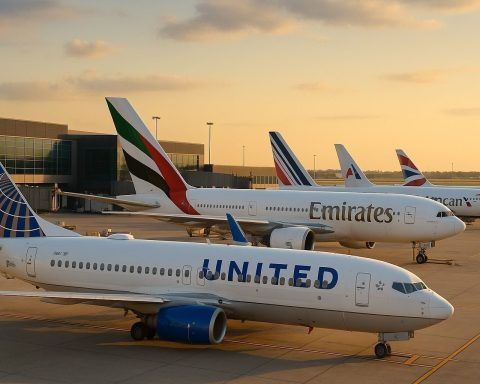
American Airlines stock rises as free Wi‑Fi rollout meets softer U.S. fines stance

American Airlines stock rises as free Wi‑Fi rollout meets softer U.S. fines stance

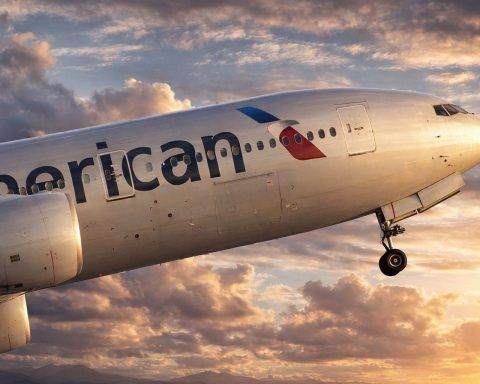
American Airlines shares rose about 2% to $15.99 Wednesday after announcing free in-flight Wi‑Fi for AAdvantage members, sponsored by AT&T. U.S. regulators proposed easing civil fines in airline consumer-protection cases, waiving $16.7 million in penalties imposed on American last year. Delta and United shares fell about 0.8% each.
Viasat (VSAT) Stock Today: Price Jumps as ViaSat-3 Expansion, Ka-Band Defense Network, and Analyst Forecasts Shape 2026 Outlook (Dec. 22, 2025)

Viasat (VSAT) Stock Today: Price Jumps as ViaSat-3 Expansion, Ka-Band Defense Network, and Analyst Forecasts Shape 2026 Outlook (Dec. 22, 2025)

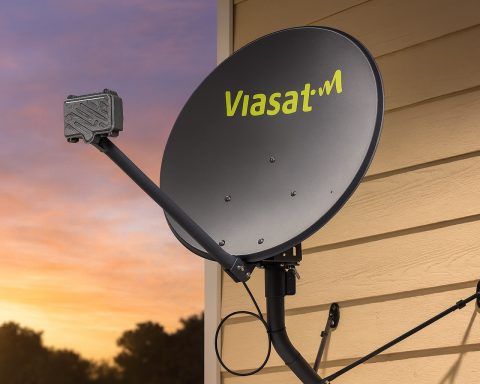
Viasat shares rose about 7% to $36.16 by midday Monday, Dec. 22, 2025, after the company released a year-in-review update. The recap highlighted the November launch of ViaSat-3 F2, plans for expanded capacity in 2026, and over 2,000 maritime orders for its NexusWave system. The stock traded between the mid-$34s and mid-$36s during the session.
Space & Satellite Stocks Today: Rocket Lab (RKLB), Viasat (VSAT), Planet Labs (PL), Spire (SPIR), Iridium (IRDM) and Globalstar (GSAT) — News, Forecasts and Analysis for Dec. 17, 2025

Space & Satellite Stocks Today: Rocket Lab (RKLB), Viasat (VSAT), Planet Labs (PL), Spire (SPIR), Iridium (IRDM) and Globalstar (GSAT) — News, Forecasts and Analysis for Dec. 17, 2025

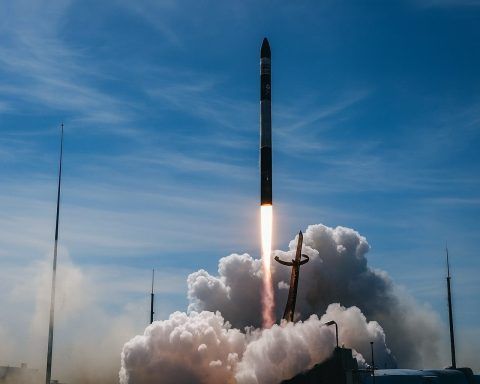
Rocket Lab advanced its next Electron launch for the U.S. Space Force to December 18, highlighting demand for rapid government missions. Space and satellite stocks fell midday as the Nasdaq dropped and Fed comments signaled continued restrictive policy. Shares of major defense contractors also declined after reports of possible White House action on shareholder payouts.
Viasat’s 2025 Takeoff: Stock Soars, New Satellites Launch, and a High-Stakes Future

Viasat’s 2025 Takeoff: Stock Soars, New Satellites Launch, and a High-Stakes Future

Viasat’s 2025 Rally and Resurgence Viasat’s stock has been on a tear in 2025, marking a stark reversal of fortune. By late Q3 2025, VSAT shares had climbed roughly +280% year-to-datetrefis.com – a dramatic rebound after plummeting 70% in 2024trefis.com. The rally has accelerated through the year: a fresh surge in August saw the stock jump 25% in six daystrefis.com, as investors reacted to improving financial news and strategic developments. Viasat’s market capitalization now hovers around $4–4.5 billiontrefis.com, up from barely $1 billion at 2024’s trough, yet the stock still trades at a substantial discount to historical valuation multiples. At about 1.5×
Global Satellite Industry Skyrockets: Inside the $400B Space Boom and the Race to $1+ Trillion by 2035

Global Satellite Industry Skyrockets: Inside the $400B Space Boom and the Race to $1+ Trillion by 2035

Key Facts Industry Overview and Historical Context (A Decade of Transformation) Just 10–15 years ago, the satellite industry was a relatively stable domain dominated by government programs and a handful of commercial players focused on geostationary communications satellites. In 2010 the global space economy was around $277 billion thespacereport.org, heavily driven by broadcasting (satellite TV) and government-funded activities. Since then, the industry has nearly doubled in size, fueled by a wave of private-sector innovation often dubbed the “NewSpace” movement. Companies like SpaceX and Blue Origin – founded in 2002 and 2000 respectively – began to challenge traditional aerospace firms by the
Wi‑Fi Titans Clash: Starlink Gen3 vs TP‑Link Deco BE95 vs Netgear Orbi 970 – 2025 Mesh Router Showdown

Global Satellite Internet Showdown 2025: Starlink vs. Viasat vs. OneWeb – Who’s Winning the Race for Space Broadband?

Key Facts Introduction Satellite internet has entered a new era in 2025. Once a niche last-resort service with slow speeds and tiny data caps, it’s now a fast-growing sector powering everything from rural homes to airplanes in flight. The charge has been led by SpaceX’s Starlink, the low-Earth orbit constellation that proved satellite broadband can be fast and relatively low-latency. Hot on its heels are legacy players like Viasat and HughesNet upgrading their systems, new LEO networks like OneWeb targeting businesses, and tech giants like Amazon’s Project Kuiper preparing to launch full services. Even regional and government initiatives are joining
Free Satellite Internet: Myth or Reality? The Cheapest Options Revealed

Free Satellite Internet: Myth or Reality? The Cheapest Options Revealed

In 2018, LinkSure announced plans for a 272-satellite constellation to provide free global Wi-Fi by 2026. Quika offered a mostly free satellite broadband in parts of the Middle East and Africa, delivering about 3 Mbps down/1 Mbps up, but installation and a hardware deposit were still required. There is currently no genuinely free satellite internet for consumers; all major providers require paid subscriptions and specialized equipment because satellites and ground infrastructure cost millions. Amazon’s Project Kuiper aims for affordable service and is expected to start in late 2025. In emergencies, SpaceX Starlink has provided free service and terminals in Ukraine
Internet Access and Satellite Connectivity in Honduras: A Digital Lifeline in Central America

Internet Access and Satellite Connectivity in Honduras: A Digital Lifeline in Central America

As of early 2024, about 7.03 million Hondurans were internet users, representing 65.9% of the population. Internet penetration rose from roughly 25–30% in the mid-2010s to about 61% in 2023 and 66% in 2024. There is a sharp urban-rural divide, with about 55% of urban residents online in 2019 versus around 20% of rural residents. In 2024, Honduras had 8.41 million active mobile cellular connections, roughly 79% of the population, with many people using multiple SIM cards. By 2023, about 85% of the population had access to at least a basic 4G signal from Tigo and Claro, though speeds differ
Satellite Internet Revolution: How SpaceX Starlink and Rivals Are Connecting the World from Space (2025–2030 Outlook)

Satellite Internet Revolution: How SpaceX Starlink and Rivals Are Connecting the World from Space (2025–2030 Outlook)

As of mid-2025, SpaceX Starlink has deployed over 7,600 satellites—about 65% of all active satellites—reaching 4+ million subscribers by late 2024 and 5+ million by mid-2025 across more than 125 countries. Starlink offers 50–200+ Mbps speeds with 20–40 ms latency, using a flat phased-array user terminal nicknamed “Dishy McFlatface” and laser-linked satellites to extend polar and ocean coverage. OneWeb, now called Eutelsat OneWeb after a 2023 merger, operates roughly 634 satellites as of mid-2023 and completed its Gen-1 network in 2023, with Gen-2 satellites (about 100) on order for 2026. Amazon’s Project Kuiper plans 3,236 satellites, had 78 production satellites
Global Satellite Internet Showdown: Starlink vs Viasat vs OneWeb vs Kuiper – Which One Will Connect the World?

Global Satellite Internet Showdown: Starlink vs Viasat vs OneWeb vs Kuiper – Which One Will Connect the World?

Starlink’s residential service delivers about 100–250 Mbps down and 10–20 Mbps up, with latency around 20–50 ms and a median near 45 ms as of mid‑2025. Starlink pricing is typically around $120 per month for standard residential service, with a $80 Lite tier in some regions, and it offers month‑to‑month service with a 30‑day trial. Starlink operates in more than 50 countries globally and had over 3 million customers in nearly 100 countries by late 2024, reaching remote regions from the Arctic to the Amazon. Starlink’s second‑generation satellites (V2) can handle roughly 80–100 Gbps per satellite, with a goal to
Starlink Satellite Internet FAQ

Space-Age WiFi: How Starlink, HughesNet, and Viasat Are Beaming Broadband from Space

Starlink uses a low Earth orbit constellation with about 7,600 satellites in orbit as of mid-2025 (aiming for 12,000+), delivering 50–250 Mbps downloads with 20–50 ms latency and no hard data caps on standard plans (heavy users may be throttled during congestion). HughesNet operates GEO satellites (EchoStar Jupiter fleet, including Jupiter 3) offering up to 50–100 Mbps on newer plans, around 600 ms latency, soft data caps with throttling, and pricing roughly $50–$100 per month with equipment around $300 or a $15/month lease; Fusion LTE hybrid is available. Viasat uses ViaSat-2/3 GEO satellites to provide 100–150 Mbps and, on newer
10,000 Satellites and 5 Million Users: Inside the Satellite Internet Revolution of 2025

10,000 Satellites and 5 Million Users: Inside the Satellite Internet Revolution of 2025

Starlink has launched over 8,000 satellites since 2019 and serves more than 5 million users across 125+ countries as of 2025. Amazon’s Project Kuiper launched its first 27 satellites in April 2025 on an Atlas V, aiming for a 3,236-satellite constellation with Ka-band and user terminals around $400. The EU’s IRIS² plan is a €10.6 billion multi-orbit network targeting about 300 satellites by 2030. China began launching the first of 13,000 Guowang satellites, with 64 craft launched by the end of 2024. OneWeb has about 650 satellites and merged with European operator Eutelsat in September 2023 to form a GEO-LEO
Space Showdown: How Military Satellites Are Shaping the Ukraine‑Russia War

Space Showdown: How Military Satellites Are Shaping the Ukraine‑Russia War

SpaceX deployed 5,000 Starlink terminals to Ukraine within days of the 2022 invasion, rising to about 15,000 active terminals by June 2022, with Ukraine at one point accounting for roughly 58% of global Starlink traffic. Russia attempted to jam Starlink signals on the battlefield, SpaceX rolled a software update to bypass the jamming, and by 2023–2024 reports noted illicit Starlink terminals in Russian hands that had to be disabled. On February 24, 2022, Russia launched a cyberattack against Viasat’s KA-SAT network that crippled thousands of Ukrainian modems and disrupted satellite links across Europe. In August 2022, Ukraine crowdfunded $20 million
Space-Based 5G Backhaul: The Billion-Dollar Race to Orbit 5G (2024–2031)

Space-Based 5G Backhaul: The Billion-Dollar Race to Orbit 5G (2024–2031)

Starlink’s upfront CapEx was estimated at about $10 billion and later as high as $30 billion, SpaceX launched over 8,000 Starlink satellites with about 4,000 in operation by April 2025, and the service exceeded 5 million subscribers worldwide by 2025. Amazon’s Project Kuiper is a $10 billion plan for a 3,236-satellite constellation, with 27 production satellites launched by April 2025 and a requirement to have 1,618 satellites in operation by July 2026 under its FCC license. Telesat Lightspeed plans 198 satellites, has secured roughly $2.54 billion in funding, aims to launch by mid-2026 and deliver global service by around 2027,
2025 Satellite Internet Showdown: Starlink vs Viasat vs HughesNet vs OneWeb & More

2025 Satellite Internet Showdown: Starlink vs Viasat vs HughesNet vs OneWeb & More

Starlink (SpaceX) is a LEO constellation (~4,500 satellites) delivering residential speeds ~100–250 Mbps down / 10–20 Mbps up, business up to ~350–400 Mbps, with a median latency ~45 ms in Q1 2025 and no hard data caps, employing a Fair Use Policy that deprioritizes after 1 TB. HughesNet Jupiter-3 (GEO) upgrade in 2024–25 offers 50–100 Mbps down (about 3 Mbps up), with latency ~600–700 ms, Fusion hybrid areas lowering latency, and a 24-month contract with equipment lease around $14.99/month or $299–$449 purchase, dish ~0.74 m, Wi‑Fi 6 modem, and 100–200 GB Priority Data per month plus 2 AM–8 AM unmetered
D2D Gold Rush: The Race to Own the Sky-to-Phone Future (2025–2033)

D2D Gold Rush: The Race to Own the Sky-to-Phone Future (2025–2033)

In April 2023, AST SpaceMobile’s BlueWalker 3 demonstrated the first two-way voice call from an off-the-shelf smartphone (Samsung Galaxy S22) to a satellite. In November 2022, Apple launched Emergency SOS via Satellite on iPhone 14 using Globalstar, with the service free for two years. In September 2022, Lynk Global received the FCC license for commercial satellite-direct-to-phone services, enabling a 10-satellite initial constellation for SMS. 3GPP Release 17, frozen in 2022, formally added Non-Terrestrial Networks support so standard 5G devices can connect to satellites with adjusted timing and error correction. In 2024, Viasat and BSNL demonstrated two-way SMS connectivity using a
Mobile & Portable Satellite Internet in 2025: The Ultimate Guide to Starlink Roam, HughesNet, Inmarsat, Viasat & More

Mobile & Portable Satellite Internet in 2025: The Ultimate Guide to Starlink Roam, HughesNet, Inmarsat, Viasat & More

Starlink Roam hardware costs $599, with Regional plans at $150 per month and Global plans at $200 per month, offering unlimited data and high speeds. As of May 2025, SpaceX’s Starlink LEO constellation includes over 7,600 satellites and provides coverage in more than 100 countries. Starlink Roam typical real‑world performance ranges from 50–150 Mbps download and 5–20 Mbps upload, with latency around 30–50 ms. HughesNet’s Jupiter 3 satellite (GEO) delivers up to 100 Mbps download and 5 Mbps upload, with roughly 600 ms latency across North and South America. Viasat is deploying the ViaSat-3 global constellation, with three satellites each
The GEO Reboot: How 2040 Will Look from 36,000 km Up

The GEO Reboot: How 2040 Will Look from 36,000 km Up

By 2040, analysts expect the global GEO replacement rate to be 10–15 new satellites per year, totaling about 200 GEO satellites from 2024 to 2040 and replacing most of today’s roughly 350-satellite fleet. A typical GEO satellite is designed for about 15 years, but all-electric propulsion and on-orbit servicing can push operational life to 20–30 years, as shown by MEV extensions of Intelsat-901 and 10-02 in 2020–2021. NASA is phasing out the dedicated TDRS relay fleet by the mid-2030s and shifting to commercial SATCOM services from providers such as SpaceX, SES, Viasat, and Inmarsat, with NASA stopping new TDRS users
In-Flight Wi-Fi Takes Off: The Sky-High Race for Satellite Connectivity 2024–2030

In-Flight Wi-Fi Takes Off: The Sky-High Race for Satellite Connectivity 2024–2030

Euroconsult projects the number of IFC-equipped aircraft worldwide will grow from about 9,900 in 2021 to over 21,000 by 2030. SpaceX Starlink, an LEO system with more than 4,000 satellites by 2024, has contracts to equip over 2,000 aircraft by early 2025 and can deliver up to 350 Mbps per aircraft with installation times of 8–10 hours. OneWeb completed a 618-satellite constellation in 2023, merged with Eutelsat to form a multi-orbit offering, and began aviation service in 2023–2024 with Panasonic Discover Airlines projects by 2025. Viasat and Inmarsat provide a global Ka-band GEO network after merger, with ViaSat-3 entering service

Stock Market Today

Wall Street Feels the Heat (and Thrill): Fed Cuts, Tariffs & Mega-Mergers Set NYSE Buzz

Stock Market Today 08.02.2026

8 February 2026
LIVEMarkets rolling coverageStarted: February 8, 2026, 12:00 AM ESTUpdated: February 8, 2026, 12:49 AM EST Australian Shares Set for Volatile Earnings Season Amid Market Sensitivity February 8, 2026, 12:49 AM EST. **Australian stock markets** face heightened volatility as earnings season kicks off with little room for error. Analysts warn that even a **1% earnings miss** could trigger sharp price swings, stripping away previous insulation from market shocks. This turbulence reflects the removal of 'shock absorbers' in share prices, signaling an unpredictable three weeks ahead for investors. Anthony Macdonald, business journalist and Chanticleer columnist, forecasts significant fluctuations likely exceeding historical norms.
Tower Semiconductor stock jumps again on Nvidia optics tie-up as earnings near

Tower Semiconductor stock jumps again on Nvidia optics tie-up as earnings near

8 February 2026
Tower Semiconductor shares rose 7.7% to $139.04 Friday after announcing a collaboration with Nvidia on AI data-center networking. The stock touched $141 intraday and gained another 1% after hours. Investors await Tower’s Feb. 11 earnings for details on its silicon photonics work. No financial terms or shipment timeline were disclosed.
Longsys Electronics stock heads into Monday after new guarantees; what 301308 investors watch next

Longsys Electronics stock heads into Monday after new guarantees; what 301308 investors watch next

8 February 2026
Longsys disclosed new guarantees for a 100 million yuan Hong Kong loan and a $9 million Brazil credit line, bringing its total approved guarantee quota to 11 billion yuan and outstanding guarantees to 5.81 billion yuan. The company said all guarantees are for consolidated subsidiaries and within approved limits. Shares closed at 288 yuan Friday, down 1.6%. China inflation and credit data are due this week.
MACOM stock price steadies near highs into Monday after earnings pop and fresh filings

MACOM stock price steadies near highs into Monday after earnings pop and fresh filings

8 February 2026
MACOM shares rose 3.5% to $235.87 Friday after the company reported fiscal Q1 revenue of $271.6 million and raised its full-year data center growth outlook to 35–40%. Fidelity’s FMR LLC disclosed a 10.7% stake, while shareholder Susan Ocampo filed to potentially sell up to 100,000 shares. Stifel raised its price target to $255. MACOM expects to repay $161 million in convertible notes in March.
Go toTop