Browse Category

Satellites News 21 June 2025 - 28 June 2025

Texting From Space: The T-Mobile–Starlink ‘T-Satellite’ Launch Heralds the Direct-to-Device Era

Texting From Space: The T-Mobile–Starlink ‘T-Satellite’ Launch Heralds the Direct-to-Device Era

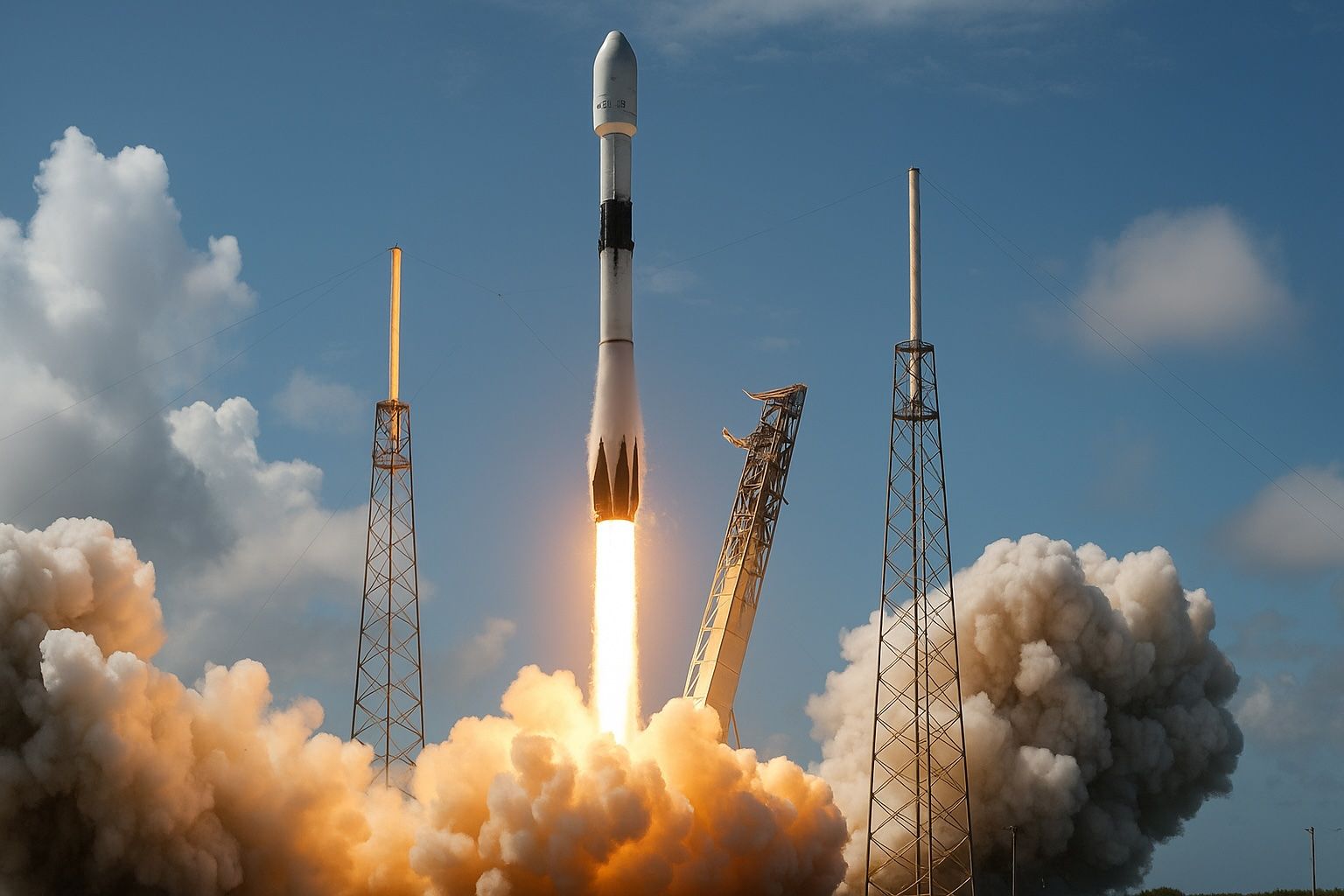
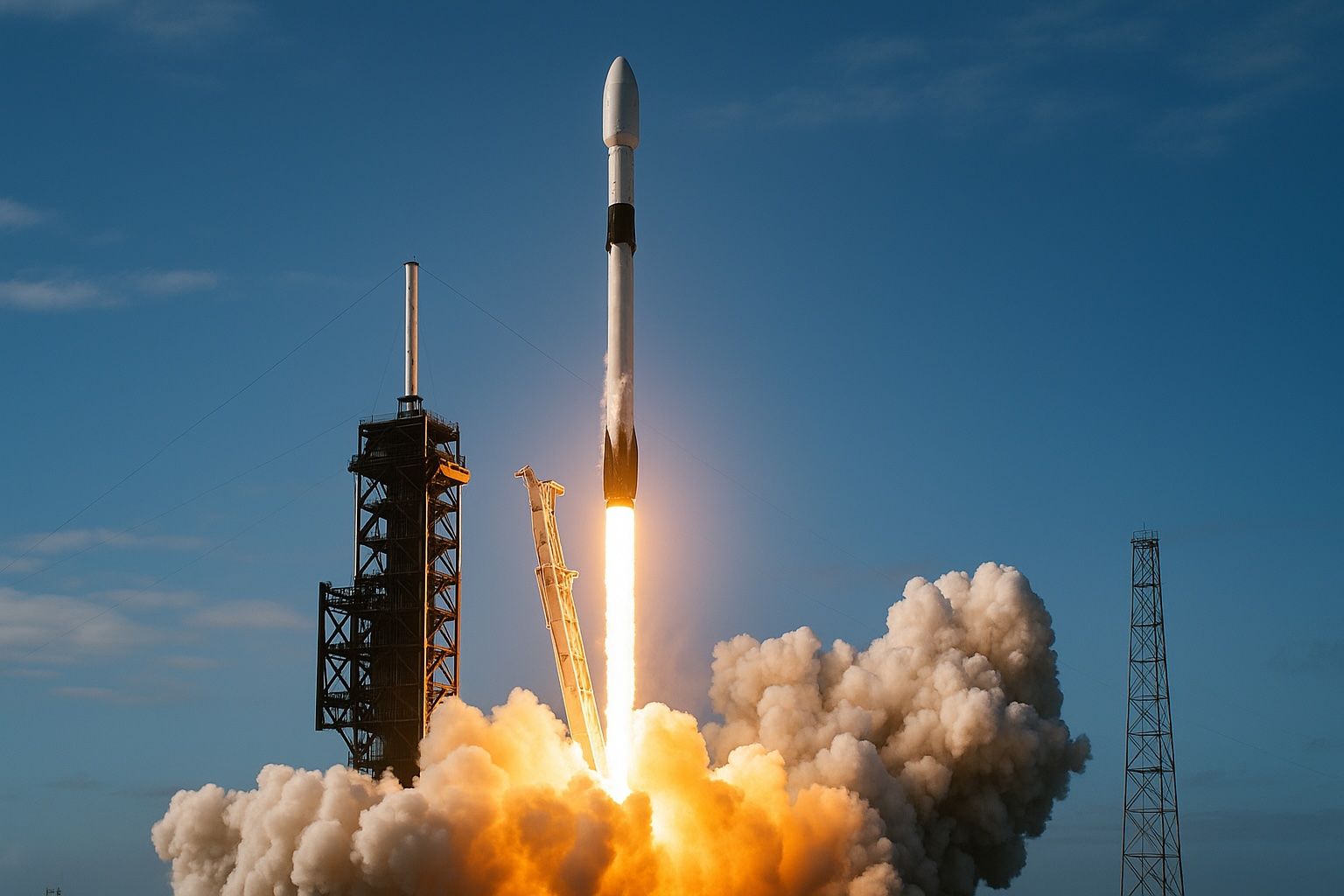
In August 2022, T-Mobile and SpaceX announced the Coverage Above and Beyond partnership to end mobile dead zones by connecting standard smartphones to Starlink satellites, branded as T-Satellite with Starlink, aiming to cover roughly 500,000 square miles of the U.S. Starlink Gen2 satellites feature Direct to Cell antenna arrays that enable direct-to-device connectivity with unmodified 4G/5G smartphones, effectively emulating a space-based cell tower. The first batch of six direct-to-cell capable Starlink satellites was launched in January 2024 on a Falcon 9 rocket. In March 2024 the FCC issued rules for non-terrestrial networks and, in November 2024, granted SpaceX conditional approval
Space Technology News Roundup: Satellites, Launches & Deep Space Updates / Updated: 2025-06-27 16:54

Space Technology News Roundup: Satellites, Launches & Deep Space Updates / Updated: 2025-06-27 16:54

ESA’s Biomass satellite, the first with a P-band SAR, released its initial high-resolution images and enables 3D mapping of forest structure for carbon accounting. Rocket Lab’s 67th Electron launch deployed four satellites—three HawkEye 360 Cluster 12 microsatellites and the experimental Kestrel-0A—marking the ninth Electron mission in 2024. Amazon’s Project Kuiper added 27 satellites to reach a total of 54, launched on an Atlas V, intensifying competition with SpaceX’s Starlink. WISeSat.Space plans a 100-satellite secure LEO constellation by 2027 to deliver encrypted IoT connectivity using post-quantum encryption. Finland acquired its first military SAR satellites from ICEYE, expanding independent reconnaissance and surveillance
27 June 2025
Airbus CO3D: AI-Powered, Laser-Linked Constellation for 50 cm Global 3D Mapping

Airbus CO3D: AI-Powered, Laser-Linked Constellation for 50 cm Global 3D Mapping

CO3D comprises four identical S250-based satellites, each weighing about 250–300 kg with 100% electric propulsion, delivering ~50 cm spatial-resolution optical imagery. It aims to produce a global Digital Surface Model with ~1 m vertical accuracy and to map ~40 million km² of Earth’s land per year in 3D. The system targets roughly 90% of the globe’s land areas between ±70° latitude to be mapped within five years. Satellites operate in two pairs on opposite sides of Earth, with ~100 km separation in the same orbit plane to enable synchronized stereo imaging. The four-satellite launch is planned for 25 July 2025
State of Space and Satellite Technologies in 2025 (Updated: June 27th, 2025)

State of Space and Satellite Technologies in 2025 (Updated: June 27th, 2025)

Artemis I launched on November 16, 2022, marking NASA’s Space Launch System (SLS) first flight and sending an uncrewed Orion around the Moon. The global space economy reached about $570 billion in 2023, with roughly 80% of that value produced by commercial activities. As of 2025, there are over 11,000 active satellites serving Earth, out of about 45,000 tracked objects including debris. In 2024 there were 259 orbital launches globally, with the United States conducting 154 and SpaceX responsible for 90. SpaceX conducted its first orbital Starship test on April 20, 2023 from Boca Chica, Texas; the flight ended with
26 June 2025
Latest Satellite News & Insights 26.06.2025

Latest Satellite News & Insights 26.06.2025

NASA’s James Webb Space Telescope captured images of exoplanet TWA 7b, a Saturn-mass planet orbiting the young star TWA 7, using high-contrast imaging and a coronagraph. Israeli airstrikes on western Iran targeted military satellites, air defense systems, and missile infrastructure, using around 20 fighter jets and over 30 munitions. ESA’s Biomass satellite, launched in April, released its first images mapping global forests using radar to measure the carbon stored in forests. A transient radio signal from NASA’s long-inactive Relay 2 satellite was detected on Earth, likely caused by an electrostatic discharge. The U.S. Space Force’s FY26 budget includes $277 million
26 June 2025
Eyes in the Sky, Data in the Cloud – Satellite Downlink & Cloud Integration Market Skyrockets by 2032

Eyes in the Sky, Data in the Cloud – Satellite Downlink & Cloud Integration Market Skyrockets by 2032

The market is projected to grow from $14.44 billion in 2025 to $55.17 billion by 2032, a CAGR of 21.1%. In 2025, agriculture accounts for about 40% of revenue, while government and military end-users account for about 46.8%. North America leads with about 44–45% of global market share in 2025, while Asia-Pacific is the fastest-growing region at about 37% share. By 2032, Asia-Pacific is projected to approach or surpass North America in market size, with North America and APAC each around one-third of the market and Europe near 20%. The number of active satellites is projected to rise to 58,000+
25 June 2025
Orbital Quantum Leap: First Photonic Edge-Computing Satellite Set to Transform Space Data Processing

Orbital Quantum Leap: First Photonic Edge-Computing Satellite Set to Transform Space Data Processing

The ROQuET payload, a photonic quantum computer no larger than a shoebox, was developed by Philip Walther’s team at the University of Vienna and measures about 15 × 15 × 45 cm, weighing roughly 9.5 kg with an aluminum frame and a borosilicate glass optical circuit. The device was launched on June 23, 2025, aboard SpaceX’s Transporter-14 mission and hosted on D-Orbit’s ION platform as the SCV004 Upmik payload. The Falcon 9 rocket lifted off from Vandenberg Space Force Base and deployed around 70 satellites into a sun-synchronous orbit at about 550 km altitude. The mission demonstrates edge computing, enabling
Uzbekistan’s Internet Makeover: Blazing Speeds, New Satellites, and Lingering Barriers

Uzbekistan’s Internet Makeover: Blazing Speeds, New Satellites, and Lingering Barriers

Uzbekistan’s internet infrastructure has shifted from slow dial-up to fiber and 4G/5G networks, with Uztelecom expanding fiber backbones and boosting international capacity to 3.2 Tbps in 2022. As of 2022, 2G networks blanket 99% of the population, 3G covers about 90%, and 4G LTE reaches roughly two-thirds of residents. In 2023, Uzbekistan began rolling out 5G with thousands of base stations, with the first phase targeting full 5G coverage in Tashkent and partial coverage in provincial centers. Uztelecom dominates fixed broadband, carrying 98% of fixed connections, while private mobile operators include Ucell, Beeline Uzbekistan, Mobiuz, and Perfectum Mobile. There were
25 June 2025
Latest Satellite News & Insights 25.06.2025

Latest Satellite News & Insights 25.06.2025

EarthDaily Analytics launched its first Earth observation satellite, initiating a next-generation ten-satellite constellation to deliver daily AI-ready global imagery and analytics, with the full constellation expected to be operational next year. SpaceX launched 27 Starlink satellites from Cape Canaveral on a Falcon 9 booster (B1080) in its 20th flight, with the first stage successfully recovered, expanding global internet coverage to over 7,800 active relays. James Webb Space Telescope captured its first direct image of exoplanet TWA 7 b about 110 light-years away using a coronagraph on the MIRI instrument. ESA’s Biomass satellite released its first radar images using P-band synthetic
24 June 2025
Jeff Bezos vs. Elon Musk: How Amazon’s New Kuiper Satellites Could Disrupt a $100 Billion Space‑Internet Gold Rush

Space Race Frenzy: Exploding Starships, Quantum‑Proof Satellites & Europe’s Billion‑Dollar Constellation Shake‑Up — Everything That Hit Orbit TODAY (24 June 2025)

SpaceX’s Transporter-14 rideshare lofted 70 payloads, including memorial capsules, ICEYE and Capella radar sats, and York Space Systems’ Dragoon Tranche-1 12-satellite demo. The first Dragoon craft launched Monday on Transporter-14 is now on orbit, with SDA citing a four-month schedule cut to accelerate capabilities. Shijian-21 rendezvoused with Shijian-25 at about 22,236 miles, rehearsing refueling and capture maneuvers that analysts warn could neutralize adversary satellites in a conflict. T-Mobile’s T-Satellite service will provide full data links on 1 Oct 2025, piggybacking on 657 Starlink satellites, with basic messaging starting 23 July and 911 texting free for all U.S. users. SpaceX targets
Space Race 2.0: A Shoebox‑Sized Quantum Satellite Blasts Off—Can It Make Hackers Obsolete?

Space Race 2.0: A Shoebox‑Sized Quantum Satellite Blasts Off—Can It Make Hackers Obsolete?

QUICK³ is a 3U CubeSat weighing 4 kg, led by Germany’s Technical University of Munich, and it launched on 23 June 2025 aboard SpaceX’s Transporter‑14 from Vandenberg SFB. It carries the first true single-photon source flown, a laser-pumped hexagonal boron nitride chip on a 10 × 10 × 15 cm photonic chip. True single photons are expected to raise secret-key rates 10–100× over weak-laser systems. The pump laser is a 698 nm diode module, 45 × 80 × 20 mm, weighing 200 g. QUICK³ uses a 3U CubeSat bus with a 4 kg mass budget and rideshare compatibility, with launch
“Unhackable from Orbit!” – How a 4 kg CubeSat Just Kicked‑Off the Race for a Global Quantum‑Secure Internet

“Unhackable from Orbit!” – How a 4 kg CubeSat Just Kicked‑Off the Race for a Global Quantum‑Secure Internet

On 23 June 2025 at 07:18 UTC, the Falcon 9 lifted the QUICK³ nano-satellite into a 550 km sun-synchronous orbit from Vandenberg Space Force Base during SpaceX’s Transporter-14 rideshare, with payload separation confirmed nine minutes after launch. The QUICK³ spacecraft weighs 4 kg and is a 3-U CubeSat (10 × 10 × 30 cm) with a primary experiment window of 6 minutes per 97-minute orbit. QUICK³ aims to bypass fiber-based quantum key distribution limits by sending true single photons through near-vacuum upper atmosphere to enable intercontinental quantum-secure links. A hexagonal-boron-nitride colour centre single-photon source emits at 650–700 nm, paired with
Umbrella in Orbit: ESA’s BIOMASS Satellite Lifts Earth’s Green Veil, Revealing Hidden Carbon Stores and Jaw‑Dropping First Images

Umbrella in Orbit: ESA’s BIOMASS Satellite Lifts Earth’s Green Veil, Revealing Hidden Carbon Stores and Jaw‑Dropping First Images

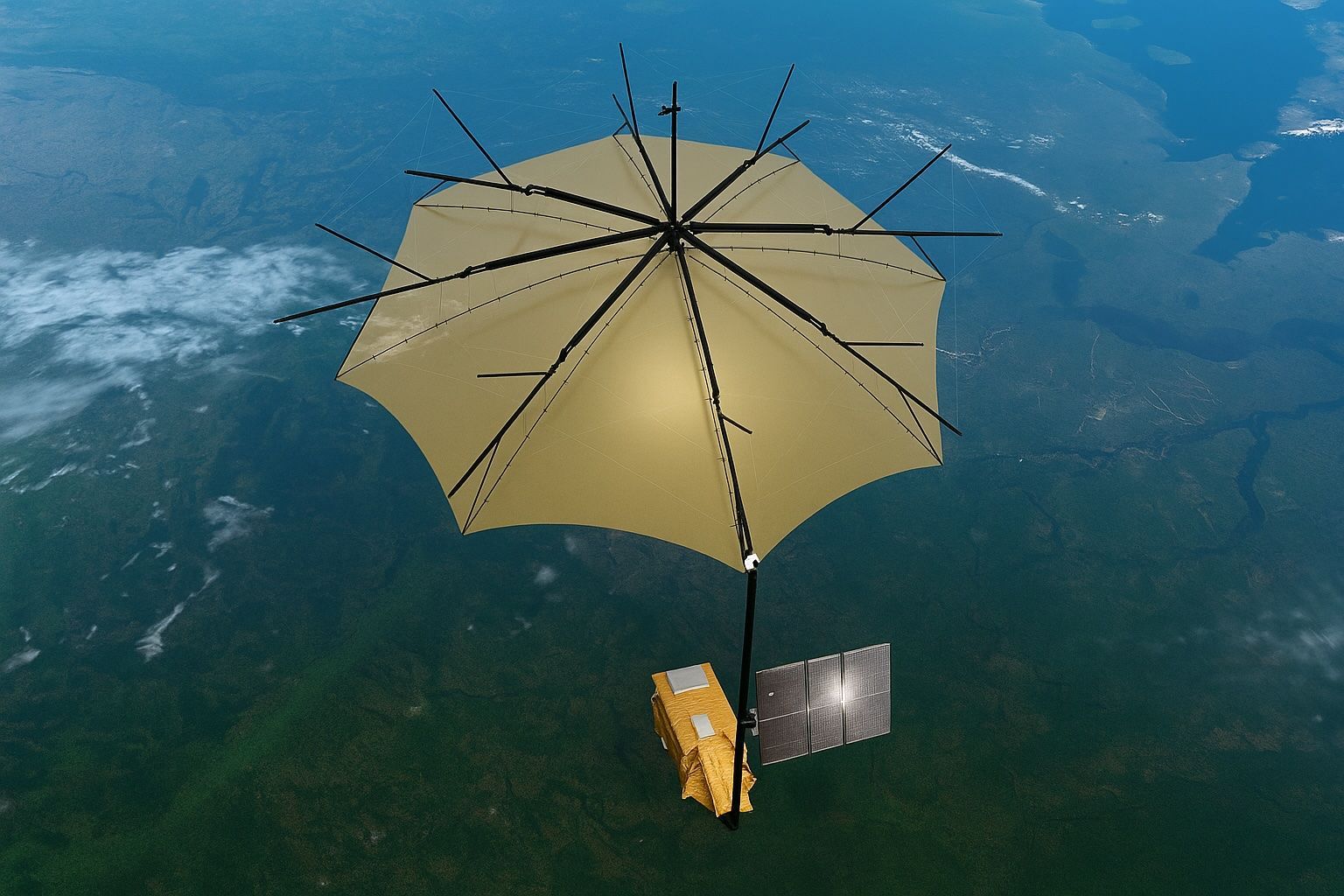
BIOMASS uses a fully polarimetric P-band SAR with a 70 cm wavelength to pierce through canopies and measure woody trunks where most forest carbon is stored. The 12-meter deployable reflector, shaped like an umbrella and built by L3Harris, directs radar pulses back to the sensor. The 1.25-tonne spacecraft was launched on 29 April 2025 aboard a Vega-C rocket from Kourou into a 666 km sun-synchronous orbit (flight VV26). The gold-colored reflector unfurled in orbit on 7 May 2025, marking a key commissioning milestone. First images show colour-coded maps of the Amazon, Indonesia, and the bedrock of the Sahara. By combining
24 June 2025
Oceanography and the Eye in the Sky: How Satellites Are Redefining Our Oceans

Oceanography and the Eye in the Sky: How Satellites Are Redefining Our Oceans

Since 1993, TOPEX/Poseidon and the Jason series have produced a continuous global mean sea level record, showing a rise of about 3.1–3.3 millimeters per year with acceleration to over 4 millimeters per year in the last decade and by 2023 the global mean sea level was over 100 millimeters higher than in 1993. Seasat (1978) carried a radar altimeter and, during its 105-day mission, provided ocean data that followed GEOS-3’s 1975 testing of radar altimetry. TOPEX/Poseidon, launched in 1992, carried two altimeters (NASA Ku/C-band and CNES Poseidon) and achieved sea-surface height accuracy of about 2–3 centimeters on a 10-day repeat
23 June 2025
Sky Watchers: The 2025–2033 Boom in Weather & Climate Satellite Constellations

Sky Watchers: The 2025–2033 Boom in Weather & Climate Satellite Constellations

Over 5,400 Earth observation satellites are projected to be launched globally from 2024 to 2033, nearly triple the previous decade. NOAA’s GeoXO program will deploy at least three geostationary satellites (with options up to four more) to upgrade GOES-R and extend Western Hemisphere coverage, following a $2.27 billion contract awarded to Lockheed Martin in 2024. NOAA/NASA plan JPSS-3 for 2027 and JPSS-4 for 2032 to provide critical morning-orbit polar data for numerical weather models. Europe’s MTG and MetOp-SG programs will deliver six MTG satellites (four MTG-I imagers and two MTG-S sounders) and the MetOp-SG A1/B1 pair by 2025, with MTG
Latest News and Developments in Satellites (2024–2025)

Latest News and Developments in Satellites (2024–2025)

In the first four months of 2025, over 1,200 satellites were launched, roughly a 50% increase from the same period in 2024. SpaceX’s Starlink had more than 7,000 small satellites in orbit by late 2024, with 573 Starlinks launched in Q1 2025 and about 9,000 laser inter-satellite links moving some 42 petabytes of data per day. In October 2024, SpaceX completed the final batch of OneWeb’s first-generation broadband satellites, bringing the constellation to roughly 634 LEO satellites. Amazon’s Project Kuiper launched its first 27 satellites in April 2025 on a ULA Atlas V, starting a planned 3,236-satellite network with a
21 June 2025
10,000 Satellites and 5 Million Users: Inside the Satellite Internet Revolution of 2025

10,000 Satellites and 5 Million Users: Inside the Satellite Internet Revolution of 2025

Starlink has launched over 8,000 satellites since 2019 and serves more than 5 million users across 125+ countries as of 2025. Amazon’s Project Kuiper launched its first 27 satellites in April 2025 on an Atlas V, aiming for a 3,236-satellite constellation with Ka-band and user terminals around $400. The EU’s IRIS² plan is a €10.6 billion multi-orbit network targeting about 300 satellites by 2030. China began launching the first of 13,000 Guowang satellites, with 64 craft launched by the end of 2024. OneWeb has about 650 satellites and merged with European operator Eutelsat in September 2023 to form a GEO-LEO
Space Force’s Secret 480-Satellite MILNET: Inside SpaceX’s New Military “Starlink” Revolution

Space Force’s Secret 480-Satellite MILNET: Inside SpaceX’s New Military “Starlink” Revolution

MILNET is a secret Space Force project that will be a government-owned, contractor-operated LEO satcom constellation of about 480 satellites, announced in June 2025. On June 18, 2025, Breaking Defense revealed that Space Force is funding MILNET in partnership with SpaceX, with SpaceX building and flying the satellites while Space Force Delta 8 oversees operations and the NRO manages the program. MILNET will use SpaceX’s Starshield platform, delivering enhanced encryption and security, with Starshield ground terminals derived from Starlink hardware able to interoperate with Starlink via laser cross-links. The network is designed as a hybrid mesh that will fuse DoD
21 June 2025
Zombie Satellite! Defunct NASA Orbiter Emits Blazing Radio Burst After 60 Years

Zombie Satellite Awakens: Defunct 1960s NASA Orbiter Blasts Earth with Mysterious Radio Pulse

Relay 2 was a NASA experimental communications satellite built by RCA, launched January 21, 1964, atop a Delta B rocket from Cape Canaveral, designed to relay television signals and study Earth’s radiation belts. Ground support for Relay 2 ended by September 1965, and its transmitters began failing, with the first transponder dying on November 20, 1966. The second transponder failed on June 9, 1967, leaving Relay 2 officially defunct and transmitting for less than three years. Relay 2 weighed about 78 kg (172 lb) at launch and orbited in an elliptical medium Earth orbit roughly 1,870 km by 7,600 km.
21 June 2025
France Tightens Grip on Space: Inside the €1.35 Billion Eutelsat Power Play

France Tightens Grip on Space: Inside the €1.35 Billion Eutelsat Power Play

In June 2025 the French government announced a €1.35 billion capital injection into Eutelsat, via the Agence des participations de l’État, with €717 million to be injected and Bpifrance’s 13.6% stake absorbed, lifting France’s holding to 29.99%. France becomes Eutelsat’s largest shareholder as a result of the stake transfer, solidifying the 29.99% holding. The move is designed to create a European satellite champion to counter Starlink and to secure sovereign access to space infrastructure amid geopolitical tensions. Eutelsat was founded in 1977, pioneered Europe’s direct-to-home TV in the 1990s, merged with OneWeb in July 2022, and the deal closed on
21 June 2025

Stock Market Today

Walmart stock jumps 3% to $131 as Dow clears 50,000 — what to watch before Monday

Walmart stock jumps 3% to $131 as Dow clears 50,000 — what to watch before Monday

7 February 2026
Walmart shares climbed 3.34% to $131.18 Friday, pushing its market value to about $1.05 trillion as the Dow closed above 50,000 for the first time. Retail stocks mostly gained, with Target up 4.24% and Costco up 1.20%, while Amazon dropped 5.55%. Investors await Walmart’s fiscal Q4 results on Feb. 19 and key U.S. economic data next week.
Go toTop