
Today: 2 July 2026
Browse Category

Satellites 1 September 2025 - 14 September 2025

Luxembourg’s Space Boom: How a Tiny Country Became a Satellite Powerhouse

Luxembourg’s Space Boom: How a Tiny Country Became a Satellite Powerhouse

Key Facts: Luxembourg’s space ambitions began in the mid-1980s. In 1985 the government launched SES, Europe’s first private satellite operator ses.com. SES’s inaugural Astra 1A satellite was launched in 1988, opening up direct-to-home TV across Europe ses.com. Throughout the 1990s and 2000s SES expanded globally, acquiring U.S. satellites and building a fleet that today covers most of the Earth ses.com ses.com.
Spain’s Stellar Ascent: Inside the Boom of Its Space and Satellite Industry

Spain’s Stellar Ascent: Inside the Boom of Its Space and Satellite Industry

Spain’s space journey began in the dawn of the Space Age. In the 1960s, Spain partnered with NASA to host critical tracking stations – Maspalomas in the Canary Islands and Robledo de Chavela near Madrid – which relayed signals for NASA’s Mercury, Gemini, and Apollo missions ibanet.org. In 1966, Spain built the El Arenosillo launch site in Huelva for suborbital sounding rockets surinenglish.com, marking its first steps toward launch capability. By 1974, Spain achieved a major milestone: the launch of Intasat, its first domestically built satellite. Intasat was a 25 kg scientific satellite launched for free by NASA on a Delta rocket in November 1974 esa.int. This success was coordinated by the National Commission for Space Research and INTA. INTA – founded in 1942 – became Spain’s lead aerospace R&D arm room.eu.com, developing sounding rockets like INTA-255 and INTA-300 in the 1960s–70s esa.int.
NASA Hints at Martian Life, SpaceX’s 120-Launch Greenlight & Warfighter Satellites – Space News Roundup (Sept 12–13, 2025)

NASA Hints at Martian Life, SpaceX’s 120-Launch Greenlight & Warfighter Satellites – Space News Roundup (Sept 12–13, 2025)

One of the week’s most groundbreaking developments came from the Red Planet. NASA unveiled evidence that a Martian rock sample may contain a “potential biosignature” – a clue of past microbial life. The Perseverance rover drilled the sample, dubbed “Sapphire Canyon,” from an ancient river delta in Jezero Crater in July 2024 nasa.gov. Scientists noticed millimeter-sized “leopard spots” in the reddish rock, which on Earth can result from chemical processes that microbes use for energy nasa.gov livescience.com. The rock is rich in clay, a material excellent at preserving organic traces of life over eons nasa.gov. This discovery – now peer-reviewed in Nature – prompted excitement at NASA. “The identification of a potential biosignature on the Red Planet is a groundbreaking discovery, and one that will advance our understanding of Mars,” said acting NASA Administrator Sean Duffy, calling it “the closest we have ever come to discovering life on Mars” nasa.gov. However, NASA officials caution that the telltale spots could yet have a non-biological origin livescience.com. To know for sure, scientists say we may have to await the Mars Sample Return mission that will bring Perseverance’s cached rocks back to Earth in the 2030s livescience.com. Still, the finding validates the rover’s
13 September 2025
From Startup Nation to Space Nation: Inside Israel’s Booming Satellite Industry

From Startup Nation to Space Nation: Inside Israel’s Booming Satellite Industry

Israel’s space journey began modestly but ambitiously. In the 1960s, academia and defense researchers laid the groundwork for a national space program en.wikipedia.org. The Israeli Space Agency was established in 1983 under the Ministry of Science to coordinate space activities en.wikipedia.org. Just five years later, in September 1988, Israel launched Ofeq-1, its first satellite, using a domestically developed Shavit rocket from Palmachim Airbase en.wikipedia.org. This successful launch made Israel one of only 8 countries at the time capable of launching satellites into orbit, a remarkable feat for such a small nation en.wikipedia.org. Throughout the 1990s and 2000s, Israel notched a series of space milestones. It deployed the Ofeq series of reconnaissance satellites for defense jewishvirtuallibrary.org. In 1995, Ofeq-3 became Israel’s first operational imaging satellite, marking the start of a permanent Israeli presence in orbit israelbonds.com. On the commercial side, Israel introduced the AMOS series of communications satellites in 1996, beginning with AMOS-1 en.wikipedia.org. These satellites, built by Israel Aerospace Industries and operated by private company Spacecom, have delivered TV broadcasting and broadband services across Europe, Africa, and the Middle East. A setback occurred in 2016 when AMOS-6 was lost in a launch-pad explosion, prompting a national re-think of space strategy
12 September 2025
Space Race Frenzy: Satellite Triumphs, Cosmic Surprises & Billion-Dollar Bets Galvanize Space Industry

Space Race Frenzy: Satellite Triumphs, Cosmic Surprises & Billion-Dollar Bets Galvanize Space Industry

NASA & ESA – Ocean Satellite and Artemis Research: On Sept. 11, NASA and the European Space Agency spotlighted their upcoming Sentinel-6B oceanography satellite, due to launch in November. Sentinel-6B will succeed the current Sentinel-6 Michael Freilich in tracking sea-level rise and ocean conditions. Its altimeter radar will monitor sea surface height, wave heights and wind speeds – data vital for marine weather forecasts that warn ships of storms and high seas nasa.gov. “Sentinel-6B will soon take on the vital task of improving ocean and weather forecasts to help keep ships, their crews, and cargo safe,” noted Dr. Nadya Vinogradova Shiffer, NASA’s lead ocean altimetry scientist nasa.gov. The satellite, a US-EU partnership, launches from California in a few weeks and will ensure continuity of the decades-long sea level record. NASA also released an in-depth Artemis update: the Artemis II lunar flyby crew will perform over a dozen biomedical experiments during their circa-10-day Moon mission. As both test subjects and operators, the crew will wear smart monitors to log sleep and cognition changes, give saliva and blood samples to track immune function, and even fly “organ-on-a-chip” microfluidic devices to study how deep-space radiation affects human cells nasa.gov nasa.gov. This research –
South Korea’s Space Revolution: From Late Bloomer to Satellite Powerhouse by 2030

South Korea’s Space Revolution: From Late Bloomer to Satellite Powerhouse by 2030

Sources: South Korean news agencies and official statements were used to ensure up-to-date information and quotes. Key references include Yonhap News Agency reports on KASA’s establishment and budget en.yna.co.kr en.yna.co.kr, the Hanwha-KARI Nuri rocket transfer koreajoongangdaily.joins.com koreajoongangdaily.joins.com, and startup launch successes en.yna.co.kr, as well as JoongAng Daily and Korea Times features on industry trends koreajoongangdaily.joins.com koreajoongangdaily.joins.com. These sources provide a factual basis for the history, current developments, and future outlook discussed. All citations are preserved in the format provided.
Global Internet on Edge: Cable Cuts, Satellite Gambits & Digital Freedom Fights (Sept 10–11, 2025)

Global Internet on Edge: Cable Cuts, Satellite Gambits & Digital Freedom Fights (Sept 10–11, 2025)

A sudden undersea cable crisis struck in early September, severing two key fiber-optic lines that carry internet traffic between continents. On Sept 7, network monitors at NetBlocks detected that the SEA-ME-WE 4 and IMEWE submarine cables were cut near Jeddah, Saudi Arabia reuters.com. The impact was felt across multiple countries: India, Pakistan, Saudi Arabia, the UAE, and others all experienced drastically slowed internet speeds or partial outages as data traffic was forced onto alternate paths reuters.com reuters.com. Connectivity in parts of East Africa was also reportedly affected, given the importance of those cables for linking African networks to Europe and Asia. Technology giant Microsoft alerted customers that its Azure cloud services in the Middle East were seeing increased latency due to “multiple undersea fiber cuts in the Red Sea,” although it said it was routing traffic via other network paths to maintain service reuters.com reuters.com. Industry experts note that the Red Sea is one of the world’s most critical internet chokepoints, carrying an estimated 17% of global internet data between Europe, Africa and Asia timesofindia.indiatimes.com. Consequently, damage to cables in this corridor can have “wide-ranging consequences” timesofindia.indiatimes.com far beyond the immediate region. Bloomberg reports have highlighted the challenges of repairing
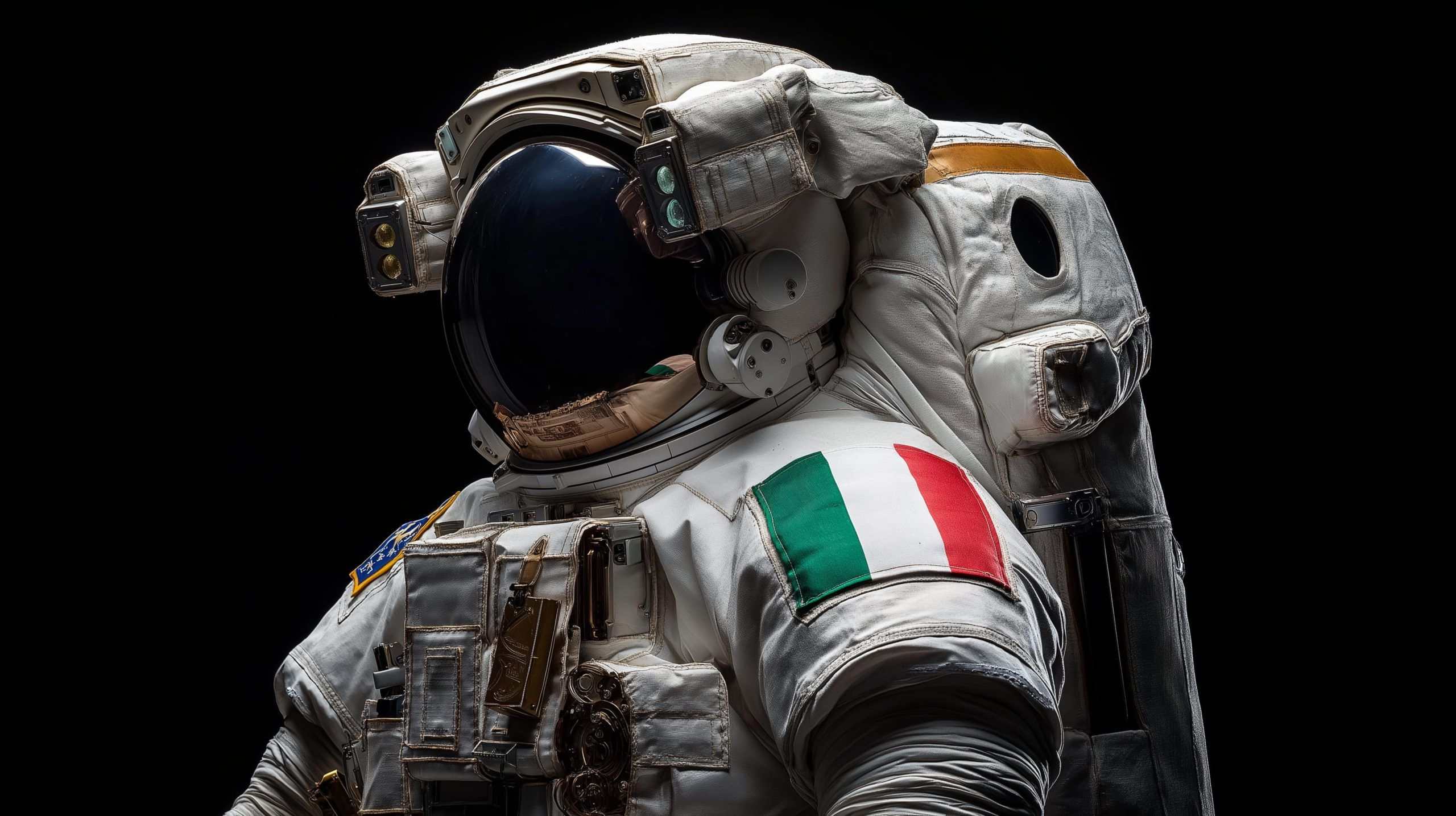
Italy’s Space Industry Skyrockets: Inside the Satellite Boom and Race to 2030

Italy’s Space Industry Skyrockets: Inside the Satellite Boom and Race to 2030

Italy’s engagement with space stretches back to the dawn of the Space Age. In the 1950s, visionaries like aerospace engineer Luigi Broglio and physicist Edoardo Amaldi laid the groundwork for Italy’s space program Wetheitalians Wetheitalians. Their efforts led to the San Marco project, a collaboration with NASA that saw Italy design and build its own satellites while the U.S. provided launch vehicles. On December 15, 1964, Italy’s first satellite, San Marco 1, was successfully launched – making Italy the fifth country to put a satellite in orbit Wetheitalians Wikipedia. This early achievement is commemorated in Italy every year as the National Space Day on December 16th Wetheitalians. Throughout the 1960s and 1970s, Italy remained at the forefront of European space efforts. It was a founding member of the European Space Agency in 1975, partnering with other European nations to pool resources for space science, applications, and launch vehicles. Italy contributed to pioneering European rockets and satellites during this era. In 1988, the Italian government created the Agenzia Spaziale Italiana – the Italian Space Agency – to unify and coordinate all national space activities Wikipedia. ASI’s formation professionalized Italy’s space program and allowed Italy to take on larger roles in international
Britain’s New Space Race: Inside the UK’s Booming Space & Satellite Industry

Britain’s New Space Race: Inside the UK’s Booming Space & Satellite Industry

The UK has a long if understated space heritage, with several pivotal milestones over the past decades: In summary, the UK space sector’s history is one of early scientific achievements, a long period of reliance on partners, and a recent renaissance focusing on commercialization. From building satellites that connect the world to laying the groundwork for launching them, Britain’s space journey has set the stage for a new chapter of growth.
8 September 2025
Cable Cuts, Crackdowns & Satellite Surges: Global Internet Access Upheavals (7–8 Sept 2025)

Cable Cuts, Crackdowns & Satellite Surges: Global Internet Access Upheavals (7–8 Sept 2025)

A sudden severing of multiple undersea internet cables in the Red Sea over the weekend sent shockwaves through global connectivity. On September 7, monitoring groups reported that two major subsea fiber systems were cut near Jeddah, Saudi Arabia, dramatically slowing or disrupting internet service in countries including India, Pakistan, Kuwait, Saudi Arabia, and the UAE beaumontenterprise.com beaumontenterprise.com. NetBlocks called it “a series of subsea cable outages” that degraded connectivity across the region beaumontenterprise.com. Technology giant Microsoft alerted Azure cloud customers to expect increased latency for traffic routed via the Middle East due to “multiple undersea fiber cuts in the Red Sea,” although it quickly rerouted data along alternate paths reuters.com. Etisalat and Du – the UAE’s largest ISPs – saw nationwide slowdowns, with users complaining of sluggish speeds reuters.com beaumontenterprise.com. In Kuwait, authorities confirmed the FALCON cable was also severed beaumontenterprise.com. Saudi officials offered no comment on the incident, which they did not publicly acknowledge beaumontenterprise.com.
From Sputnik to Sanctions: Inside Russia’s Space & Satellite Industry 2025

From Sputnik to Sanctions: Inside Russia’s Space & Satellite Industry 2025

Russia’s space enterprise is anchored in the Soviet Union’s legendary space program, which set many historic milestones. The USSR built a formidable space infrastructure – at its peak in 1989, space spending was 1.5% of Soviet GDP en.wikipedia.org – achieving the first satellite, first human in orbit, first spacewalk, and launching robust programs like Soyuz crewed spacecraft and Salyut/Mir space stations. Soviet design bureaus and manufacturing plants sprang up across the union, forming the backbone of today’s industry. The collapse of the USSR in 1991, however, thrust this sprawling space-industrial complex into an existential crisis. Russia inherited most Soviet space assets. Funding plummeted in the 1990s “crisis years.” By 1998, Russia’s civil space budget was just 20% of late-Soviet levels en.wikipedia.org, causing an 80% reduction in spending and workforce contraction from ~400,000 Soviet-era employees to ~300,000 by mid-1990s en.wikipedia.org. Major projects were canceled – notably the Buran space shuttle in 1993, immediately idling 30% of the industry’s workers en.wikipedia.org. To survive, many Russian space companies turned abroad: they marketed launch services and technology internationally, forged joint ventures, and sold satellite hardware to foreign partners en.wikipedia.org. Throughout the 1990s, no centralized space agency existed in the Soviet system – individual design
6 September 2025
Starlink Blitz, Spy Satellite Surprises & Space Station Boost: Space News Roundup (Sept 5–6, 2025)

Starlink Blitz, Spy Satellite Surprises & Space Station Boost: Space News Roundup (Sept 5–6, 2025)

NASA kept busy on multiple fronts. On Sept. 5, NASA announced it will broadcast the launch and docking of Roscosmos’s Progress 93 cargo ship next week, as the Russian freighter carries ~3 tons of food, fuel and supplies to the International Space Station nasa.gov. This Progress launch and its six-month stay at the ISS come as NASA also tests new ways to maintain the station’s orbit. Notably, a SpaceX Dragon CRS-33 cargo vehicle performed the first-ever reboost of the ISS using its own engines on Sept. 3. Ground controllers fired Dragon’s new thruster kit for over 5 minutes, raising the ISS altitude by roughly a mile ts2.tech space.com. This successful test inaugurates a new capability for station-keeping – one that NASA plans to use regularly this fall – and reduces dependence on Russia’s Progress for routine boosts ts2.tech. “The test comes as NASA seeks alternatives to rely less on Russia’s vehicles for station-keeping,” agency officials noted ts2.tech. The station’s Expedition 73 crew continued science operations ranging from bone-loss studies to cardio experiments space.com. They also engaged in STEM outreach, answering questions from students in New York via a live Earth-to-space Q&A on Sept. 5 – with JAXA astronaut Kimiya Yui
6 September 2025
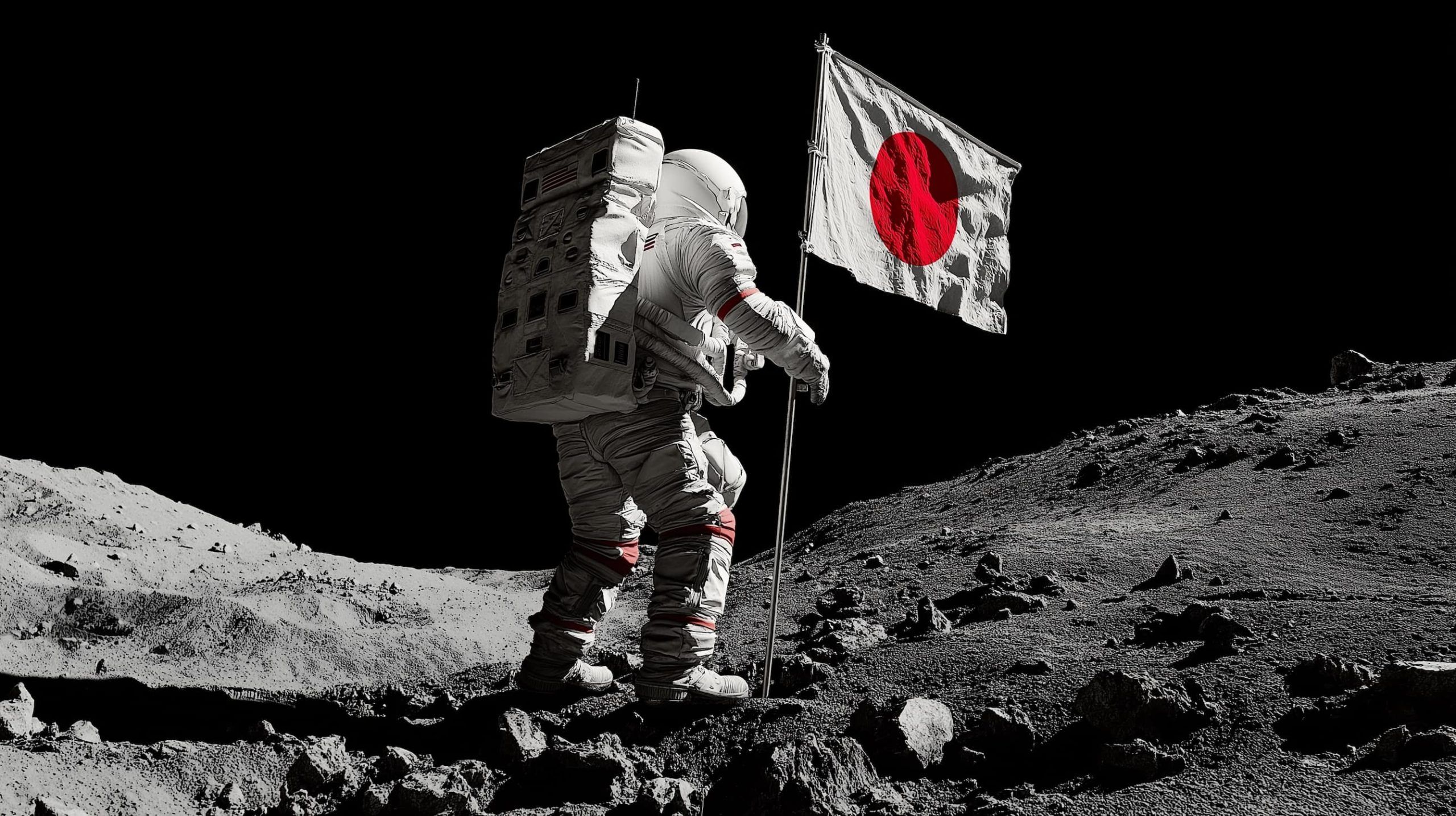
Japan’s Space and Satellite Industry: A Comprehensive 2025 Market Report

Japan’s Space and Satellite Industry: A Comprehensive 2025 Market Report

Japan’s journey in space began in the 1950s and has grown from university research rockets to a major national endeavor. In 1955, Professor Hideo Itokawa’s team launched the first pencil rocket as a rudimentary experiment en.wikipedia.org. By the 1960s, Japan developed larger sounding rockets leading up to its first satellite launch. In February 1970, Japan successfully launched the Ohsumi satellite on a Lambda-4S rocket, making Japan the world’s fourth spacefaring nation to launch an indigenous satellite into orbit u-tokyo.ac.jp. Throughout the 1970s and 1980s, Japan built out its launch sites at Tanegashima and Uchinoura, and developed new rockets often with technology licensed or adapted from the U.S. nasaspaceflight.com. In the 1990s, Japan progressed to the H-II rocket – its first fully home-grown liquid-fuel launcher nasaspaceflight.com. The H-II’s early flights faced some costly failures, exposing the need for greater reliability and cost-efficiency nasaspaceflight.com. This led to the H-IIA rocket which became a workhorse with a 98% success rate over 50 launches nasaspaceflight.com. Notable scientific missions in this era included Kaguya, Hayabusa, and Akatsuki. Japan also sent its first astronauts into space: beginning with payload specialist Toyohiro Akiyama in 1990 and multiple JAXA astronauts on NASA Space Shuttles through the 1990s–2000s. In
Starlink Blitz, Spy Sat Scare & Mission Milestones: Space News Roundup (Sept 4–5, 2025)

Starlink Blitz, Spy Sat Scare & Mission Milestones: Space News Roundup (Sept 4–5, 2025)

NASA & SpaceX – New Boosts and Milestones: In a notable first for ISS operations, SpaceX’s CRS-33 Dragon cargo ship successfully executed a reboost of the International Space Station on Sept. 3 nasa.gov. Firing new thrusters in its trunk for over five minutes, the uncrewed Dragon raised the ISS orbit by about a mile – inaugurating a capability that will be used periodically through fall 2025 to help maintain the station’s altitude nasa.gov nasa.gov. This test comes as NASA seeks alternatives to rely less on Russia’s Progress vehicles for station-keeping. Meanwhile, SpaceX is poised for a landmark booster recovery: the company’s next Starlink mission is set to achieve the 500th landing of a Falcon first stage if successful spaceflightnow.com. The Starlink 10-57 launch from Kennedy Space Center, scheduled for early Sept. 5, will mark SpaceX’s 111th flight of the year – keeping the company on pace for a record ~170 launches in 2025 spaceflightnow.com. The veteran Falcon 9 booster flying this mission is on its 27th reuse, underscoring SpaceX’s aggressive turnaround and reusability practices spaceflightnow.com. Weather was 70% favorable for the sunrise liftoff, with Space Force meteorologists monitoring coastal showers but expecting no organized storms during the launch window spaceflightnow.com.
Starlink Blitz, Spy Satellite Surprise & Moon Race Showdown – Space News Roundup (Sept. 3–4, 2025)

Starlink Blitz, Spy Satellite Surprise & Moon Race Showdown – Space News Roundup (Sept. 3–4, 2025)

On Sept. 3, NASA’s acting Administrator Sean Duffy announced a significant leadership move, naming longtime engineer Amit Kshatriya as the agency’s new Associate Administrator nasa.gov. This top civil-service post puts Kshatriya – previously head of NASA’s Moon-to-Mars architecture team – in charge of driving Artemis and deep-space exploration goals. The timing coincided with a strong show of support from the U.S. Senate for Project Artemis, amid worries about competition with China. In a Sept. 3 hearing pointedly titled “There’s a Bad Moon on the Rise: Why Congress and NASA Must Thwart China in the Space Race,” senators from both parties issued a “clarion call to get Americans back on the Moon and establish a sustainable presence before China puts taikonauts there.” They stressed staying the course on Artemis as currently planned spacepolicyonline.com, rejecting any drastic program cuts. Notably, this consensus clashes with the Trump Administration’s budget proposal to curtail Artemis after the first lunar landing – a plan lawmakers signaled they will fight to reverse spacepolicyonline.com spacepolicyonline.com. Experts at the hearing underscored the high stakes. Mike Gold, a former NASA official now with Redwire, warned that “the nation that controls the Moon will ultimately control the Earth, and we stand
4 September 2025
From Satellite Struggles to Starlink: Tuvalu’s Internet Revolution

From Satellite Struggles to Starlink: Tuvalu’s Internet Revolution

Tuvalu is a Polynesian microstate of about 10,000 people spread across nine coral atolls. Until recently, its internet infrastructure consisted solely of satellite links – there were no subsea fiber cables, and even regional microwave links to neighbors were absent due to the vast ocean distances. All international and inter-island data traveled via satellite, terminating at earth stations in Funafuti and smaller VSAT terminals on outer islands en.wikipedia.org prepaid-data-sim-card.fandom.com. This satellite dependency made Tuvalu’s internet expensive, bandwidth-constrained, and prone to outages. For most of the 2010s, Tuvalu’s connectivity was extremely limited. In 2012, the total bandwidth for the entire country was only 512 kbps uplink and 1.5 Mbps downlink en.wikipedia.org – essentially a single slow broadband connection shared by everyone. Even by 2016, total capacity was under 80 Mbps prepaid-data-sim-card.fandom.com. This bottleneck meant that basic web browsing was sluggish and data-intensive activities were nearly impossible. Internet access was described as high-cost and limited, contributing to Tuvalu’s status as “one of the least connected countries in the world” as of 2019scoop.co.nz.
Space Industry Blastoff: Top Satellite & Space Developments (Sept. 2–3, 2025)

Space Industry Blastoff: Top Satellite & Space Developments (Sept. 2–3, 2025)

Starlink Surge: SpaceX kicked off September with back-to-back Starlink launches. On Sept. 2 at 8:51 p.m. Pacific, a Falcon 9 lifted off from Vandenberg SFB in California carrying 24 Starlink internet satellites to polar orbit spaceflightnow.com space.com. Notably, this mission flew a brand-new first stage booster, a rarity for SpaceX’s now highly reflown fleet space.com. The booster – only the 7th new Falcon 9 introduced in over 100 launches this year spaceflightnow.com – successfully touched down on the Of Course I Still Love You droneship ~8½ minutes after liftoff spaceflightnow.com. “Reusability has fueled the growth for human spaceflight, for commercial launch and for government launch. And it’s also made a more reliable system,” SpaceX VP Kiko Dontchev said recently, adding “Falcon 9…has become the most reliable rocket in the history of the world” spaceflightnow.com spaceflightnow.com. The Vandenberg launch was SpaceX’s 109th Falcon 9 flight of 2025 and marked the 498th overall booster landing, underscoring that reliability and cadence spaceflightnow.com spaceflightnow.com. Just hours later, SpaceX launched another Falcon 9 from Florida’s Cape Canaveral at 7:56 a.m. EDT on Sept. 3, lofting 28 Starlink V2 Mini satellites into low Earth orbit spaceflightnow.com spaceflightnow.com. This mission featured booster B1083 on its 14th reuse,
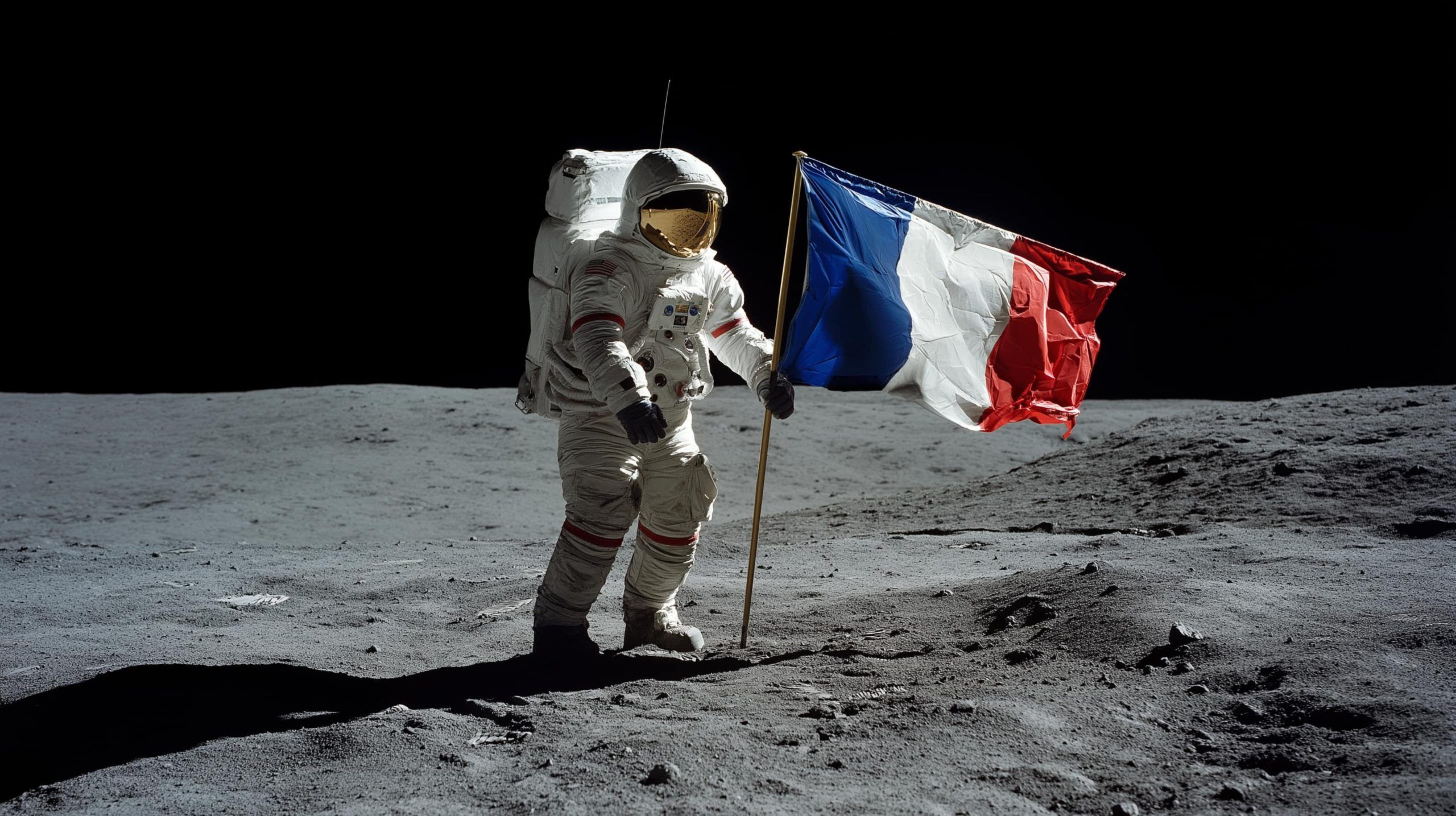
Rocketing Ambitions: Inside France’s Booming Space & Satellite Industry in 2025

Rocketing Ambitions: Inside France’s Booming Space & Satellite Industry in 2025

France’s space journey began in the Cold War era with a quest for strategic independence. General de Gaulle established CNES in 1961 to make France an autonomous space power cnes.fr. This goal was dramatically realized on 26 November 1965, when France’s Diamant rocket launched the Astérix satellite into orbit from Algerian soil – making France the third country to launch its own satellite cnes.fr cnes.fr. This early success kick-started a proud legacy of French “firsts,” including the opening of the Guiana Space Centre in Kourou in 1965 and the development of French satellite series like FR-1/FR-2 and scientific payloads through the 1960s. By the 1970s, France championed European collaboration to pool resources and talent. In 1973, CNES led the push for a European launcher – the Ariane program – to guarantee independent access to space cnes.fr. France was instrumental in forming the European Space Agency in 1975 and emerged as its top contributor and strategic leader cnes.fr cnes.fr. On 24 December 1979, the Ariane 1 rocket thundered off from Kourou on its maiden flight, heralding Europe’s entry into the commercial launch market cnes.fr. Arianespace, a French-led consortium, was created in 1980 to commercialize Ariane launches – a visionary move that
Tech Turbulence: Big Antitrust Wins, Spy Satellites & Cyber Scares – Sept 2–3, 2025 Roundup

Tech Turbulence: Big Antitrust Wins, Spy Satellites & Cyber Scares – Sept 2–3, 2025 Roundup

US-China Tech Tensions: In a blow to Beijing’s chip ambitions, the U.S. Commerce Department revoked the “validated end-user” fast-track export status that had allowed Taiwan’s TSMC to import advanced American chipmaking tools into China without a license reuters.com. The privilege will end on Dec. 31, meaning TSMC’s Nanjing fab will need case-by-case export licenses for U.S. equipment thereafter reuters.com. The fab produces 16 nm “mature node” semiconductors – not cutting-edge chips – contributing only ~2.4% of TSMC’s revenue reuters.com. TSMC said it’s “evaluating the situation” and working with U.S. officials to ensure “uninterrupted operations” in Nanjing reuters.com. While South Korean rivals’ shares dipped on their own export curbs, TSMC’s stock held steady reuters.com. Analysts noted the direct impact on TSMC is minimal, but U.S. equipment suppliers like KLA and Applied Materials could see reduced sales to China reuters.com. This latest move – driven by the Trump administration’s push to ensure China “not benefit too much from advanced American technology” reuters.com – tightens the semiconductor export chokehold that began in 2022. Toyota Goes Electric in Europe: Long a hybrid champion, Toyota took a significant EV step by announcing its first fully battery-electric vehicle to be built in Europe reuters.com. The Japanese
Internet Access Upheaval: Censorship Crackdowns, Satellite Booms & Shutdowns Rock the Globe (Aug 31 – Sep 1, 2025)

Internet Access Upheaval: Censorship Crackdowns, Satellite Booms & Shutdowns Rock the Globe (Aug 31 – Sep 1, 2025)

Russia doubles down on censorship: In a dramatic escalation of internet control, Russia implemented new laws on September 1 targeting both communication platforms and online content. The Kremlin is forcing a switch from WhatsApp and Telegram to a domestic messaging app called “Max,” which was launched in June by state-controlled tech firm VK thebarentsobserver.com thebarentsobserver.com. All phones sold in Russia from Sept 1 onward will come with “Max” pre-installed as the default, and officials are pressuring businesses and even universities to adopt it. At the same time, merely viewing or searching for banned information online is now criminalized – a stark departure from prior rules that only punished posting or distributing “extremist” content thebarentsobserver.com thebarentsobserver.com. The government’s ever-growing blacklist of “extremist materials” has no clear boundaries, creating an atmosphere of uncertainty and fear thebarentsobserver.com thebarentsobserver.com. “The most shocking part is that mere contact with banned content is illegal: just looking at it is a crime,” noted Ekaterina Shul’man, a Russian political scientist, who pointed out the move blatantly contradicts Russia’s own constitution guaranteeing free information access thebarentsobserver.com. Analysts warn these measures will spur extreme self-censorship, as citizens become afraid to even browse the web or use VPNs for fear of
1 September 2025
1 2 3 4 7

Stock Market Today

  • Cramer Sees Moderna's Pipeline Opening Up Beyond Covid
    July 1, 2026, 7:50 PM EDT. CNBC's Jim Cramer said on Mad Money that Moderna now looks different than during the Covid rush, with a cancer pipeline and vaccines reaching outside infectious diseases. He sees many programs still years out but calls for buying pullbacks, pointing to Moderna's track to profits and new data from late-stage cancer trials-like the melanoma combo trial with Merck's Keytruda. Moderna shares have jumped almost 150% this year but still trade under pandemic highs. Cramer also mentions fresh regulatory wins, including FDA advisory backing for its flu shot and a European nod for its combined Covid-flu vaccine.
Go toTop