Today: 1 March 2026
Browse Category

Space 8 October 2025 - 15 November 2025

SpaceX launches 29 Starlink satellites from Florida; targets another 28 from Vandenberg today (Nov. 6, 2025)

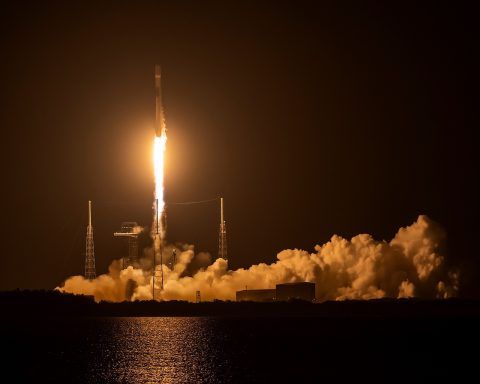
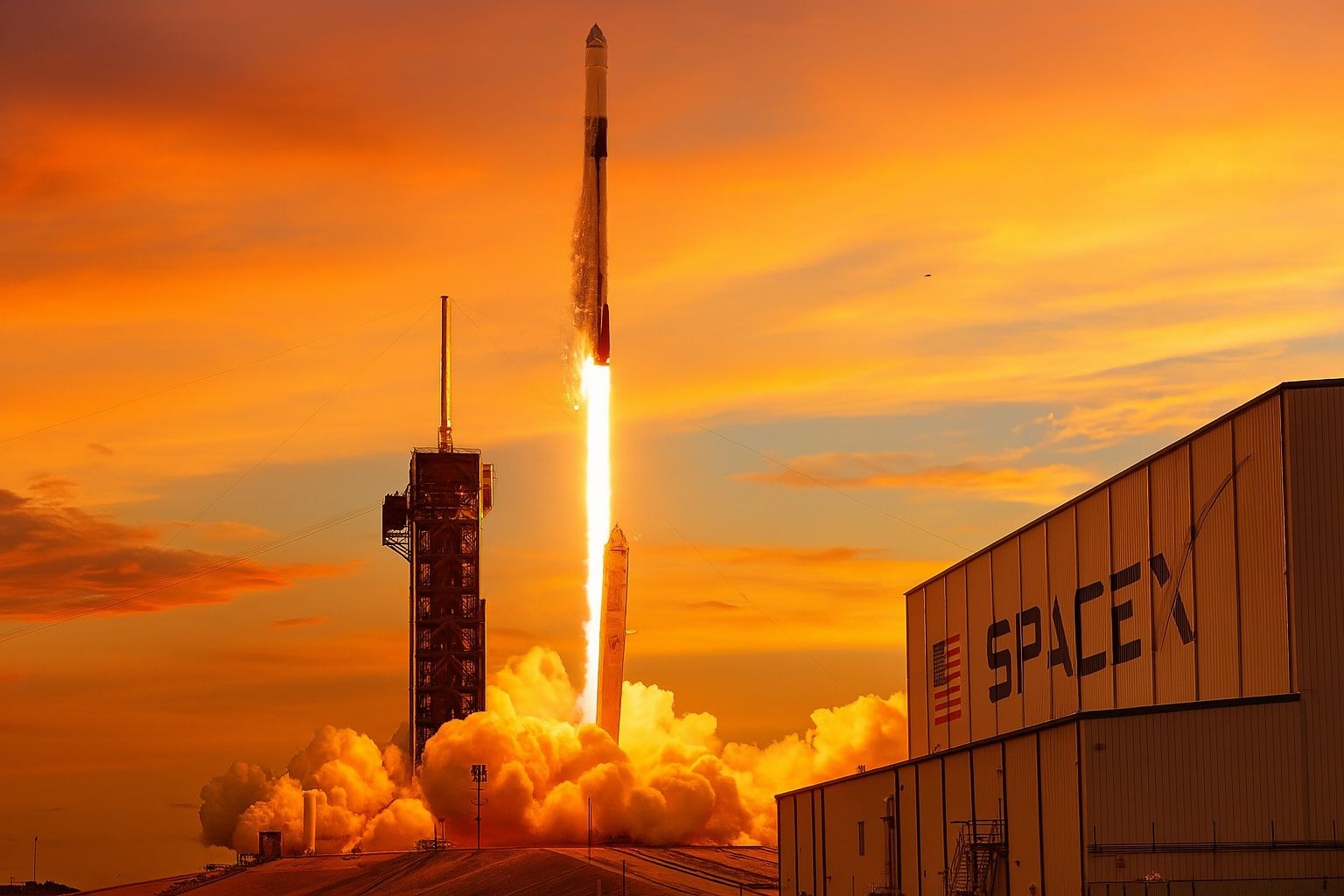
Cape Canaveral Rocket Launch Today (Nov. 15, 2025): SpaceX Falcon 9 Sends Starlink 6‑85 to Orbit at 1:44 a.m. ET; Booster Lands on ‘JRTI’

SpaceX launched 29 Starlink satellites aboard a Falcon 9 from Cape Canaveral at 1:44 a.m. ET Saturday, November 15, 2025. The first stage, booster B1078, landed on the droneship Just Read the Instructions after its 24th flight. The launch followed another Falcon 9 mission from nearby Kennedy Space Center just 3 hours 35 minutes earlier. Both flights carried 29 satellites each.
15 November 2025
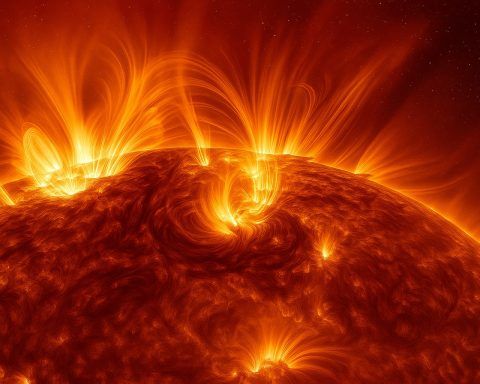
Severe G4 Solar Storm Lights Up Skies: Northern Lights Visible Across U.S., Southern Lights in Australia — Where to Watch Tonight (Nov. 12, 2025)

Severe G4 Solar Storm Lights Up Skies: Northern Lights Visible Across U.S., Southern Lights in Australia — Where to Watch Tonight (Nov. 12, 2025)

A G4 “severe” geomagnetic storm hit Earth at 01:20 UTC on Nov. 12, NOAA confirmed, triggering widespread auroras across the U.S. and Australia. The storm, linked to an X5.1 solar flare and multiple CMEs, is expected to persist into tonight. Possible impacts include degraded GPS, radio disruptions, and power grid issues. Aurora sightings stretched from the Mid-Atlantic to the Upper Midwest and as far north as Sydney.
12 November 2025
SpaceX launches 29 Starlink satellites from Florida; targets another 28 from Vandenberg today (Nov. 6, 2025)

SpaceX Launches 29 Starlink Satellites on Falcon 9, Breaking Florida’s Annual Launch Record — Nov. 11, 2025

SpaceX launched 29 Starlink satellites from Cape Canaveral at 10:21 p.m. EST on Nov. 10, marking Florida’s 94th orbital-class launch of 2025 and breaking last year’s record. The Falcon 9 booster landed on the “Just Read the Instructions” droneship, its 141st touchdown there. The flight was delayed to comply with FAA restrictions during a U.S. government shutdown. Weather was 60% favorable at liftoff.
11 November 2025
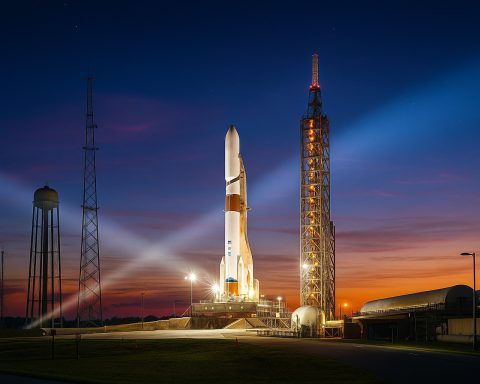
Blue Origin’s New Glenn Set to Launch NASA’s ESCAPADE to Mars Today (Nov. 9): Liftoff at 2:45 p.m. ET — How to Watch, Weather, Flight Plan & What’s Onboard

Blue Origin’s New Glenn Set to Launch NASA’s ESCAPADE to Mars Today (Nov. 9): Liftoff at 2:45 p.m. ET — How to Watch, Weather, Flight Plan & What’s Onboard

Blue Origin’s New Glenn rocket is set for its second orbital launch at 2:45 p.m. ET from Cape Canaveral, carrying NASA’s twin ESCAPADE Mars probes and a Viasat communications demo. The 88-minute window opens with a 65% chance of favorable weather. Blue Origin will attempt to recover the booster on the Jacklyn drone ship in the Atlantic. ESCAPADE aims to reach Mars orbit in 2027 after a year-long detour.
9 November 2025
SpaceX Wins $81.6 Million U.S. Space Force Deal to Launch WSF-M2 Weather Satellite in 2027

SpaceX Starlink update for Nov. 7, 2025: 29‑satellite Falcon 9 lined up at Kennedy as FAA imposes overnight launch window; California mission lofts 28 satellites

SpaceX plans to launch 29 Starlink V2 Mini satellites from Kennedy Space Center at 7:10 a.m. EST Saturday, using Falcon 9 booster B1069. The first stage will target a droneship landing off South Carolina. The FAA has ordered all U.S. commercial space launches to occur overnight only, starting Nov. 10, due to air traffic controller staffing shortages. Earlier this week, SpaceX flew Starlink missions from both Florida and California.
8 November 2025
Alien Probe or Cosmic Relic? Interstellar Comet 3I/ATLAS Baffles Scientists (updated 27.10.2025)

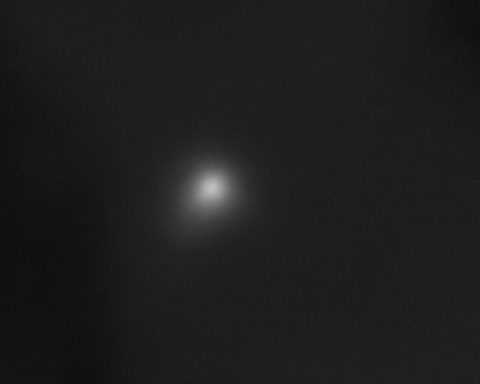
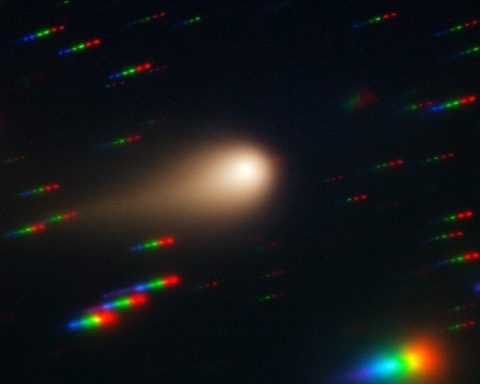
NASA’s Interstellar Visitor 3I/ATLAS on Nov. 5: Fresh Post‑Sun Images, JWST Chemistry—and How to See It Next

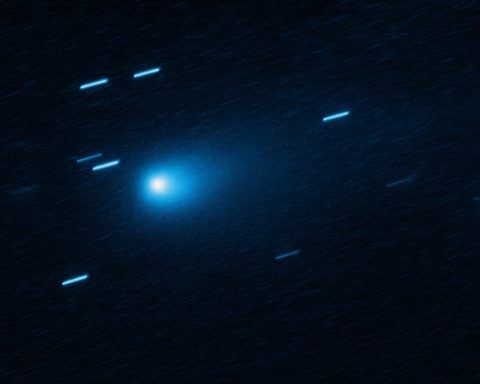
The Virtual Telescope Project released a new image of interstellar comet 3I/ATLAS on Nov. 5 as it reappeared in pre-dawn skies after solar conjunction. NASA says 3I/ATLAS is not a threat to Earth, with its closest approach set for December 2025 at 1.8 AU. Recent findings show a CO₂-rich coma, a blue color shift, and active water outgassing detected at a large distance from the Sun.
5 November 2025
Record-Setting Black Hole Flash Dazzles Astronomers: “One-In-A-Million” Flare Blasts Light = 10 Trillion Suns

Record-Setting Black Hole Flash Dazzles Astronomers: “One-In-A-Million” Flare Blasts Light = 10 Trillion Suns

Astronomers observed the brightest black hole flare ever recorded, outshining 10 trillion Suns. The event, caused by a supermassive black hole shredding a giant star, occurred in a galaxy about 10–11 billion light-years away. Detected in 2018 by Caltech’s Zwicky Transient Facility, the flare peaked over months and is now fading. Findings led by Matthew Graham were published Nov. 4, 2025, in Nature Astronomy.
Interstellar Visitor 3I/ATLAS Just Turned Blue and “Accelerated”—Here’s What Really Happened This Week

Interstellar Visitor 3I/ATLAS Just Turned Blue and “Accelerated”—Here’s What Really Happened This Week

3I/ATLAS showed a sharp brightening near perihelion, with brightness scaling as r^‑7.5, according to new analyses of solar observatory data. Space-based photometry found the object appeared distinctly bluer than the Sun, indicating gas emission dominated. First post-perihelion optical images were taken Oct. 31–Nov. 2 by Qicheng Zhang. Perihelion occurred Oct. 29 around 11:35 UTC, JPL reported.
5 November 2025
India’s “Bahubali” Rocket to Launch 4.4-Ton Heaviest-Ever Military Satellite – Countdown to Nov 2 Blastoff

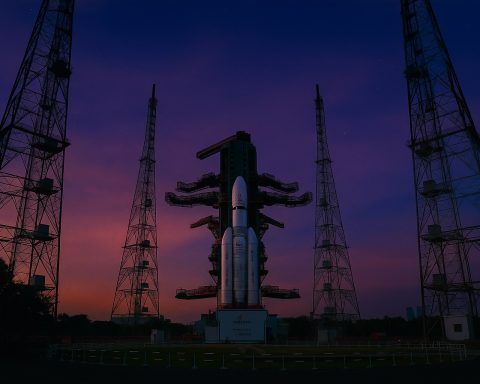
India’s “Bahubali” Rocket to Launch 4.4-Ton Heaviest-Ever Military Satellite – Countdown to Nov 2 Blastoff

India’s LVM3-M5 rocket is scheduled to launch the 4,400-kg CMS-03 (GSAT-7R) satellite for the Indian Navy at 5:26 PM IST on Nov. 2 from Sriharikota. CMS-03 will be the heaviest communications satellite sent to geostationary transfer orbit from India. The satellite will replace GSAT-7 and provide secure links across the Indian Ocean. ISRO reports all systems are ready and the countdown has begun.
2 November 2025
Breaking: NASA’s X-59 Quiet Supersonic Jet Takes Off – Travel Times Could Halve

NASA’s Quiet Supersonic X-59 Jet Makes Historic First Flight – Could Halve Air Travel Time

NASA’s X-59 QueSST experimental jet, built with Lockheed Martin, completed its first flight in California on Oct. 28, 2025. The aircraft’s design aims to reduce the sonic boom to a soft “thump,” allowing supersonic travel over land. U.S. regulators plan to use flight data to consider lifting the ban on civilian supersonic flights. Lockheed Martin’s stock traded near $487 following the milestone.
29 October 2025
Alien Probe or Cosmic Relic? Interstellar Comet 3I/ATLAS Baffles Scientists (updated 27.10.2025)

Harvard Scientist’s Halloween Warning: Comet 3I/ATLAS May Hide Alien Tech and Spark Market Chaos

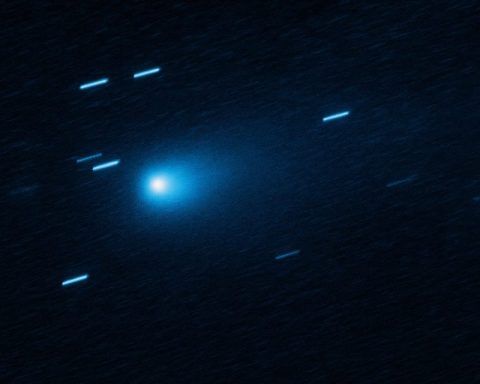
Comet 3I/ATLAS, discovered July 1, 2025, is only the third known interstellar object, racing through the Solar System at 58 km/s on a hyperbolic path. Hubble data suggest it may be the largest interstellar comet seen, with a nucleus possibly up to 46 km wide and unusual chemical signatures. Harvard’s Avi Loeb claims there’s a 40% chance it’s alien technology, citing its trajectory and odd composition. NASA says it poses no threat to Earth.
29 October 2025
Rare Interstellar Comet 3I/ATLAS – a 10-Billion-Year-Old Time Capsule – Flies Past Mars

Largest & Oldest Interstellar Comet Ever Seen Nears Sun – 3I/ATLAS Blasts Water ‘Like a Fire Hose’

Comet 3I/ATLAS, discovered July 1, 2025, is the third known interstellar object to enter our solar system. It will pass closest to the Sun on October 29–30, 2025, but will not be visible from Earth. The comet is traveling over 130,000 mph and may be up to 5–10 km wide, making it the largest interstellar visitor detected. Observations show strong water outgassing and a coma rich in carbon dioxide.
28 October 2025
Hungarian Astronaut Builds Super-Muscles with Futuristic EMSCULPT NEO Device

Hungarian Astronaut Builds Super-Muscles with Futuristic EMSCULPT NEO Device

Hungarian astronaut Tibor Kapu used BTL’s EMSCULPT NEO device in his ISS pre-flight training to combat muscle loss in microgravity. Tests showed muscle hypertrophy and improved fitness beyond traditional workouts. Kapu’s June 2025 Axiom Mission 4 flight marked Hungary’s first astronaut in 45 years. The mission included crew from the USA, India, Poland, and Hungary.
22 October 2025
NASA Confirms Earth’s “Secret Second Moon” – Tiny Asteroid 2025 PN7 Will Orbit with Us Until 2083

NASA Confirms Earth’s “Secret Second Moon” – Tiny Asteroid 2025 PN7 Will Orbit with Us Until 2083

Astronomers have identified asteroid 2025 PN7, a 19-meter object, co-orbiting Earth in a synchronized path since the 1960s. Discovered by Pan-STARRS on Aug. 2, 2025, PN7 will remain near Earth for about 60 more years but never comes closer than 4 million km. NASA confirms it is not a true moon but a “quasi-moon” orbiting the Sun. Scientists say it poses no collision risk.
22 October 2025
Sky on Fire Tonight: Giant ‘Solar Canyon’ Aims 800‑km/s Wind at Earth—Northern Lights Could Ignite 15 U.S. States & Test Global Tech

Northern Lights Alert: Major Solar Storm Could Ignite Stunning Aurora Displays Across North America

NOAA has issued a G2 geomagnetic storm watch for October 16, 2025, as multiple solar eruptions from sunspot AR4246 are set to hit Earth between October 15 and 17. Forecasters say auroras may be visible as far south as New York and Idaho, with up to 15 U.S. states in the viewing zone. The storm could cause power grid fluctuations and satellite signal issues. The Sun is near peak activity in its 11-year cycle.
16 October 2025
SHOCKING: Asteroid Discovered Just Days Ago Will Buzz Earth TODAY (Closer Than the Moon) – What Experts and Investors Are Saying

SHOCKING: Asteroid Discovered Just Days Ago Will Buzz Earth TODAY (Closer Than the Moon) – What Experts and Investors Are Saying

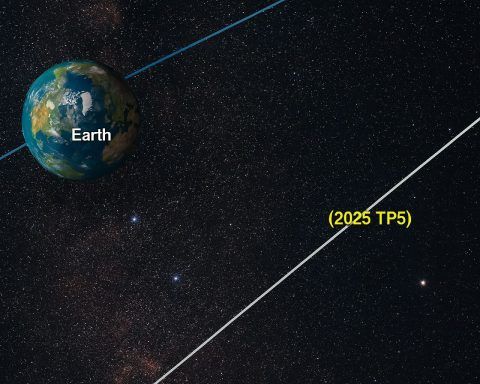
Asteroid 2025 TP5, discovered Oct. 13, will pass Earth at about 60,300 miles—one-quarter the Moon’s distance—at 20:09 UTC on Oct. 15. The 54-foot object poses no impact risk, according to NASA and ATLAS. It will pass within 74,600 miles of the Moon on Oct. 16. ATLAS detected the asteroid just two days before its closest approach.
SpaceX’s Starship Ignites Moon-Race Drama: Will NASA Beat China?

SpaceX’s Starship Ignites Moon-Race Drama: Will NASA Beat China?

SpaceX will launch Starship Flight 11 on Oct. 13, 2025, the last mission for its current Block 2 rocket. The test will trial new landing methods and a reinforced heat shield. NASA is relying on Starship for Artemis III, targeting a crewed lunar landing by 2027, while China aims for its own moonwalk by 2030. SpaceX’s Starlink now counts about 8,500 satellites and $15.5 billion in yearly revenue.
13 October 2025
Verizon Goes to Space: AST SpaceMobile Deal Signals End of Dead Zones – Stock Rockets on Breakthroughs

Verizon Goes to Space: AST SpaceMobile Deal Signals End of Dead Zones – Stock Rockets on Breakthroughs

Verizon and AST SpaceMobile signed a commercial deal to launch direct-to-phone satellite broadband across the U.S. starting in 2026. Recent tests connected standard 4G phones via AST’s satellite between Texas and New Jersey. AST’s stock surged over 200% in 2025, hitting record highs after the announcement. More than 50 global carriers have partnered with AST to offer similar services.
Go toTop