Browse Category

Technology Trends 5 August 2025 - 19 September 2025

The AI Titans of 2025: Inside the Power Index Rankings and Global Race for AI Dominance

The AI Titans of 2025: Inside the Power Index Rankings and Global Race for AI Dominance

Observer’s 2025 A.I. Power Index is a curated ranking of the 100 most influential individuals steering the future of artificial intelligence. According to the Observer, the list spans “CEOs, researchers, policymakers to investors shaping the future of artificial intelligence” Observer. Unlike lists that focus solely on company metrics or academic citations, the Power Index takes a broad view of “power” in AI, blending technical impact with business and policy influence. Selections were made by the Observer’s editorial team to capture those “shaping the future of AI” in 2025 Observer.
2025’s Robotic Dogs Unleashed: The Ultimate Cyberdog Showdown 🌐🤖🐕

2025’s Robotic Dogs Unleashed: The Ultimate Cyberdog Showdown 🌐🤖🐕

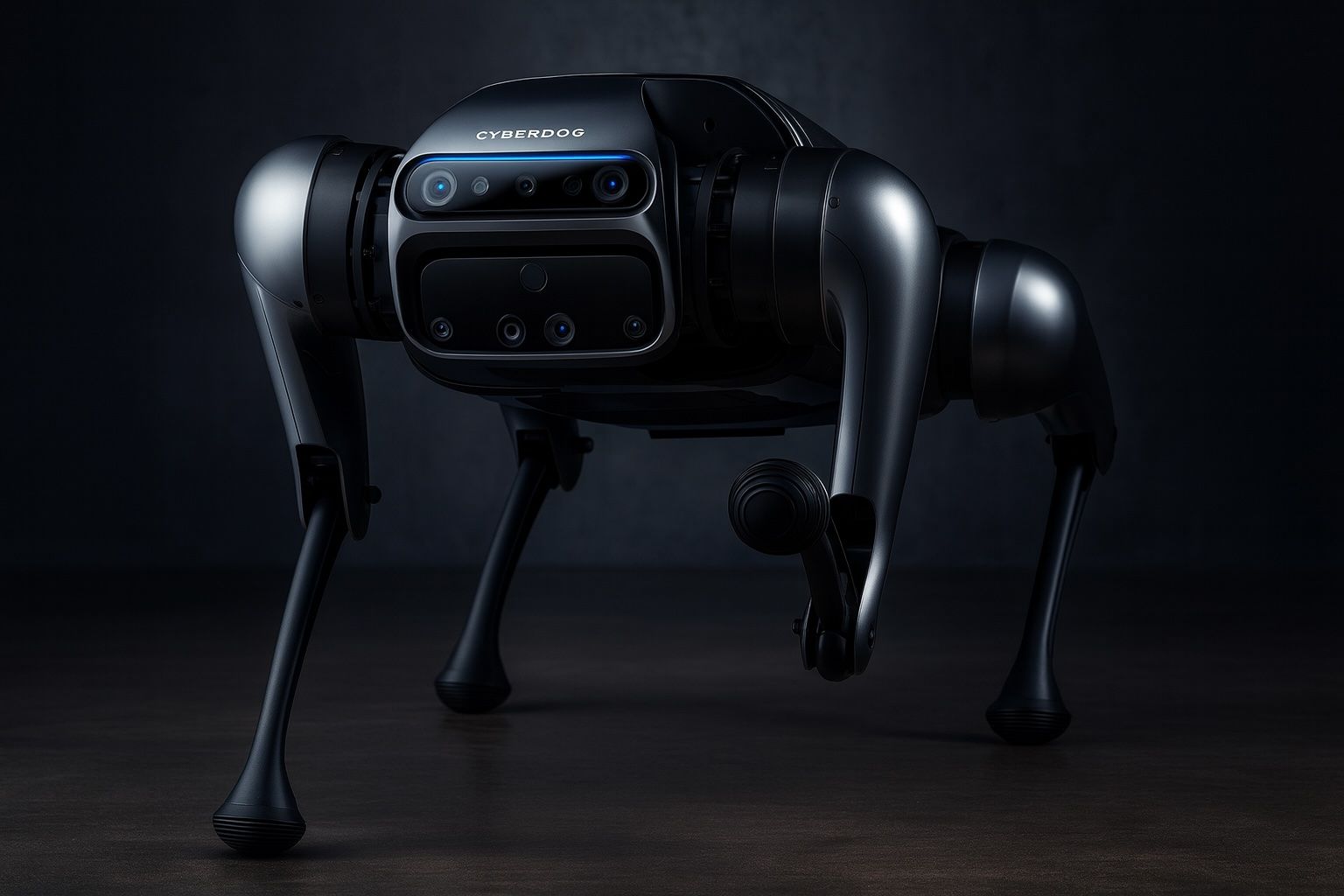
Cyberdogs are four-legged mobile robots that resemble mechanical canines. Unlike toy robots of the past, today’s cyberdogs leverage cutting-edge robotics and AI to move with animal-like agility and respond intelligently to their environment. They can trot, hop, and even dance, blurring the line between machine and pet. Crucially, these robots aren’t just gimmicks – they fulfill real roles:
Amazon’s Finance Teams Unleash AI for Complex Tasks – Transforming Corporate Finance

Amazon’s Finance Teams Unleash AI for Complex Tasks – Transforming Corporate Finance

In summary, Amazon’s bold embrace of AI in its finance function illustrates a watershed moment for corporate finance at large. Generative AI is rapidly moving from an experimental tool to a core part of how finance teams operate, enabling analysis and decision support at a speed and scale previously unimaginable. While early automation mostly took the drudgery out of accounting, today’s AI is tackling judgment-intensive tasks like interpreting complex regulations, explaining business drivers, and even drafting strategy documents. This has the potential to elevate the role of finance – shifting professionals toward more strategic, analytical work – but it also demands new skills and strong ethical guardrails. Amazon’s experience is echoed by peers like Google, Microsoft, JPMorgan, and Walmart, who are all investing heavily in AI to reinvent their finance and operations. The excitement is palpable: faster closes, smarter insights, and fewer tedious spreadsheets. But so are the challenges: ensuring accuracy, managing job transitions, and keeping AI on a leash so that human judgment remains in the loop.
Chrome’s Game-Changing AI Features: Smarter Tabs, Instant Writing & Custom Themes (vs. Edge & Safari)

Chrome’s Game-Changing AI Features: Smarter Tabs, Instant Writing & Custom Themes (vs. Edge & Safari)

Chrome’s “Help me write” feature in action: With a short prompt, the AI drafts a more detailed, polished message for the user to review or insert. Chrome’s writing assistant can pull in context – for example, highlighting key product features if you’re writing a review – to make suggestions more relevant 9to5google.com.
Meta’s New $799 Ray-Ban Smart Glasses Stun with AR Display & AI Features – Is This the Future of Wearables?

Meta’s New $799 Ray-Ban Smart Glasses Stun with AR Display & AI Features – Is This the Future of Wearables?

Meta Ray-Ban Display is the social media giant’s boldest foray yet into augmented reality eyewear. Unveiled by Mark Zuckerberg at the Meta Connect 2025 conference on Sept. 17, these smart glasses are the first from Meta to include a built-in heads-up display since Google Glass theguardian.com. From the outside, they resemble classic Ray-Ban Wayfarer sunglasses, a deliberate choice to avoid the cyborg look that doomed earlier smart glasses theguardian.com. But inside the right lens lies a tiny, high-resolution screen that can overlay digital info into your field of view – from text messages and turn-by-turn directions to real-time translations and even video calls theguardian.com roadtovr.com.
AI Chip Boom, Google’s New Tricks, and Hollywood’s Robot Wars – Today’s AI News Roundup

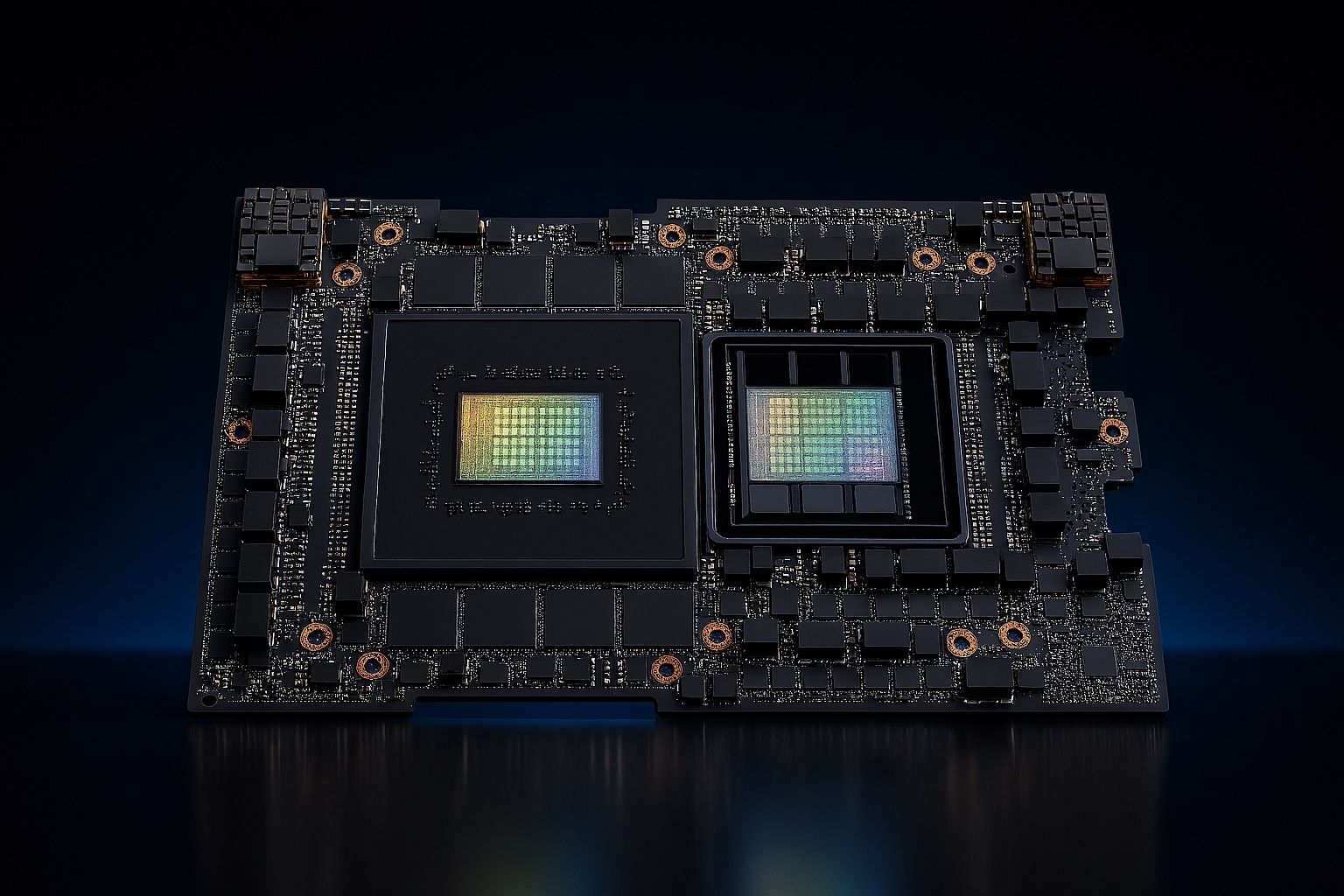
AI Chip Wars: USA vs China vs Taiwan – Inside the Trillion-Dollar Race to 2030

The race for dominance in AI chips – the specialized processors that power artificial intelligence – has become a core battleground in technology and geopolitics. In 2025, the United States, China, and Taiwan stand as key players, each with a different role: the U.S. is home to the leading chip designers, China is a massive and ambitious consumer and emerging producer, and Taiwan is the manufacturing epicenter. AI chips are not only critical for flashy applications like generative AI but also for a wave of smart devices and autonomous machines. As a result, nations are treating semiconductor leadership as a strategic priority akin to an arms race. The global AI chip market is already enormous and growing exponentially – valued around $50–$60 billion in the mid-2020s and projected to climb to several hundred billion by 2030 idtechex.com nextmsc.com. This report dives into the current landscape and future outlook of the AI chip market in the U.S., China, and Taiwan, covering market size, key companies, use cases, supply chains, government policies, tech trends, and the geopolitical forces at play.
Quantum Revolution 2025: Unhackable Encryption, Superspeed Computing & the 6G Quantum Future

Quantum Revolution 2025: Unhackable Encryption, Superspeed Computing & the 6G Quantum Future

In 2025, the race is on to rebuild our digital security before quantum computers can crack it. Modern encryption protocols like RSA and ECC – which protect everything from online banking to emails – could be rendered obsolete by a powerful quantum computer running Shor’s algorithm. Post-quantum cryptography refers to new cryptographic algorithms designed to resist quantum attacks while still running on conventional computers csrc.nist.gov csrc.nist.gov. After a 7-year global competition, the U.S. National Institute of Standards and Technology finalized its first PQC standards in August 2024 nist.gov. These include a lattice-based key exchange and digital signature schemes derived from the algorithms CRYSTALS-Kyber, CRYSTALS-Dilithium, and SPHINCS+ csrc.nist.gov csrc.nist.gov. In March 2025, NIST selected an additional code-based encryption algorithm to be standardized by 2027 as a backup method csrc.nist.gov.
AI Chaos or Revolution? Here’s What You Missed in the Last 48 Hours

AI Chaos or Revolution? Here’s What You Missed in the Last 48 Hours

Google’s Search Gets an AI Upgrade: Google turned its famous homepage Doodle into an AI-powered learning portal this week. For three days, Google’s Doodles highlighted commonly searched school topics – quadratic equations, photosynthesis, and DNA – and clicking on each launched the new “AI Mode” in Google Search blog.google. AI Mode is billed as Google’s most powerful search experience: users can ask follow-up questions about the Doodle topics and get in-depth explanations, complete with suggested links to dig deeper blog.google. Essentially, Google is weaving an educational chatbot into its search engine. The AI Mode tab is now live on desktop and the Google mobile app blog.google. This move comes as Google competes with Microsoft’s Bing Chat and OpenAI’s ChatGPT to integrate generative AI into everyday search. By using playful Doodles to drive students into AI Mode, Google is signaling how seamlessly it wants AI helpers to blend into mainstream search and learning.
Global Internet Access Shockwaves: Cable Cuts, Censorship & Broadband Booms (Sept 6–7, 2025)

Global Internet Access Shockwaves: Cable Cuts, Censorship & Broadband Booms (Sept 6–7, 2025)

On September 6, a sudden multi-cable break in the Red Sea sent shockwaves through global connectivity. Several undersea fiber-optic cables were simultaneously cut near Jeddah, Saudi Arabia beaumontenterprise.com. The impact was felt across continents – internet traffic between Europe/Asia and the Middle East slowed to a crawl, and countries like Pakistan and India experienced degraded service beaumontenterprise.com. Microsoft’s Azure cloud warned users of increased latency as data was rerouted onto backup paths beaumontenterprise.com. In the Gulf, UAE customers on du and Etisalat noticed sluggish speeds beaumontenterprise.com. While the exact cause remains unclear, the incident raised alarms about possible sabotage amid regional conflicts. Experts noted that even an errant ship anchor can sever these vital lines in shallow seas beaumontenterprise.com. Repairs are underway, but with multiple deep-sea cuts, full restoration could take weeks.
AI Invades the Ivory Tower: Universities Race to Ride the Artificial Intelligence Wave

AI Invades the Ivory Tower: Universities Race to Ride the Artificial Intelligence Wave

Not long ago, “artificial intelligence” in college was confined to niche computer science electives or research labs. Today, it’s going mainstream in higher education. Universities are rapidly rolling out AI majors, minors, and certificates to meet student demand and workforce needs. Carnegie Mellon University made headlines in 2018 as the first to offer a bachelor’s degree in Artificial Intelligence skywork.ai. Since then, dozens of universities have followed suit with new programs blending computer science, data science, and machine learning. MIT launched a cross-disciplinary major in “AI and Decision Making,” and Stanford’s Human-Centered AI initiative spans seven departments to ensure students learn to design AI that augments rather than replaces human capabilities skywork.ai. Even public university systems are scaling up AI education: the University of Florida, for example, hired >100 faculty and created over 200 AI-infused courses across all colleges as part of an “AI Across the Curriculum” push skywork.ai.
AI Layoff Wave of 2025: Salesforce’s 4,000-Job Cut Is Just the Beginning

AI Layoff Wave of 2025: Salesforce’s 4,000-Job Cut Is Just the Beginning

Tech companies have been on the forefront of integrating artificial intelligence – and now they’re seeing the workforce shake-ups that come with it. Salesforce made headlines this year when Marc Benioff confirmed the CRM giant cut about 4,000 customer support jobs after rolling out new AI-powered support bots foxbusiness.com foxbusiness.com. These “AI agents” can handle routine customer queries, generate content, and even manage websites automatically latimes.com. The efficiency gains were striking enough that Salesforce stopped backfilling many support roles. “With our AI agent platform, the number of support cases declined and we no longer need to actively backfill support engineer roles,” the company noted, adding that hundreds of employees were redeployed into other departments like sales and professional services foxbusiness.com. In essence, software now does work that thousands of humans did recently – a milestone Benioff has openly embraced. On a recent podcast he estimated AI is doing 30–50% of all work at Salesforce already foxbusiness.com. He touted this as a positive partnership between humans and machines: “Humans are not going away… we are working in partnership with these agents,” Benioff said, pushing back on doomsday notions of full automation latimes.com.
Global Satellite Industry Skyrockets: Inside the $400B Space Boom and the Race to $1+ Trillion by 2035

Global Satellite Industry Skyrockets: Inside the $400B Space Boom and the Race to $1+ Trillion by 2035

Just 10–15 years ago, the satellite industry was a relatively stable domain dominated by government programs and a handful of commercial players focused on geostationary communications satellites. In 2010 the global space economy was around $277 billion thespacereport.org, heavily driven by broadcasting and government-funded activities. Since then, the industry has nearly doubled in size, fueled by a wave of private-sector innovation often dubbed the “NewSpace” movement. Companies like SpaceX and Blue Origin – founded in 2002 and 2000 respectively – began to challenge traditional aerospace firms by the early 2010s, pioneering reusable rockets and drastically lowering launch costs. In parallel, the advent of standardized small satellites and microsatellite constellations enabled startups to enter space businesses with unprecedented speed and affordability.
AI Breakthroughs, Backlash & Big Moves – Global Roundup (Aug 23–24, 2025)

AI Breakthroughs, Backlash & Big Moves – Global Roundup (Aug 23–24, 2025)

Major advancements in generative AI made headlines. OpenAI ventured into biotechnology by using a specialized GPT-4 variant to design enhanced “Yamanaka factor” proteins for cell rejuvenation, yielding a 50× increase in stem-cell marker expression in lab tests ts2.tech. OpenAI touted this as proof that AI can “meaningfully accelerate life science innovation,” after engineered proteins achieved full pluripotency in cells across multiple trials ts2.tech. Meanwhile, Adobe launched Acrobat Studio – an AI-powered PDF platform combining Acrobat tools, Adobe Express, and AI assistants ts2.tech. The new “PDF Spaces” feature lets users upload up to 100 documents and chat with AI tutors that summarize content, answer questions, and generate insights ts2.tech. Adobe calls it the biggest evolution of PDF in decades, effectively transforming static files into dynamic knowledge hubs with role-specific AI assistants ts2.tech. “We’re reinventing PDF for modern work”, said Adobe VP Abhigyan Modi, calling Acrobat Studio “the place where your best work comes together” by uniting PDFs with generative AI news.adobe.com.
AI News Blast: Generative AI Surges, Chip Wars Intensify, and Robots Rise (21–22 August 2025)

AI News Blast: Generative AI Surges, Chip Wars Intensify, and Robots Rise (21–22 August 2025)

OpenAI’s Global Push: ChatGPT maker OpenAI announced it will open its first India office in New Delhi, aiming to deepen its reach in its second-largest user market reuters.com. The company has already set up a legal entity in India and begun hiring locally. India is critical for OpenAI’s growth – it just launched a ₹380/month ChatGPT plan there this week to attract more of the country’s nearly 1 billion internet users reuters.com. OpenAI faces headwinds too: Indian publishers have sued it for allegedly using their content to train AI without permission, though the company denies wrongdoing reuters.com. “Opening our first office and building a local team is an important first step in our commitment to make advanced AI more accessible across the country and to build AI for India, and with India,” CEO Sam Altman said in a statement reuters.com – underscoring a pledge to tailor AI to local needs. OpenAI will also confront stiff competition in India’s AI arena, as rivals like Google’s Gemini and startup Perplexity have rolled out advanced AI services free for many Indian users reuters.com to quickly grow their market share.
22 August 2025
Google Gemini’s August 2025 Revolution: AI Mode Goes Global, Cars Talk Back, and More

Google Gemini’s August 2025 Revolution: AI Mode Goes Global, Cars Talk Back, and More

Gemini Powers a Smarter Google Search: In August 2025, Google rolled out its AI Mode in Search to 180 countries, massively expanding beyond the initial U.S./UK/India rollout Techcrunch 9To5Google. This AI Mode – powered by Google’s Gemini AI model – lets users ask complex questions with follow-ups directly in search results Techcrunch. Google upgraded the underlying model to Gemini 2.5 in Search, promising faster, higher-quality AI overviews for tough queries like coding or math Blog Blog. Crucially, teens can now use AI overviews and sign-in is no longer required Blog, reflecting Google’s confidence in Gemini’s safety at scale. “Starting this week, Gemini 2.5 is coming to Search for both AI Mode and AI Overviews in the U.S.,” Google announced Blog, highlighting Gemini as the new brain of Search.
AI’s Wild 48 Hours: Bold $34B Bids, Breakthrough Bots & High-Stakes Showdowns (Aug 12–13, 2025)

AI’s Wild 48 Hours: Bold $34B Bids, Breakthrough Bots & High-Stakes Showdowns (Aug 12–13, 2025)

Over the past two days, the global AI arena has seen a whirlwind of breakthroughs, blockbuster deals, policy twists and market swings. From billion-dollar takeover bids and open-sourced supermodels to government crackdowns and ethical debates, here’s a comprehensive roundup of the major AI developments from August 12–13, 2025.
Google Gemini Live vs Amazon Alexa+ vs Siri’s Apple Intelligence: The Ultimate AI Assistant Showdown 2025

Google Gemini Live vs Amazon Alexa+ vs Siri’s Apple Intelligence: The Ultimate AI Assistant Showdown 2025

Voice assistants have entered a new era powered by generative AI. Google’s Gemini Live, Amazon’s Alexa+, and Apple’s Siri with Apple Intelligence are leading the charge with next-gen capabilities. Each promises more natural conversations, deeper integrations, and smarter performance than their predecessors. In this report, we compare the latest versions of these AI assistants – their features, underlying AI models, voice interface improvements, privacy safeguards, expert impressions, and what’s coming next – to see which assistant is ahead in 2025, and for which use cases.
Battle of the EV Charging Standards: Tesla’s NACS vs. CCS2 vs. CHAdeMO – Who Will Rule the Roads in 2025?

Battle of the EV Charging Standards: Tesla’s NACS vs. CCS2 vs. CHAdeMO – Who Will Rule the Roads in 2025?

Electric vehicle drivers have long faced a confusing battle of charging plugs – three major fast-charging standards with different shapes, speeds, and regional strongholds. As of August 2025, the landscape is rapidly shifting. Tesla’s once-proprietary NACS is gaining ground, the industry-backed CCS remains dominant in Europe and beyond, and Japan’s legacy CHAdeMO standard is fading. In this report, we compare these EV charging standards in technology, history, global adoption, policy, automaker support, and the latest developments. Which plug will ultimately charge ahead? Let’s dive in.