
NEW YORK, July 13, 2026, 15:10 EDT
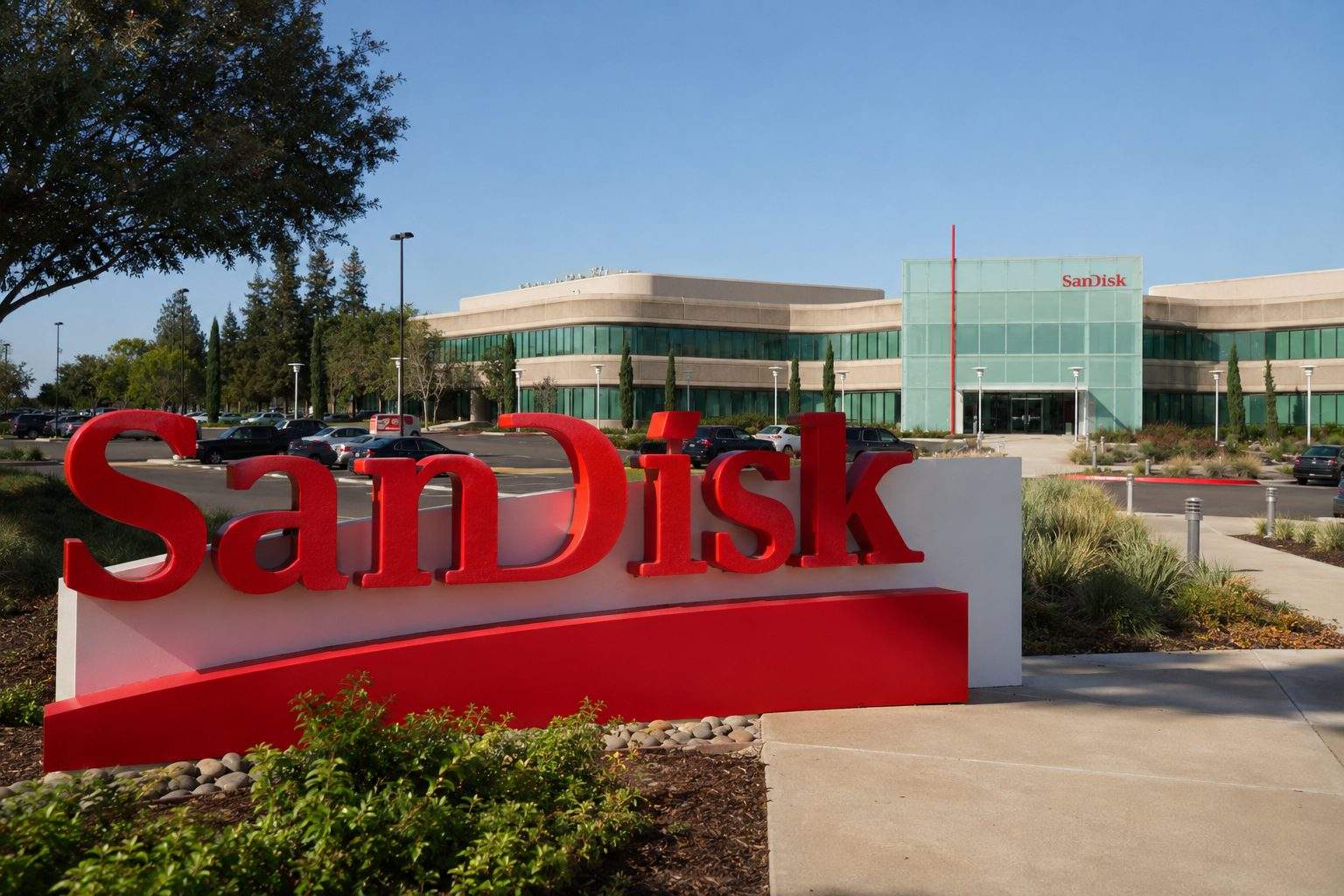
Sandisk NASDAQ:SNDK shares sank 13% to about $1,669 on Monday afternoon. That was the move even after Evercore ISI’s Amit Daryanani doubled his price target to $3,100 from $1,400. Daryanani said investors were “underappreciating the durability” of Sandisk’s earnings and free cash flow, cash left after capital spending, in the next few years. Barron’s
That timing data cuts into the bullish case. Sandisk’s April 3 filing listed $41.6 billion in remaining performance obligations, or RPO—contracted revenue still to be booked. Only about 15% of that, $6.24 billion, was due to show up as revenue in the next 12 months. The RPO figure leaves out some deals under a year. It highlights the gap between headline backlog and what Sandisk can deliver soon.
Chip stocks are under pressure as investors pull back ahead of earnings. The Philadelphia Semiconductor Index is down more than 11% since its June high. U.S. semiconductor funds lost about $11 billion in outflows for the week ended June 24, the biggest exit for any week this century, after nearly $12 billion came in during the prior two weeks. “We’ve never seen this kind of extreme earnings growth. But the question then becomes, how long can we expect this to continue,” Steve Sosnick, chief market analyst at Interactive Brokers Group NASDAQ:IBKR, said. Reuters
Sandisk, which makes NAND flash memory for solid-state drives, nearly doubled fiscal third-quarter revenue from the previous quarter, reaching $5.95 billion. Data-center sales soared 233% to $1.47 billion. Gross margin was 78.4%. For the current quarter, Sandisk expects revenue between $7.75 billion and $8.25 billion. The company also signed two more deals after the quarter ended. CEO David Goeckeler described the results as a “fundamental inflection point.” Sandisk
Sandisk said its new BiCS10 chip, now sampling, packs 59% more bit density than BiCS8 and has interface speeds up to 33% faster. Higher density may mean lower storage costs per unit. CTO Alper Ilkbahar described the design as aimed at “faster interface speeds, higher bit density and improved power efficiency.” In a Seeking Alpha note posted Sunday, Pythia Research compared those advances with the company’s long contracts as part of a bullish argument. The contributor is long Sandisk. Sandisk Corporation
Wall Street firms aren’t using the same profit year for their targets. Goldman Sachs Group NYSE:GS is basing its view on normalized calendar-2026 earnings of $110 a share with a 20x multiple. Evercore goes with fiscal-2027 earnings of $212.78 and roughly 15x. Bernstein’s base case stands at $243 for that same fiscal 2027 period. Evercore figures more than a third of fiscal-2027 bit output — memory capacity — will come from the new deals, at gross margins north of 80%.
| Firm | Earnings base | Target multiple | Price target | Upside from about $1,669 |
|---|---|---|---|---|
| Goldman Sachs | $110, calendar 2026 | 20.0x | $2,200 | 31.8% |
| Evercore ISI | $212.78, fiscal 2027 | 14.6x implied | $3,100 | 85.8% |
| Bernstein | $243, fiscal 2027 | 12.3x implied | $3,000 | 79.8% |
Sandisk at Monday’s close trades at about 15.2x Goldman’s 2026 earnings forecast and 7.8x Evercore’s 2027 estimate. The gap is the play here: investors aren’t paying more for far-out earnings, they’re betting profit comes in as planned and sticks, even if supply loosens up. SEC timing turns the spotlight to when revenue lands, not just the size of the deal.
Sandisk’s new business model agreements last between one and five years, with built-in price floors, caps, and terms to pay if buyers pull out, Goeckeler told Reuters in May. “We want consistent, predictable economics,” he said. Reuters
Sandisk trades at a higher trailing price/earnings ratio than Micron Technology NASDAQ:MU or Western Digital NASDAQ:WDC. On Monday it dropped more than twice as much as either of those peers, based on the latest quotes.
| Company | Monday move | Trailing P/E | Market value |
|---|---|---|---|
| Sandisk | dropped 12.9% | 58.0x | $261.8 billion |
| Micron Technology | fell 4.9% | 21.1x | $1.07 trillion |
| Western Digital | down 5.9% | 32.8x | $189.0 billion |
The contracts can’t kill the cycle, though. Sandisk itself names risks like fickle demand and prices, long-term execution issues, production delays, and supply snags. If data center storage spending hits a slowdown or NAND supply grows too fast, supply not locked into deals could get priced down and today’s margin gains might fade.
Sandisk is set to report its fiscal fourth-quarter and full-year results on August 5, with an investor day scheduled for August 13. Investors will be looking for the latest RPO balance, details on the share of 2027 output under contract, and a timeline for revenue recognition from the two latest deals. Just beating earnings may not be enough to answer questions about how long demand will last.
Related articles: NASDAQ:SNDK