Search result

AZERBAIJAN

State of Internet Access in Azerbaijan: From Fiber to the Final Frontier

State of Internet Access in Azerbaijan: From Fiber to the Final Frontier

The first internet connection in Azerbaijan was established in 1994, with public access available by 1996. By 2010, there were an estimated 3.7 million internet users, about 44% of the population. In 2009 Azerbaijan issued a third GSM operator license as 3G services were introduced. Delta Telecom has historically owned the sole Internet Exchange Point and the international gateway, supplying 90–95% of the country’s international bandwidth in the late 2000s. By 2022 Azerbaijan’s total international internet bandwidth reached about 2.2 terabits per second, up from 155 Mbps in 2006, aided by new fiber links to Russia, Georgia, and Turkey. As

Azerbaijan Starts Gas Deliveries to Germany and Austria, Adding Two New European Markets

Azerbaijan Starts Gas Deliveries to Germany and Austria, Adding Two New European Markets

BAKU, January 18, 2026, 00:45 (GMT+4) Azerbaijan’s state energy giant SOCAR has started delivering natural gas to Germany and Austria through the Trans Adriatic Pipeline (TAP), which is a key segment of the Southern Gas Corridor bringing Caspian gas into Europe, the company announced on Friday. SOCAR said this step aims to expand its gas sales network across Europe and the Middle East. (Anadolu Ajansı) Flows at the outset are crucial as Europe continues to reshape its gas supply following the sharp drop in Russian pipeline deliveries after Moscow’s invasion of Ukraine. Germany and Austria have been scrambling to secure
State of Internet Access in Armenia: From Fiber to the Final Frontier

State of Internet Access in Armenia: From Fiber to the Final Frontier

Armenia ended ArmenTel’s monopoly around 2005–2007, opening Armenia’s internet market to new ISPs and mobile operators. In 2013, Armenia removed the licensing regime for ISPs, allowing any company to provide internet after notifying the Public Services Regulatory Commission (PSRC). By 2022, more than 200 ISPs were officially registered in Armenia. In 2020, Armenia scored 88.5 out of 100 on the ITU ICT Regulatory Tracker, placing it in the advanced “fourth generation” regulation category. As of 2023, about 77% of Armenia’s population uses the internet. By 2021, 100% of Armenia’s settlements had 4G/LTE coverage. Fiber accounts for over 83% of fixed
Internet Access and Satellite Connectivity in Turkmenistan

Internet Access and Satellite Connectivity in Turkmenistan

As of early 2024, Turkmenistan had about 2.59 million internet users, roughly 39.5% of the population—the lowest penetration in Central Asia. Turkmenistan’s telecom market is a state monopoly led by Turkmentelecom (Turkmen Telecom), with TM CELL/Altyn Asyr as the sole mobile operator after MTS exited in 2017–2018. There were about 4.34 million mobile subscriptions in early 2024, representing 66% of the population, with 3G introduced in 2010 and 4G LTE in 2013. In 2023 the government set a minimum broadband speed of 1 Mbps and a top tier of 6 Mbps, though real-world speeds are often far lower. The median
Turkey’s Space and Satellite Industry: 2025 Market Report and 2030 Outlook

Turkey’s Space and Satellite Industry: 2025 Market Report and 2030 Outlook

Key Facts Historical Background: From First Satellites to a National Space Agency Turkey’s foray into space began with modest steps in the late 20th century and has since picked up remarkable speed. The country’s early efforts were focused on satellite communications as Turkey sought to improve telecommunications and broadcast infrastructure for its growing economy. 1994 – First Turkish Satellite: After joining the international Intelsat consortium in the 1980s uydu.turksat.com.tr, Turkey launched its first communications satellite, Türksat 1B, in August 1994 on an Ariane rocket uydu.turksat.com.tr. (An earlier attempt, Türksat 1A in January 1994, failed during launch.) Türksat 1B’s successful deployment to geostationary orbit
Internet Access in Georgia (Country) vs Georgia (U.S. State): Infrastructure, Coverage, Providers & Digital Divide

Internet Access in Georgia (Country) vs Georgia (U.S. State): Infrastructure, Coverage, Providers & Digital Divide

By December 2019, fiber connections in Georgia (country) totaled 758,680, with DSL at 41,345 and FTTH accounting for over 82% of fixed broadband. Georgia’s national backbone lands at the Black Sea port of Poti and runs along rail lines to Tbilisi, interconnecting Armenia and Azerbaijan. Starlink became available in Georgia in November 2023 after mid-2022 ComCom authorization, with service priced around 160 GEL per month and a one-time equipment cost of 1,780 GEL. MagtiCom and Silknet dominate Georgia’s fixed broadband market, together accounting for about 78% of subscriptions in May 2023 (MagtiCom ~47.7%, Silknet ~30.9%). Open Net, a nonprofit fiber
Internet Access Services in Kazakhstan

Internet Access Services in Kazakhstan

Kazakhtelecom accounts for roughly 60% of Kazakhstan’s telecom market by revenue in 2023 and owns major stakes in mobile operators Kcell and Tele2/Altel. Kar-Tel/Beeline Kazakhstan (VEON) holds about 28% market revenue and is a leading mobile and broadband provider. In internet traffic by autonomous networks, Kazakhtelecom is largest at around 26%, Beeline about 20%, Tele2 Kazakhstan about 19%, and Kcell about 9%, indicating a consumer market duopoly. The Digital Kazakhstan program has expanded fiber nationwide, deploying more than 20,000 kilometers of fiber by 2021 and achieving 118 cities and over 4,500 villages with broadband, covering 97.2% of the population. By
10 marzo 2025
The Ultimate Global Missile Guide: Secret Weapons and Strategic Arsenals Revealed

The Ultimate Global Missile Guide: Secret Weapons and Strategic Arsenals Revealed

The United States fields the LGM-30G Minuteman III ICBM (silo-based) with a ~13,000 km range that carries 1× nuclear RV (W78/W87, ~335 kt) and the UGM-133 Trident II D5 SLBM (submarine-launched) with >12,000 km range capable of up to 8 MIRVs (W76/W88). The U.S. LRHW “Dark Eagle” program develops a long-range hypersonic boost-glide missile with a ~2,775 km range using a 2-stage solid booster and an HGV. Russia fields the RS-28 Sarmat heavy ICBM (silo-based) with 10,000–18,000 km range and Mach 20+ reentry, and it deploys the Avangard hypersonic glide vehicle. China’s DF-41 is a mobile, road-mobile ICBM with a
17 junio 2025
Ukraine’s Telecom Revolution: 2025 Market Outlook and Strategic Insights

Ukraine’s Telecom Revolution: 2025 Market Outlook and Strategic Insights

In 2020, Ukraine planned a commercial 5G spectrum auction for end-2021, but the tender was delayed and regulators cut mobile termination rates from ₴0.12 to ₴0.08 per minute in October 2020 as they focused on 4G. In June 2021, Datagroup completed its acquisition of Volia, creating a combined fiber backbone with over 4 million fiber-connected households. In August 2021, Vodafone Ukraine acquired 99.9% of ISP Vega and a cable TV operator to pursue quad‑play services. In March 2022, a missile strike hit Kyiv TV Tower, knocking major broadcasts off air and contributing to early March outages with roughly 500 mobile
BP Share Price Today, 28 November 2025: Buybacks, Castrol Deal Talks and Olympic Pipeline News Shape the Outlook

BP Share Price Today, 28 November 2025: Buybacks, Castrol Deal Talks and Olympic Pipeline News Shape the Outlook

BP’s share price edged higher on Friday, 28 November 2025, as investors weighed steady oil prices around $63 a barrel, another sizeable share buyback, ongoing talks over a sale of the Castrol lubricants business, and fresh developments around the Olympic Pipeline leak in the United States. BP share price today on the London Stock Exchange (LON: BP.) BP’s primary listing in London finished the session firmly in positive territory. Different data providers show slightly different last prices (for example, Google Finance shows 453.55p as of 4:52 p.m. UTC), but they all point to a modest rebound after Thursday’s dip and
Turkey’s Digital Divide: Inside the State of Internet Access and Satellite Connectivity in 2025

Turkey’s Digital Divide: Inside the State of Internet Access and Satellite Connectivity in 2025

Turkey’s fiber backbone length grew from about 425,000 km in 2020 to over 605,000 km by 2024. Fiber broadband subscribers reached around 8.1 million by 2024, and fiber accounted for about 39.4% of fixed broadband subscriptions at end-2024. Turkey’s 4.5G network, launched in 2016, provides nationwide coverage and had over 87 million 4.5G users by 2024. Commercial 5G has not launched as of 2025; a spectrum tender is planned for August 2025 with initial 5G service targeted to begin in 2026. Turkcell is the largest mobile operator with about 40.2% of mobile subscribers in Q1 2024 and about 45% of
Uzbekistan’s €9.46 Billion Green Energy Leap: 42 Projects, 2 Billion kWh of Solar and a Rebuff to Fossil Fuel Politics

Uzbekistan’s €9.46 Billion Green Energy Leap: 42 Projects, 2 Billion kWh of Solar and a Rebuff to Fossil Fuel Politics

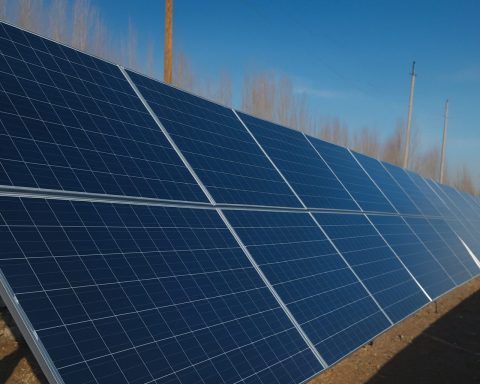
A New Energy Story Out of Central Asia While much of the global debate on energy still revolves around fossil fuels, one landlocked Central Asian country has started to quietly redraw the map. In the first week of December 2025, Uzbekistan unveiled a sweeping package of renewable energy and grid projects, deepened partnerships with Saudi and other foreign investors, and disclosed new figures showing that small-scale solar panels alone have already generated nearly 2 billion kWh of electricity this year.qazinform.com+1 The scale and speed of these changes have drawn international attention. A widely shared analysis on CleanTechnica goes as far
1 2 3

Stock Market Today

Go toTop