

Marcin Frąckiewicz

Marcin Frąckiewicz

Marcin Frąckiewicz is the founder and CEO of TS2 Space, a satellite communications company serving customers around the world. A graduate of the Warsaw School of Economics (SGH), he has more than two decades of experience in telecommunications, satellite services and technology ventures. He writes about satellite communications, space technology, artificial intelligence and the stock market, with a particular focus on technology companies, semiconductors, emerging industries and the trends shaping global innovation. Follow Marcin Frąckiewicz on Google News, Facebook. or Linkedin.

Starlink and the Satellite Internet Market (2025) – Comprehensive Report

Starlink and the Satellite Internet Market (2025) – Comprehensive Report

Business Model: Starlink is SpaceX’s satellite internet venture aiming to deliver broadband globally using a low Earth orbit satellite constellation. Unlike traditional satellite ISPs that often partner with local distributors, Starlink primarily operates a direct-to-consumer model – users order a Starlink kit and subscribe to monthly service. By leveraging SpaceX’s reusable rockets to launch its own satellites, Starlink keeps launch costs relatively low and controls the end-to-end service. The business strategy is high-volume, global coverage: targeting underserved rural and remote consumers who lack fiber or cable options, while also pursuing lucrative enterprise and government contracts spacenews.com forbes.com.au. SpaceX views Starlink as a long-term cash generator and has aggressively reinvested in expanding the network forbes.com.au forbes.com.au.

Global Satellite and Space Industry Report 2025: Market Overview and Outlook to 2030

Global Satellite and Space Industry Report 2025: Market Overview and Outlook to 2030

The global space industry is experiencing robust growth in the mid-2020s, driven by commercial innovation and rising government investment. In 2024, the global space economy reached an estimated $415 billion in revenue, up 4% from the previous year sia.org. Commercial satellite activities dominate, accounting for about $293 billion of this total sia.org. The number of operational satellites has exploded, from roughly 3,371 in 2020 to 11,539 satellites in orbit by the end of 2024 sia.org – a more than threefold increase in just four years. This surge, largely due to new “mega-constellations” of small satellites, highlights a key trend: space infrastructure is growing faster than industry revenues, indicating falling costs per satellite and improved launch economies.
Satellite Technology in Military and Defense: A Global Overview

Satellite Technology in Military and Defense: A Global Overview

Military satellites are artificial satellites used for defense and security purposes, providing capabilities that are now indispensable in modern warfare en.wikipedia.org. Since the earliest reconnaissance satellites of the Cold War era, space-based assets have evolved into “silent sentinels” that offer unrivaled advantages in intelligence, communications, and precision operations aerospacedefensereview.com. In the 21st century, military satellites are vital force multipliers – indicating a nation’s military strength and readiness – by delivering real-time surveillance and secure connectivity across the globe aerospacedefensereview.com. These systems give militaries a strategic edge: they can spy on adversaries from orbit, relay orders and data instantly over vast distances, guide weapons with pinpoint accuracy, and even detect missile launches in their boost phase. In essence, space has become a critical warfighting domain, with military planners regarding orbital assets as key to maintaining information dominance and situational awareness on the battlefield aerospacedefensereview.com af.mil. As a result, investments in military space technology have surged worldwide, driving rapid innovation and international competition in this high-ground arena.
Global Drone Industry: 2025 Market Report

Global Drone Industry: 2025 Market Report

The global drone industry has experienced rapid growth over the past decade, becoming a multi-billion dollar market with robust future prospects. In 2024 the global drone market was valued around $73 billion, and it is forecast to reach $163+ billion by 2030, reflecting a 14%+ CAGR in the latter 2020s grandviewresearch.com grandviewresearch.com. This expansion has been driven by technological advancements which have expanded drone capabilities across many sectors grandviewresearch.com. Industry forecasts vary slightly, but all indicate strong growth: one analysis projects the commercial drone segment alone to grow from ~$18.6B in 2024 to ~$37B by 2029 news.satnews.com. Overall, drones are becoming indispensable tools for consumers, businesses, and militaries worldwide.
Drones in Ukraine (2022–2025): A Comprehensive Report

Drones in Ukraine (2022–2025): A Comprehensive Report

The period from 2022 through 2025 has seen Ukraine transform into a focal point of drone deployment and innovation. Unmanned aerial vehicles, commonly known as drones, have permeated nearly every aspect of Ukraine’s military, commercial, civilian, and humanitarian spheres. In the ongoing war sparked by the 2022 Russian invasion, drones became an indispensable asset on the battlefield, used in roles ranging from frontline reconnaissance and precision strikes to logistics and electronic warfare countermeasures. At the same time, Ukrainian society and industry have harnessed drone technology for non-military purposes – from farming and infrastructure monitoring to disaster relief and medical supply delivery. This report presents a formal overview of drone usage in Ukraine from 2022 through 2025, examining battlefield deployments, civilian applications, key manufacturers and suppliers, the wartime evolution of Ukraine’s drone industry, and projections for future developments in both military and civilian domains.
Inside Ethiopia’s Internet Boom: Fiber Optics, 5G Dreams, and Starlink Skies

Inside Ethiopia’s Internet Boom: Fiber Optics, 5G Dreams, and Starlink Skies

Ethiopia is undergoing a quiet internet revolution – transforming from one of the world’s least connected countries into a burgeoning digital hub. In a nation of over 120 million people, internet access was once a rarity, hampered by limited infrastructure and a state telecom monopoly. Today, dramatic changes are afoot: new fiber-optic backbones span the country, shiny 4G and 5G towers rise over city skylines, and satellite internet promises to beam connectivity to the remotest villages. This report dives into Ethiopia’s evolving internet landscape – from urban-rural divides and major telecom players to cutting-edge projects like 5G rollouts and Starlink’s satellite ambitions – painting a comprehensive picture of a country racing to bridge its digital divide.
29 May 2025
10 Gbps in Paradise: Inside Seychelles’ High-Speed Internet Revolution (and the Satellite Showdown)

10 Gbps in Paradise: Inside Seychelles’ High-Speed Internet Revolution (and the Satellite Showdown)

Seychelles may be a remote Indian Ocean archipelago, but it boasts surprisingly advanced internet infrastructure. The country’s connectivity journey leapt forward with the installation of submarine fiber-optic cables. The first major undersea cable, the Seychelles East Africa System, connected the islands to continental Africa in the early 2010s, ending reliance on slow, costly satellites. In August 2021, a second submarine link was secured when Intelvision obtained support to lease a branch of the massive 2Africa submarine cable being built by Vodafone Ifc Developingtelecoms. This new cable, offering 600 Gbps of international capacity, complements SEAS to boost redundancy and lower bandwidth costs Developingtelecoms. With these cables as a backbone, Seychelles has greatly expanded its domestic fiber network across the main islands.
State of Internet Access in Mexico: The Digital Divide, Ground and Sky

State of Internet Access in Mexico: The Digital Divide, Ground and Sky

Introduction:Internet access in Mexico has expanded dramatically in recent years, reaching over 107 million users by early 2024 datareportal.com. The country has invested heavily in both ground-based infrastructure and emerging satellite services to connect its people. Yet a significant digital divide remains between well-served urban areas and underserved rural communities. This report provides a comprehensive overview of Mexico’s internet landscape as of 2025 – covering infrastructure developments, the urban–rural gap, key service providers, typical speeds and pricing, the rise of satellite internet, and the challenges and opportunities ahead. All data are the latest available, with sources including Mexico’s telecom regulator, government reports, and industry analyses.
29 May 2025
Fire, Ice, and Fiber: How Iceland’s Internet Leaves the World in the Dust

Fire, Ice, and Fiber: How Iceland’s Internet Leaves the World in the Dust

Iceland may be a small, remote island in the North Atlantic, but it boasts one of the world’s most advanced internet ecosystems. Virtually the entire population is online – over 99% of Icelanders use the internet en.wikipedia.org – and they enjoy some of the fastest connections on Earth. This report explores Iceland’s internet infrastructure from ultra-fast fiber networks to far-reaching mobile coverage, detailing key providers, speeds, accessibility, government initiatives, satellite options, and how Iceland compares globally.
29 May 2025
The Shocking Truth Behind Chile’s Internet Boom: 96% Connected (and Counting)

The Shocking Truth Behind Chile’s Internet Boom: 96% Connected (and Counting)

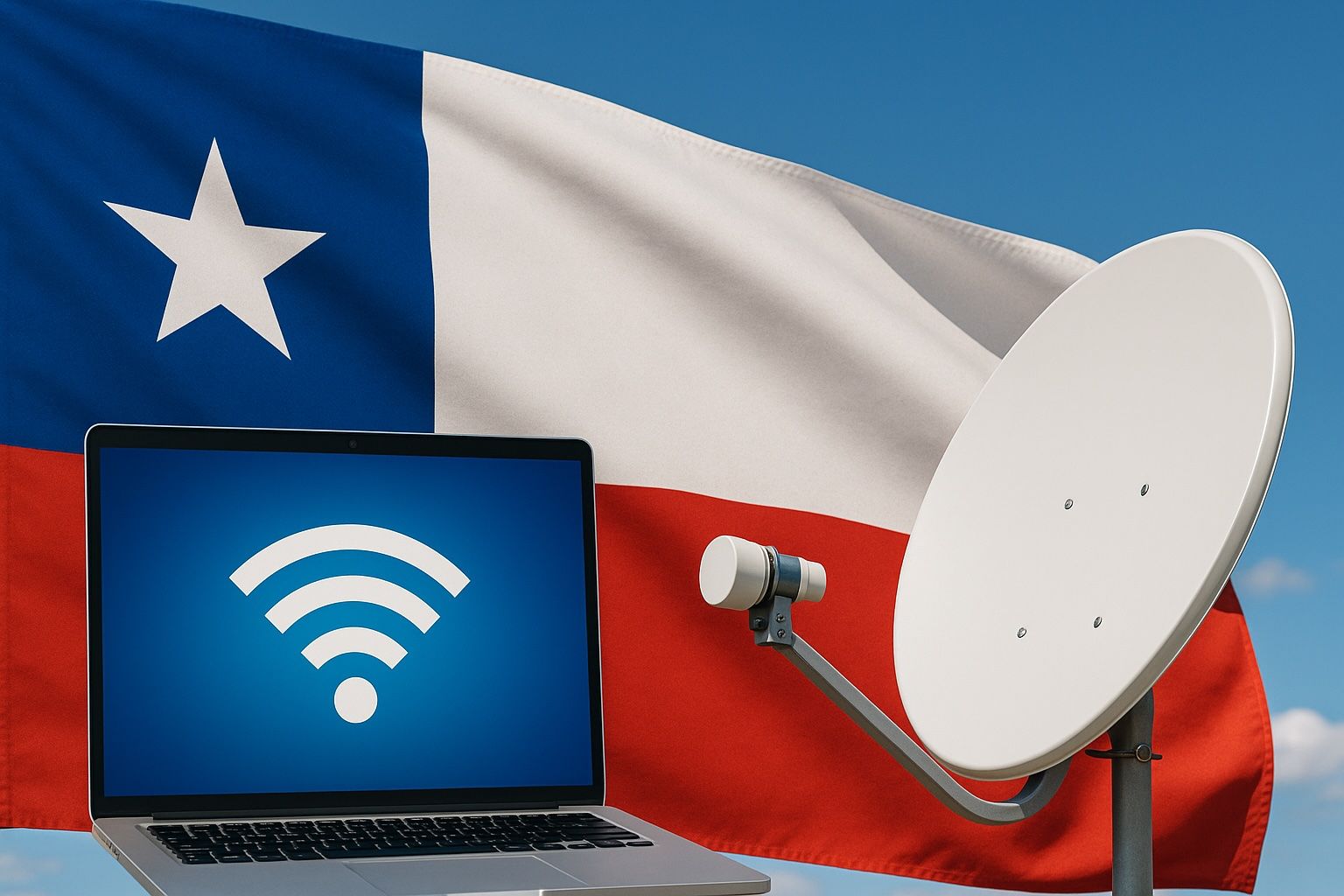
Introduction: Chile has experienced an internet access revolution over the past decade, becoming one of Latin America’s most connected countries. As of early 2024, an astonishing 96.5% of Chilean households have internet access – up from only about 70% in 2015 litoralpress.cl. This dramatic expansion has been fueled by nationwide infrastructure upgrades, aggressive broadband competition, and forward-looking government policies. Yet behind the headline figures are surprising details about urban–rural gaps, the technologies linking Chile’s remote corners, and the ongoing challenges of affordability and digital inclusion. The following report dives deep into the state of internet access in Chile, uncovering eight key insights – from coverage statistics and technology trends to provider market share, satellite internet growth, pricing, user experience, and government initiatives.
Out of Signal? These Phones Talk to Space! The Truth About Satellite SMS and Satellite Phones

Out of Signal? These Phones Talk to Space! The Truth About Satellite SMS and Satellite Phones

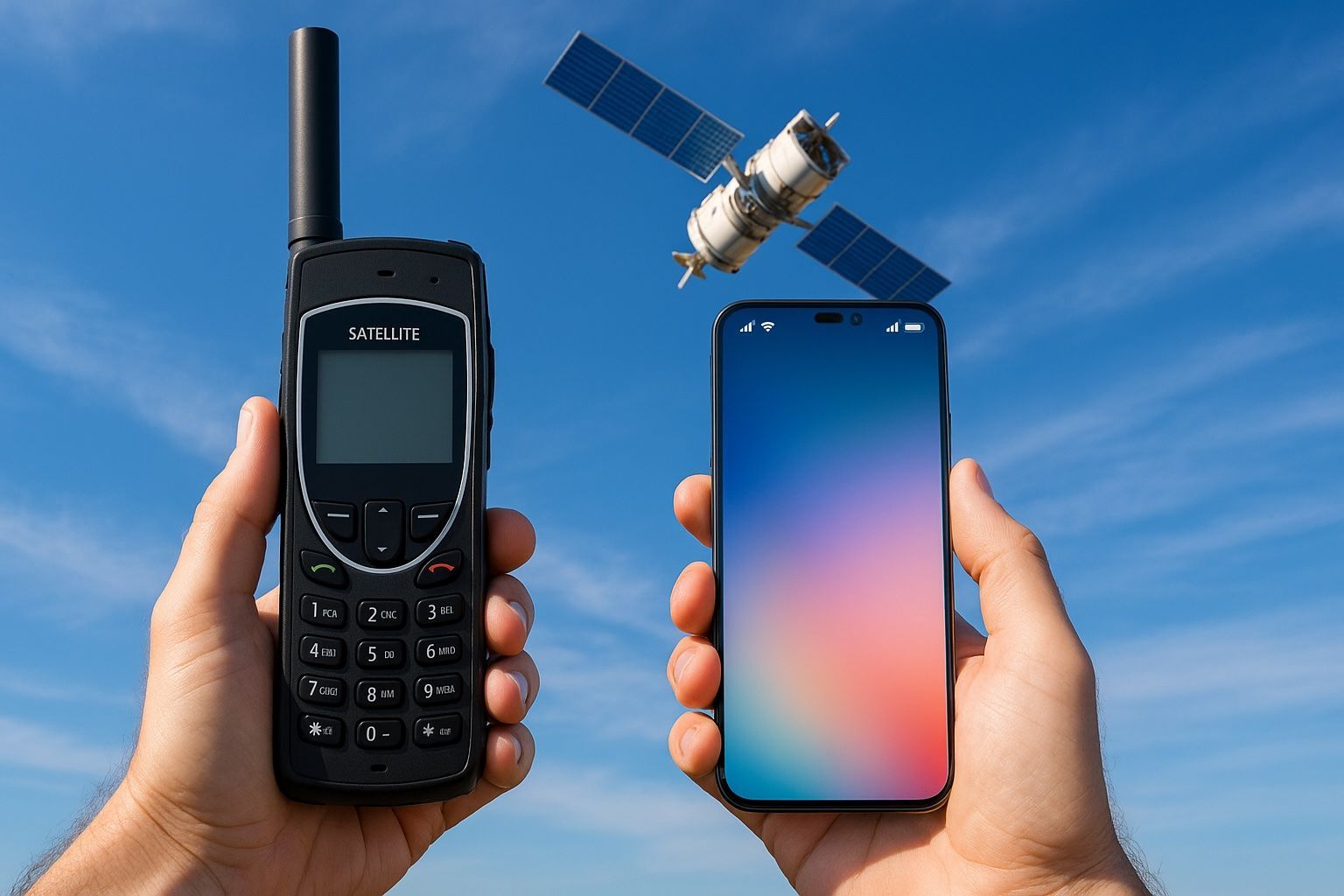
In today’s connected world, we expect our phones to have signal everywhere – but far beyond the reach of cell towers, only satellites can bridge the gap. Satellite communication refers to using orbiting satellites to send and receive signals, allowing phones to connect where no ground network exists en.wikipedia.org. This is crucial for emergency responders, explorers, sailors, and anyone in remote areas or disaster zones where terrestrial networks are down. Satellite connectivity has proven to be a lifeline in natural disasters and conflicts, as it remains operational even when local infrastructure fails en.wikipedia.org. In recent years, advances have brought satellite links to ordinary smartphones, meaning even if you’re “out of signal,” your phone might still “talk to space” to keep you connected.
Inside OneWeb’s Global Internet Play: How This Satellite Network Is Quietly Disrupting Starlink’s Orbit

Inside OneWeb’s Global Internet Play: How This Satellite Network Is Quietly Disrupting Starlink’s Orbit

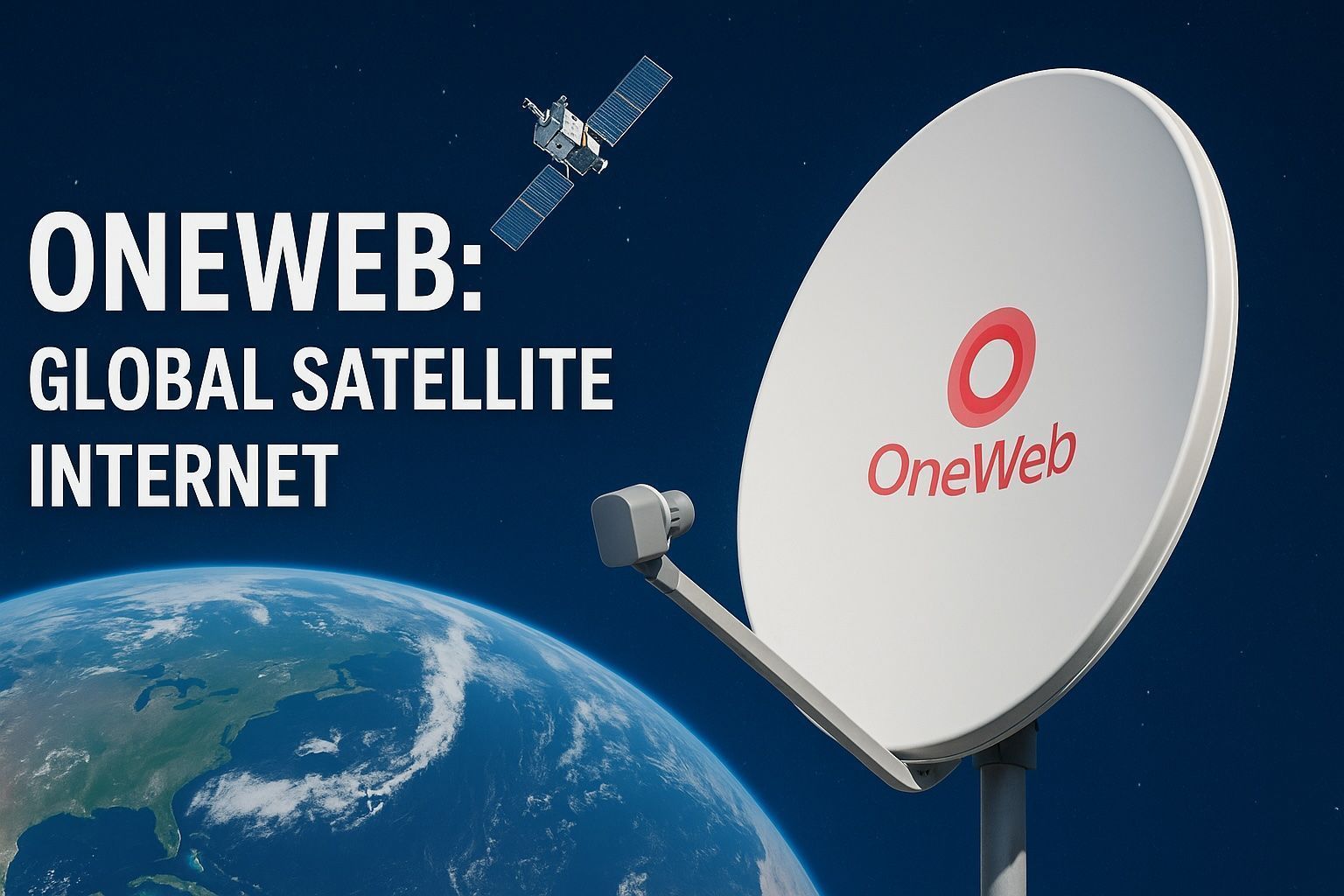
OneWeb is building a global satellite internet constellation that aims to bridge the digital divide by delivering broadband connectivity to remote and underserved regions of the world. Founded in 2012, the company has deployed hundreds of small low-Earth-orbit satellites at ~1,200 km altitude to blanket the Earth in coverage en.wikipedia.org en.wikipedia.org. Unlike SpaceX’s Starlink, OneWeb has “quietly” pursued a different business model – focusing on enterprise, government, and telecommunications partners rather than individual users en.wikipedia.org. Backed by major investors and now merged with Europe’s Eutelsat, OneWeb has overcome bankruptcy and logistical hurdles to complete its first-generation constellation by 2023 nasaspaceflight.com nasaspaceflight.com. This report provides a comprehensive look at OneWeb’s satellite technology, coverage, service plans, target users, deployment timeline, business model, and funding. It also compares OneWeb with other satellite broadband players like Starlink, SES’s O3b system, and Amazon’s upcoming Project Kuiper, highlighting OneWeb’s unique position and challenges in the market.
Sky-Fi Revolution: How Starlink Is Reshaping Global Internet Access

Sky-Fi Revolution: How Starlink Is Reshaping Global Internet Access

High-speed internet access is increasingly seen as essential infrastructure, yet billions worldwide still lack reliable connectivity. Traditional wired broadband and cellular networks often fail to reach remote or underserved areas, leaving a “digital divide.” Enter Starlink, a satellite internet constellation developed by SpaceX. Starlink is deploying thousands of low Earth orbit satellites to deliver broadband internet virtually anywhere on the globe. Since launching its first satellites in 2019, Starlink has rapidly expanded service to cover around 130 countries and territories en.wikipedia.org, amassing millions of users. This report examines how Starlink’s novel approach – dubbed a “Sky-Fi” revolution – is reshaping global internet access through its performance, coverage, and challenges, and how it compares to other satellite internet providers.
Brazil’s Digital Divide: The Real Story Behind Internet Access and the Race to Connect Everyone

Brazil’s Digital Divide: The Real Story Behind Internet Access and the Race to Connect Everyone

Internet connectivity in Brazil has grown tremendously over the past decade, transforming how Brazilians communicate, learn, and do business. Yet, beneath impressive national statistics lies a nuanced digital divide – gaps between rich and poor, urban and rural, and between well-connected regions and those still struggling for basic access. This report provides a comprehensive overview of internet access in Brazil, examining penetration rates, infrastructure developments, urban-rural disparities, key telecom players, government connectivity programs, affordability issues, and emerging trends. The goal is to unpack “the real story” behind Brazil’s connectivity landscape – highlighting both the achievements in closing the gap and the challenges that remain in the race to connect everyone.
29 May 2025
State of Internet Access in Argentina: Fiber, 5G, and Satellite in 2025

State of Internet Access in Argentina: Fiber, 5G, and Satellite in 2025

Introduction: Argentina stands among Latin America’s most connected countries, with over 40 million internet users and an individual internet penetration of about 88% as of early 2024 datareportal.com. The country’s telecom landscape is evolving rapidly: fiber-optic networks are expanding, 5G mobile services are rolling out, and new satellite options promise to reach remote areas. Yet significant disparities persist between urban and rural connectivity, and economic challenges influence both service deployment and affordability. This report provides a comprehensive overview of Argentina’s internet infrastructure and usage in 2025 – covering fixed broadband, mobile broadband, and satellite services – and examines penetration, speeds, major providers, government initiatives, the emerging role of satellite internet, regional comparisons, and the key challenges and opportunities in expanding access.
Connecting the Unconnected: The State of Internet Access in the Central African Republic

Connecting the Unconnected: The State of Internet Access in the Central African Republic

The Central African Republic remains one of the least connected nations on earth. As of early 2024, only about 616,600 Central Africans were internet users, roughly 10.6% of the population datareportal.com. In other words, nearly 90% of the country’s ~5.8 million people are offline datareportal.com. Most users access the internet via mobile networks, as fixed broadband infrastructure is extremely limited. There were about 1.86 million cellular mobile connections active in CAR in 2024, equivalent to 32% of the population datareportal.com. By contrast, less than half of Central Africans even have a mobile phone, and only about 14% have access to electricity reuters.com – stark indicators of the developmental challenges affecting internet uptake. The table below summarizes key indicators:
29 May 2025
Stay Connected in NYC Without Breaking the Bank: The Ultimate Tourist Guide to Wi-Fi & Data

Stay Connected in NYC Without Breaking the Bank: The Ultimate Tourist Guide to Wi-Fi & Data

New York City might be the city that never sleeps, but you also don’t want to be the tourist that never connects. Whether you need GPS directions in Midtown or to upload a selfie from Central Park, having reliable internet is essential. This comprehensive guide will show you how to get online in NYC easily – from free Wi-Fi hotspots all over town to short-term SIM cards and eSIMs that dodge outrageous roaming fees. We’ll also cover what to expect at hotels, how to stay secure on public networks, and some city-backed programs offering free connectivity to everyone. Let’s dive in!
Internet Access in the Philippines: A Comprehensive Report

Internet Access in the Philippines: A Comprehensive Report

The Philippines has made significant strides in expanding its digital infrastructure and internet use over the past few years. As of early 2025, an estimated 97.5 million Filipinos were using the internet, representing about 83.8% of the population. This is a dramatic increase from past decades and reflects the country’s push toward digitalization. By 2024, internet penetration was roughly in the 84–89% range of the population, indicating that most Filipinos are now online in some capacity.
Internet Access in Russia

Internet Access in Russia

Russia has a vast internet user base and a well-developed core infrastructure. As of early 2025, about 133 million people in Russia were internet users, representing an internet penetration rate of 92.2% of the population datareportal.com pulse.internetsociety.org. This penetration has grown steadily from about 85% in 2020 to over 92% by 2023 pulse.internetsociety.org. In absolute terms, Russia is among the top countries for number of internet users. The country’s backbone infrastructure includes numerous data centers and exchange points – over 100 data centers and 38 Internet Exchange Points operate across Russia, helping route traffic efficiently pulse.internetsociety.org. Major cities like Moscow and St. Petersburg serve as hubs for internet exchanges, while long-haul fiber optic trunk lines span the country’s vast geography, connecting even far-flung regions.
15 May 2025
AI PORTFOLIO

Top Stock Picks

Today’s highest-ranked model selections.

#1 STRONG BUY

Taiwan Semiconductor

NYSE: TSM 96 / 100
#2 BUY

AerCap

NYSE: AER 95 / 100
#3 BUY ON PULLBACK

Constellation Energy

NASDAQ: CEG 93 / 100
#4 BUY

Walt Disney

NYSE: DIS 90 / 100
#5 ACCUMULATE

American International Group

NYSE: AIG 87 / 100
View full portfolio
Editorial model selection. Not personalised advice.