Today: 30 June 2026

Inside America’s Silent Sentinels: The Untold Story of GSSAP in Space Surveillance

Inside America’s Silent Sentinels: The Untold Story of GSSAP in Space Surveillance

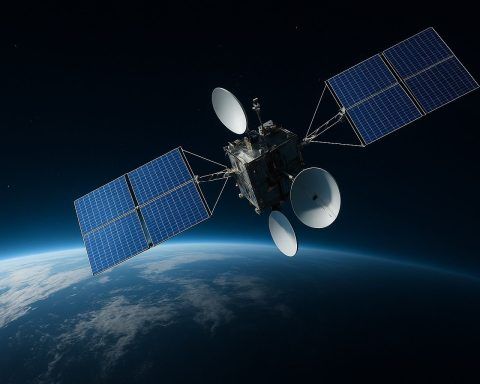
High above Earth, in the crowded expanse of geosynchronous orbit some 22,300 miles up, a set of American satellites quietly keeps watch. These are the Geosynchronous Space Situational Awareness Program satellites – often dubbed “neighborhood watch” satellites – and they form a covert but crucial line of defense in space. Born in secrecy and now a linchpin of U.S. Space Force operations, GSSAP’s “silent sentinels” monitor other spacecraft, guard vital national assets, and exemplify the new era of space surveillance. What follows is an in-depth look at GSSAP’s origins, missions, capabilities, and its role in securing America’s dominance in the high frontier. The GSSAP program began under a veil of classification in the early 2010s as the U.S. Air Force sought better ways to surveil objects in GEO – the orbital ring where critical satellites for communications, navigation, and missile warning reside. The existence of GSSAP was first publicly revealed in 2014 after years of covert development en.wikipedia.org. In July 2014, the Air Force launched the first two operational GSSAP satellites into near-geosynchronous orbit, together with a small experimental satellite known as ANGELS stratcom.mil stratcom.mil. According to Air Force Secretary Deborah Lee James, these spacecraft would “enhance the nation’s ability

5 June 2025
Mega-Constellations Exposed: How Swarms of Tiny Satellites Are Taking Over Low Earth Orbit

“No Signal? No Problem!” – Next‑Gen Satellite Phones Set to Change Everything

Imagine being able to send a message or make a call from anywhere on Earth, even far outside cellular coverage. That’s the promise driving the development of next-generation handheld satellite phones and advanced antennas. Long seen as bulky gadgets of last resort, satellite phones are now undergoing a revolution. Tech giants, satellite operators, and startups are racing to integrate space-based links into ordinary smartphones and rugged devices alike www2.deloitte.com ts2.tech. The result? Handsets that seamlessly tap satellites when terrestrial networks vanish, miniaturized antennas that fit in pockets, and a wave of innovations that could make “no signal” a thing of the past. This report dives into the latest breakthroughs in satellite phone technology, the key players behind them, technical hurdles being overcome, emerging use cases from disaster response to remote exploration, and what the future holds for truly global connectivity. Satellite communication is shedding its old limitations through bold new innovations in both devices and infrastructure:
Orbiting at Zero Speed: How Geostationary Satellites Rule Global Communications

Orbiting at Zero Speed: How Geostationary Satellites Rule Global Communications

A geostationary orbit is a circular orbit around Earth’s equator at approximately 35,786 km altitude where a satellite orbits once per sidereal day in the same direction as Earth’s rotation Wikipedia Esa. This precise altitude and orbital period make the satellite appear motionless at a fixed point in the sky to ground observers. In other words, the satellite orbits with Earth’s rotation, effectively “hovering” over a single longitude. This special orbit was first popularized by Arthur C. Clarke in 1945 as a way to revolutionize global radio communications Space Wikipedia, and the region of space at ~36,000 km altitude above the equator is often called the “Clarke Belt.” In practical terms, a satellite in GEO maintains a constant position relative to the Earth’s surface. Ground antennas can be aimed at that spot permanently without tracking moving targets Wikipedia Wikipedia. The satellite orbits at about 3 km/s to keep pace with Earth’s rotation Esa. Just three such satellites, spaced roughly 120° apart in longitude, can provide near-global coverage because each GEO satellite “sees” about a third of the Earth’s surface from its high vantage point Esa. This wide, continuous coverage and fixed positioning make GEO satellites ideal for communications and other
5 June 2025
Connected Canada: A Comprehensive Look at Internet Access in 2025

Connected Canada: A Comprehensive Look at Internet Access in 2025

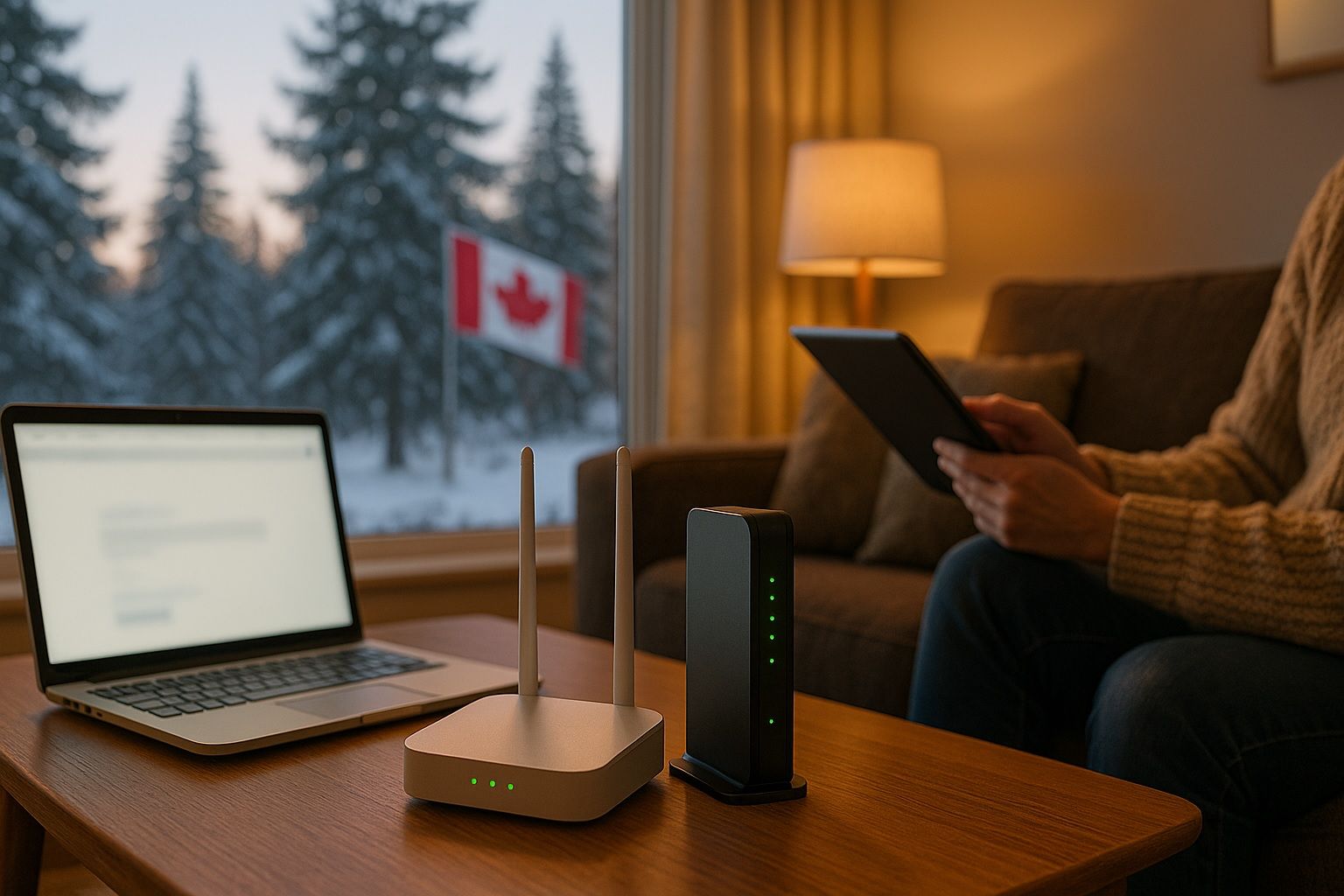
Canada’s vast geography and diverse communities present unique challenges and opportunities for internet connectivity. In recent years, significant progress has been made to bring high-speed internet to Canadians nationwide, yet stark disparities remain between densely populated cities and sparsely populated rural or remote regions. As of early 2025, approximately 93.5% of Canadian households have access to high-speed internet – up from about 79% in 2014 newswire.ca cnpartners.ca. The federal government’s Universal Broadband Fund, launched in 2020 with a $3.225 billion budget, aims to extend 50/10 Mbps service to 98% of households by 2026 and 100% by 2030 cnpartners.ca. This report examines the current state of internet access in Canada – covering all major forms of access, the national coverage and regional disparities in connectivity, the major service providers and their market presence, typical pricing and speed tiers, the role of satellite internet for remote areas, and key government initiatives and future trends shaping Canada’s digital landscape. Fiber-to-the-home is considered the gold standard for broadband, offering ultra-fast speeds and low latency via fiber-optic cables directly to homes. In Canada’s urban and suburban areas, fiber deployments have accelerated over the past decade. Bell Canada and Telus are the leading fiber providers. Bell
5 June 2025
Mega-Constellations Exposed: How Swarms of Tiny Satellites Are Taking Over Low Earth Orbit

Mega-Constellations Exposed: How Swarms of Tiny Satellites Are Taking Over Low Earth Orbit

Low Earth Orbit generally refers to orbits up to about 2,000 km above Earth’s surface nasa.gov. At these altitudes, satellites circle the globe in ~90–120 minutes, close enough for low-latency communications and high-resolution observations. In recent years, small satellites – typically massing from a few kilograms up to a few hundred kilograms – have revolutionized LEO activities. These minisatellites, microsatellites, and even tiny nanosatellites pack advanced capabilities into compact frames nasa.gov. Smaller size means lower cost: they can be built and launched much more cheaply than traditional one-ton satellites en.wikipedia.org. This cost reduction, combined with improvements in electronics and solar power, has enabled deploying constellations – large networks of small satellites working in concert. In effect, dozens or thousands of satellites working together can provide continuous global coverage or high revisit rates that a single big satellite in LEO could never achieve. Dozens of flat-panel Starlink small satellites stacked for launch on a single rocket. Mass production and compact design allow many satellites to be launched together, dramatically lowering per-satellite launch cost en.wikipedia.org starlink.com.
Military Satellite Services: Complete Guide to Secure Communications

Military Satellite Services: Complete Guide to Secure Communications

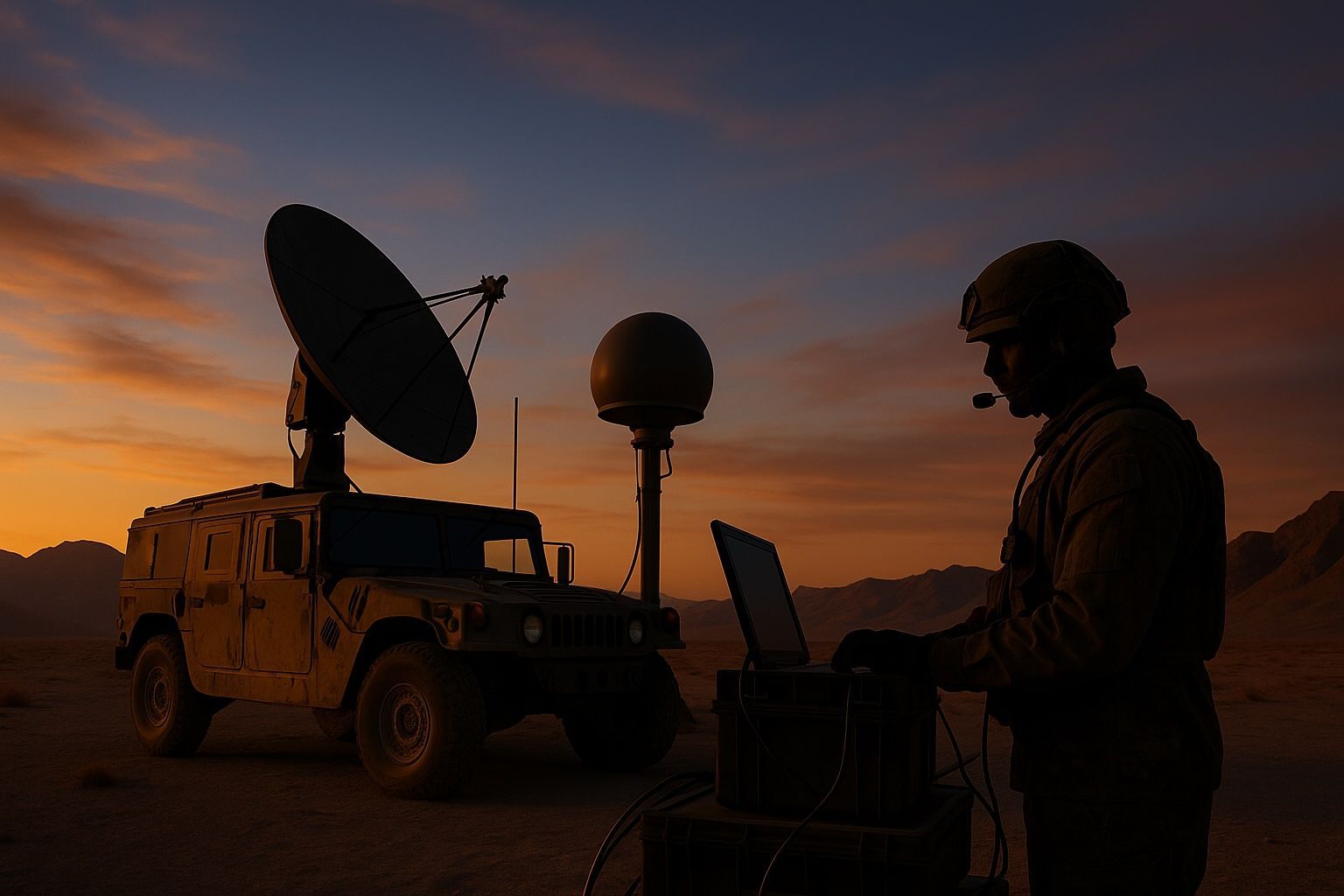
Introduction: Modern military forces rely heavily on satellites as force multipliers and intelligence assets in space. Over the last few decades, warfare has shifted toward highly technology-driven operations, making space-based capabilities central to strategic planning nsin.us. Military satellites – once limited to Cold War-era spy missions – now form the ever-watchful “eyes in the sky,” delivering critical communications, surveillance, navigation, and early warning services to militaries worldwide nsin.us. These orbital platforms enable real-time intelligence and global connectivity that dramatically enhance a nation’s military reach and responsiveness. In this report, we explore the types of military satellite services, their roles in modern warfare, the technologies that empower them, and the global landscape of military space capabilities. We also discuss recent innovations, emerging threats, and future trends shaping the next generation of military satellites. Military satellites serve diverse functions in support of defense and security. Key categories include communications, reconnaissance/surveillance, navigation, early warning, signals/electronic intelligence, and weather support satellites newspaceeconomy.ca. Each type is purpose-built with specialized payloads and instruments to fulfill its mission. Below is an overview of these satellite types and their roles:
Aviation Satellite Services: Benefits, Providers, and New Technologies

Aviation Satellite Services: Benefits, Providers, and New Technologies

Aviation satellite services refer to the use of satellites to support air travel through communication, navigation, surveillance, and connectivity functions. These services enable aircraft to maintain links far beyond the range of ground-based radios by connecting to communications satellites Wikipedia. Global Navigation Satellite Systems provide precise positioning and navigation signals to aircraft worldwide, allowing flexible point-to-point routing and performance-based navigation Faa. Satellites are also used to monitor aircraft positions and to facilitate search-and-rescue by detecting emergency beacons Wikipedia Skybrary. In essence, satellite services form a critical part of aviation’s CNS infrastructure, extending connectivity and coverage on a global scale. Key Benefits: Using satellites in aviation improves safety and efficiency by enabling reliable beyond-line-of-sight communication, accurate global navigation, real-time aircraft tracking, and inflight passenger connectivity. These capabilities enhance air traffic management and passenger experience even where no terrestrial networks exist.
How Satellite Internet Is Revolutionizing Disaster Response and Humanitarian Relief

How Satellite Internet Is Revolutionizing Disaster Response and Humanitarian Relief

Disasters – whether natural or man-made – often wreak havoc on local communication infrastructure. Hurricanes, earthquakes, and conflicts can topple cell towers, sever fiber-optic cables, and leave entire regions cut off. For instance, Hurricane Maria in 2017 damaged 95% of cell towers in Puerto Rico, leaving the island largely without phone service freepress.net. In such dire situations, internet connectivity becomes as critical as food or shelter for saving lives. Responders need communications to coordinate evacuations and direct aid, while survivors need to call for help and receive information. As the American Red Cross emphasizes, when all conventional communications are down, setting up emergency satellite links allows a relief headquarters to function – “imagine all communications are down... We can set up a network... Without [this], there would be no way for the Red Cross to stand up a relief operation” mndaksredcross.org. In humanitarian crises, connectivity truly becomes lifesaving for affected people and essential for the aid teams supporting them globalpolicyjournal.com. This report explores how satellite internet is meeting that need and revolutionizing disaster response. Satellite internet provides broadband connectivity via satellites orbiting the Earth rather than through terrestrial cables or cell towers. In a satellite network, user terminals on the
Internet Access in Cameroon: The Race to Connect a Nation

Internet Access in Cameroon: The Race to Connect a Nation

Cameroon, a Central African nation of about 29.5 million people, is racing to improve internet connectivity for its citizens. As of early 2025, roughly 41.9% of the population uses the internet, leaving the majority still offline datareportal.com bmz-digital.global. Internet access has grown rapidly over the past decade, yet it remains unevenly distributed and faces many challenges. Urban centers enjoy far more connectivity than rural villages, creating a significant digital divide. This report provides a comprehensive overview of internet access in Cameroon – from current penetration levels and infrastructure, to service providers and costs, to the challenges and initiatives shaping the country’s digital future. Key comparisons with other African nations are included to contextualize Cameroon’s progress. The goal is to shed light on Cameroon’s connectivity landscape and the “race” to get the nation online, examining both achievements to date and the road ahead. National Internet Usage: Cameroon’s internet penetration stood around 42–44% of the population in 2024-2025, meaning less than half of Cameroonians are online datareportal.com bmz-digital.global. There were about 12.7 million internet users in January 2024 and 12.4 million at the start of 2025 datareportal.com datareportal.com. This slight dip reflects rapid population growth outpacing user growth, as well as refined
When the Grid Goes Dark: How Satellite Phones Keep Us Connected in Emergencies

When the Grid Goes Dark: How Satellite Phones Keep Us Connected in Emergencies

When hurricanes flatten cell towers and earthquakes sever landlines, staying connected becomes a lifeline. In such dire scenarios, satellite phones emerge as critical tools to maintain communication when the grid goes dark. Unlike regular cell phones tied to terrestrial networks, satellite phones link directly to satellites orbiting above, enabling calls and messages from virtually anywhere on Earth. This report explores how satellite communication technology works and why it’s invaluable during emergencies. We’ll compare satellite phones with other emergency comms, profile the major satellite phone providers, and examine real-world case studies – from natural disasters to conflict zones and remote expeditions. We’ll also consider the advantages and limitations of satellite phones in crisis settings, the regulatory hurdles in some regions, their role in government and humanitarian operations, and emerging innovations that are shaping the future of emergency connectivity. Satellite phones are mobile handsets that communicate via satellites instead of terrestrial cell towers. When a satellite phone makes a call, it beams the voice or text signal straight up to an orbiting satellite, which then relays it down to a ground station and onward to the recipient’s phone network dhs.gov dhs.gov. In essence, a satellite phone treats a spacecraft as a “cell
Inside the Sky Shield: How Secure Is Your Satellite Internet?

Inside the Sky Shield: How Secure Is Your Satellite Internet?

Satellite internet is revolutionizing global connectivity—from remote villages to ships at sea—but how safe are these space-age links? This report explores the ins and outs of satellite internet security, from the basics of how it works to the encryption guarding your data, real-world hacks, industry practices, regulations, and cutting-edge defenses on the horizon. In a satellite internet system, your data doesn’t travel through buried cables—it beams up to space and back. The setup has three main components: satellites in orbit satellites only a few hundred km up), ground gateway stations on Earth that connect the satellite network to the internet, and a user terminal en.wikipedia.org realpars.com. When you send or request data, your dish communicates with the satellite, which relays the signal to a gateway station tied into the terrestrial internet, often via a central Network Operations Center groundcontrol.com. This “bent-pipe” relay means all your online traffic hops through space – from your dish to the satellite, down to the gateway, and onward to the web en.wikipedia.org en.wikipedia.org.
Satellite vs Fiber Internet: The 2025 Latency & Bandwidth Showdown

Satellite vs Fiber Internet: The 2025 Latency & Bandwidth Showdown

In the race for high-speed internet, satellite and fiber-optic broadband represent two very different approaches. Fiber-optic is often considered the gold standard – delivering data at nearly the speed of light through glass cables buried underground or strung on poles mcsnet.ca. Satellite internet, by contrast, beams data to orbiting satellites and back to Earth, enabling connectivity virtually anywhere on the planet. Each technology has unique strengths and weaknesses, especially when it comes to latency and bandwidth. This report provides an up-to-date comparison of satellite vs. fiber internet as of mid-2025, examining how they work, their typical performance, real-world use cases, coverage differences, infrastructure challenges, costs, and recent advancements like SpaceX’s Starlink and 5G broadband. Fiber-Optic Broadband: Fiber internet transmits data as pulses of light through strands of glass fiber. Because information travels via light, fiber can carry enormous amounts of data at extremely high speeds – even up to gigabits per second – with very low signal attenuation. Fiber networks usually run directly to homes or to neighborhoods, providing a dedicated physical connection. The result is a fast and reliable link that isn’t affected by radio interference or weather. Data on fiber can literally travel at near light speed, making
4 June 2025
The Sky Connect: How Satellite Internet Is Revolutionizing Rural and Remote Life

The Sky Connect: How Satellite Internet Is Revolutionizing Rural and Remote Life

Imagine a village high in the mountains or deep in the rainforest, once cut off from the online world, suddenly gaining high-speed internet from the sky. This is the promise of satellite internet. By beaming broadband connectivity from orbit, satellite networks are bridging the digital divide and transforming life in far-flung communities. In 2023, an estimated 2.6 billion people remained offline globally – largely in rural areas itu.int twn.my. Satellite internet technology is now poised to change that, bringing education, healthcare, and economic opportunity to places fiber cables and cell towers could never reach. Satellite internet is a form of wireless broadband that uses orbiting satellites to link users to the global internet. Instead of relying on miles of fiber-optic cables or phone lines, data is transmitted through space between a satellite dish at the user’s location and satellites orbiting Earth circleid.com. The basic process is: your device connects to a local satellite dish, the signal travels up ~ to a satellite, which relays it down to a ground station linked into the internet backbone, and data comes back along the same path circleid.com. This all happens nearly instantaneously, in a matter of milliseconds, enabling even remote villages to get
Battle for the Final Frontier: Starlink vs OneWeb vs Kuiper vs Telesat Lightspeed

Battle for the Final Frontier: Starlink vs OneWeb vs Kuiper vs Telesat Lightspeed

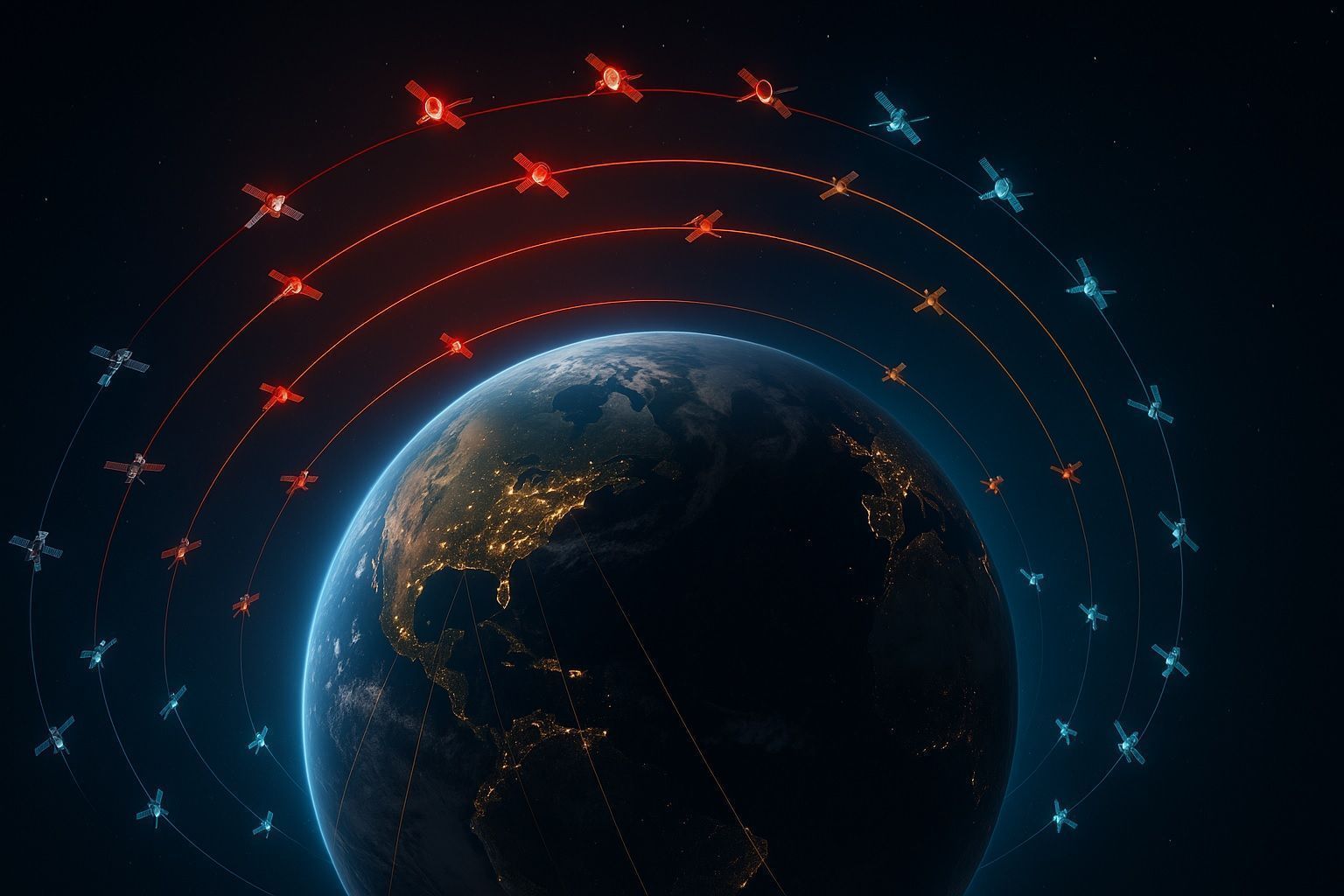
Low-Earth orbit satellite internet has become a hotly contested “final frontier” of the telecom industry. Multiple players – notably SpaceX’s Starlink, the UK/India-backed OneWeb, Amazon’s Project Kuiper, and Canada’s Telesat Lightspeed – are racing to blanket the globe in affordable, high-speed internet from space. All seek to deliver broadband to areas poorly served by terrestrial networks, using constellations of hundreds or thousands of satellites in low orbit. This report provides a comprehensive comparison of these major LEO satellite internet projects – from their backgrounds and technical designs to market strategies, pricing, regulatory issues, partnerships, challenges, and future outlook. Visual comparison of major LEO broadband constellations as of 2024. Each project plans a large fleet of satellites in low orbit to provide global internet coverage.
3 June 2025
Cambodia’s Internet Boom or Digital Doom? Inside the Kingdom’s Connected Revolution

Cambodia’s Internet Boom or Digital Doom? Inside the Kingdom’s Connected Revolution

Cambodia’s internet landscape has transformed rapidly over the past decade, heavily favoring wireless over wired connectivity. Mobile broadband is the primary backbone of internet access, with over 22 million cellular subscriptions in a country of ~17 million people datareportal.com – a penetration of 131.5%. Major cities are blanketed by 3G/4G networks, and even 4G LTE service now reaches most districts. In contrast, fixed broadband remains limited mainly to urban centers. As of early 2023, there were only about 310,000 fixed internet subscriptions nationwide developingtelecoms.com, reflecting the still-nascent fiber-optic rollout compared to mobile. Cambodia’s fiber-optic backbone is growing – with domestic trunk lines laid along highways and new submarine cable projects underway – but last-mile fiber-to-the-home is available to relatively few. International bandwidth historically transited through Thailand and Vietnam, but Cambodia is expanding its direct connections. The country’s first submarine cable landed in 2017, and an upgraded submarine link from Hong Kong to Sihanoukville is planned for 2024 developingtelecoms.com. Funded by Chinese investment, this new high-capacity cable will replace older links and add 640 km of undersea fiber within Cambodia’s territory developingtelecoms.com, aiming to make internet service faster and cheaper. The core backbone is operated by a few players, which interconnect
Why Starlink Keeps Hitting Red Tape Around the World

Why Starlink Keeps Hitting Red Tape Around the World

A Starlink user terminal installed on a riverboat in remote Brazil, reflecting the service’s reach into areas underserved by terrestrial internet reuters.com. Despite such promise, Starlink’s global expansion has repeatedly run into regulatory roadblocks in different countries. Starlink, the satellite internet constellation operated by SpaceX, aspires to deliver high-speed broadband worldwide – from megacities to the most remote villages. Its global ambitions to bridge the digital divide come with an inherent challenge: navigating a patchwork of national regulations and red tape. Unlike terrestrial internet services, which operate within national borders, Starlink’s space-based system crosses boundaries, requiring licensing and spectrum approval in each country it serves. Around the world, regulators have responded with varying degrees of caution or enthusiasm. Some nations have eagerly welcomed Starlink to boost connectivity, while others have imposed strict conditions, citing concerns over licensing, spectrum interference, national security, competition, and compliance with local telecom laws. This report provides a country-by-country analysis of the regulatory hurdles Starlink has encountered through 2025, highlighting supportive versus hostile environments, real examples of regulatory actions, and the evolving policy landscape.
No Signal? No Problem – Starlink’s Direct-to-Cell Satellites Are Eliminating Dead Zones

No Signal? No Problem – Starlink’s Direct-to-Cell Satellites Are Eliminating Dead Zones

Imagine sending a text from the middle of the ocean or deep in the mountains with no cell tower in sight. That’s the promise of Starlink’s new Direct-to-Cell technology – a “cell tower in space” that lets ordinary phones connect via satellite when terrestrial coverage is absent. In recent trials, SpaceX’s Starlink satellites have successfully relayed SMS texts and even voice/video calls directly to standard smartphones, showcasing a potential game-changer for mobile connectivity. This report dives into what Starlink Direct-to-Cell is, its key milestones, the partners and timelines involved, and what it all means for the telecom industry and consumers around the world. Starlink Direct-to-Cell is a satellite-based cellular service designed to eliminate mobile dead zones by connecting unmodified 4G LTE phones directly to orbiting satellites starlink.com starlink.com. In essence, each equipped Starlink satellite functions like a floating cell phone tower in space, with an onboard 4G LTE base station that communicates with standard phones on the ground starlink.com. Unlike traditional satellite phones, users do not need any special hardware or apps – any normal smartphone can connect, as long as it supports the frequency band used and has a clear view of the sky starlink.com. The satellites then route
Starlink’s Sky Grab: How SpaceX Is Quietly Rewiring the Global Internet Game

Starlink’s Sky Grab: How SpaceX Is Quietly Rewiring the Global Internet Game

SpaceX’s Starlink has rapidly built a mega-constellation of satellites that is reshaping how the world accesses the internet. Since launching the first batch of 60 satellites in 2019, Starlink has put thousands of satellites into low-Earth orbit to blanket the planet with broadband coverage Telegeography. By late 2024, nearly 7,000 Starlink satellites were in orbit – a constellation dwarfing all others Reuters. This “sky grab” of orbital real estate has enabled Starlink to reach millions of users globally, many in remote areas previously left offline. Starlink’s explosive growth – from 1 million users at end-2022 to over 4.6 million by end-2024 Politico – signals a quiet but profound shift in the global internet game, as satellite broadband emerges as a viable alternative where traditional fiber and cell networks fall short. The following report examines Starlink’s evolution, its expanding coverage and market penetration across regions, competitive and regulatory hurdles, business strategies, and its social-economic impacts on connectivity and the digital divide. Starlink’s journey from concept to global coverage has been remarkably swift. Deployment milestones include the public beta rollout in October 2020, followed by rapid expansion to dozens of countries by 2021-2022 as more satellites launched. SpaceX hit the 1,000-satellite mark
3 June 2025
Inside Burundi’s Digital Struggle: The Truth About Internet Access and the Satellite Solution

Inside Burundi’s Digital Struggle: The Truth About Internet Access and the Satellite Solution

Burundi, a small landlocked nation in East Africa, faces a digital connectivity crisis. Despite modest improvements in recent years, it remains one of the world’s least-connected countries, with only about 11–12% of Burundians using the internet as of 2023–2024 ecofinagency.com datareportal.com. This report dives deep into the current state of internet access in Burundi – from the reach of mobile and broadband networks to the emergence of satellite internet – and examines the players, policies, challenges, and opportunities shaping the country’s digital future. In a region where neighbors like Rwanda and Tanzania are rapidly advancing, Burundi’s struggle to bridge the digital divide is both urgent and instructive. Below, we explore the facts behind the headlines and what solutions might finally connect Burundi’s underserved millions. Burundi’s internet landscape is characterized by extremely low penetration, heavy reliance on mobile networks, and minimal fixed broadband. As of early 2025, only about 1.78 million people out of ~14 million were internet users datareportal.com. In other words, nearly 88–90% of the population remains offline datareportal.com ecofinagency.com. This puts Burundi near the bottom globally in connectivity. Those who are online mostly access the internet via mobile phones: an overwhelming 99.6% of internet subscriptions are mobile broadband

Stock Market Today

  • TURF ETF Sees Heavy Trading as Mosaic Slumps, Ivanhoe Electric Gains
    June 30, 2026, 1:26 PM EDT. Trading spiked in the T Rowe Price Natural Resources ETF (TURF) on Tuesday with volume jumping to more than 477,000 shares, well above the usual three-month average of 32,000. TURF was up 0.1% as some big names in the fund moved sharply. Mosaic fell 5.3% on heavy volume over 7.3 million shares. Vale added 0.2% with more than 5.4 million shares traded. Ivanhoe Electric stood out with a 4.2% rise. Fervo Energy dropped 5.8%. Investors were more active in natural resources stocks and volatility picked up.
Go toTop