
Today: 2 July 2026
Browse Category

Internet 3 June 2025 - 17 June 2025

Satellites, Submarine Cables & Cell Phones: Inside Haiti’s Battle for the Internet

Satellites, Submarine Cables & Cell Phones: Inside Haiti’s Battle for the Internet

Haiti lags far behind its neighbors in internet access. As of early 2025, only about 39.3% of Haitians – roughly 4.65 million people – were using the internet Datareportal. This penetration rate is among the lowest in the Caribbean Worldbank. In other words, over 60% of Haiti’s population remains offline, with connectivity especially limited in impoverished and remote areas. Urban centers like Port-au-Prince have far more internet users than rural villages, reflecting a significant urban-rural digital divide. The gap is also stark across gender lines: in 2020, only about 7% of Haitian women and girls had internet access – the lowest rate in Latin America and the Caribbean Worldbank. While that number may have improved slightly, a huge portion of the population still lacks the means or opportunity to get online. The vast majority of Haitians who do use the internet rely on mobile phones. There were about 10.2 million mobile connections active in Haiti by 2025 Datareportal. Many people maintain multiple SIM cards or phones, so mobile subscriptions outnumber individuals. Importantly, most of these connections are technically capable of data service – about 93.7% use 3G, 4G, or other “broadband” mobile network technology Datareportal. In practice, however, mobile broadband

17 June 2025
Internet Access in Macedonia: From Fiber to the Final Frontier

Internet Access in Macedonia: From Fiber to the Final Frontier

North Macedonia’s fixed broadband landscape has evolved from legacy DSL lines to modern fiber-optic networks. The incumbent Makedonski Telekom remains the dominant fixed-line provider, but its once-ubiquitous DSL service is gradually being eclipsed by fiber. In recent years MakTel has aggressively expanded fiber-to-the-home, migrating many DSL customers to fiber for higher speeds Globenewswire. The company boasts the largest fiber network – over 270,000 households passed by fiber as of the early 2020s Telekom – and now offers plans up to 1 Gbps on its optical infrastructure Telekom. Where fiber isn’t yet available, MakTel still provides ADSL/VDSL to ensure nationwide coverage. Meanwhile, A1 Macedonia has emerged as a strong competitor. A1 inherited a substantial hybrid fiber-coaxial cable network and has since been rolling out FTTH in many areas Club200 A1. A1’s cable and fiber networks cover all major cities and towns. For example, A1 offers 200 Mbps symmetric fiber plans in its combo bundles A1, highlighting its push into high-speed fiber services. The country’s largest independent ISP, Telekabel, has also been pivotal. Telekabel started as a cable TV provider in the 1990s and pioneered cable internet in Macedonia, helping drive broadband adoption with affordable prices Club200. Today Telekabel operates in 17
17 June 2025
Zimbabwe’s Internet Revolution: From Lagging Signals to Sky-High Satellites

Zimbabwe’s Internet Revolution: From Lagging Signals to Sky-High Satellites

Zimbabwe connected to the internet relatively early, but access was very limited for many years. The first internet service providers emerged in the mid-1990s – Data Control & Systems was established in 1994 and MWEB in 1995 paynow.co.zw chatsports.com. At that time the internet was expensive and largely confined to corporations and elite users. Dial-up connections and rudimentary infrastructure meant very slow speeds and high costs chatsports.com. By the late 1990s, only tens of thousands of Zimbabweans were online. Indeed, internet penetration was just 0.3% of the population in 2000, though it grew to around 15% by 2011 freedomhouse.org freedomhouse.org. Through the 2000s, growth accelerated as cybercafés mushroomed in cities and more people got online despite economic turmoil. The state-owned Post & Telecommunications Corporation initially monopolized the backbone and sold bandwidth to private ISPs paynow.co.zw. The Zimbabwe Internet Service Providers Association counted nearly 30 ISPs by the 2000s, though many were small paynow.co.zw. Major telecom companies like Econet Wireless entered the scene, and by the 2010s mobile phones became the primary on-ramp to the internet for most Zimbabweans. Still, internet access remained a luxury for many until recent years, due to infrastructure and cost barriers.
16 June 2025
Inside Poland’s Internet Boom: From Urban Speeds to Satellite Signals

Inside Poland’s Internet Boom: From Urban Speeds to Satellite Signals

Poland is experiencing a rapid transformation in its internet landscape, marked by surging broadband speeds and expanding access even in remote villages. Once lagging behind its Western European peers in connectivity, the country is now closing the gap through aggressive fiber-optic rollout, near-ubiquitous mobile broadband, and even the adoption of cutting-edge satellite internet services. This report provides a comprehensive overview of Poland’s internet infrastructure – from the fiber lines beneath city streets to Starlink satellites overhead – along with key statistics on penetration, speed, affordability, regulatory developments, government initiatives, EU comparisons, and the major providers driving this internet boom. Fiber and DSL Broadband – The Urban-Rural Divide: Poland’s fixed broadband infrastructure has advanced significantly in recent years, but stark differences remain between urban and rural areas. In cities and large towns, high-speed internet options like fiber-optic and upgraded cable networks are widely available. In fact, by mid-2023 fiber-to-the-premises had become the most prevalent fixed broadband technology in Poland, passing 75.4% of all homes Point Topic. This represents a dramatic expansion – FTTP coverage jumped nearly 16 percentage points in one year, reflecting accelerated deployment in both new and existing neighborhoods Point Topic. Legacy DSL networks, while still present, continue to
Fiber vs 5G vs Starlink: The Shocking Truth About Internet Speeds, Latency and Costs Worldwide

Fiber vs 5G vs Starlink: The Shocking Truth About Internet Speeds, Latency and Costs Worldwide

Introduction: The way you access the internet can make or break your online experience. Is fiber-optic broadband truly the fastest option everywhere? Can the latest 5G wireless and Elon Musk’s Starlink satellite network dethrone wired broadband? What about legacy tech like DSL or alternatives like cable, fixed wireless, and even futuristic Li-Fi light-based internet? In this comprehensive report, we compare all popular internet access technologies worldwide. We’ll examine their speeds, latency, reliability, coverage, installation complexity, costs, scalability, and suitability for home vs business use. The differences are dramatic – and you might be surprised which technology comes out on top in each category. To set the stage, the table below provides a snapshot comparison of key metrics for each major internet access type:
Internet Access in Uruguay: The Quiet Digital Revolution Reaching the Sky

Internet Access in Uruguay: The Quiet Digital Revolution Reaching the Sky

Uruguay, a small South American nation of 3.4 million people, has quietly become a regional leader in internet connectivity and digital inclusion. With a tech-literate population and ambitious public initiatives, Uruguay boasts one of Latin America’s highest internet penetration rates trade.gov. Over the past decade, the country has undergone a “quiet digital revolution” – extending high-speed access via fiber-optic cables to even small towns, achieving near-universal mobile broadband coverage, and embracing new technologies like 5G and satellite internet. This report examines the state of internet access in Uruguay across fixed, mobile, and satellite domains, detailing current coverage and usage statistics, the government policies that enabled this progress, infrastructure investments and technologies used, the advent of satellite services “reaching the sky,” efforts to bridge the urban–rural digital divide, challenges faced, and future opportunities. Uruguay’s internet adoption is among the highest in the Americas. Nearly 90% of the population uses the internet, up from roughly 80% a few years prior datareportal.com riotimesonline.com. Fixed broadband connections numbered about 1.1 million in 2023 – roughly 32 subscriptions per 100 people theglobaleconomy.com – indicating that a large majority of households have a broadband connection. Mobile internet is even more ubiquitous: as of early 2024 Uruguay
Inside Saint Lucia’s Digital Revolution: The Untold Story of Internet and Satellite Access

Inside Saint Lucia’s Digital Revolution: The Untold Story of Internet and Satellite Access

Saint Lucia is experiencing a quiet digital revolution. Once limited by slow connections and spotty coverage, the island now boasts fiber-optic broadband, ubiquitous mobile internet, and even satellite links beaming connectivity from space. This report explores every facet of internet access in Saint Lucia – from the major service providers and infrastructure, to government initiatives and emerging technologies – painting a comprehensive picture of how this Caribbean nation is bridging the digital divide. Saint Lucia’s internet market is dominated by two main ISPs: Flow and Digicel+. These companies offer a range of home broadband plans, alongside island-wide mobile data services. In late 2024, a new player entered the scene in the form of Starlink satellite internet, expanding options for remote and rural users ts2.tech. Below is a comparison of the major providers, their technologies, and offerings:
The Digital Lifeline: Inside Ghana’s Internet Revolution from Fiber to Satellite

The Digital Lifeline: Inside Ghana’s Internet Revolution from Fiber to Satellite

Ghana has seen a rapid rise in internet usage over the past decade, evolving from single-digit penetration in 2010 to nearly 70% of the population online today. As of early 2025, approximately 24.3 million Ghanaians were internet users, representing an internet penetration rate of 69.9% datareportal.com. This is a dramatic increase from just 8% in 2010, thanks to expanding mobile networks and cheaper devices blogs.worldbank.org. The country had 38.3 million active mobile connections by 2025, indicating many people use multiple SIM cards datareportal.com. Most of these connections are now data-capable – over 93% of mobile connections are on 3G, 4G, or 5G networks datareportal.com – underscoring the dominance of mobile broadband in Ghana’s connectivity landscape. Internet Use by Demographics: Internet adoption is widespread across age groups and genders, but disparities exist. Young people are the most connected – about 80% of youth were internet users in 2021 blogs.worldbank.org – while usage among older adults was lower blogs.worldbank.org. Men are slightly more likely to be online than women blogs.worldbank.org, reflecting a persistent gender gap. Urban residents also have greater access: roughly 80% of urban Ghanaians used the internet in 2021, compared to 54% in rural areas blogs.worldbank.org. This urban–rural divide is
Lightning-Fast Latvia: Inside Europe’s Undercover Internet Powerhouse

Lightning-Fast Latvia: Inside Europe’s Undercover Internet Powerhouse

Latvia, a small Baltic nation of 1.9 million, has quietly become a global leader in internet connectivity. With over 92% of its people online and surfing at blistering speeds, Latvia enjoys near-universal internet access datareportal.com pulse.internetsociety.org. Whether it’s gigabit fiber in the capital or 5G signal in the countryside, Latvians are reaping the benefits of decades of tech investment and forward-thinking policy. From fiber-optic networks that blanket the country to 5G mobile broadband and even satellite internet for remote areas, Latvia’s digital infrastructure punches far above its weight. This report dives into all aspects of internet access in Latvia – fixed broadband, mobile networks, satellite options, usage trends, urban–rural gaps, major providers, costs, government initiatives, and how Latvia stacks up in the EU – to see how this “undercover” internet powerhouse came to be. Latvia’s fixed-line broadband is dominated by modern, high-speed networks, with legacy technologies rapidly fading. Fiber-optic broadband is king: Latvia ranks among Europe’s top countries for fiber deployment and adoption budde.com.au. In fact, over 50% of Latvian households use fiber connections – one of only seven European countries to achieve such a high fiber penetration budde.com.au. Crucially, fiber isn’t just an urban luxury; Latvia boasts the second-highest
15 June 2025
Why San Marino’s Tiny Size Might Be Its Biggest Internet Advantage

Why San Marino’s Tiny Size Might Be Its Biggest Internet Advantage

San Marino’s compact territory has enabled nearly universal internet coverage. The country’s telecom network features widespread fiber-optic broadband alongside legacy DSL copper lines. Over 50% of subscribers are already on fiber, and the main provider has pledged to migrate entirely off copper by 2027 sanmarinofixing.com. In practice, this means all households will use Fiber-to-the-Home or Fiber-to-the-Cabinet within two years sanmarinofixing.com. Even today, broadband reaches virtually 100% of Sammarinese residents, thanks to past projects like “Project Socrate” that started cabling the whole territory ahead of its time. The mobile network is equally strong: 4G LTE service blankets the republic, and remarkably San Marino achieved full 5G coverage by the end of 2018 as part of an early pilot with Telecom Italia en.wikipedia.org. This made it Europe’s first country with nationwide 5G. The combination of advanced fiber and cutting-edge mobile infrastructure means residents enjoy modern, high-capacity internet access almost everywhere in the country. San Marino’s internet market is tiny but highly concentrated. The former telecom monopoly, Telecom Italia San Marino – a branch of Telecom Italia – still controls the lion’s share of services. In fact, TISM commands about 93% of the internet subscriptions, making it by far the dominant ISP pulse.internetsociety.org.
Côte d’Ivoire’s Internet Revolution: Fiber Optics, 5G Dreams, and Satellite Solutions

Côte d’Ivoire’s Internet Revolution: Fiber Optics, 5G Dreams, and Satellite Solutions

Côte d’Ivoire is undergoing a digital transformation, rapidly expanding internet infrastructure and connectivity across the country Trade. Fueled by government ambition to become a West African digital hub Trade, investments in fiber-optic networks, mobile broadband, and even satellite internet are reshaping how Ivorians access the online world. Internet usage has grown from only a fraction of the population two decades ago to roughly 38–41% of citizens today Internetsociety, but significant gaps remain between urban and rural areas. This report provides a comprehensive look at Côte d’Ivoire’s internet access landscape – from ultra-fast fiber in city centers to innovative satellite projects for remote villages – covering infrastructure status, key providers, usage trends, affordability, policies, recent developments, and how the country stacks up against its West African peers. High-speed internet access in Côte d’Ivoire reflects an urban-rural divide. Over half of Ivorians live in urban areas Datareportal, and cities like Abidjan enjoy extensive 3G/4G coverage and growing fiber deployments. In urban centers, about 50% of the population uses the Internet, compared to only 22% in rural areas Internetsociety. Major cities benefit from multiple mobile operators and fiber rings, while rural communities often rely on basic 2G/3G connections or shared facilities. In remote
8 June 2025
Internet Access in Comoros: From Island Gaps to Satellite Signals

Internet Access in Comoros: From Island Gaps to Satellite Signals

Comoros is a small archipelago nation in the Indian Ocean, comprised of three main islands – Grande Comore, Anjouan, and Mohéli – along with the neighboring French territory of Mayotte freiheit.org. Its geography poses unique challenges for telecommunications: the islands are separated by ocean channels and are volcanic and mountainous, making infrastructure deployment difficult and costly. For many years, Comoros’ insular landscape led to island gaps in connectivity, with limited inter-island links and reliance on expensive satellite connections for external communication. Today, however, the country is undergoing a digital transformation. Undersea fiber-optic cables now connect the islands to each other and to international networks, mobile broadband is expanding, and new satellite services like Starlink are on the horizon. This report provides an overview of Comoros’ geography and telecom infrastructure, the current state of Internet access, the major service providers, key statistics on usage and speeds, pricing and regulatory context, ongoing initiatives to improve access, the challenges that persist, and future prospects for bridging the digital divide in this small island developing state. Island Topography and Isolation: The Union of the Comoros is an archipelago off Africa’s east coast with a total land area just over 2,000 km² worldatlas.com. The islands
Connecting Colombia: Bridging the Digital Divide from Cities to the Amazon

Connecting Colombia: Bridging the Digital Divide from Cities to the Amazon

Colombia has seen rapid growth in internet access, reaching roughly three-quarters of the population online as of 2024 Datareportal. Mobile phones and home broadband have become common in urban areas, transforming how Colombians communicate, work, and learn. However, these gains also mask stark disparities – a deep digital divide separates well-connected cities from rural and remote regions. This report provides a comprehensive overview of internet access in Colombia, including penetration rates, urban vs. rural gaps, key service providers, typical speeds and pricing, the emergence of satellite internet, government initiatives, infrastructure challenges, and future trends. The tone is informative yet accessible, aiming to shed light on both progress and ongoing challenges in connecting all corners of Colombia to the digital world. Internet usage in Colombia has grown dramatically, but there is still room to improve. As of early 2025, an estimated 41.1 million Colombians were internet users, equivalent to about 77% of the population Datareportal. The majority of users access the internet via mobile devices, but fixed broadband subscriptions have also increased. Colombia had about 17 fixed broadband subscriptions per 100 people in 2023, reflecting steady growth in home internet connectivity Theglobaleconomy. In early 2024 there were 39.5 million internet users,
Satellite Technologies FAQ

Satellite Technologies FAQ

Satellites are objects that orbit a larger body, like Earth or another planet spaceplace.nasa.gov. They play many roles in modern life, from beaming TV signals and providing internet/phone connections to monitoring weather and enabling GPS navigation spaceplace.nasa.gov spaceplace.nasa.gov. Below is an extensive FAQ, grouped by topic, answering common questions about satellites and related technologies in simple terms.
Chad’s Digital Desert: The Shocking Truth Behind the Country’s Internet Revolution

Chad’s Digital Desert: The Shocking Truth Behind the Country’s Internet Revolution

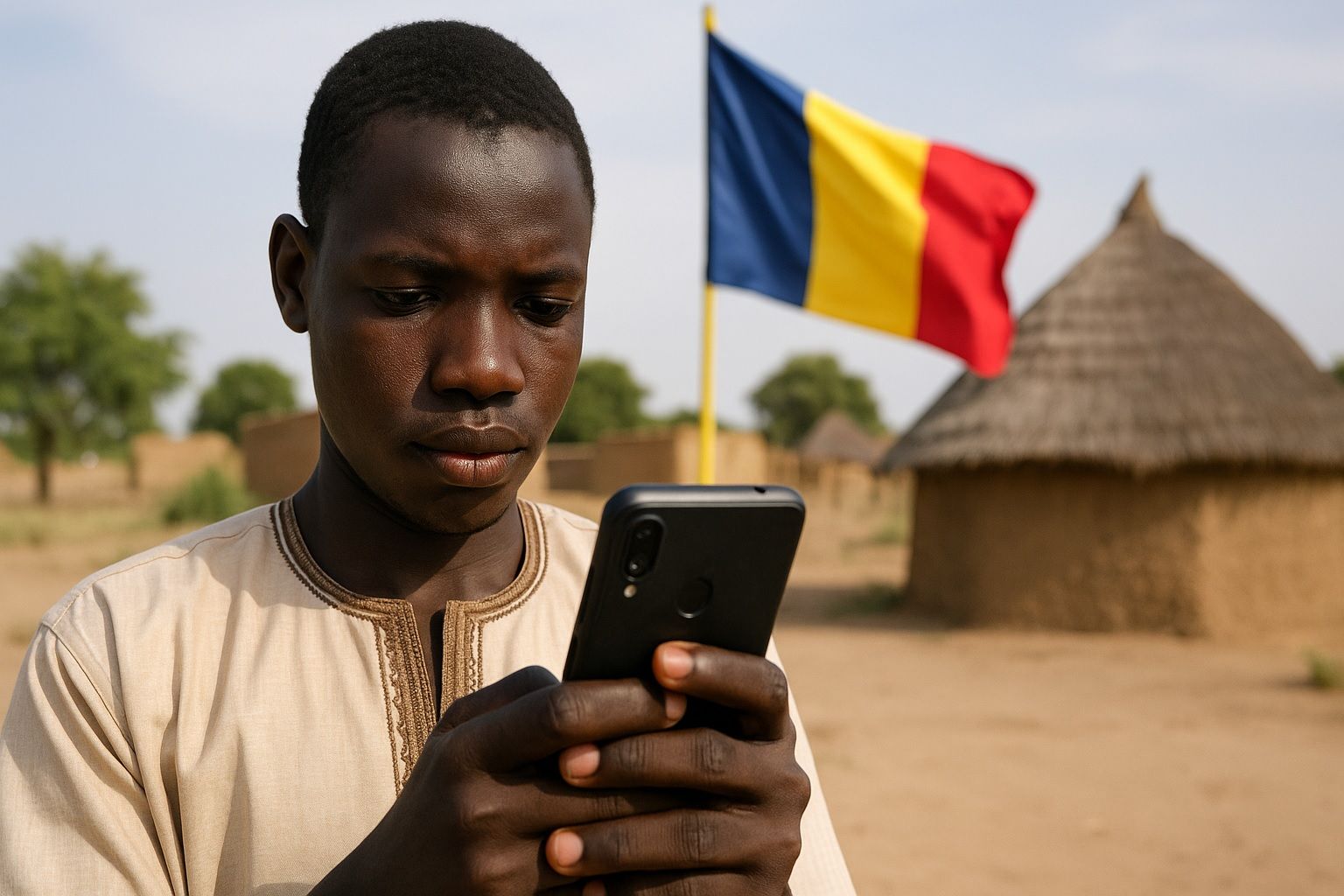
Chad, a vast landlocked nation in Central Africa, has one of the world’s lowest rates of internet connectivity. As of early 2025, only about 13% of Chadians use the internet, compared to a global average around 60% capmad.com. This places Chad near the bottom globally in internet access. The digital infrastructure is underdeveloped, and most citizens remain offline due to a mix of limited networks, high costs, and challenging geography. Yet change is on the horizon – from ambitious government initiatives to new satellite services promising to close the connectivity gap. This report provides a comprehensive overview of internet access in Chad, examining current penetration, infrastructure, affordability, mobile and broadband services, the advent of satellite internet, government ICT policies, key challenges, and emerging opportunities. Key indicators of Chad’s internet landscape include: These headline numbers show the scale of Chad’s digital divide. In the sections below, we delve into why connectivity remains so scarce, how people who are online get access, what efforts are underway to improve the situation, and whether Chad may be on the cusp of an internet revolution.
Internet Access in Cape Verde: Current Status and Outlook

Internet Access in Cape Verde: Current Status and Outlook

Cape Verde has made significant strides in expanding internet access across its islands. As of early 2025, about 73.5% of the population are internet users, up from roughly 72% a year prior datareportal.com datareportal.com. In absolute terms, this represents approximately 387,000 users out of a population of ~526,000 datareportal.com. Internet penetration in Cape Verde is among the highest in Africa, more than double the continental average, and is only surpassed by a few small island states like Mauritius and Seychelles ifc.org. This progress reflects steady growth from near-zero connectivity in the 1990s to today’s relatively widespread usage. Broadband infrastructure has evolved from basic dial-up and DSL to modern fixed and mobile networks. Fixed broadband subscriptions remain limited in scale, but have grown rapidly in recent years. During the pandemic fixed broadband customers surged by 46%, driven by fiber-optic rollouts and higher demand for home internet menosfios.com menosfios.com. Cape Verde Telecom reported passing over 22,000 homes with fiber by the end of 2021, primarily in urban areas menosfios.com. Meanwhile, mobile broadband is the primary mode of access for most Cape Verdeans. There were over 600,000 mobile cellular connections active in early 2025 datareportal.com, reflecting many users with multiple SIMs. Importantly, 91%
6 June 2025
The Space Race for the Internet: Inside the Billion-Dollar Satellite Mega-Constellation Boom

The Space Race for the Internet: Inside the Billion-Dollar Satellite Mega-Constellation Boom

Stacks of Starlink satellites awaiting deployment in orbit. A new space race is underway—not for the Moon or Mars, but to blanket Earth in high-speed internet from space. Private companies and governments are launching mega-constellations of satellites by the thousands, aiming to beam broadband connectivity to every corner of the globe. The stakes are enormous: billions of dollars are pouring into these projects, and the outcome could redefine how the world connects and who controls that connectivity. Rocket launches carrying dozens of satellites at a time have become routine, signaling a technological revolution that promises to bridge digital divides and create a truly global internet infrastructure. This report dives into the history, technology, key players, and far-reaching implications of this 21st-century space race. Satellite communications have come a long way since the first communications satellites of the 1960s. Traditional satellite internet relied on a few large geostationary satellites parked 36,000 km above Earth, which provided broad coverage but suffered high latency and limited capacity. Companies like HughesNet and Viasat built GEO-based networks for rural internet, but speeds were slow and lag times of ~600 ms made real-time applications difficult. In the 1990s, pioneers dreamed of low Earth orbit constellations: projects
Internet Access in Cameroon: The Race to Connect a Nation

Internet Access in Cameroon: The Race to Connect a Nation

Cameroon, a Central African nation of about 29.5 million people, is racing to improve internet connectivity for its citizens. As of early 2025, roughly 41.9% of the population uses the internet, leaving the majority still offline datareportal.com bmz-digital.global. Internet access has grown rapidly over the past decade, yet it remains unevenly distributed and faces many challenges. Urban centers enjoy far more connectivity than rural villages, creating a significant digital divide. This report provides a comprehensive overview of internet access in Cameroon – from current penetration levels and infrastructure, to service providers and costs, to the challenges and initiatives shaping the country’s digital future. Key comparisons with other African nations are included to contextualize Cameroon’s progress. The goal is to shed light on Cameroon’s connectivity landscape and the “race” to get the nation online, examining both achievements to date and the road ahead. National Internet Usage: Cameroon’s internet penetration stood around 42–44% of the population in 2024-2025, meaning less than half of Cameroonians are online datareportal.com bmz-digital.global. There were about 12.7 million internet users in January 2024 and 12.4 million at the start of 2025 datareportal.com datareportal.com. This slight dip reflects rapid population growth outpacing user growth, as well as refined
Cambodia’s Internet Boom or Digital Doom? Inside the Kingdom’s Connected Revolution

Cambodia’s Internet Boom or Digital Doom? Inside the Kingdom’s Connected Revolution

Cambodia’s internet landscape has transformed rapidly over the past decade, heavily favoring wireless over wired connectivity. Mobile broadband is the primary backbone of internet access, with over 22 million cellular subscriptions in a country of ~17 million people datareportal.com – a penetration of 131.5%. Major cities are blanketed by 3G/4G networks, and even 4G LTE service now reaches most districts. In contrast, fixed broadband remains limited mainly to urban centers. As of early 2023, there were only about 310,000 fixed internet subscriptions nationwide developingtelecoms.com, reflecting the still-nascent fiber-optic rollout compared to mobile. Cambodia’s fiber-optic backbone is growing – with domestic trunk lines laid along highways and new submarine cable projects underway – but last-mile fiber-to-the-home is available to relatively few. International bandwidth historically transited through Thailand and Vietnam, but Cambodia is expanding its direct connections. The country’s first submarine cable landed in 2017, and an upgraded submarine link from Hong Kong to Sihanoukville is planned for 2024 developingtelecoms.com. Funded by Chinese investment, this new high-capacity cable will replace older links and add 640 km of undersea fiber within Cambodia’s territory developingtelecoms.com, aiming to make internet service faster and cheaper. The core backbone is operated by a few players, which interconnect
Why Starlink Keeps Hitting Red Tape Around the World

Why Starlink Keeps Hitting Red Tape Around the World

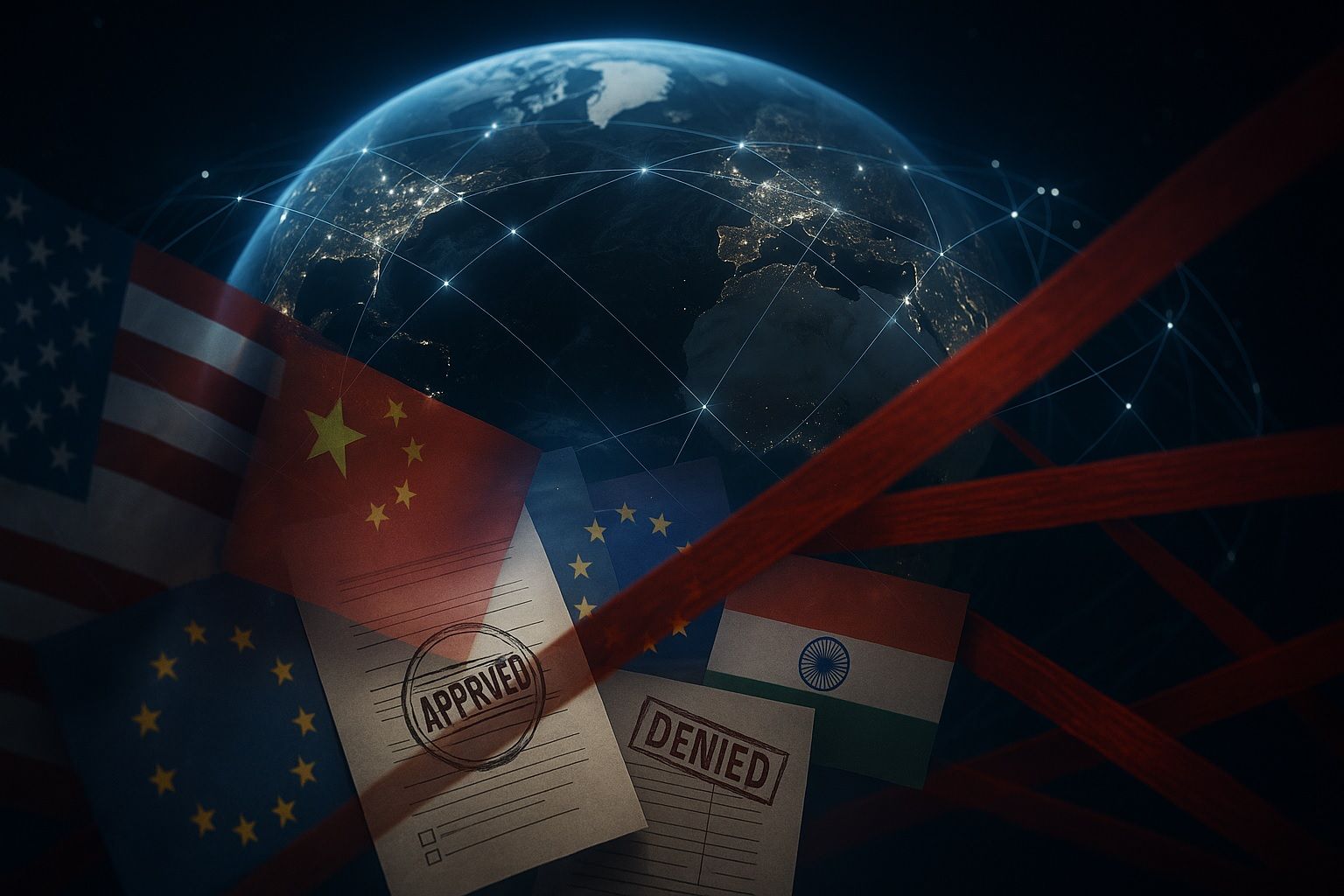
A Starlink user terminal installed on a riverboat in remote Brazil, reflecting the service’s reach into areas underserved by terrestrial internet reuters.com. Despite such promise, Starlink’s global expansion has repeatedly run into regulatory roadblocks in different countries. Starlink, the satellite internet constellation operated by SpaceX, aspires to deliver high-speed broadband worldwide – from megacities to the most remote villages. Its global ambitions to bridge the digital divide come with an inherent challenge: navigating a patchwork of national regulations and red tape. Unlike terrestrial internet services, which operate within national borders, Starlink’s space-based system crosses boundaries, requiring licensing and spectrum approval in each country it serves. Around the world, regulators have responded with varying degrees of caution or enthusiasm. Some nations have eagerly welcomed Starlink to boost connectivity, while others have imposed strict conditions, citing concerns over licensing, spectrum interference, national security, competition, and compliance with local telecom laws. This report provides a country-by-country analysis of the regulatory hurdles Starlink has encountered through 2025, highlighting supportive versus hostile environments, real examples of regulatory actions, and the evolving policy landscape.
1 4 5 6 7 8 9

Stock Market Today

  • Cramer’s Top 10: Jobs Miss, Upgrades for Palantir and Airlines, OpenAI’s Government Plan
    July 2, 2026, 9:20 AM EDT. Jim Cramer's July 2 watchlist points to a lighter-than-forecast June jobs report-nonfarm payrolls up just 57,000, well below the 115,000 expected. That pushed Treasury yields lower and futures up. OpenAI is reportedly offering the U.S. government a 5% stake to let it in on AI gains. Palantir saw DA Davidson boost the stock to buy, setting a target for 40% upside. Nvidia is rolling out a model where AI startups get compute power in exchange for a piece of revenue. Meta laid out fresh plans for cloud AI. Honeywell Aerospace, Delta, and United picked up upgrades as supply and fuel costs improved. DuPont's price target saw a small bump.
Go toTop