Browse Category

Night Sky News 20 December 2025 - 4 January 2026

Northern lights forecast tonight: Solar storm watch meets the Wolf Moon

Northern lights forecast tonight: Solar storm watch meets the Wolf Moon

NEW YORK, Jan 4, 2026, 17:16 ET U.S. space weather forecasters expect a minor geomagnetic storm on Sunday, a development that can brighten the northern night sky with auroras, also known as the northern lights. The timing matters because skywatchers are already dealing with a bright, near-full Wolf Moon that can wash out faint sky targets. Any aurora strong enough to punch through that glare would be more noticeable across northern viewing zones. The forecast also matters beyond stargazing. Geomagnetic storms, driven by bursts of solar material, can disrupt radio communications and affect satellites, adding operational risk for aviation and
4 January 2026
Night sky tonight: NOAA issues geomagnetic storm watch for New Year’s weekend as supermoon nears

Night sky tonight: NOAA issues geomagnetic storm watch for New Year’s weekend as supermoon nears

NEW YORK, January 1, 2026, 14:46 ET The U.S. National Oceanic and Atmospheric Administration has issued geomagnetic storm watches through Saturday after several solar eruptions, a setup that can strengthen the northern lights over parts of North America. NOAA Space Weather Prediction Center The timing matters because the first nights of 2026 coincide with a burst of solar activity that can ripple from the sky to critical infrastructure. Geomagnetic storms can push aurora farther from the poles and also stress systems that rely on radio and satellite links. For the public, the payoff is a chance — not a guarantee —
1 January 2026
Look up tonight: New England fireball reports roll in as Quadrantid meteors switch on

Look up tonight: New England fireball reports roll in as Quadrantid meteors switch on

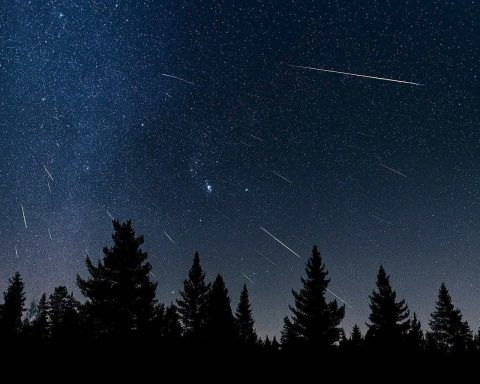
NEW YORK, December 29, 2025, 06:42 ET Dozens of skywatchers across New England filed reports of a bright “fireball” on Saturday evening, according to the American Meteor Society’s public log of sightings. The entries, clustered around 5:59 p.m. ET, came as the Quadrantid meteor shower’s active period begins, giving stargazers another reason to look up this week. (https://fireball.amsmeteors.org/members/imo_view/browse_reports?event=PENDING&page=7) The timing matters now because the Quadrantids are one of the year’s more intense meteor showers when they peak, but the best activity typically concentrates into a narrow window. That makes planning — and timing — more important than for longer, drawn-out
29 December 2025
Night Sky Tonight (December 28, 2025): Waxing Gibbous Moon, Brilliant Jupiter, and the Quadrantids Begin

Night Sky Tonight (December 28, 2025): Waxing Gibbous Moon, Brilliant Jupiter, and the Quadrantids Begin

Sunday night, December 28, 2025, brings a classic late-December sky: a bright, growing Moon that lights up the landscape, Jupiter stealing the show for evening stargazers, and the Quadrantid meteor shower officially kicking off its annual run as we head toward the New Year. Moongiant+2Sky & Telescope+2 Below is a complete, publication-ready roundup of what matters most in the sky tonight (28.12.2025)—including the latest space-weather and asteroid-flyby updates that are making the rounds in astronomy reporting and official monitoring dashboards. services.swpc.noaa.gov+2NASA Jet Propulsion Laboratory (JPL)+2 Tonight’s biggest skywatching headlines If you only have 5 minutes outside, make it these: Moon phase tonight: bright waxing gibbous (and why
28 December 2025
Night Sky Today (Dec. 26, 2025): Crescent Moon Meets Saturn Tonight as Jupiter Brightens Toward Opposition

Night Sky Today (Dec. 26, 2025): Crescent Moon Meets Saturn Tonight as Jupiter Brightens Toward Opposition

Boxing Day has a gift for anyone who can step outside for five minutes: a bright crescent Moon and Saturn hanging close together in the evening sky—an easy, naked-eye pairing that also happens to be one of the simplest ways all year to “find” Saturn for the first time. Later tonight, Jupiter takes over as the brightest planet in the sky, and it’s heading toward its January 2026 opposition, when it will be at its biggest and brightest of the season. EarthSky Below is a roundup of today’s (Dec. 26, 2025) skywatching coverage and what it adds up to in
26 December 2025
Night Sky Today (Dec. 25, 2025): Christmas Crescent Moon Near Saturn as Jupiter Shines Like a “Christmas Star”

Night Sky Today (Dec. 25, 2025): Christmas Crescent Moon Near Saturn as Jupiter Shines Like a “Christmas Star”

December 25, 2025 brings a rare “holiday-perfect” mix for skywatchers: a waxing crescent Moon low after sunset, Saturn nearby in the evening, and brilliant Jupiter rising to dominate the night—plus lingering Ursid meteors and continued attention on space weather after a week of unsettled solar wind. Space If you’re stepping outside tonight, you don’t need a telescope to have a great night. But if you did unwrap binoculars or a beginner scope for Christmas, this is one of the best nights of the season to start using them. Space Night sky highlights at a glance for Dec. 25–26 Moon phase
25 December 2025
Night Sky Today (Dec. 25, 2025): Crescent Moon and Saturn at Dusk, Brilliant Jupiter Later, Ursid Meteors, and a Christmas ISS Flyby

Night Sky Today (Dec. 25, 2025): Crescent Moon and Saturn at Dusk, Brilliant Jupiter Later, Ursid Meteors, and a Christmas ISS Flyby

Christmas night has a delightfully “classic winter sky” vibe in the Northern Hemisphere: a fat waxing crescent Moon glowing in the southwest as twilight fades, Saturn parked nearby like a steady golden bead, and Jupiter muscling its way up in the east-northeast to dominate the late-evening and overnight sky. StarDate Online Add in the last few nights of the Ursid meteor shower (still active through Dec. 26), plus a widely timed International Space Station pass before sunrise in many parts of North America and Europe, and Night Sky Today is doing its best to be a holiday encore. AP News
25 December 2025
Night Sky Today: What to See Tonight on Christmas Eve, Dec. 24, 2025 — Crescent Moon, Saturn, Jupiter, ISS Flyby and Aurora Chances

Night Sky Today: What to See Tonight on Christmas Eve, Dec. 24, 2025 — Crescent Moon, Saturn, Jupiter, ISS Flyby and Aurora Chances

Christmas Eve 2025 arrives with a sky that’s doing the most — in the best way. Tonight’s waxing crescent Moon is growing brighter (roughly “one-fifth lit” by evening), setting the stage for easy naked-eye stargazing, quick telescope looks at lunar craters along the day-night line, and a clean backdrop for planets and satellites. Space+1 And yes: there’s also a very real chance you’ll see a bright, silent “moving star” glide overhead — the International Space Station — timed so neatly around the holiday that it’s already become part of the day’s skywatching headlines. Space+1 Below is a detailed, news-driven guide
24 December 2025
Night Sky Tonight (Dec. 23, 2025): Crescent Moon Earthshine, Northern Lights Alert, and the Ursids’ Final ActNight Sky TonightNight Sky Tonight (Dec. 23, 2025): Crescent Moon Earthshine, Northern Lights Alert, and the Ursids’ Final Act

Night Sky Tonight (Dec. 23, 2025): Crescent Moon Earthshine, Northern Lights Alert, and the Ursids’ Final ActNight Sky TonightNight Sky Tonight (Dec. 23, 2025): Crescent Moon Earthshine, Northern Lights Alert, and the Ursids’ Final Act

Dec. 23, 2025 — Tonight’s sky is doing that classic winter trick: it gets dark early, stays dark long, and then quietly hands you a few genuinely photogenic targets as a reward for being a warm-blooded mammal who chose to go outside anyway. The main storylines in Night Sky Today (December 23, 2025) are straightforward and very worth your time: a thin waxing crescent Moon with “earthshine” shortly after sunset, a NOAA-backed aurora chance that could push the northern lights into parts of the U.S., and the Ursid meteor shower still ticking through its final nights of the year. American
23 December 2025
Night Sky Today (22.12.2025): Ursid Meteor Shower Peak, Aurora Alert, and the Best Planets to Spot Tonight

Night Sky Today (22.12.2025): Ursid Meteor Shower Peak, Aurora Alert, and the Best Planets to Spot Tonight

The “Night Sky Today” headline for 22.12.2025 is basically a gift-wrapped astronomy combo: the Ursid meteor shower is peaking on the darkest nights of the month, the Moon is only a slim waxing crescent (so it won’t wash out faint meteors), and bright Jupiter is dominating the late-evening sky. Add in a NOAA space-weather forecast calling for minor geomagnetic storming (the kind that can boost aurora chances), and you’ve got one of the most watchable late-December skies in years—assuming clouds don’t crash the party. NOAA SWPC+3TIME+3American Meteor Society+3 Below is a detailed, news-focused guide to what’s happening in the sky
22 December 2025
Night Sky Tonight (Dec. 21, 2025): Winter Solstice Stargazing, Ursid Meteor Shower Peak, Jupiter’s Glow — and Interstellar Comet 3I/ATLAS

Night Sky Tonight (Dec. 21, 2025): Winter Solstice Stargazing, Ursid Meteor Shower Peak, Jupiter’s Glow — and Interstellar Comet 3I/ATLAS

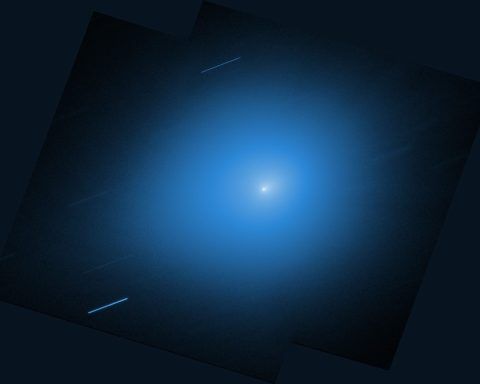
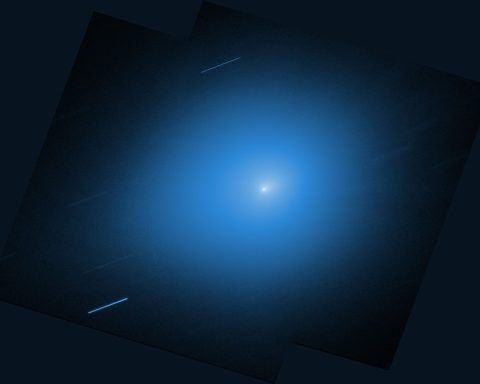
If you’ve been waiting for a “big” skywatching night, Sunday, December 21, 2025 delivers one of the most atmospheric setups of the year: it’s the December solstice, bringing the longest night and shortest day for the Northern Hemisphere—precisely when a thin crescent Moon keeps skies dark for the Ursid meteor shower. And while Jupiter dominates the late evening, skywatchers with the right telescope may still have a shot at a once-in-a-lifetime target: interstellar comet 3I/ATLAS, which made its closest pass by Earth just two nights ago. NASA Science+3Time and Date+3EarthSky+3 Below is a practical, publication-ready guide to Night Sky Today—built
21 December 2025
Night Sky Today (Dec. 20, 2025): New Moon Darkness, Jupiter All Night, Ursid Meteors Next, and Interstellar Comet 3I/ATLAS

Night Sky Today (Dec. 20, 2025): New Moon Darkness, Jupiter All Night, Ursid Meteors Next, and Interstellar Comet 3I/ATLAS

Saturday, December 20, 2025 brings one of the most skywatcher-friendly setups of the year: a New Moon has wiped out moonlight, Jupiter is blazing in the evening sky and staying up late, the Ursid meteor shower is building toward its peak, and an interstellar comet—3I/ATLAS—is still within reach of backyard telescopes just after its closest pass by Earth. AP News+4EarthSky+4Scientific American+4 If you’ve been waiting for a “go night” to step outside, let your eyes adjust, and simply follow bright signposts across the sky, tonight is it. New Moon Night: The Dark-Sky Advantage Peaks Now The Moon reaches New Moon
20 December 2025
1 2 3 6

Stock Market Today

Broadcom Stock Gets a Google AI Spend Lift as Jefferies Sees 60% Upside

Broadcom Stock Gets a Google AI Spend Lift as Jefferies Sees 60% Upside

7 February 2026
Google raised its 2026 capital expenditure forecast to $175 billion–$185 billion, with most spending expected on data-center chips. Broadcom shares rose about 2% after the announcement, while Nvidia and AMD slipped. Jefferies reiterated a buy rating on Broadcom, maintaining a $500 price target, implying a 62% upside from Wednesday’s close.
No $2,000 IRS stimulus check is coming in February 2026 — but Trump’s tariff-check talk keeps the rumors alive

No $2,000 IRS stimulus check is coming in February 2026 — but Trump’s tariff-check talk keeps the rumors alive

7 February 2026
The IRS has not announced new federal stimulus payments for February 2026, and Congress has not approved fresh checks. Trump told NBC he is considering $2,000 tariff rebate checks but has not committed, saying any payout would likely come later in 2026. The IRS warns taxpayers to ignore texts and emails about “stimulus payments” and verify notices through official channels.
Go toTop