Browse Category

Space Industry News 16 July 2025 - 18 September 2025

Swiss Space Industry Soars: Inside Switzerland’s Satellite & NewSpace Revolution

Swiss Space Industry Soars: Inside Switzerland’s Satellite & NewSpace Revolution

Introduction Switzerland may be known for its precision watches and banks, but it’s also quietly becoming a powerhouse in the space and satellite industry. With a dynamic ecosystem that blends academic excellence, deep-tech entrepreneurship, and strong public support, the Alpine nation is making its mark beyond Earth’s atmosphere. Renato Krpoun, head of the Swiss Space Office, attributes this success to Switzerland’s unique environment: “Switzerland’s stable political environment, neutrality and high standard of living are fundamental pillars for the success of the Swiss space ecosystem.” globalairspaceradar.com. In recent years, the Swiss space sector has seen record investments, pioneering start-ups, and major
18 September 2025
Brazil’s Space Industry Is Taking Off: New Players, Big Plans, and a Sky-High 2040 Outlook

Brazil’s Space Industry Is Taking Off: New Players, Big Plans, and a Sky-High 2040 Outlook

Key Facts Historical Development of Brazil’s Space & Satellite Industry Brazil’s space journey began in the early 1960s amid the space race era. In 1961, the government formed its first space research group (GOCNAE) and by 1964 started launching home-grown Sonda sounding rockets for high-atmosphere research en.wikipedia.org. Over the next two decades, Brazil methodically built up expertise in rocketry and satellite technology, albeit under military oversight during the Cold War. A milestone plan, the Missão Espacial Completa Brasileira (MECB) launched in 1980, aimed to make Brazil self-sufficient in space tech – including developing launch vehicles, a launch site, and a
16 September 2025
Luxembourg’s Space Boom: How a Tiny Country Became a Satellite Powerhouse

Luxembourg’s Space Boom: How a Tiny Country Became a Satellite Powerhouse

Key Facts (2024–2025): Historical Development (1980s–2010s) Luxembourg’s space ambitions began in the mid-1980s. In 1985 the government launched SES (Société Européenne des Satellites), Europe’s first private satellite operator ses.com. SES’s inaugural Astra 1A satellite was launched in 1988, opening up direct-to-home TV across Europe ses.com. Throughout the 1990s and 2000s SES expanded globally, acquiring U.S. satellites and building a fleet that today covers most of the Earth ses.com ses.com. Luxembourg joined the European Space Agency (ESA) in 2005, cementing its role in Europe’s space efforts gouvernement.lu. However, for decades space in Luxembourg was largely limited to satcom and broadcasting. In
Spain’s Stellar Ascent: Inside the Boom of Its Space and Satellite Industry

Spain’s Stellar Ascent: Inside the Boom of Its Space and Satellite Industry

Historical Evolution: From Early Tracking to First Satellites Spain’s space journey began in the dawn of the Space Age. In the 1960s, Spain partnered with NASA to host critical tracking stations – Maspalomas in the Canary Islands and Robledo de Chavela near Madrid – which relayed signals for NASA’s Mercury, Gemini, and Apollo missions ibanet.org. (Maspalomas would later support Apollo 11 and Skylab, reflecting Spain’s early contribution to human spaceflight esa.int esa.int.) In 1966, Spain built the El Arenosillo launch site in Huelva for suborbital sounding rockets surinenglish.com, marking its first steps toward launch capability. By 1974, Spain achieved a
From Startup Nation to Space Nation: Inside Israel’s Booming Satellite Industry

From Startup Nation to Space Nation: Inside Israel’s Booming Satellite Industry

Historical Background: From Ofeq to the Moon Israel’s space journey began modestly but ambitiously. In the 1960s, academia and defense researchers laid the groundwork for a national space program en.wikipedia.org. The Israeli Space Agency (ISA) was established in 1983 under the Ministry of Science (now Innovation, Science and Technology) to coordinate space activities en.wikipedia.org. Just five years later, in September 1988, Israel launched Ofeq-1, its first satellite, using a domestically developed Shavit rocket from Palmachim Airbase en.wikipedia.org. This successful launch made Israel one of only 8 countries at the time capable of launching satellites into orbit, a remarkable feat for
12 September 2025
Space Race Frenzy: Satellite Triumphs, Cosmic Surprises & Billion-Dollar Bets Galvanize Space Industry

Space Race Frenzy: Satellite Triumphs, Cosmic Surprises & Billion-Dollar Bets Galvanize Space Industry

Key Facts Government Agencies: New Satellites, ISS Resupply & Artemis Science NASA & ESA – Ocean Satellite and Artemis Research: On Sept. 11, NASA and the European Space Agency spotlighted their upcoming Sentinel-6B oceanography satellite, due to launch in November. Sentinel-6B will succeed the current Sentinel-6 Michael Freilich in tracking sea-level rise and ocean conditions. Its altimeter radar will monitor sea surface height, wave heights and wind speeds – data vital for marine weather forecasts that warn ships of storms and high seas nasa.gov. “Sentinel-6B will soon take on the vital task of improving ocean and weather forecasts to help
12 September 2025
South Korea’s Space Revolution: From Late Bloomer to Satellite Powerhouse by 2030

South Korea’s Space Revolution: From Late Bloomer to Satellite Powerhouse by 2030

Sources: South Korean news agencies and official statements were used to ensure up-to-date information and quotes. Key references include Yonhap News Agency reports on KASA’s establishment and budget en.yna.co.kr en.yna.co.kr, the Hanwha-KARI Nuri rocket transfer koreajoongangdaily.joins.com koreajoongangdaily.joins.com, and startup launch successes en.yna.co.kr, as well as JoongAng Daily and Korea Times features on industry trends koreajoongangdaily.joins.com koreajoongangdaily.joins.com. These sources provide a factual basis for the history, current developments, and future outlook discussed. All citations are preserved in the format provided.
Italy’s Space Industry Skyrockets: Inside the Satellite Boom and Race to 2030

Italy’s Space Industry Skyrockets: Inside the Satellite Boom and Race to 2030

Key Facts Historical Development of Italy’s Space & Satellite Sector Italy’s engagement with space stretches back to the dawn of the Space Age. In the 1950s, visionaries like aerospace engineer Luigi Broglio and physicist Edoardo Amaldi laid the groundwork for Italy’s space program Wetheitalians Wetheitalians. Their efforts led to the San Marco project, a collaboration with NASA that saw Italy design and build its own satellites while the U.S. provided launch vehicles. On December 15, 1964, Italy’s first satellite, San Marco 1, was successfully launched – making Italy the fifth country to put a satellite in orbit (and notably, one
Britain’s New Space Race: Inside the UK’s Booming Space & Satellite Industry

Britain’s New Space Race: Inside the UK’s Booming Space & Satellite Industry

Key Facts Summary Historical Development of the UK Space & Satellite Sector The UK has a long if understated space heritage, with several pivotal milestones over the past decades: In summary, the UK space sector’s history is one of early scientific achievements, a long period of reliance on partners, and a recent renaissance focusing on commercialization. From building satellites that connect the world to laying the groundwork for launching them, Britain’s space journey has set the stage for a new chapter of growth. Current Industry Landscape: Size, Scope and Key Players Today the United Kingdom boasts one of the world’s
8 September 2025
India’s Space Industry Skyrockets: From ISRO’s Legacy to a $77 Billion Future

India’s Space Industry Skyrockets: From ISRO’s Legacy to a $77 Billion Future

Key Facts: Introduction India’s space and satellite industry is undergoing a transformative boom, turning the country into one of the hottest “new space” markets to watch. Long synonymous with ISRO’s thrifty but trailblazing missions – such as the Mars Orbiter Mission that reached the red planet in 2014 for just $74 M (cheaper than the Hollywood movie Gravity) reuters.com – India is now leveraging that legacy to build a vibrant commercial space ecosystem. In recent years, a series of government reforms, startup successes, and high-profile missions have dramatically changed the landscape. The once entirely state-driven program is opening up to private
7 September 2025
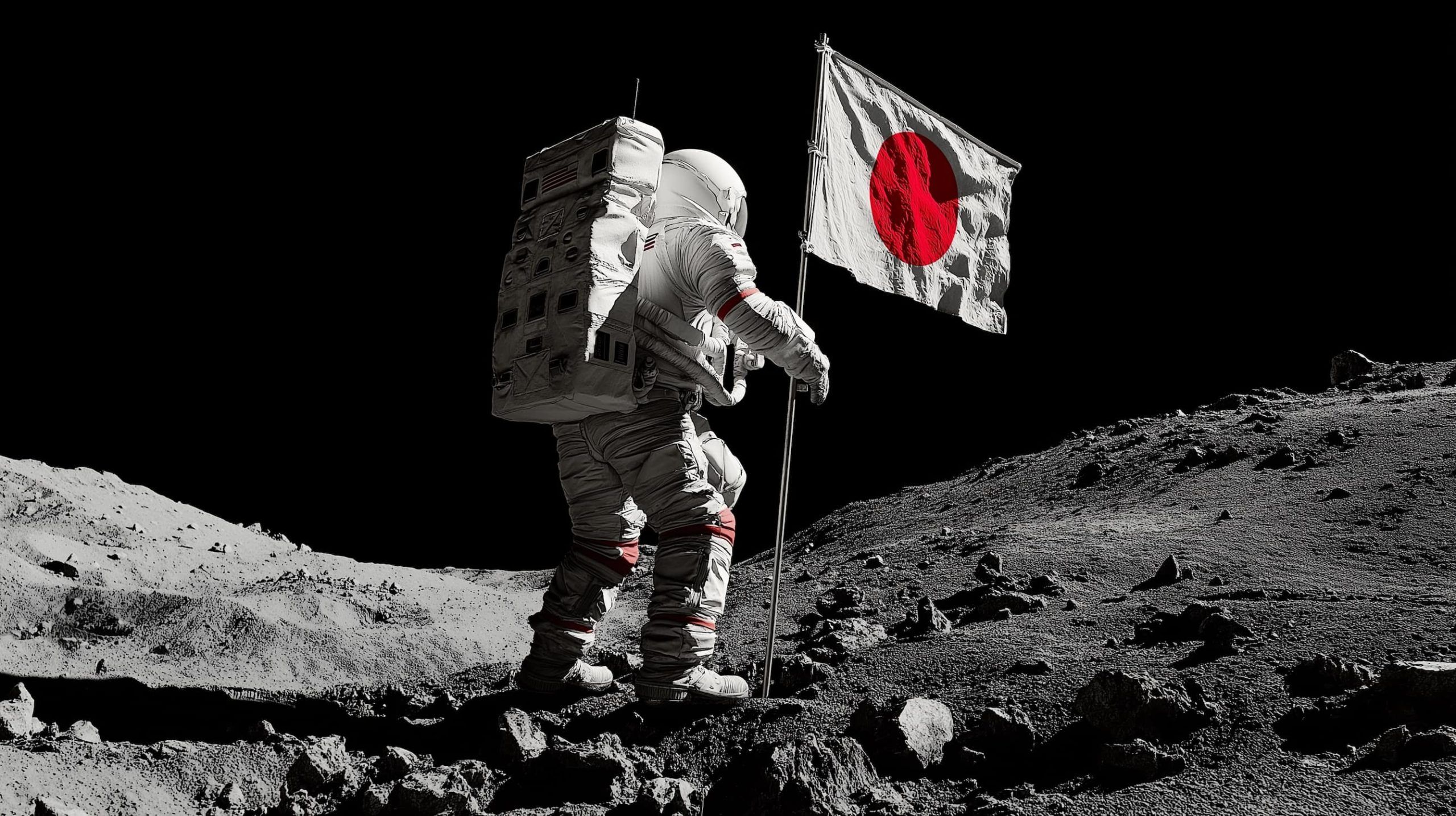
Japan’s Space and Satellite Industry: A Comprehensive 2025 Market Report

Japan’s Space and Satellite Industry: A Comprehensive 2025 Market Report

Key Facts Historical Development of Japan’s Space Program Japan’s journey in space began in the 1950s and has grown from university research rockets to a major national endeavor. In 1955, Professor Hideo Itokawa’s team launched the first pencil rocket as a rudimentary experiment en.wikipedia.org. By the 1960s, Japan developed larger sounding rockets (the Kappa and Lambda series) leading up to its first satellite launch. In February 1970, Japan successfully launched the Ohsumi satellite on a Lambda-4S rocket, making Japan the world’s fourth spacefaring nation to launch an indigenous satellite into orbit (after the USSR, USA, and France) u-tokyo.ac.jp. Throughout the
Space Industry Blastoff: Top Satellite & Space Developments (Sept. 2–3, 2025)

Space Industry Blastoff: Top Satellite & Space Developments (Sept. 2–3, 2025)

Key Facts Launch Highlights Starlink Surge: SpaceX kicked off September with back-to-back Starlink launches. On Sept. 2 at 8:51 p.m. Pacific (0351 UTC Sept. 3), a Falcon 9 lifted off from Vandenberg SFB in California carrying 24 Starlink internet satellites to polar orbit spaceflightnow.com space.com. Notably, this mission (Starlink Group 17-8) flew a brand-new first stage booster, a rarity for SpaceX’s now highly reflown fleet space.com. The booster – only the 7th new Falcon 9 introduced in over 100 launches this year spaceflightnow.com – successfully touched down on the Of Course I Still Love You droneship ~8½ minutes after liftoff spaceflightnow.com. “Reusability has fueled the growth for human
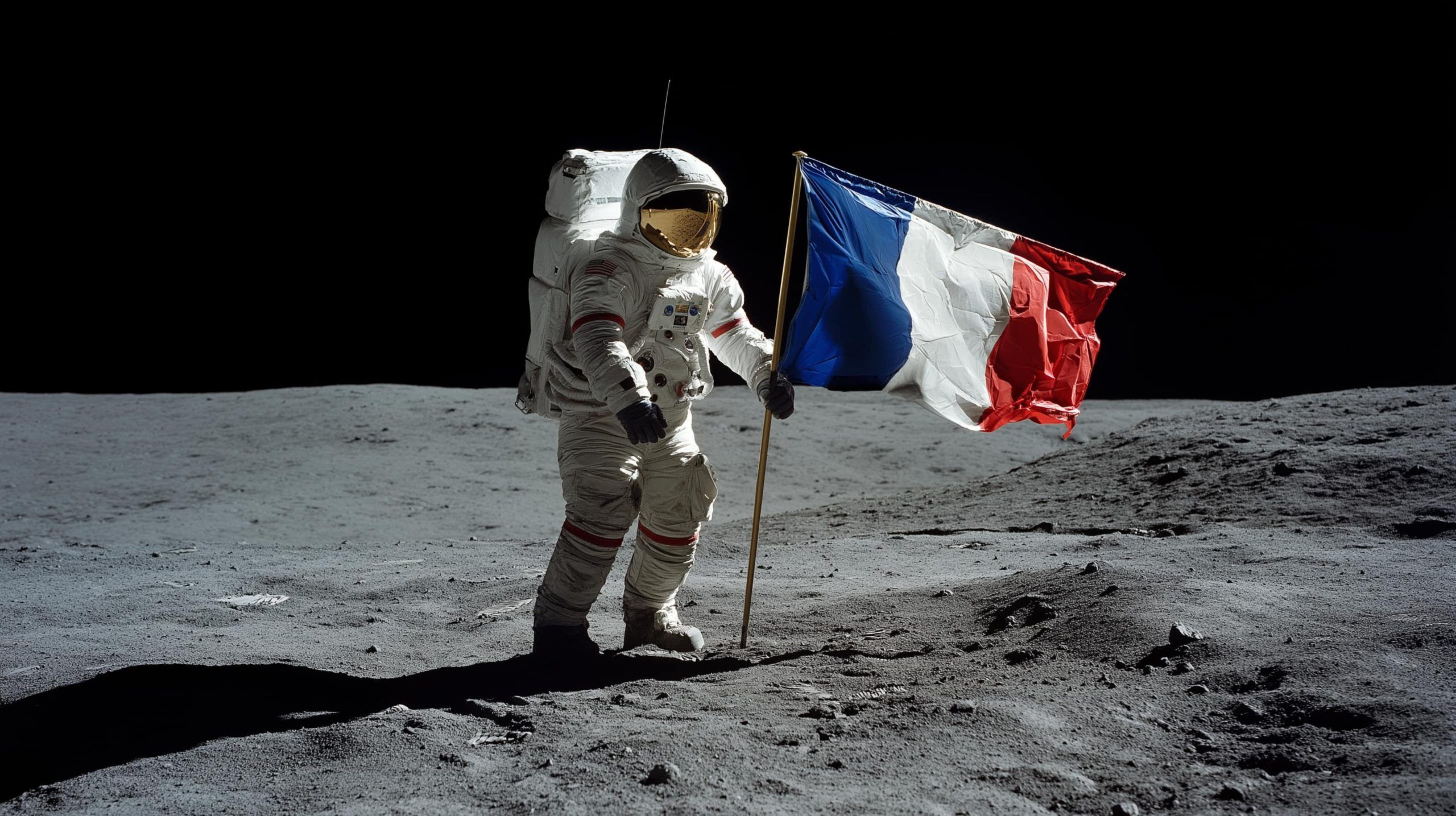
Rocketing Ambitions: Inside France’s Booming Space & Satellite Industry in 2025

Rocketing Ambitions: Inside France’s Booming Space & Satellite Industry in 2025

Key Facts Historical Evolution of France’s Space Sector France’s space journey began in the Cold War era with a quest for strategic independence. General de Gaulle established CNES (Centre National d’Études Spatiales) in 1961 to make France an autonomous space power cnes.fr. This goal was dramatically realized on 26 November 1965, when France’s Diamant rocket launched the Astérix satellite into orbit from Algerian soil – making France the third country (after the USSR and USA) to launch its own satellite cnes.fr cnes.fr. This early success kick-started a proud legacy of French “firsts,” including the opening of the Guiana Space Centre
Global Space Industry Soars to New Heights: Inside the $500+ Billion Space Boom (2025 Report)

Global Space Industry Soars to New Heights: Inside the $500+ Billion Space Boom (2025 Report)

Key Facts Historical Overview: From Moon Race to the NewSpace Era In the mid-20th century, government programs completely dominated space exploration. The Cold War space race saw the Soviet Union and United States achieve seminal milestones – from Sputnik (1957) and Yuri Gagarin’s first orbit (1961) to the U.S. Apollo 11 Moon landing in 1969. Over the following decades, government-led endeavors built the foundations of today’s industry: satellites for communications and GPS, the Space Shuttle program (1981–2011), and the International Space Station (assembled 1998–2011). Private companies played a supporting role as contractors to NASA, the Soviet space program, etc., but
2 September 2025
U.S. Space Industry Blast-Off: Inside America’s $600B Space Boom and the Race to a $1 Trillion Future

U.S. Space Industry Blast-Off: Inside America’s $600B Space Boom and the Race to a $1 Trillion Future

Introduction Space is no longer just about astronauts and moonwalks – it’s big business and a pillar of the U.S. economy. In 2024, the global space economy reached an all-time high of $613 billion, reflecting 7.8% year-over-year growth spacefoundation.org. The United States is at the forefront of this boom, accounting for roughly 37% of worldwide space revenues ts2.tech ts2.tech. “Space is not just a frontier for exploration; it is a cornerstone of our economy and security,” says Space Foundation CEO Heather Pringle spacefoundation.org. From government rocket programs to billionaire-led rocket companies, America’s space sector has transformed into a fast-growing industry –
Poland’s Space Industry Is Taking Off: Inside the Rapid Rise of a New European Space Power

Poland’s Space Industry Is Taking Off: Inside the Rapid Rise of a New European Space Power

Key Facts Historical Overview of Poland’s Space Activities Poland’s engagement with space dates back to the Cold War era. As a Soviet-aligned nation, Poland participated in the Interkosmos program, which involved Eastern Bloc scientists in Soviet-led space missions en.wikipedia.org. During this time, Polish researchers built instruments for international missions – over the decades, 80+ Polish-made instruments have flown on various Soviet, ESA, and NASA spacecraft fac.org.uk. The pinnacle of this early period was in 1978, when Mirosław Hermaszewski became the first (and to date, only) Pole to travel to space, spending 8 days aboard the Soviet Salyut 6 station as
China’s Space Boom: 2025 Market Report Reveals a $350 Billion Space & Satellite Superpower

China’s Space Boom: 2025 Market Report Reveals a $350 Billion Space & Satellite Superpower

Historical Overview of China’s Space & Satellite Industry China’s journey to the stars began during the Cold War. In 1958, Mao Zedong’s government launched the “Two Bombs, One Satellite” program to develop nuclear bombs, missiles, and satellites indigenously warontherocks.com. This led to China’s first satellite – Dong Fang Hong 1 (“The East is Red”) – successfully launched into orbit in 1970, making China the world’s fifth spacefaring nation warontherocks.com. The early decades of China’s space effort were entirely state-run, focused on national security and basic communications. From 1970 through the 2000s, state-owned enterprises steadily put dozens of satellites into orbit for
2 September 2025
Space IPOs, Mega-Hacks, and Tariff Twists: Non‑AI Tech News Roundup (Aug 8–9, 2025)

Space IPOs, Mega-Hacks, and Tariff Twists: Non‑AI Tech News Roundup (Aug 8–9, 2025)

Sony raised its annual profit forecast 4% to ¥1.33 trillion ($9 billion) on tariff relief and strong PlayStation demand, with tariff impact now expected at ¥70 billion, down from ¥100 billion. Sony’s PlayStation division sold 2.5 million PS5 consoles in Q1, up 4%, helping gaming profits double on software and network services. SMIC reported Q2 revenue of $2.2 billion, up 16% year over year, with net profit down 19.5% as factories ran at 92.5% utilization. President Trump demanded Intel CEO Lip-Bu Tan resign over China ties, sending Intel stock down about 3% as the company secured $8 billion in federal
Space Race Heats Up: Satellite Launch Blitz, Lunar Power Plays & Billion-Dollar Space Deals (Aug 5–6, 2025 Roundup)

Space Race Heats Up: Satellite Launch Blitz, Lunar Power Plays & Billion-Dollar Space Deals (Aug 5–6, 2025 Roundup)

SpaceX Sets Launch Records, Amazon’s Kuiper Mission Up Next Rocket Lab Delivers Japanese Radar Satellite China Launches Internet Satellites, Sparks Debris Concerns NASA Mission Updates: Small-Sat Setbacks & Mars Rover Milestone ISS Crew Rotation and U.S.-Russia Cooperation Europe Preps Ariane 6 Debut and Future Missions Big Commercial Deals: Smartphone Constellations & Moon Ventures Space Policy Highlights: Nuclear Power in the Moon Race Sources: Space.com; SpaceNews; NASA Press Releases and Blogs; Reuters; Associated Press; ESA; TS2 Space Roundup; SatNews; Advanced Television; Qazinform space.com news.satnews.com ts2.tech abcnews.go.com ts2.tech nasa.gov science.nasa.gov ts2.tech cfpublic.org ts2.tech esa.int electronicspecifier.com ts2.tech advanced-television.com ts2.tech spacepolicyonline.com spacepolicyonline.com.
6 August 2025
Galactic Gold Rush: Global Satellite & Space Industry Soars Toward $1 Trillion

Galactic Gold Rush: Global Satellite & Space Industry Soars Toward $1 Trillion

In 2024 the global space economy was valued at roughly $550–600 billion, with projections to approach $1 trillion within 10–15 years. North America, led by the U.S., accounted for about 60% of world space spending in 2024, with American firms building 83% of all commercial satellites launched that year and earning 69% of global satellite manufacturing revenue, while capturing about 65% of commercial launch revenues. 2024 set a record with 259 orbital launches and 2,695 satellites deployed, driven largely by SpaceX’s activity. Global satellite manufacturing revenues in 2024 reached about $20 billion, up 17% from 2023, with the U.S. responsible

Stock Market Today

Data Center Stocks Surge Into the Weekend: Digital Realty, Equinix and Vertiv Set Up a Big Week Ahead

Data Center Stocks Surge Into the Weekend: Digital Realty, Equinix and Vertiv Set Up a Big Week Ahead

7 February 2026
Digital Realty, Equinix, and Vertiv shares surged Friday, with Vertiv up 10% and Digital Realty rising 4.1%, as investors rotated back into AI-linked data center stocks. The move followed Amazon’s $200 billion and Alphabet’s $175–185 billion 2026 capex targets. Digital Realty set 2026 core FFO guidance at $7.90 to $8.00 per share. Wall Street ended the week broadly higher, led by chipmakers.
Quantum computing stocks bounce hard: IonQ, Rigetti, D‑Wave rally as traders reset for a data-heavy week

Quantum computing stocks bounce hard: IonQ, Rigetti, D‑Wave rally as traders reset for a data-heavy week

7 February 2026
IonQ, Rigetti, D‑Wave, and Quantum Computing Inc shares surged 15–21 percent Friday, erasing losses from the previous session. The rebound followed a Wall Street rally that sent the Dow above 50,000 for the first time. IonQ remains under scrutiny after a short-seller report questioned its Pentagon contract revenue. Investors await delayed U.S. jobs and inflation data next week.
Go toTop