Today: 3 July 2026
Browse Category

NASDAQ:INTC 12 June 2025 - 8 August 2025

Tech Turmoil: Courts Hacked, Space IPO Soars & Tech Titans Tussle – Global Roundup (Aug 7–8, 2025)

Tech Turmoil: Courts Hacked, Space IPO Soars & Tech Titans Tussle – Global Roundup (Aug 7–8, 2025)

Sony surprised investors by raising its profit forecast 4% to ¥1.33 trillion for the year, crediting a smaller-than-feared hit from U.S. trade tariffs reuters.com. The Japanese giant said tariff impacts were now estimated at ¥70 billion instead of ¥100 billion, as new trade deals eased pressure reuters.com. Sony’s PlayStation division also boosted the outlook—first-quarter PS5 console sales rose 4% to 2.5 million units amid strong demand for games and network services reuters.com. “Sony is further cementing its dominance in high fidelity gaming,” observed Serkan Toto of Kantan Games, adding “in my view, Sony is now competing with the PC more than the Xbox” reuters.com. The upbeat forecast and expert praise highlight Sony’s growing clout in entertainment even as it navigates geopolitical headwinds. China’s top chipmaker SMIC reported unexpected resilience despite escalating U.S. tariffs. The foundry said U.S. trade policy hasn’t caused the “hard landing” it once feared, thanks to contingency plans and surging domestic demand keeping its factories at full capacity until October reuters.com reuters.com. Co-CEO Zhao Haijun noted many clients stockpiled chips or found new suppliers, minimizing the tariff impact: “everyone has either stocked up enough inventory for this year and next year, or found other suppliers… So I
RISC-V vs ARM vs x86: The 2025 Silicon Architecture Showdown

RISC-V vs ARM vs x86: The 2025 Silicon Architecture Showdown

The battle for computing supremacy is heating up in 2025, as three major CPU architectures – RISC-V, ARM, and x86 – vie for dominance. These instruction set architectures underpin everything from tiny IoT sensors to supercomputers. x86 has ruled PCs and servers for decades, ARM now powers virtually all smartphones, and newcomer RISC-V is exploding in popularity as an open alternative. Each has unique strengths: x86 offers brute-force performance and a vast software legacy, ARM boasts efficiency and a mature mobile/embedded ecosystem, and RISC-V’s open design promises unprecedented flexibility and innovation eetimes.eu eetimes.eu. This report provides an in-depth comparison of the three architectures – covering technical foundations, performance, power efficiency, flexibility, licensing, ecosystem maturity, security, hardware implementations, and the latest trends as of mid-2025. We’ll also highlight expert insights, industry quotes, and upcoming products. The stakes are high: whoever leads in this “silicon architecture showdown” will shape the future of computing across mobile devices, cloud data centers, edge AI, and beyond. At a high level, the x86 architecture is the classic example of a CISC design, while both ARM and RISC-V follow RISC principles. In practice, modern CPUs blur the lines – but the design philosophies still influence each architecture’s
Epic Handheld Gaming Showdown: Lenovo Legion Go S vs Steam Deck OLED vs MSI Claw 8 AI+

Epic Handheld Gaming Showdown: Lenovo Legion Go S vs Steam Deck OLED vs MSI Claw 8 AI+

Handheld PC gaming is heating up with powerful contenders emerging to challenge Valve’s Steam Deck. In this comprehensive comparison, we pit Lenovo’s Legion Go S, Valve’s Steam Deck, and MSI’s Claw 8 AI+ against each other across all critical dimensions. From raw hardware specs and gaming performance to battery endurance, display quality, and design ergonomics, we leave no stone unturned. We also include expert quotes, latest news, and real-world insights to help you decide which device reigns supreme in 2025’s handheld gaming arena. Each of these portables packs custom silicon and ample memory to run modern games, but their internals differ significantly:
10 Non‑AI Tech Shockers: Space Triumphs, Gadget Surprises & More (Aug 1–2, 2025)

10 Non‑AI Tech Shockers: Space Triumphs, Gadget Surprises & More (Aug 1–2, 2025)

Intel’s Massive Restructuring: Chip giant Intel confirmed sweeping layoffs of around 24,000 employees – roughly one-quarter of its workforce – as new CEO Lip-Bu Tan slashes projects and retreats from costly expansions theverge.com theverge.com. Intel is even halting planned “mega-fab” chip factories in Germany and Poland amid the belt-tightening. “I do not subscribe to the belief that if you build it, they will come… under my leadership, we will build what customers need when they need it,” Tan declared, emphasizing a return to demand-driven growth theverge.com. This hard pivot comes after years of troubles for Intel, which is aiming to regain its footing in the semiconductor race. AMD’s 64-Core Beast: In brighter chip news, AMD unleashed the Ryzen Threadripper 9980X, a high-end desktop CPU packing 64 cores and 128 threads. The Zen 5-based monster can boost up to 5.4 GHz and carries a hefty $4,999 price tag amd.com. Shipping began July 31, and early reviews say these 64 cores “soar for serious work,” delivering unparalleled performance for creators and engineers techspot.com. AMD’s new Threadripper 9000 series aims to cement the company’s lead in ultra-powerful workstation chips.
Wall Street Shocked by AI Surge: What Happened on July 24–25?

Wall Street Shocked by AI Surge: What Happened on July 24–25?

Major stock indices powered to fresh record highs on Thursday, July 24, as blockbuster AI-driven earnings ignited a tech rally reuters.com. The S&P 500 edged up 0.07% to notch its fourth consecutive record close, while the Nasdaq Composite gained 0.18% to its own all-time high reuters.com newsandsentinel.com. In contrast, the Dow Jones Industrial Average slumped 0.7%, dragged down by non-tech names less tied to the AI frenzy reuters.com. Investors were buoyed by a perfect storm of upbeat factors – resilient economic data, hopes for trade deal progress, and earnings that far exceeded expectations. “Investors are feeling optimistic about trade negotiations, about the economy, the trend in inflation, as well as the better-than-expected Q2 earnings reports,” noted Sam Stovall, chief investment strategist at CFRA Research reuters.com. With artificial intelligence the standout growth driver, traders poured into tech and AI plays, overshadowing worries about tariffs or recession for now. Google’s parent Alphabet stole the spotlight with robust Q2 results that underscored the payoff from heavy AI investment reuters.com. The company reported a fatter profit than analysts expected and announced a $10 billion boost to its 2025 capital expenditure budget – now $85 billion – largely to expand AI chips and data centers
Dell XPS vs MacBook Pro vs Spectre vs ThinkPad vs Surface vs ZenBook vs Razer: 2025’s Ultimate Premium Laptop Showdown

Dell XPS vs MacBook Pro vs Spectre vs ThinkPad vs Surface vs ZenBook vs Razer: 2025’s Ultimate Premium Laptop Showdown

When it comes to high-end laptops, Dell’s XPS lineup has long been a gold standard – but rivals like Apple’s MacBook Pro, HP’s Spectre x360, Lenovo’s ThinkPad X1 series, Microsoft’s Surface Laptop, Asus’s ZenBook, and Razer’s Blade are pulling out all the stops. In 2024–2025, each of these flagship families has upped the ante with cutting-edge designs, powerful new processors, stunning displays, and bold innovations. In this in-depth comparison, we pit the Dell XPS 13, 15, and 17 against their fiercest competitors in design, performance, display quality, battery life, input devices, ports, value, and user satisfaction. Who comes out on top in the battle of premium laptops? Let’s break it down category by category, with expert insights and the latest 2025 updates along the way. Dell XPS: Dell’s XPS laptops are famed for their sleek, modern design – aluminum unibody exteriors with carbon-fiber or glass-fiber composite palmrests that keep them light yet sturdy. The XPS 13 introduced the near-borderless InfinityEdge display, setting trends for slim bezels across the industry. These machines feel premium, with tight build tolerances and minimal flex. However, Dell’s pursuit of thinness sometimes comes with trade-offs in thermals and upgradability. Still, XPS laptops are often considered some
Shockwaves in Silicon: Global Chip Industry’s Two-Day Upheaval (July 23–24, 2025)

Shockwaves in Silicon: Global Chip Industry’s Two-Day Upheaval (July 23–24, 2025)

AI Chips and Memory Leap Forward: The semiconductor news cycle was dominated by advancements in artificial intelligence hardware. SK Hynix – a key memory supplier to Nvidia – revealed it is on track to double its sales of high-bandwidth memory chips this year to meet surging AI demand reuters.com reuters.com. Buoyed by “strong demand for artificial intelligence chips and customers stockpiling ahead of potential U.S. tariffs,” SK Hynix announced plans to boost capital spending on cutting-edge chip equipment, especially for HBM production reuters.com reuters.com. Company executives said major clients are launching new AI models that will drive even greater need for advanced memory, prompting preemptive investments to secure future supply reuters.com. Industry analysts viewed the spending hike as a bold bet on technology: “Today’s announcement on boosting this year’s CAPEX appears to reflect SK Hynix’s confidence,” noted Ryu Young-ho of NH Investment & Securities reuters.com. Chipmakers Embrace Next-Gen Nodes: In logic chips, Intel’s new CEO Lip-Bu Tan is refocusing the company’s strategy around an upcoming “14A” fabrication process, shifting away from the 18A process that former leadership had poured billions into reuters.com. The goal is to make Intel’s foundry unit more competitive for external customers and catch up to Taiwan’s
2025 CPU Wars: Intel vs AMD vs Apple M‑Series – The Ultimate Processor Showdown

2025 CPU Wars: Intel vs AMD vs Apple M‑Series – The Ultimate Processor Showdown

The year 2025 finds the CPU landscape more competitive than ever. Long-standing rivals Intel and AMD are battling fiercely for desktop and server supremacy, while Apple’s M‑series ARM-based chips have upended expectations in laptops. Other players like Qualcomm and MediaTek are advancing mobile and ARM designs, aiming to challenge the x86 incumbents in new markets. This report provides an in-depth comparison of the latest and most popular CPUs across desktop, laptop, workstation, and server segments, including real-world performance benchmarks, power efficiency, AI capabilities, integrated GPUs, pricing, and thermal output. We also highlight expert commentary from industry analysts and engineers, and examine which processors excel for gaming, content creation, mobile computing, and enterprise/cloud use cases. To keep things organized, we’ll break down the competition by category and brand, then summarize key specs and benchmark scores in a comparison table. Finally, we’ll look at how these chips fare in different use scenarios and peek at upcoming releases shaping the future of computing.
GPU Wars 2025: NVIDIA vs AMD vs Intel – The Ultimate Graphics Showdown

GPU Wars 2025: NVIDIA vs AMD vs Intel – The Ultimate Graphics Showdown

The graphics card arena in mid-2025 is more dynamic than ever. Three major players – NVIDIA, AMD, and Intel – are vying for supremacy across gaming, content creation, and even artificial intelligence. Each brings its own philosophy: NVIDIA pushes cutting-edge performance and features, AMD focuses on value and high efficiency, and Intel’s newcomer Arc GPUs aim to disrupt the budget and mid-range market. In this comprehensive comparison, we’ll break down the latest GPU line-ups, examine how they stack up in performance, value, power efficiency, and features, and highlight recent developments and controversies shaping the GPU landscape in 2025. Whether you’re a gamer, creator, or casual user, this guide will help you understand the state of GPUs in 2025 in clear, accessible terms. NVIDIA – The Performance Leader: NVIDIA continues to dominate the high-end GPU market. Its GeForce RTX 40-series cards, launched in 2022–2023, set a new bar for performance and features. The flagship RTX 4090 in particular is the undisputed performance champion – Tom’s Hardware dubbed it the “fastest GPU currently available,” albeit with an “extreme” price tag and power draw tomshardware.com tomshardware.com. With 24GB of fast GDDR6X memory and ground-breaking capabilities like 3rd-gen ray tracing cores and 4th-gen Tensor
Ultimate 2025-2026 Desktop PC & All-in-One Showdown: Top Picks for Every User

Ultimate 2025-2026 Desktop PC & All-in-One Showdown: Top Picks for Every User

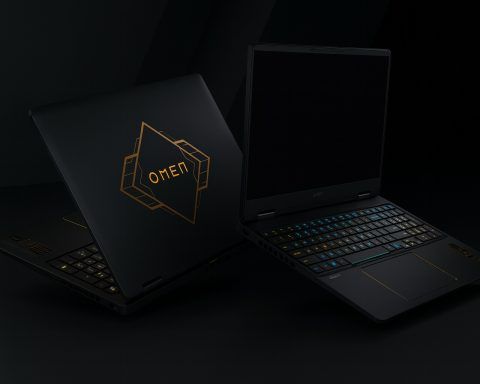
As we head into late 2025 and beyond, a new generation of desktop computers is emerging – blending blistering performance, sleek designs, and even built-in AI. Major manufacturers are overhauling their lineups and branding to simplify choices. For example, Dell retired its long-standing XPS, Inspiron, and OptiPlex brands in favor of a clear “good-better-best” tiered scheme tomshardware.com. HP made a similar move by scrapping the Pavilion and Envy names and unifying consumer PCs under the new Omni series pcworld.com pcworld.com. Meanwhile, Apple’s Mac lineup continues to push the envelope with its in-house silicon chips. In this report, we’ll compare the latest and most popular desktop PCs and all-in-one systems of 2025-2026, across all major platforms, usage categories, and budgets. We’ll dive into specs, performance, design, display quality, ports, upgradeability, unique features, and even a glimpse of upcoming models. Expert commentary and quotes are included to give additional insight. Let’s find the perfect desktop for home users, gamers, creative professionals, and business users alike! Home users and general-purpose desktops demand a balance of affordability, versatility, and ease of use. In 2025, manufacturers are delivering just that – from compact budget PCs suitable for basic tasks and family use, up to elegant
Chiplet Technology 2025: Design Tools, Yield Challenges, and Market Adoption

Chiplet Technology 2025: Design Tools, Yield Challenges, and Market Adoption

Chiplet technology has emerged as a transformative approach to chip design, breaking large monolithic chips into multiple smaller chiplets that operate together in one package. This modular design offers key advantages over traditional system-on-chip architectures. By partitioning complex systems into specialized dies, chiplets provide greater flexibility, allow mixing of different process nodes, and improve manufacturing yield and cost-efficiency creativestrategies.com semiengineering.com. As one analysis explains, “chiplets are small, and smaller dies improve wafer yields since the chance of a defect affecting a die diminishes with size. In a monolithic SoC, a single flaw can render the entire chip unusable” creativestrategies.com. Indeed, AMD reported that using a chiplet architecture in its EPYC server processors yielded up to 70% cost reduction compared to a comparable single-die design azonano.com – a testament to how higher yields and node optimization drive down cost per chip. Beyond cost, chiplets help overcome scaling limitations. They sidestep the lithography reticle size limit, enabling construction of “virtual” larger chips by stitching multiple reticle-sized dies creativestrategies.com. High-performance processors like AMD’s Instinct MI300 use numerous chiplets to pack more transistors and functionality than a single die could creativestrategies.com. Chiplets also alleviate the “memory wall” by allowing memory dies to sit close
Global Tech Shake-Up: Massive Breakthroughs and Crises Rock the Industry (12–13 July 2025 Roundup)

Global Tech Shake-Up: Massive Breakthroughs and Crises Rock the Industry (12–13 July 2025 Roundup)

July 13, 2025 – It’s been a whirlwind weekend in tech. From record-shattering electric vehicles in China and Europe to major moves in crypto policy and renewable energy breakthroughs, the past 48 hours showcased the diverse innovations and headlines redefining technology across the globe. Here are the most important and intriguing tech stories from July 12–13, 2025, spanning consumer gadgets, semiconductor advances, electric vehicles, cybersecurity, clean energy, blockchain, telecom, and more. China’s electric car industry is pushing the performance envelope. Leaks from Chinese auto bloggers hint that Geely’s EV brand Zeekr is preparing a hypercar with over 2,000 horsepower, an unprecedented figure that would eclipse even the 1,500hp Xiaomi SU7 Ultra unveiled earlier this year techradar.com techradar.com. The rumored model – an upgraded version of Zeekr’s 001 FR, which already boasts 1,300hp – would set a new high bar for EV acceleration and track performance. Industry observers note that “the pace of progress in the Chinese EV market is staggering,” with domestic brands rapidly closing the gap with Western automakers techradar.com. If realized, Zeekr’s 2,000hp EV would join a very exclusive club of electric hypercars and underscore China’s determination to lead in next-gen autos.
Trusted Execution Environment (TEE) Hardware News – June–July 2025

Trusted Execution Environment (TEE) Hardware News – June–July 2025

Trusted Execution Environments – secure hardware enclaves that protect code and data – have seen significant developments in mid-2025. Below is a comprehensive overview of the latest TEE-related hardware announcements, market trends, security updates, use cases, expert insights, and policy moves from June and July 2025. Analysts project explosive growth in confidential computing adoption over the next decade. According to market research forecasts, the global confidential computing market is expected to grow from roughly $24 billion in 2025 to over $350 billion by 2032, a staggering ~46% CAGR fortunebusinessinsights.com. This reflects the industry’s expectations that TEEs will become ubiquitous across cloud and edge infrastructure. Driving this growth are increasing data privacy demands, regulatory pressures, and the surge in sensitive AI workloads – all of which benefit from “data in use” protection that TEEs provide.
High-Performance Computing Highlights (June–July 2025): Exascale Era, HPC-AI Convergence, and Global Supercomputing Advances

High-Performance Computing Highlights (June–July 2025): Exascale Era, HPC-AI Convergence, and Global Supercomputing Advances

The early summer of 2025 saw major milestones in high-performance computing, marked by new exascale supercomputers coming online, significant product launches from leading vendors, and accelerating HPC-AI convergence. In June 2025, the latest TOP500 rankings confirmed three U.S. exascale systems at the forefront and introduced Europe’s first near-exascale machine. Vendors like NVIDIA and AMD announced new technologies – from NVIDIA’s NVLink Fusion interconnect to AMD’s next-generation Instinct GPUs – aimed at boosting AI and HPC workloads. HPC adoption continued to expand across sectors: cloud providers entered the Top 5, pharmaceutical firms tapped dedicated supercomputers for drug discovery, and national initiatives funded HPC centers and training programs. Industry analysts reported double-digit market growth driven by AI, and scientists achieved breakthrough results using cutting-edge HPC systems. The following report details these developments with sources and context. Three Exascale Systems Lead the World: The June 2025 update of the TOP500 list marked a historic moment – for the first time, three supercomputers surpassed one exaflop in the LINPACK benchmark Tomshardware. The El Capitan system at LLNL retained the #1 spot with 1.742 exaFLOPS sustained performance Top500 Tomshardware. El Capitan, built by HPE/Cray, features AMD’s 4th Gen EPYC CPUs paired with Instinct MI300A APU
Semiconductor Industry Roundup (June–July 2025): Advanced Chips, Equipment, and Geopolitics

Semiconductor Industry Roundup (June–July 2025): Advanced Chips, Equipment, and Geopolitics

The summer of 2025 saw significant strides in cutting-edge semiconductor process nodes. Taiwan Semiconductor Manufacturing Co. continued to lead in 3 nm production, reportedly achieving near 90% yield on its 3 nm process – far ahead of rival Samsung Foundry’s roughly 50% yield design-reuse.com. These yield discrepancies have driven more high-profile customers toward TSMC, allowing it to command premium pricing design-reuse.com design-reuse.com. Samsung, which pioneered 3 nm gate-all-around technology in 2022, still struggles to reach competitive yields and has even lost some mobile chip orders to TSMC, though it secured Google’s Tensor G5 on 3 nm and other new clients for older nodes design-reuse.com design-reuse.com. Both TSMC and Samsung are now racing toward 2 nm technology. TSMC’s 2 nm is on track for risk production and aims for high-volume manufacturing in late 2025 or early 2026 reuters.com reuters.com. Industry reports in June detailed a “fierce race” between TSMC and Samsung to debut 2 nm chips, with TSMC widely seen as ahead in yield and timing design-reuse.com. Samsung is prioritizing improvements to its 2 nm and 4 nm nodes and has reportedly postponed any 1.4 nm “trial line” investments, indicating its 1.4 nm node is unlikely to arrive before 2028–2029 design-reuse.com.
Global Semiconductor Industry Trends and 2025 Outlook: AI Boom, Advanced Nodes, and Geopolitics (Report: June 27th, 2025)

Global Semiconductor Industry Trends and 2025 Outlook: AI Boom, Advanced Nodes, and Geopolitics (Report: June 27th, 2025)

The semiconductor industry entered 2025 on a strong upswing after a cyclical downturn in 2022–2023. Global chip revenue hit $626 billion in 2024, up 18.1% from the prior year, and is projected to reach a new record of around $705 billion in 2025 semimedia.cc design-reuse.com. This growth is propelled primarily by surging demand for AI and high-performance computing chips, alongside a rebound in memory chip prices semimedia.cc semimedia.cc. Generative AI workloads in data centers have quickly become the second-largest semiconductor market, with data-center chip sales jumping to $112 billion in 2024 design-reuse.com. At the same time, automotive electronics remain a robust growth engine, and the industry as a whole is well on track toward an aspirational $1 trillion annual market by 2030 gartner.com deloitte.com. Overall, mid-2025 finds the chip sector in a period of resurgent demand and record investment, tempered by ongoing supply chain adjustments and geopolitical uncertainties. AI Chips and Accelerators: The explosive adoption of generative AI is reshaping chip design and demand. Specialized AI accelerators – especially GPUs and AI-specific chips – are in extremely high demand for training and running AI models. Industry leader NVIDIA nearly doubled its semiconductor revenue in 2024 on the strength of AI
100 Semiconductor Giants Powering the Modern World

100 Semiconductor Giants Powering the Modern World

From the chip designers dreaming up new architectures to the foundries fabricating silicon wafers at nanoscale precision, the semiconductor industry is built on a global network of companies that fuel our digital age. In this comprehensive report, we highlight 100 of the most important semiconductor companies across all key segments: fabless chip designers, integrated device manufacturers, pure-play foundries, equipment manufacturers, materials and supply-chain providers, outsourced assembly and test companies, and design IP/EDA software firms. Each entry includes a link to the company’s official website, its primary region, its role in the industry, and a brief description of why it matters – with sources to substantiate key facts like market dominance, technological leadership, or revenue rank. These companies manufacture semiconductor chips, either for external customers or for their own products. They include the giants of logic processing, memory storage, and integrated device production.
Artificial Intelligence in Satellite and Space Systems

Artificial Intelligence in Satellite and Space Systems

Artificial intelligence is increasingly intertwined with modern space technology, enabling spacecraft and satellites to operate more autonomously and efficiently than ever before. From helping Mars rovers navigate alien terrain to processing vast streams of Earth observation data in orbit, AI techniques like machine learning and automated planning are revolutionizing how we explore and utilize space. This report provides a comprehensive overview of the intersection of AI and satellite/space systems, covering key applications, historical milestones, the current state of the art in various sectors, enabling technologies, benefits and challenges, future trends, and the major organizations driving advances in this domain. AI is being applied across a wide range of space-related activities. Key applications include:
1 34 35 36

Stock Market Today

  • FTSE: Elliott Wave Setup Points to Rebound After Pullback
    July 3, 2026, 4:43 AM EDT. FTSE finished a three-wave pullback, a classic Elliott Wave Zig Zag, hitting support inside the 'Equal Legs' zone at 10370.44 to 10275.23. This Fibonacci area shows possible short-term downside, but it also sets up a rally once support holds. The 10333.17 low marks the end of the correction and opens up a risk-free buy. Analysis that includes bigger time-frame cycles and correlation work now calls for new upside toward fresh highs. Traders using Elliott Wave or pattern-read strategies can watch live sessions or test advanced tools to sharpen their forecasts.
Go toTop