
Today: 1 July 2026
Browse Category

Space 26 July 2025 - 2 August 2025

SpaceX Wins $81.6 Million U.S. Space Force Deal to Launch WSF-M2 Weather Satellite in 2027

SpaceX’s Epic 48 Hours: Astronauts Blast Off, Starship Roars & Starlink Soars (Aug 1–2, 2025)

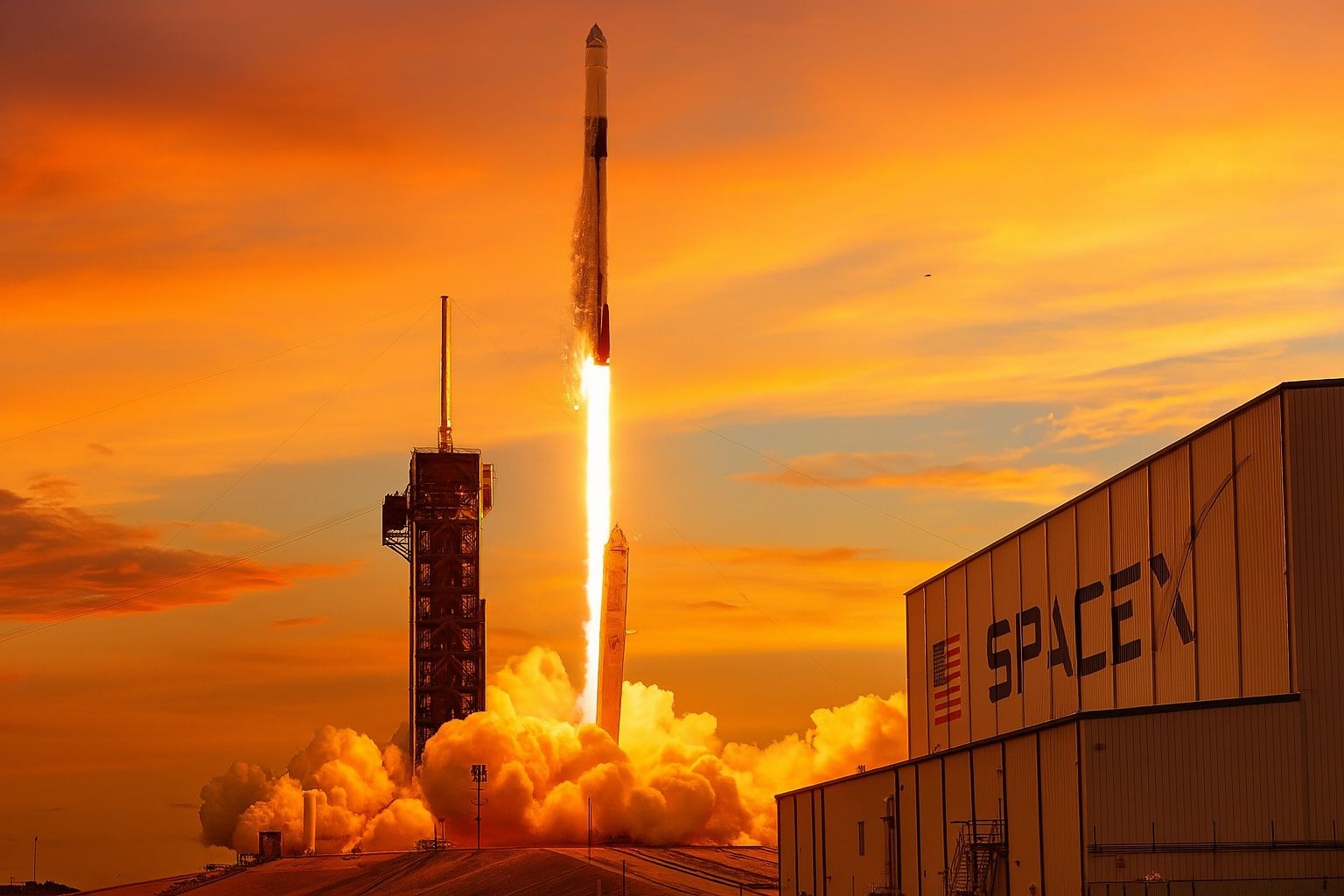
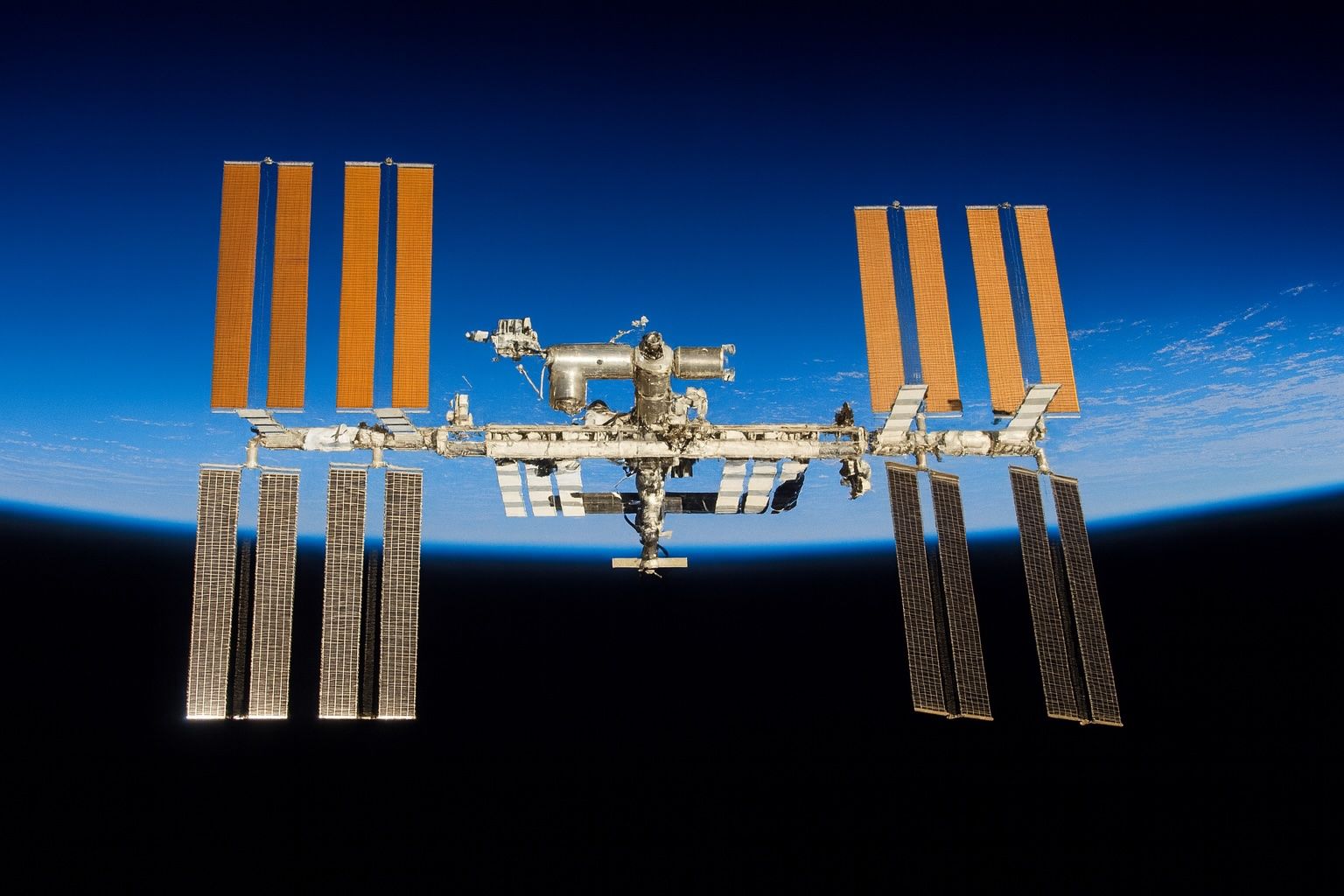
SpaceX packed a whirlwind of headline-grabbing developments into the first two days of August 2025. From a triumphant crewed launch dodging storm clouds, to a fiery Starship engine test in Texas, to new milestones for the ever-growing Starlink satellite network – here’s your comprehensive roundup of everything SpaceX in the past 48 hours. Astronaut Launch: After a one-day weather delay, SpaceX successfully launched NASA’s Crew-11 mission on Friday, August 1. Nine Merlin engines thundered at 11:43 a.m. EDT from Kennedy Space Center, as the Falcon 9 rocket “threaded the clouds” and lifted Crew Dragon Endeavour into orbit spaceflightnow.com. On board were four crew members: NASA astronauts Zena Cardman and Mike Fincke, JAXA astronaut Kimiya Yui, and Roscosmos cosmonaut Oleg Platonov, all embarking on a long-duration stay at the International Space Station nasa.gov. Despite gloomy Florida weather, the team beat the odds to blast off on schedule reuters.com, with the Dragon capsule separating cleanly from the second stage less than 10 minutes after liftoff spaceflightnow.com.
2 August 2025
Blasting Off: The Ultimate Guide to Every Upcoming Rocket Launch Worldwide 🌎🚀

Blasting Off: The Ultimate Guide to Every Upcoming Rocket Launch Worldwide 🌎🚀

The global space industry is gearing up for a record-breaking launch cadence in the coming months. From crewed missions and Moon landings to massive satellite deployments, nearly every week will see a rocket lifting off somewhere around the world. SpaceX alone aims for up to 170 launches in 2025, almost one every other day Space – a stunning figure made possible by reusable rockets and relentless innovation. Other space agencies and companies are also ramping up, with new vehicles debuting and ambitious missions on the horizon. In short, 2025 is poised to be one of the busiest – and most exciting – years in spaceflight history. Below, we break down all the upcoming launches, complete with dates, rockets, missions, payloads, and why they matter. While the above covers launches slated for the immediate months ahead, several high-profile missions loom just beyond 2025. These include NASA’s Artemis II in April 2026, which will send astronauts around the Moon on the SLS megarocket – humanity’s first crewed lunar voyage since Apollo Nasa. Also on the horizon are NASA’s Europa Clipper to Jupiter’s icy moon, SpaceX’s first crew flight on Starship as part of its rapid Starship test campaign, and ambitious Mars missions
2 August 2025
Blastoff to Breakthroughs: Major Space Highlights (Aug 1–2, 2025)

Blastoff to Breakthroughs: Major Space Highlights (Aug 1–2, 2025)

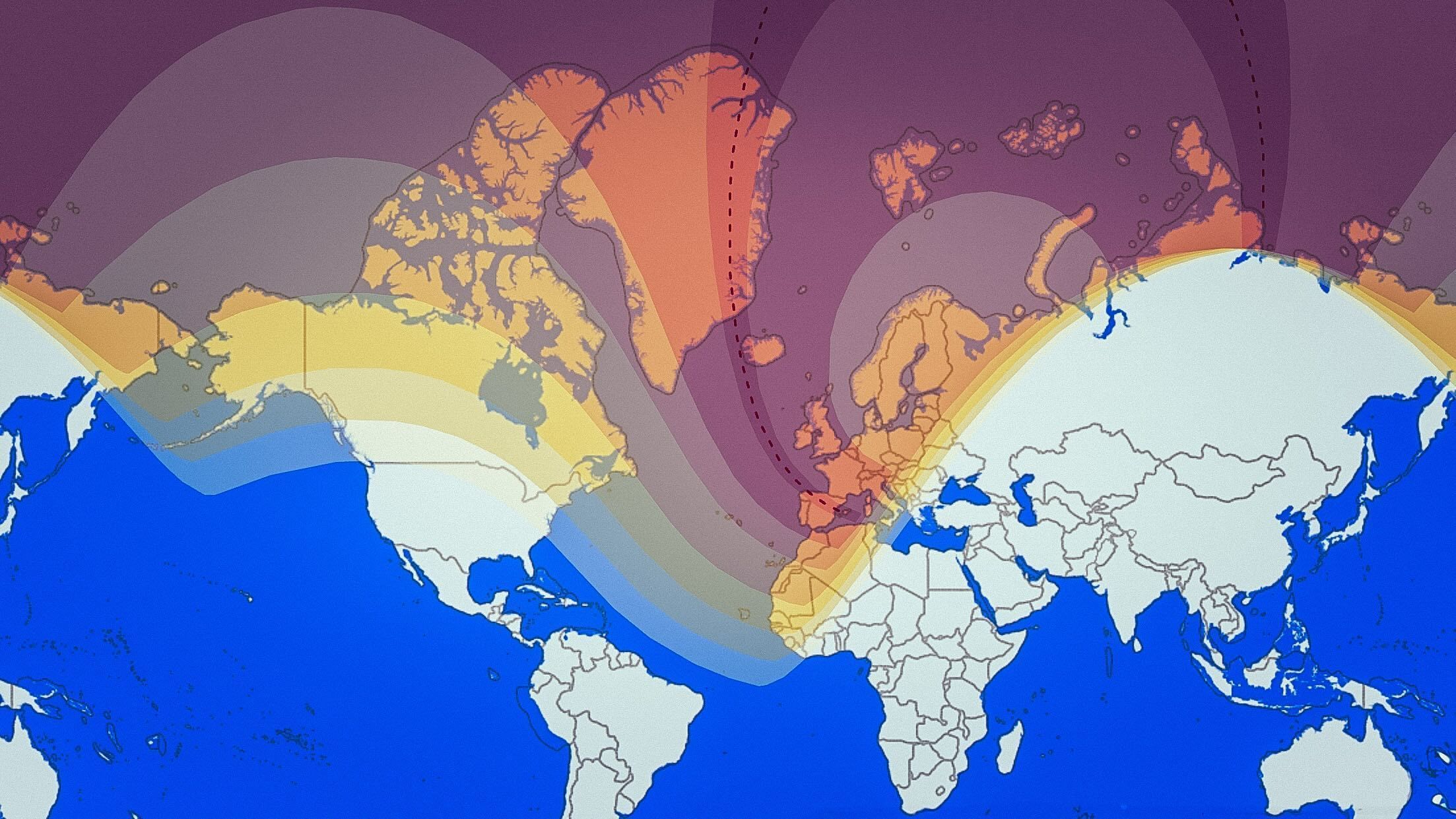
Crew-11 Launch to ISS: NASA’s SpaceX Crew-11 mission successfully lifted off from Kennedy Space Center on Aug. 1, carrying four astronauts – Zena Cardman and Mike Fincke, Kimiya Yui, and Oleg Platonov – to the International Space Station apnews.com. The Falcon 9 rocket launched at 11:43 a.m. EDT after a one-day weather delay spaceflightnow.com spaceflightnow.com. Crew-11’s Dragon capsule Endeavour was set to dock early Aug. 2 for a six-month stay spaceflightnow.com apnews.com. The launch marked SpaceX’s 11th operational crew rotation for NASA, and notably filled a gap left by Boeing’s delayed Starliner program apnews.com. “I have no emotion but joy right now. That was absolutely transcendent – ride of a lifetime,” Commander Cardman radioed after reaching orbit apnews.com. Finally, as a bit of myth-busting: NASA debunked an internet rumor that the world would experience a 6-minute global blackout on Aug. 2, 2025 due to a solar eclipse space.com. In reality, no such eclipse occurred that day – the next total solar eclipse widely visible is in 2026 ndtv.com. NASA reassured the public that Aug. 2 would be business as usual in terms of sunlight, notwithstanding the record-breaking solar eclipse of Aug. 2, 2027 that some had apparently misconstrued space.com. This
2 August 2025
10 Non‑AI Tech Shockers: Space Triumphs, Gadget Surprises & More (Aug 1–2, 2025)

10 Non‑AI Tech Shockers: Space Triumphs, Gadget Surprises & More (Aug 1–2, 2025)

Intel’s Massive Restructuring: Chip giant Intel confirmed sweeping layoffs of around 24,000 employees – roughly one-quarter of its workforce – as new CEO Lip-Bu Tan slashes projects and retreats from costly expansions theverge.com theverge.com. Intel is even halting planned “mega-fab” chip factories in Germany and Poland amid the belt-tightening. “I do not subscribe to the belief that if you build it, they will come… under my leadership, we will build what customers need when they need it,” Tan declared, emphasizing a return to demand-driven growth theverge.com. This hard pivot comes after years of troubles for Intel, which is aiming to regain its footing in the semiconductor race. AMD’s 64-Core Beast: In brighter chip news, AMD unleashed the Ryzen Threadripper 9980X, a high-end desktop CPU packing 64 cores and 128 threads. The Zen 5-based monster can boost up to 5.4 GHz and carries a hefty $4,999 price tag amd.com. Shipping began July 31, and early reviews say these 64 cores “soar for serious work,” delivering unparalleled performance for creators and engineers techspot.com. AMD’s new Threadripper 9000 series aims to cement the company’s lead in ultra-powerful workstation chips.
Beyond Starlink: Inside the New Space Race for Satellite Internet Dominance in 2025

Beyond Starlink: Inside the New Space Race for Satellite Internet Dominance in 2025

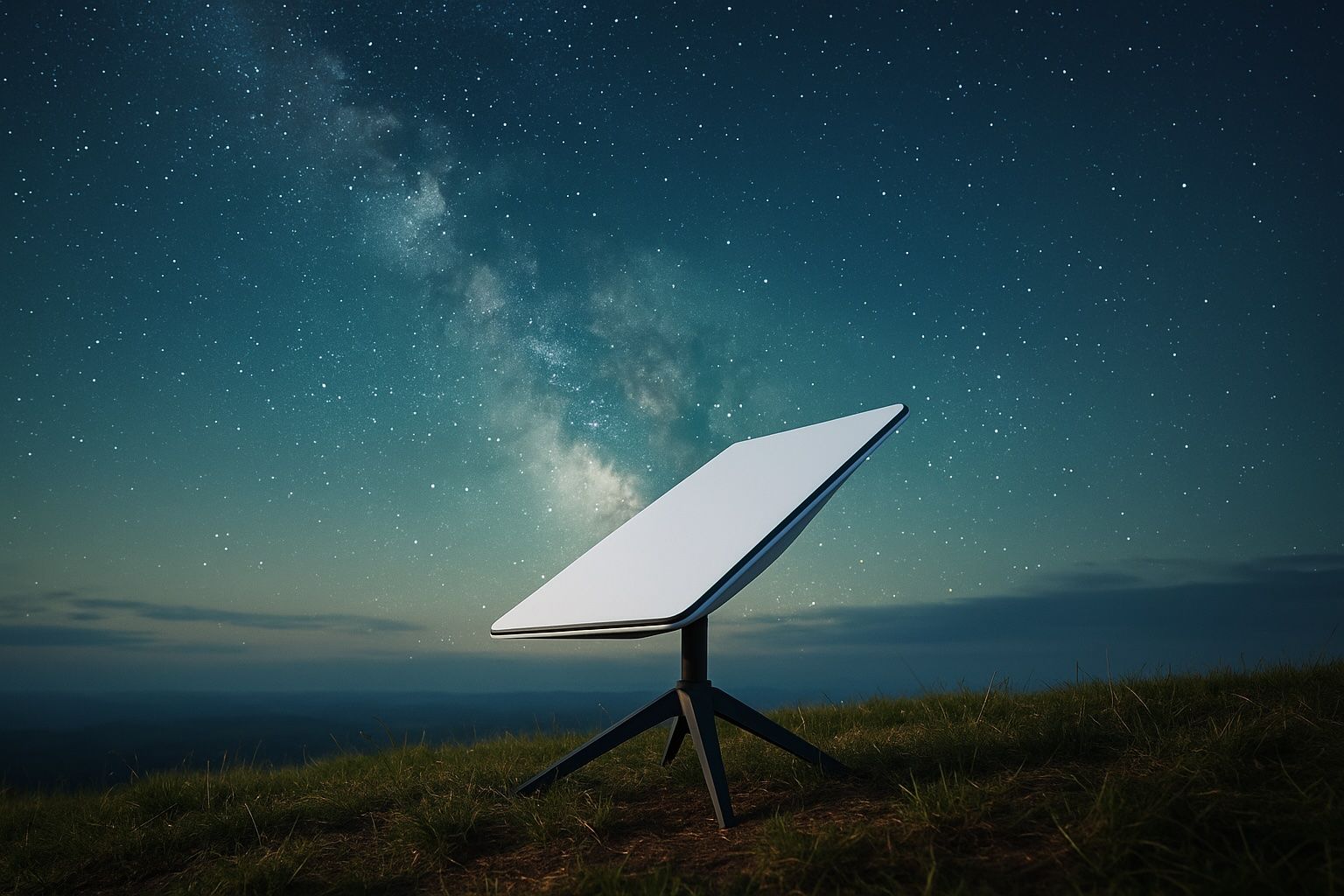
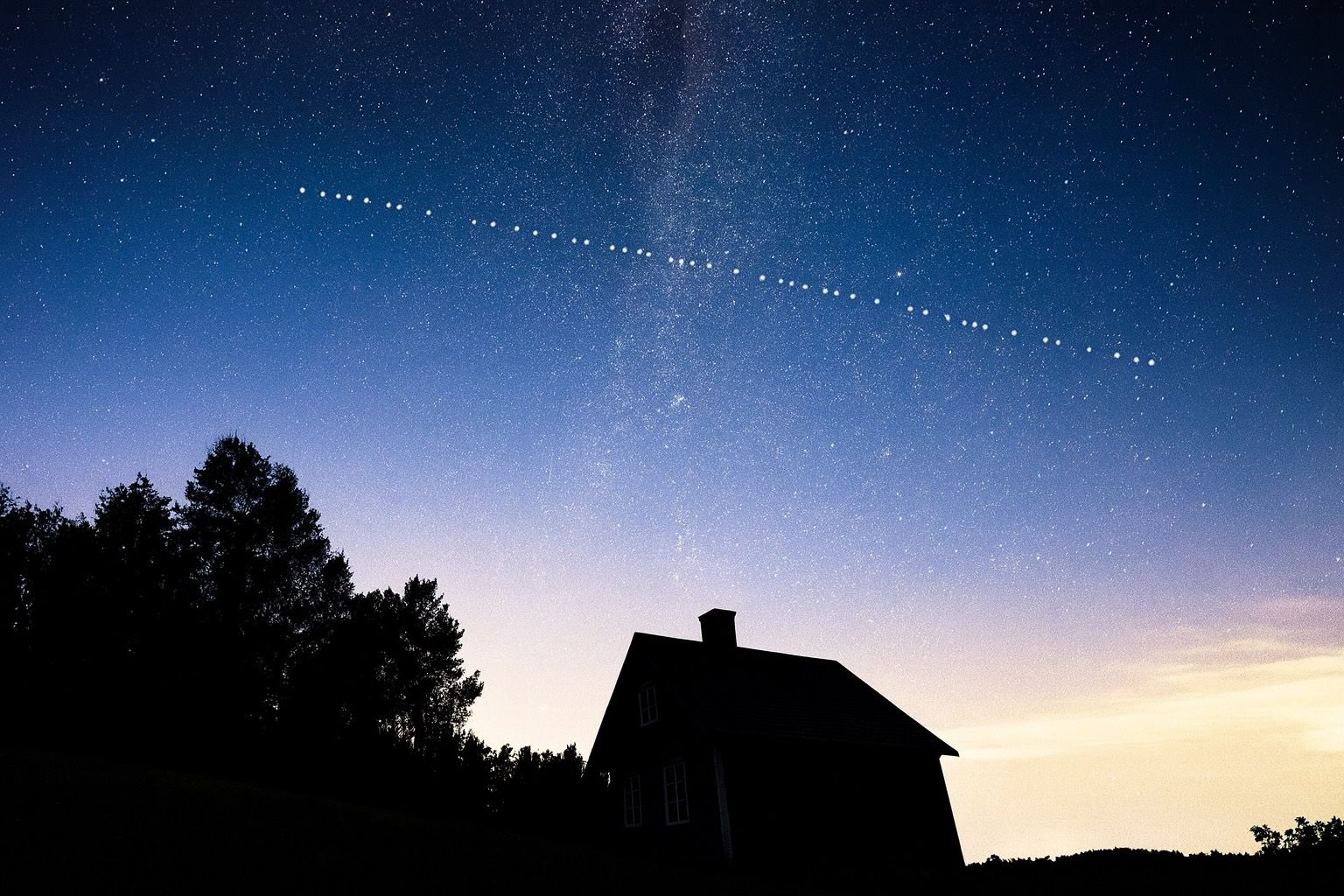
High-speed internet beaming down from space is no longer science fiction – it’s a booming reality. SpaceX’s Starlink may have pioneered this orbital broadband revolution, but a swarm of new mega-constellations is hot on its heels. In 2025, a new space race is underway as tech giants, startups, and governments worldwide scramble to launch thousands of satellites that promise to connect every corner of the globe. This next generation of satellite internet service providers – from Amazon’s Project Kuiper to OneWeb, Telesat, China’s GuoWang, and more – is poised to challenge Starlink and transform how the world gets online ts2.tech ts2.tech. Below, we delve into the key players and trends shaping this rapidly evolving industry – and what it all means for consumers, businesses, and global connectivity. Just a few years ago, satellite internet was a niche service of last resort – slow, expensive, and limited. That changed when SpaceX’s Starlink began launching fleets of low-Earth orbit satellites in 2019, proving that space-based broadband can be fast and feasible. By 2025 Starlink had surpassed 8,000 satellites launched and grown to serve over 5 million users across 125+ countries ts2.tech ts2.tech. This success set off a frenzy of investment and innovation.
1 August 2025
Skywatchers’ Delight: Meteor Showers, Auroras & Planet Parade Light Up This Weekend (Aug 1–2, 2025)

Skywatchers’ Delight: Meteor Showers, Auroras & Planet Parade Light Up This Weekend (Aug 1–2, 2025)

Get ready for an unforgettable weekend of celestial shows! On the nights of August 1–2, 2025, skies around the world will be buzzing with cosmic activity. From shooting star displays and potential auroras dancing at high latitudes, to a rare lineup of planets and even a crewed rocket launch, there’s something for every skywatcher. Below we break down all the major skywatch alerts and celestial phenomena happening globally this weekend – and how you can enjoy them. Perseid Meteor Shower – Preview: The Perseids, one of the year’s most beloved meteor showers, are active now and ramping up toward their mid-August peak amsmeteors.org. You may catch a few Perseid meteors each hour on August 1–2 in pre-dawn hours, especially in the Northern Hemisphere. “At its best, the Perseid shower delivers 50 to 100 meteors per hour, but this year far fewer will be seen” due to the bright moon, notes Ed Krupp, director of LA’s Griffith Observatory phys.org phys.org. Still, Perseids are known for fireballs – extra-bright shooting stars that can blaze across the sky and leave glowing trails phys.org. Keep an eye out for an occasional Perseid fireball even in moonlight.
1 August 2025
Space Drama: Astronaut Launch Scrub, Secret Satellites & Surprise Alliances (July 31–Aug 1, 2025)

Space Drama: Astronaut Launch Scrub, Secret Satellites & Surprise Alliances (July 31–Aug 1, 2025)

NASA’s highly anticipated Crew-11 mission to the International Space Station faced a last-minute scrub on July 31 due to an unexpected weather violation. Mission control called off the launch just over a minute before liftoff, when a bank of cumulus clouds drifted within a 10-mile safety radius of the pad space.com space.com. “Unfortunately, the weather is just not playing along,” NASA’s launch commentator Derrol Nail explained as thunderheads rolled in, noting that a Falcon 9 rocket should never pierce a tall storm cloud due to lightning risk space.com. The four international crew members – NASA’s Zena Cardman and Mike Fincke, JAXA’s Kimiya Yui, and Roscosmos cosmonaut Oleg Platonov – had to stand down and wait another day space.com. Teams quickly retargeted Friday, Aug. 1 at 11:43 a.m. ET for a second launch attempt spaceflightnow.com space.com. The next day, the weather cooperated and SpaceX’s Falcon 9 successfully blasted off from Kennedy Space Center, sending Crew Dragon Endeavour on its way to orbit. This marked the sixth flight of Endeavour – a new reuse record for SpaceX’s crew capsules space.com. By Aug. 2, Crew-11 docked with the ISS, delivering its new crew after a 39-hour transit. Notably, the Falcon 9’s first stage
1 August 2025
Space Setbacks, Cyber Hacks & Tech Triumphs: Major Tech News Roundup (July 31 – Aug 1, 2025)

Space Setbacks, Cyber Hacks & Tech Triumphs: Major Tech News Roundup (July 31 – Aug 1, 2025)

Sources: Connected news reports from Reuters, TechCrunch, CleanTechnica, and other reputable outlets reuters.com techcrunch.com ts2.tech ts2.tech reuters.com, covering developments in tech business, policy, and innovation worldwide on July 31 and Aug 1, 2025. Each link provides further details for verification.
Space Race Heats Up: Big Launches, Bold Missions & Surprising Discoveries (July 30–31, 2025)

Space Race Heats Up: Big Launches, Bold Missions & Surprising Discoveries (July 30–31, 2025)

India and NASA Launch Climate-Tracking Satellite: In a landmark collaboration, India’s space agency ISRO and NASA launched the $1.5 billion NISAR Earth-observation satellite on July 30. A Geosynchronous Satellite Launch Vehicle rocket lifted off from Satish Dhawan Space Centre at 5:40 p.m. IST, carrying the first joint NASA-ISRO radar imaging mission nasa.gov reuters.com. NISAR will map the entire planet every 12 days with dual L-band and S-band radars, detecting land and ice movements as small as a centimeter reuters.com. ISRO Chairman V. Narayanan hailed the mission’s global benefits, saying “the entire globe is going to benefit from this great accomplishment,” and noting that NISAR’s freely available data will aid worldwide climate and disaster monitoring reuters.com. NASA officials called NISAR a “pathfinder” for U.S.-India cooperation in space reuters.com. This success comes amid India’s broader space ambitions – fresh off the Chandrayaan-3 Moon landing, India is preparing its first crewed Gaganyaan mission and even planning to build a national space station by 2035 reuters.com. China’s Busy Launch Week: China bolstered its growing satellite constellations with multiple launches. On July 30, a Long March 8A rocket from the new Hainan commercial spaceport orbited the sixth batch of “Guowang” low-Earth broadband satellites, part of
The Telescope Revolution of 2025–2026: From Backyard Stargazing to Giant Cosmic Eyes

The Telescope Revolution of 2025–2026: From Backyard Stargazing to Giant Cosmic Eyes

A new wave of telescopes is taking shape in 2025 and 2026, thrilling everyone from casual backyard stargazers to professional astronomers. In this period, consumer telescope technology has leapt forward – think AI-powered “smart” scopes that practically run themselves – while massive observatories on Earth and in space are coming online to probe the deepest cosmic mysteries. In this in-depth report, we’ll compare the latest amateur telescopes alongside the cutting-edge research observatories, highlighting their features, innovations, and why experts are calling this a golden age of astronomy. By the end, you’ll see how new 2025–26 telescopes are transforming our view of the universe, whether you’re peering through a humble home telescope or a billion-dollar mega-observatory. Let’s dive in. Today’s amateur telescopes are worlds apart from the simple tubes of the past. In 2025, hobbyist astronomers can choose from smart all-in-one telescopes, advanced yet affordable computerized scopes, and refined versions of classic designs. These instruments come packed with features once reserved for professionals: automated object tracking, precision optics, digital imaging sensors, and even smartphone integration for astrophotography. As one enthusiast put it, “Mounts are more advanced, affordable, and accessible than ever… And smart telescopes? They’re packed with cutting-edge technology we could
Cosmic Objects That Could Hit Earth: Real Threats and What Scientists Are Saying

Cosmic Objects That Could Hit Earth: Real Threats and What Scientists Are Saying

Earth has been in the cosmic crosshairs before – from the dinosaur-killing 6-mile asteroid 66 million years ago to the 1908 Tunguska impact in Siberia. Today, astronomers vigilantly track near-Earth objects to make sure we know of any asteroid or comet with even a slim chance of hitting Earth. In fact, NASA’s automated Sentry system continuously scans for potential future impacts within the next 100 years scorptech.github.io, and as of mid-2025 about 1,800 asteroids are catalogued on European Space Agency’s “Risk List” with some non-zero probability of impact. The good news: none of these known objects pose an imminent threat, and impact chances are almost vanishingly small in every case. As NASA emphasizes, “there are currently no known asteroids of significant size on a collision trajectory with Earth”. But a handful of larger space rocks do merit extra attention due to their non-zero impact probabilities. Below we’ll meet all the notable cosmic objects that could collide with Earth in the future, how likely those impacts are, and what their consequences might be. Before diving into specific asteroids, it helps to know how scientists figure out the odds of an impact – and why those scary-sounding probabilities often drop to zero
31 July 2025
Space Race 2.0 Heats Up: Starlink Mega-Launch, Moon Deals & NASA-Russia Reunion Rock the Space World

Space Race 2.0 Heats Up: Starlink Mega-Launch, Moon Deals & NASA-Russia Reunion Rock the Space World

The past two days have unleashed a torrent of major space news, from record-breaking satellite launches to groundbreaking international collaborations. In just 48 hours, SpaceX notched yet another Starlink mega-launch, NASA inked a new Moon mission deal with a private firm, the United States and India geared up for a landmark satellite launch, and even NASA’s interim chief sat down with Russia’s space boss for the first time in years. Here’s your comprehensive roundup of the satellite and space highlights from July 29–30, 2025. Another 28 Starlink Satellites Soar: SpaceX capped Tuesday night with the launch of 28 more Starlink broadband satellites from Cape Canaveral, Florida space.com. Liftoff occurred at 11:37 p.m. EDT on July 29, and about nine minutes later the Falcon 9 rocket’s first stage landed safely on the drone ship “Just Read the Instructions” in the Atlantic space.com. This mission marked the 26th flight of that reusable booster, tying SpaceX’s own reuse record. It also pushed SpaceX’s Starlink constellation to over 8,000 active satellites in orbit space.com, underscoring the company’s breakneck deployment of its internet megaconstellation. According to satellite tracker Jonathan McDowell, SpaceX’s constellation now far outnumbers any other, a presence that is both revolutionizing global internet
30 July 2025
You Won’t Believe What Launched in Space This Week

You Won’t Believe What Launched in Space This Week

It’s been an extraordinarily busy 48 hours for spaceflight across the globe. From record-breaking rocket launches to landmark international collaborations, the news has been coming in fast. Here’s your comprehensive roundup of all the must-know satellite and space developments from July 28–29, 2025. SpaceX continued its record-smashing launch cadence with two Falcon 9 launches in under 24 hours over the weekend ts2.tech. On July 26, a Falcon 9 lifted off from Florida followed by another from California on July 27 – marking SpaceX’s 92nd mission of 2025 keeptrack.space. These “double header” Starlink missions underscore the company’s unprecedented tempo enabled by reusable rockets.
29 July 2025
See Your House from Space? Inside the World of Live Satellite Maps and Weather from Orbit

See Your House from Space? Inside the World of Live Satellite Maps and Weather from Orbit

Satellites have quietly become the unsung heroes of modern life. They play an essential role in our everyday lives, contributing to our well-being and helping meet important needs on Earth Gc. From providing the satellite maps we browse on our phones to enabling the GPS navigation in our cars, satellites are deeply integrated into daily activities. In fact, experts note that space-based satellite equipment is critically important for daily life on Earth, powering everything from real-time communications and banking networks to navigation, weather forecasting, and even internet access for remote areas Cigionline. “When we’re talking about space and what we get from it, it’s really all about communication and data… deeply integrated in almost everything that we do, whether we see the connections or not,” says Jessica West, a senior researcher in space security Cigionline. Indeed, there are thousands of satellites in space today, serving a wide range of purposes – and their impact is absolutely everywhere. Despite being hundreds or thousands of kilometers above us, satellites make it possible to zoom into any corner of the Earth. Want to see your neighborhood from above? Or check the live satellite weather over the Caribbean before a trip? Curious about yesterday’s
Space Race Heats Up: Starlink Double Launches, Mars Mission Reveals & Australia’s Orbital Debut (July 27–28, 2025)

Space Race Heats Up: Starlink Double Launches, Mars Mission Reveals & Australia’s Orbital Debut (July 27–28, 2025)

It was a whirlwind weekend in space. Over just 48 hours, rockets roared off launchpads across the globe and bold new missions were unveiled. SpaceX pulled off back-to-back Falcon 9 launches to expand its Starlink internet constellation, while astronauts from three nations arrived in Florida to prepare for a flight to the International Space Station. Europe’s Vega rocket returned to flight with a climate-focused payload, and China revealed ambitious plans to fetch rocks from Mars. Not to be outdone, China also launched a fresh batch of broadband satellites, and Australia geared up for a historic first orbital launch on its home soil. Meanwhile, India and the U.S. readied a groundbreaking Earth-observation satellite, and Russia lofted an Iranian communications satellite – underscoring space’s increasingly global tapestry. Below is a detailed roundup of all the significant satellite and space news from July 27–28, 2025, complete with expert quotes and key technical highlights. SpaceX notched two Falcon 9 launches in under 24 hours to boost its Starlink broadband network. In the predawn hours of July 26, a Falcon 9 lifted off from Cape Canaveral carrying 28 Starlink satellites, followed by another Falcon 9 launch from California just after midnight on July 27 with
28 July 2025
Batteries That Fix Themselves, Space Showdowns & a $12,000 Superchip – Tech Roundup (July 27–28, 2025)

Batteries That Fix Themselves, Space Showdowns & a $12,000 Superchip – Tech Roundup (July 27–28, 2025)

World’s Fastest CPU Hits the Market: AMD’s new flagship Ryzen Threadripper Pro 9995WX workstation processor launched for a jaw-dropping $11,699. Built on cutting-edge Zen 5 architecture, this 96-core, 192-thread behemoth boosts up to 5.4GHz techradar.com. It’s officially the world’s fastest CPU, though its eye-watering price means it’s overkill for all but the most extreme professional workloads. Tech observers note that while the 9995WX delivers record multi-threaded performance, most users would be better off with cheaper 32- or 64-core chips unless they truly need 96 cores of computing muscle. Samsung’s 61TB SSD Bargain: In storage news, Samsung’s largest SSD to date – a 61.44 TB PCIe Gen5 drive – just went on sale heavily discounted. Normally ~$7,500, it’s now listed for $5,593 after promotions techradar.com. This 2.5-inch enterprise SSD uses QLC flash and a PCIe 5.0 interface to deliver huge capacity for data centers. With 14.2 GB/s read and 2.1 GB/s write speeds, it targets read-intensive workloads. The sub-$6k sale price makes it a remarkable value in the ultra-high-capacity storage class, though it’s still a niche luxury for anyone outside of large IT environments.
Starlink Doubleheader, NASA Upheaval & Space Race Showdowns – Global Space News Roundup (July 26–27, 2025)

Starlink Doubleheader, NASA Upheaval & Space Race Showdowns – Global Space News Roundup (July 26–27, 2025)

SpaceX’s Starlink Doubleheader: SpaceX achieved two back-to-back Falcon 9 launches in under 24 hours, bolstering its Starlink internet constellation. Early Saturday morning a Falcon 9 lifted off from Cape Canaveral, Florida at 5:01 a.m. EDT carrying 28 Starlink satellites into low Earth orbit space.com. Less than a day later, at 12:31 a.m. EDT Sunday, another Falcon 9 roared skyward from Vandenberg Space Force Base in California with 24 more Starlinks on board space.com. Both missions were successful: each batch of satellites was deployed about an hour after launch, and both first-stage boosters returned for drone-ship landings space.com space.com. The rapid doubleheader brought SpaceX’s 2025 launch count to 95 flights and pushed the active Starlink satellite tally above 8,000 units in orbit space.com – a remarkable cadence aiding global broadband coverage. SpaceX’s president Gwynne Shotwell touted the reuse of flight-proven rockets as key to this tempo, after the California booster completed its 19th flight with a flawless landing space.com. Europe’s Vega-C Comeback: Across the Atlantic, Europe notched a successful science launch. On July 25, an Arianespace Vega-C rocket blasted off from Kourou, French Guiana, carrying five Earth-observing satellites into orbit ts2.tech. The payloads included MicroCarb, a 180 kg French satellite to
Space Triumphs, Gadget Shockers & Cyber Breaches – Tech Weekend Roundup (July 26–27, 2025)

Space Triumphs, Gadget Shockers & Cyber Breaches – Tech Weekend Roundup (July 26–27, 2025)

The past two days brought a flood of tech developments worldwide – from breakthrough space missions and big hardware launches to serious cybersecurity incidents and pivotal policy shifts. Here are the major tech stories from July 26–27, 2025, organized by sector: Sources: Connected press releases, government statements, and reputable media reports were used in compiling this roundup. Key references include Reuters reuters.com reuters.com, NASA ts2.tech, Business Insider businessinsider.com, Wired wired.com, Engadget techspot.com, and others as cited above. Each link 【】 points to the original source for more details.
Starlink Outage, New Launches and Space Alliances – Major Space Developments (July 25–26, 2025)

Starlink Outage, New Launches and Space Alliances – Major Space Developments (July 25–26, 2025)

Russia and Europe – Science Satellites to Orbit: On July 25, Russia’s Roscosmos successfully launched a Soyuz-2.1b rocket from Vostochny Cosmodrome, carrying two Ionosfera-M research satellites into polar orbit nasaspaceflight.com. The mission, part of Russia’s “Ionozond” program, completed a constellation to monitor ionospheric space weather effects on Earth’s environment space.com space.com. The Soyuz also deployed 18 secondary payloads – 17 Russian CubeSats and Iran’s Nahid-2 telecom satellite – in a rare rideshare that highlights growing international partnerships in orbit nasaspaceflight.com space.com. Just hours later, Europe marked a Vega-C rocket success: at 10:03 p.m. ET on July 25, Vega-C lifted off from Kourou, French Guiana, delivering MicroCarb and four CO3D Earth observation satellites into orbit space.com space.com. MicroCarb, led by CNES, will precisely map global CO₂ sources and sinks to within 1 ppm accuracy, aiding climate science space.com. The quartet of CO3D satellites, built by Airbus, will generate high-resolution 3D maps of Earth’s land surfaces, imaging in multiple visible and infrared bands at ~50 cm resolution space.com. Arianespace confirmed all five satellites were deployed successfully, marking Vega-C’s return to form after past setbacks space.com. United States – Starlink Mission and Record Reuse: In the U.S., SpaceX readied a Falcon 9 launch
Giant Leaps in Space, Gigantic Gadgets & Shocking Breaches – Tech News Roundup (July 25–26, 2025)

Giant Leaps in Space, Gigantic Gadgets & Shocking Breaches – Tech News Roundup (July 25–26, 2025)

Sources: Official corporate announcements, government releases, and reputable tech media were used in compiling this report. For more details, see NASA nasa.gov nasa.gov, Space Insider spaceinsider.tech spaceinsider.tech, Wired wired.com wired.com, Reuters reuters.com reuters.com, PCMag/CNET graphics-unleashed.com graphics-unleashed.com, Business Insider businessinsider.com businessinsider.com, and other sources as cited above.
26 July 2025
1 12 13 14 15 16 21

Stock Market Today

  • Labcorp Holdings (LH) Looks Cheaper Than Charles River (CRL) on Key Metrics
    July 1, 2026, 1:17 PM EDT. Investors sizing up Medical Services stocks are comparing Labcorp Holdings (LH) and Charles River Laboratories (CRL) on value. LH has a better Zacks Rank #2 (Buy), while CRL sits at #3 (Hold), pointing to stronger earnings prospects for LH. The numbers give LH an edge: forward P/E ratio is 15.55 with a PEG ratio of 1.96, both lower than CRL's P/E of 20.53 and PEG at 2.59. LH's Price-to-Book is 2.64, ahead of CRL's 3.71. Zacks gives LH a Value grade of B; CRL gets a C. On these marks, LH looks like the better value pick right now.
Go toTop