Marcin Frąckiewicz

CEO of TS2 Space and founder of TS2.tech. Expert in satellites, telecommunications, and emerging technologies, covering trends in space, AI, and connectivity.

The Ultimate 2025 iPhone Showdown: Every Current Model Compared (and What’s Next)

The Ultimate 2025 iPhone Showdown: Every Current Model Compared (and What’s Next)

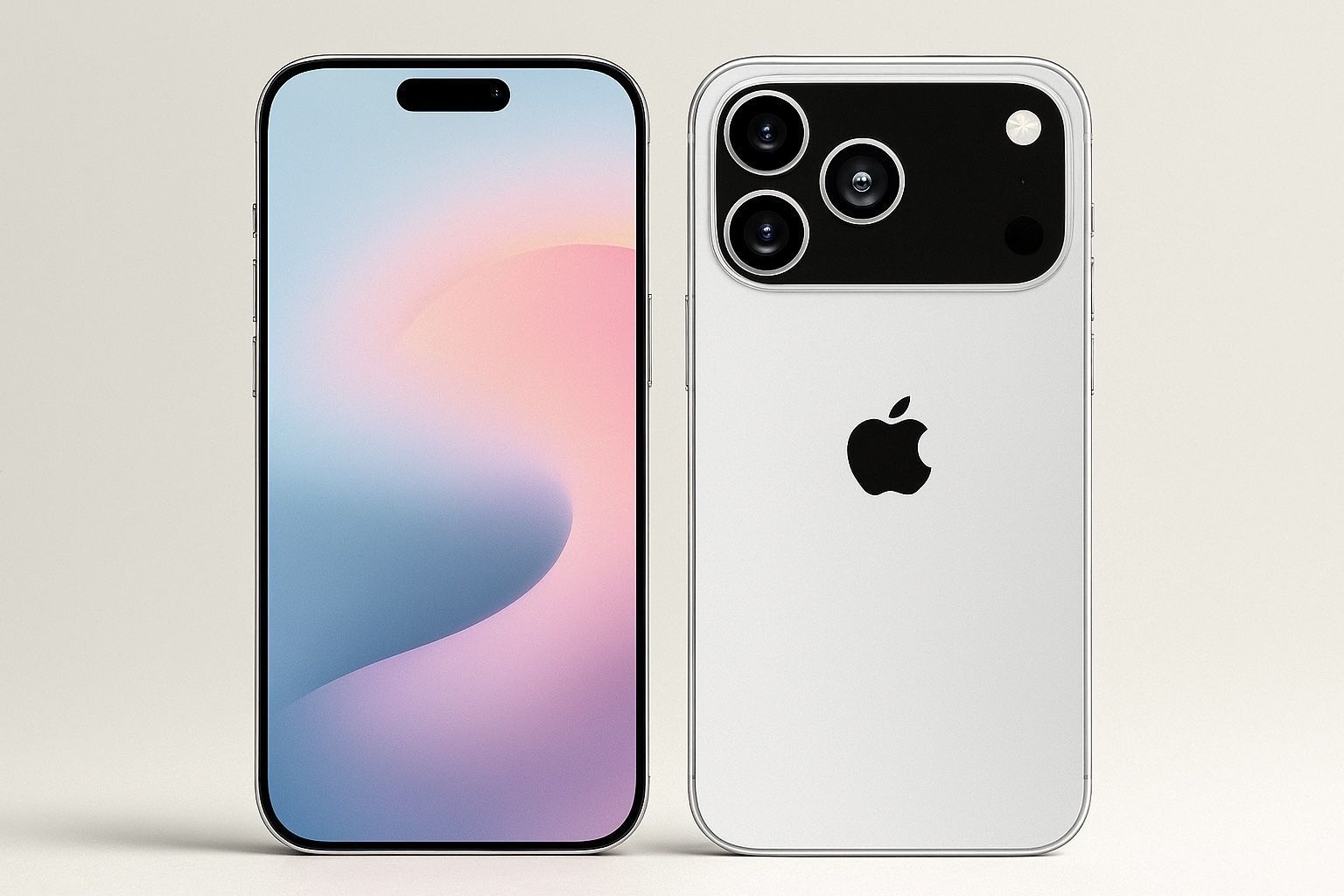
As of August 2025, Apple’s lineup includes iPhone 16 Pro, iPhone 16 Pro Max, iPhone 16, iPhone 16 Plus, iPhone 15, iPhone 15 Plus, and iPhone 16e, with iPhone 14 and iPhone SE (3rd gen) discontinued. The iPhone 16 Pro and 16 Pro Max use a Grade 5 Titanium frame, making them lighter and stronger than previous stainless-steel Pro models, with the iPhone 15 Pro shedding about 19 grams versus its predecessor. The iPhone 16e is the new entry-level model at 599 USD with 128 GB, powered by the A18 Bionic with 8 GB RAM, features a 48 MP main
12 August 2025
Mid-Range Phone Showdown: Galaxy A16 5G vs Redmi Note 14 Pro vs Realme 13 Pro+ – Which Offers the Best Value?

Mid-Range Phone Showdown: Galaxy A16 5G vs Redmi Note 14 Pro vs Realme 13 Pro+ – Which Offers the Best Value?

The Galaxy A16 5G uses a 6.7-inch 1080×2340 AMOLED display with 90Hz, a plastic frame, IP54 dust/splash resistance, a slim 7.9mm profile, and ~200g weight. It ships with Android 14 and One UI 6 and Samsung promises six OS upgrades plus six years of security updates. Redmi Note 14 Pro/Pro+ feature a 6.7-inch OLED display with 2712×1220 resolution at 120Hz, HDR10+ (Dolby Vision on Pro+), and Gorilla Glass Victus 2 front; Pro+ adds curved edges and IP68 protection. The Redmi Note 14 Pro+ 5G has a 5,000 mAh battery with 120W HyperCharge (charger included) and can reach 0–100% in under
12 August 2025
From Pixel 8 to Pixel 9 Pro XL: Every Model Compared + Rumors on the Upcoming Pixel Revolution

From Pixel 8 to Pixel 9 Pro XL: Every Model Compared + Rumors on the Upcoming Pixel Revolution

The Pixel 9 family was announced on August 13, 2024 at Google’s Made by Google event and includes the Pixel 9, Pixel 9 Pro, and Pixel 9 Pro XL, all powered by the Tensor G4 with 12 GB RAM on the base model and 16 GB RAM on the Pro/XL, and storage options from 128 GB to 1 TB with seven years of OS updates. Pixel 9 (base) features a 6.3-inch Actua OLED display, 1080×2424 resolution, 120 Hz refresh, and up to 2,700 nits brightness, starting at $799. Pixel 9 Pro uses a 6.3-inch LTPO Super Actua display with 1280×2856
12 August 2025
Battle of the Mid-Range Titans: Motorola Edge 50 Fusion vs Vivo V30 Pro vs Oppo Reno 12

Battle of the Mid-Range Titans: Motorola Edge 50 Fusion vs Vivo V30 Pro vs Oppo Reno 12

Design & Build Quality Display Each phone offers a large, vibrant OLED display with high refresh rate, but there are some differences in resolution and brightness: Performance (Chipset, RAM, Storage) Camera Systems Rear Cameras: Front Cameras:All three phones cater well to selfie lovers, with Vivo and Oppo going especially high-res: Software & Features Battery Life & Charging All three phones have beefy batteries and fast charging, but there are subtle differences: Pricing & Availability (as of August 2025) India: All three phones are available in India, though at different price tiers. The Motorola Edge 50 Fusion launched at ₹22,999 for
12 August 2025
iPhone 16 Pro Max vs Galaxy S25 Ultra vs Pixel 9 Pro: Which Superphone Will Dominate 2025?

iPhone 16 Pro Max vs Galaxy S25 Ultra vs Pixel 9 Pro: Which Superphone Will Dominate 2025?

Performance: Next-Gen Chipsets and Speed All three flagships boast cutting-edge processors, but their approaches differ: Bottom Line: Apple’s A18 Pro still rules single-threaded performance and pro apps, while Samsung’s Snapdragon 8 Elite leads in multicore throughput and GPU might tomsguide.com. Google’s Tensor G4 is the weakest on paper, but enables unique AI-driven experiences. All three are fast in real-world use, but spec-chasers will note the S25 Ultra and iPhone 16 Pro Max are neck-and-neck for the title of fastest phone in 2025 tomsguide.com tomsguide.com. Display and Design Each phone offers a huge, immersive display with its own twists: Camera Hardware
12 August 2025
How to Watch the Perseid Meteor Shower 2025 – Peak Dates, Best Viewing Times, and Tips

How to Watch the Perseid Meteor Shower 2025 – Peak Dates, Best Viewing Times, and Tips

The Perseids peak on August 12–13, 2025, as Earth passes through the densest part of Swift-Tuttle’s debris, with the official peak around 02:30–03:00 UTC on August 13. The Moon will be a bright waning gibbous at about 83–84% illumination during peak, severely reducing counts from the typical 50–100 meteors per hour to about 10–20 per hour. The best viewing times are after midnight local time, with NASA noting a prime window around 2–3 a.m. local time. The radiant lies in the constellation Perseus, near the Perseus–Cassiopeia border, so many meteors appear to radiate from that area. The shower’s material comes
11 August 2025
Don’t Miss the 2025 Perseids: Ultimate Guide to Photographing August’s Meteor Shower

Don’t Miss the 2025 Perseids: Ultimate Guide to Photographing August’s Meteor Shower

The Perseid meteor shower peaks on the night of August 12 into the early hours of August 13, 2025. The peak occurs three days after a full moon, so bright moonlight reduces fainter meteors and you may see about 10–20 meteors per hour under moonlit skies. In North America and Europe, the peak is the night of Aug 12–13 with the best rates from midnight to dawn as Perseus rises in the northeast. In Asia and Australia, the peak timing is around 2:30 UTC on Aug 13, with good opportunities in the pre-dawn hours of Aug 12 and Aug 13.
11 August 2025
From Revolutionary Beginnings to AI-Powered Future: The Epic Evolution of iOS 1–26 (2007–2025)

From Revolutionary Beginnings to AI-Powered Future: The Epic Evolution of iOS 1–26 (2007–2025)

iPhone OS 1 launched June 29, 2007 on the original iPhone, introducing a capacitive multi‑touch UI but offering no native third‑party apps. iPhone OS 2 released July 11, 2008, introducing the App Store with 500 apps at launch and 10 million app downloads in the first three days. iPhone OS 3 (June 17, 2009) added Copy, Cut & Paste, MMS support for iPhone 3G/3GS, Spotlight search, and improved Notes/Voice features. iOS 4 arrived June 21, 2010, rebranding to iOS, bringing true multitasking (limited) and the iPhone 4 Retina Display at 960×640. iOS 6 (September 19, 2012) replaced Google Maps with
11 August 2025
Android 17’s Massive Upgrades Revealed: Features, Leaks, Release Date & How It Outshines Android 14 & 15

Android’s Epic Evolution: A Complete History from Android 1.0 to Android 15 (2008–2025)

Android 1.0 debuted publicly on September 23, 2008 on the T-Mobile G1 (HTC Dream), launching Google’s first public Android release. Android 1.5 Cupcake, released in April 2009, introduced the first on-screen keyboard and home-screen widgets and began the dessert-naming tradition. Android 1.6 Donut, released in September 2009, added support for multiple screen sizes and CDMA networks such as Verizon, expanding Android’s device reach. Android 2.0–2.1 Eclair, launched October 2009 (2.0) with turn-by-turn Google Maps Navigation and pinch-to-zoom, followed by 2.1 in early 2010. Android 2.2 Froyo, released May 2010, brought a Just-In-Time compiler, mobile hotspot, USB tethering, and Flash support
11 August 2025
The Ultimate Windows Version Comparison: From 1985’s Windows 1.0 to Windows 11 and Beyond

The Ultimate Windows Version Comparison: From 1985’s Windows 1.0 to Windows 11 and Beyond

Windows 1.0 debuted in November 1985 as Microsoft’s first graphical user interface on PCs, running on top of MS-DOS as an “operating environment” with tiled windows due to an Apple licensing agreement. Windows 2.0, released in December 1987, introduced overlapping windows, desktop icons, keyboard shortcuts, expanded memory and 16-color VGA graphics, and bundled early Word and Excel. Windows 3.0 (May 1990) and Windows 3.1 (April 1992) brought mainstream adoption with 386 Enhanced Mode, up to 16 MB RAM, 256-color graphics, Program Manager and File Manager, and the Ctrl+Alt+Del soft reboot. Windows 95, launched August 24, 1995, introduced the Start Menu
11 August 2025
From Macintosh System 1 to macOS Sequoia: The Epic Evolution of Apple’s OS

From Macintosh System 1 to macOS Sequoia: The Epic Evolution of Apple’s OS

The original Macintosh debuted in January 1984 with System 1, introducing windows, icons, menus, and mouse-based interaction. System 7, released in 1991, added virtual memory and 32-bit addressing, along with built-in networking features like AppleTalk. In 1997 Apple acquired NeXT, giving Mac OS X a Unix-based core (Darwin/BSD) with the Mach kernel, leading to Mac OS X 10.0 Cheetah in March 2001. The PowerPC-to-Intel transition was announced at WWDC 2005, and by 2007 the entire Mac lineup had shifted to Intel, aided by Rosetta and Universal Binaries; Leopard 10.5 (2007) introduced Time Machine, Spaces, and Boot Camp. OS X 10.6
11 August 2025
Astrophotography Showdown: Sony A7 IV vs Canon EOS Ra vs Nikon D810A – Which Captures the Cosmos Best?

Astrophotography Showdown: Sony A7 IV vs Canon EOS Ra vs Nikon D810A – Which Captures the Cosmos Best?

The Sony A7 IV uses a 33MP back-illuminated CMOS sensor with ~5.12µm pixels and delivers unusually clean high-ISO performance, with ISO 12,800 showing little noise and star-eater largely mitigated. The Canon EOS Ra modifies its infrared-cut filter to pass roughly four times as much hydrogen-alpha light, offers 30× magnification live view for precise focusing, and provides base ISO 100–40,000 (expandable to 102,400). The Nikon D810A is built around a 36.3MP sensor with a specially tuned IR-cut that passes four times more Hα light, removes the optical low-pass filter for maximum sharpness, and has a base ISO of 200 with superb
10 August 2025
Northern Lights Alert: Best Places, Timing & Photography Tips for 2025’s Auroras

Northern Lights Alert: Best Places, Timing & Photography Tips for 2025’s Auroras

The absolute peak of Solar Cycle 25 is expected around July 2025, with about 115 sunspots mid-year. Noaa SWPC recorded a G2 geomagnetic storm on August 9, 2025, and issued G1–G2 watches on multiple days that month. Norway’s Tromsø (69°N), Alta, and the Svalbard archipelago (74–81°N) offer frequent auroras, with best viewing from late September through March and peak darkness November–January. Iceland’s prime viewing runs September to April, with the Westfjords and northern Iceland offering the clearest skies near popular spots like Thingvellir National Park and the Reykjanes Peninsula. Yellowknife in the Northwest Territories (62°N) experiences about 240 aurora nights
10 August 2025
Battle of the Telescopes: StellaLyra 8″ & Apertura AD8 Dobsonians vs. Vaonis Vespera II Smart Scope (2025 Comparison)

Battle of the Telescopes: StellaLyra 8″ & Apertura AD8 Dobsonians vs. Vaonis Vespera II Smart Scope (2025 Comparison)

StellaLyra 8″ f/6 and Apertura AD8 are both 203 mm (8″) parabolic-mirror Dobsonians with a 1200 mm focal length (≈ f/6). Vaonis Vespera II uses a 50 mm f/5 quadruplet apochromatic refractor with a built‑in camera and a Sony IMX585 sensor (8.3 MP). The StellaLyra and Apertura are manual Dobsonians on wooden alt-az mounts, while the Vespera II is a motorized GoTo system with auto‑initialization and tracking. The Vespera II offers a native field of view around 1.6° × 0.9°, enabling large targets to be captured on its screen. Visual observing with the 8″ Dobs delivers real-time eyepiece views, whereas
10 August 2025
The Best Telescopes of 2025: What the Pros Are Using and What You Should Buy

The Best Telescopes of 2025: What the Pros Are Using and What You Should Buy

The Celestron NexStar 8SE is a 203 mm Schmidt-Cassegrain with a GoTo computerized fork mount and f/10 optics, delivering bright, detailed views but at a high price for beginners. The Sky-Watcher 8-inch Dobsonian is a 203 mm reflector on a manual alt-azimuth mount with f/6, offering a large light bucket at low cost but no tracking. The Celestron NexStar Evolution 9.25 has a 235 mm aperture, premium Go-To fork mount with built-in battery and WiFi app, but is heavy (~28 kg) and expensive. The Sky-Watcher SkyMax 150 Maksutov-Cassegrain delivers high-power planetary detail with a 150 mm aperture and f/12, but
10 August 2025
Spectacular Venus–Jupiter “Cosmic Kiss” Dazzles Early Morning Skies (Don’t Miss It!)

Spectacular Venus–Jupiter “Cosmic Kiss” Dazzles Early Morning Skies (Don’t Miss It!)

The Venus–Jupiter conjunction occurs August 11–13, 2025, with its closest approach on August 12 at about 0.86° apart. Venus will shine around magnitude -4.0 and Jupiter around -1.8 to -2 during the pairing. The pair sits about 35° from the Sun, enabling viewing in a dark dawn sky. Observers should view about 45 minutes to an hour before sunrise, when the planets are 5–10° above the horizon and will rise to 15–20° as dawn progresses. In the dawn sky, Venus appears lower and brighter, with Jupiter above, forming a striking naked-eye close pair. With binoculars or a telescope, both planets
10 August 2025
August 2025 Night Sky Spectacles: Rare Black Moon, Nebula Treasure, Mars in Virgo & Saturn’s Shadow Show

August 2025 Night Sky Spectacles: Rare Black Moon, Nebula Treasure, Mars in Virgo & Saturn’s Shadow Show

On August 23, 2025, the Moon undergoes a seasonal Black Moon New Moon in Virgo at 06:06 UTC, the third New Moon in a season with four. The Dumbbell Nebula, M27, in Vulpecula is a bright planetary nebula visible throughout August 2025 and was first discovered by Charles Messier in 1764. Mars in August 2025 has a brightness of about magnitude 1.6 and a disk roughly 5 arcseconds across. Mars makes a close approach to Beta Virginis (Zavijava) on August 2, 2025, passing about 8 arcminutes to the southeast. By August 24, 2025, Mars will be about 2.7° south of
10 August 2025
Six Planets Will Align in the Sky This Month—Here’s When and How to Watch the Rare “Planet Parade”

Six Planets Will Align in the Sky This Month—Here’s When and How to Watch the Rare “Planet Parade”

On August 10, six planets—Mercury, Venus, Jupiter, Saturn, Uranus, and Neptune—will line up in a broad arc in the pre-dawn sky. Four of these planets (Mercury, Venus, Jupiter, Saturn) are visible to the naked eye, while Uranus and Neptune require binoculars or a small telescope. NASA notes that planetary parades of this kind occur only every few years, and become rarer as more planets join the lineup. The best viewing period is in mid-to-late August, with the prime nights around August 23 when the Moon is near new and does not wash out the view. Venus and Jupiter come very
10 August 2025
Full Moons 2025–2026: Supermoons, Blood Moons & Cultural Celebrations You Can’t Miss

Full Moons 2025–2026: Supermoons, Blood Moons & Cultural Celebrations You Can’t Miss

Sept. 7, 2025 – Corn Moon full moon coincides with a total lunar eclipse (Blood Moon) visible in Asia, Africa, and Australia. Oct. 6–7, 2025 – Harvest Moon is a near-perigee supermoon, peaking around 11:48 PM EDT, with the Mid-Autumn Moon Festival celebrated across China and Asia. Nov. 5, 2025 – Beaver Moon is a supermoon and the closest full moon of 2025, about 356,980 km from Earth and appearing roughly 14% bigger and 30% brighter. Dec. 4, 2025 – Cold Moon is the third consecutive full supermoon of 2025. Jan. 3, 2026 – Wolf Moon is a supermoon, peaking
10 August 2025
December 2025’s Dazzling Cold Moon – A Final Supermoon Lighting Up the Long Winter Night

December 2025’s Dazzling Cold Moon – A Final Supermoon Lighting Up the Long Winter Night

The December 4, 2025 full Moon, known as the Cold Moon, peaks at 23:15 UTC (6:15 p.m. EST; 3:15 p.m. PST in Los Angeles). This full Moon is a supermoon, about 7–8% larger in apparent size and roughly 15% brighter than a typical full Moon. It is the final in a series of three back-to-back 2025 supermoons, following October and November events. It is the closest full Moon to the winter solstice in 2025, though it occurs a couple weeks before the solstice and is also called the Long Night Moon. Because the Moon is at perigee, tides around the
10 August 2025
1 310 311 312 313 314 352

Stock Market Today

KLA stock price jumps 8% as chip rebound lifts KLAC — what to know before Monday

KLA stock price jumps 8% as chip rebound lifts KLAC — what to know before Monday

8 February 2026
KLA Corp shares surged 8.4% to $1,442.95 Friday, leading gains in chip-equipment stocks after Amazon announced a major increase in capital spending. About 1.6 million KLA shares traded as the PHLX semiconductor index rose 5.7%. KLA’s board declared a $1.90 quarterly dividend, payable March 3 to holders as of Feb. 17. Applied Materials and Lam Research also rallied sharply into the close.
CBA share price: Commonwealth Bank stock steadies after ASX selloff as earnings loom

CBA share price: Commonwealth Bank stock steadies after ASX selloff as earnings loom

8 February 2026
Commonwealth Bank of Australia closed Friday down 0.23% at A$158.91, outperforming a 2.03% drop in the S&P/ASX 200. Investors await CBA’s half-year results on Feb. 11 and commentary from CEO Matt Comyn. The Reserve Bank’s recent cash-rate hike to 3.85% and upcoming mortgage repricing are in focus. CBA flagged A$68 million in provisions and A$53 million in non-recurring income items.
Boeing stock jumps 2.6% to $243 — what Wall Street is watching before Monday

Boeing stock jumps 2.6% to $243 — what Wall Street is watching before Monday

8 February 2026
Boeing shares closed up 2.6% at $243.03 Friday, buoyed by reports of possible major aircraft orders from Saudi Arabia and India. India’s trade minister said a $70–80 billion Boeing deal could be signed by March. Supply-chain delays and regulatory scrutiny remain key risks. Boeing’s chief engineer sold over 10,000 shares earlier in the week.
Go toTop