Marcin Frąckiewicz

Marcin Frąckiewicz is the founder and CEO of TS2 Space, a satellite communications company serving customers around the world. A graduate of the Warsaw School of Economics (SGH), he has more than two decades of experience in telecommunications, satellite services and technology ventures. He writes about satellite communications, space technology, artificial intelligence and the stock market, with a particular focus on technology companies, semiconductors, emerging industries and the trends shaping global innovation. Follow Marcin Frąckiewicz on Google News, Facebook. or Linkedin.

Tech Just Leveled Up: Samsung’s Foldables, AI Browsers, and the Smartwatch Takeover / Updated: 2025, July 10th, 12:00 CET

Tech Just Leveled Up: Samsung’s Foldables, AI Browsers, and the Smartwatch Takeover / Updated: 2025, July 10th, 12:00 CET

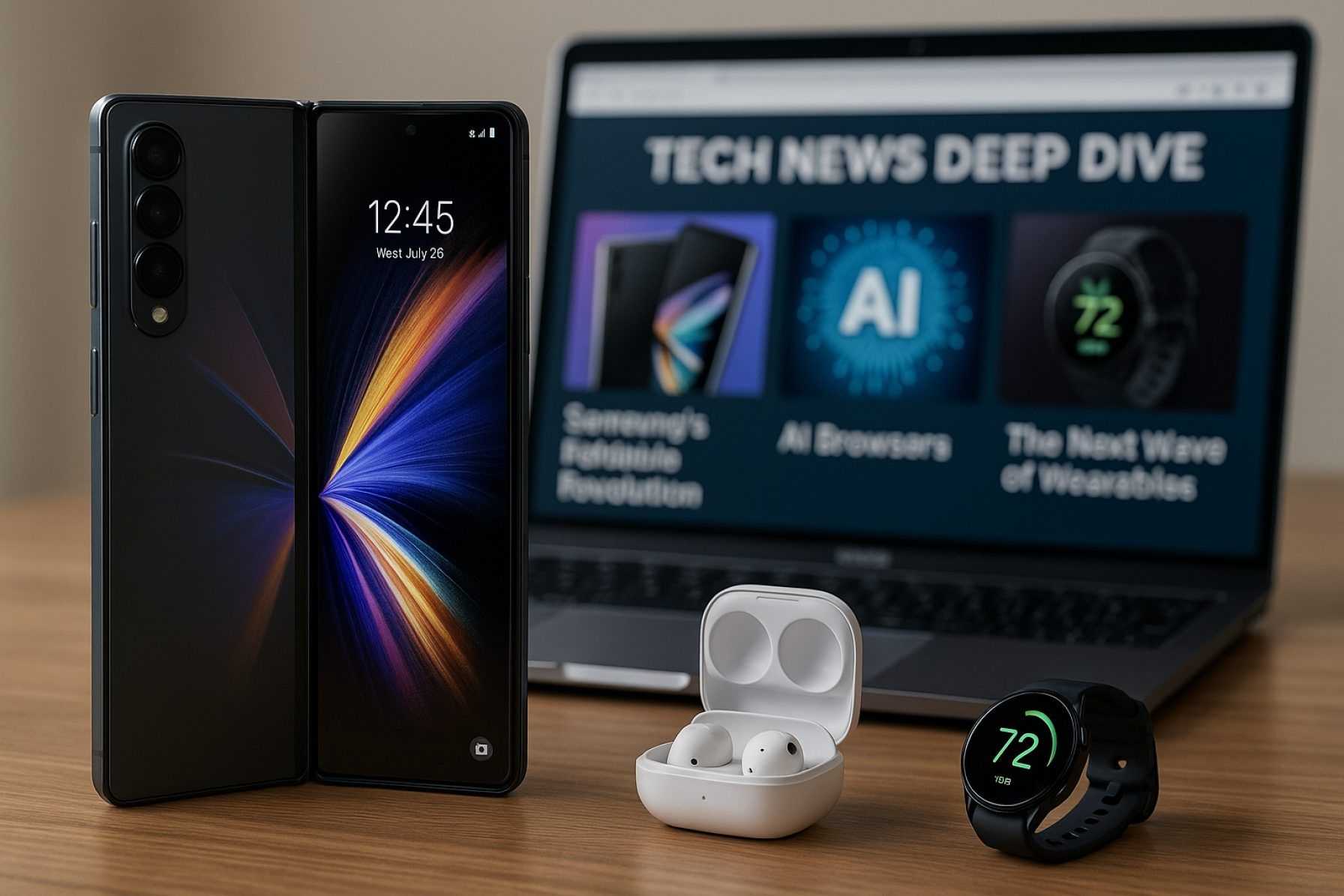
Samsung released the Galaxy Z Fold 7 and Z Flip 7, with Fold 7 folded thickness of 8.9 mm and Flip 7’s 4.1-inch external cover display, a 200 MP main camera, Snapdragon 8 Elite, up to 16 GB RAM, IP68, seven years of Android updates, and Fold 7 dropping S Pen support. Both devices feature deep Google Gemini AI integration powering Circle to Search, Gemini Live for screen and camera assistance, and native app enhancements. The Galaxy Watch 8 and Watch 8 Classic are the first Samsung wearables to include Google Gemini AI, with 3000-nit sapphire displays, antioxidant measurement, and
Space News Roundup: July 2025 / Updated: 2025, July 10th, 00:00 CET

Space News Roundup: July 2025 / Updated: 2025, July 10th, 00:00 CET

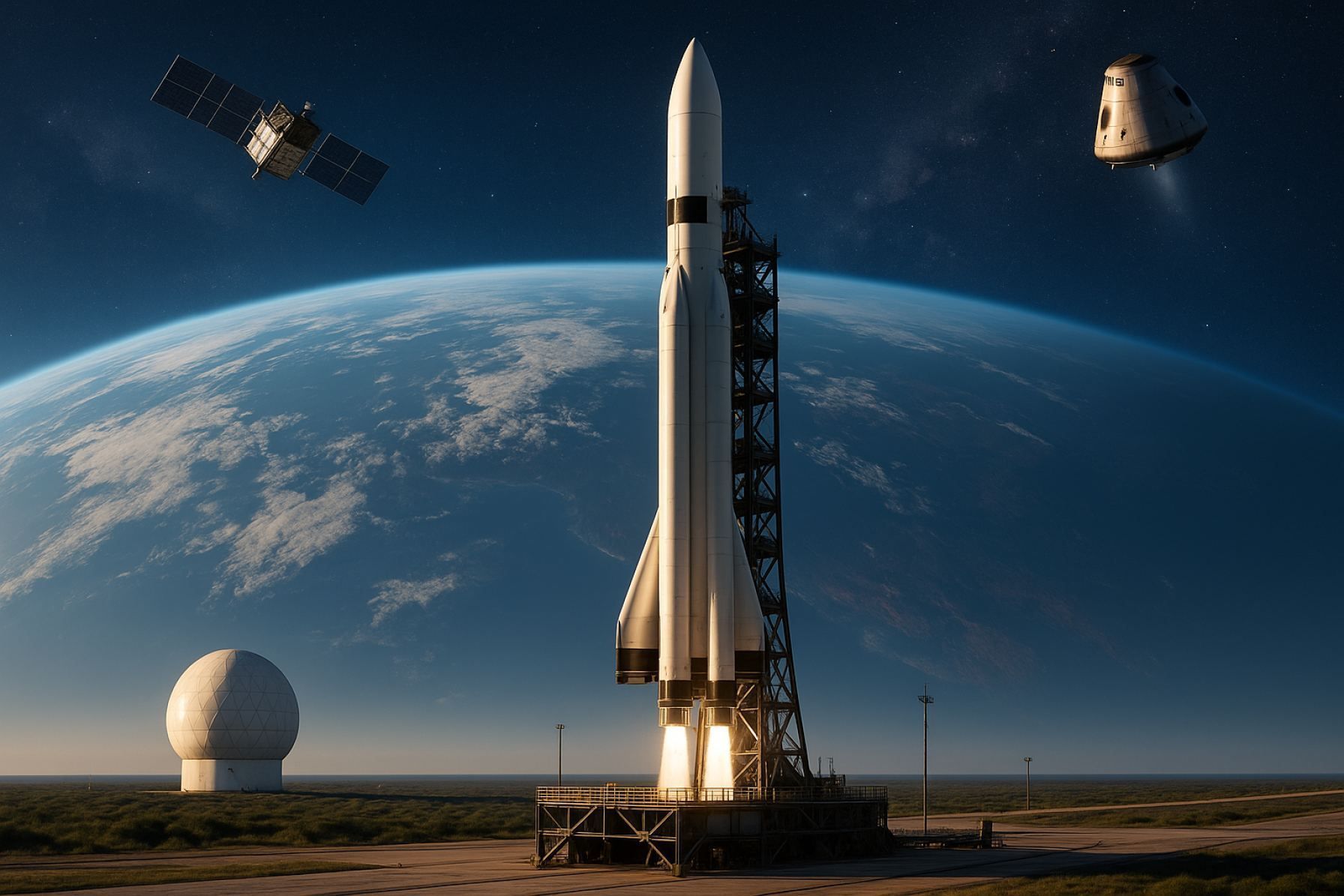
NASA deployed the WB-57 and UAVSAR-equipped Gulfstream III to support Texas flood recovery, delivering high-resolution real-time data despite persistent cloud cover, with over 110 fatalities and more than 170 missing. The European Launcher Challenge finalists are Isar Aerospace, Rocket Factory Augsburg, MaiaSpace, PLD Space, and Orbex, each eligible for contracts up to €169 million. Airbus Defence and Space España will build two PAZ-2 radar satellites for Hisdesat, delivering sub-25 cm SAR imagery with AI analytics, and first in-service expected by 2031, with 65% of work performed by Spanish firms. India approved Starlink to operate under IN-SPACe for five years, allowing
10 July 2025
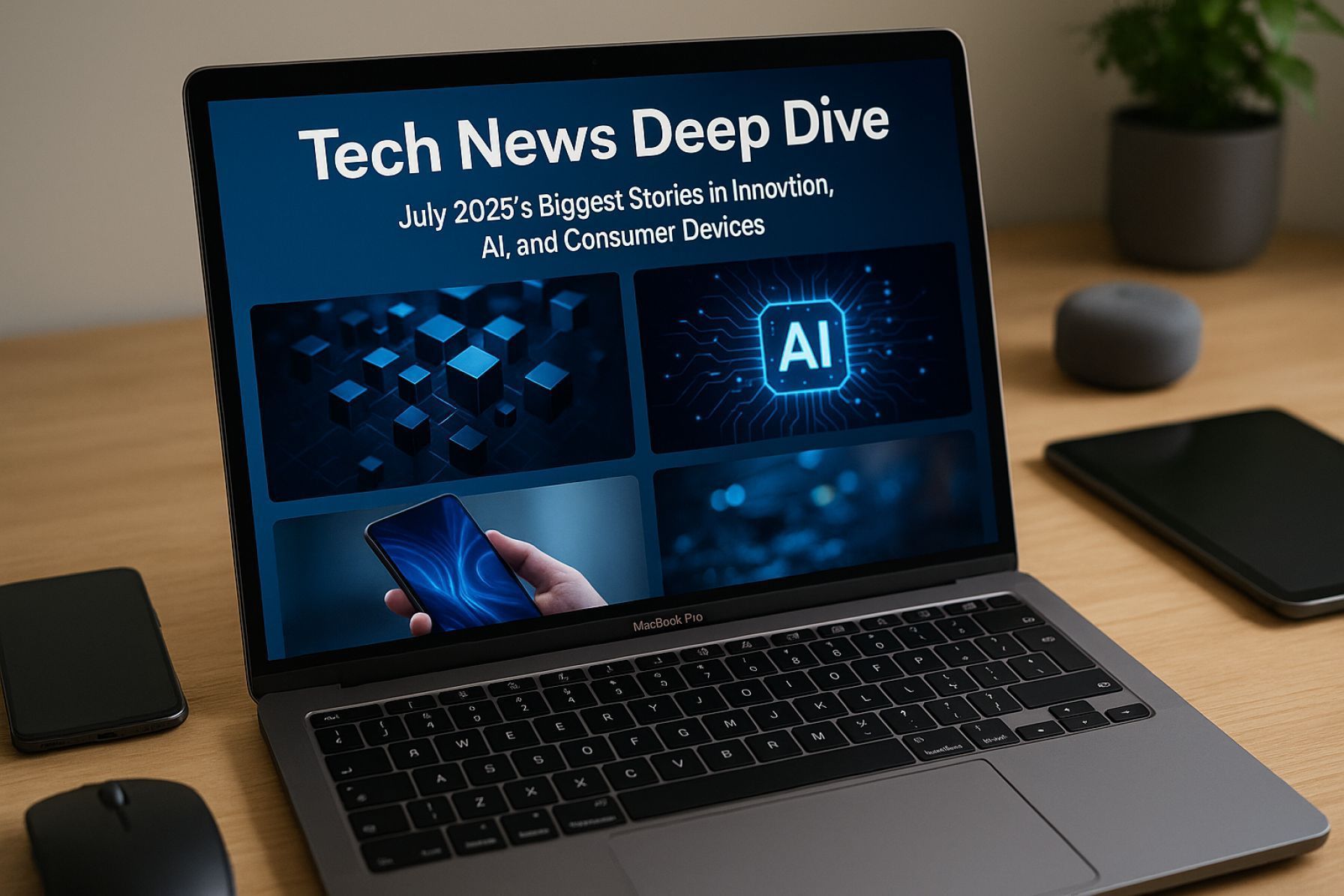
Tech News Deep Dive: July 2025’s Biggest Stories in Innovation, AI, and Consumer Devices / Updated: 2025, July 10th, 00:00 CET

Tech News Deep Dive: July 2025’s Biggest Stories in Innovation, AI, and Consumer Devices / Updated: 2025, July 10th, 00:00 CET

Nvidia becomes the world’s first publicly traded company to reach a $4 trillion market capitalization in July 2025, reflecting AI hardware leadership and accounting for over 7% of the S&P 500. Samsung unveils Galaxy Z Fold7, Z Flip7, and Z Flip7 FE at Galaxy Unpacked 2025, with Fold7 at 4.4 mm unfolded, an 8-inch Dynamic AMOLED 2X display, a 200 MP main camera, and prices starting at $1,999 for Fold7 and $899 for Flip7 FE. OpenAI plans to launch an AI-powered Chromium-based web browser with integrated AI agents that could disrupt Google Chrome and its ad revenue. Johns Hopkins’ SRT-H
The State of AI in 2025: Breakthroughs, Backlash, and the Battle for Trust / Updated: 2025, July 10th, 00:00 CET

The State of AI in 2025: Breakthroughs, Backlash, and the Battle for Trust / Updated: 2025, July 10th, 00:00 CET

In 2025, Nvidia became the first public company to surpass a $4 trillion market valuation, with its GPUs powering data centers for Microsoft, Amazon, Google, and Meta. Microsoft reported over $500 million in annual AI-driven savings, with AI generating 35% of new product code and improving call-center efficiency. Google DeepMind’s AlphaFold is enabling rapid AI-designed drug discovery, with human trials imminent. The European Union’s AI Act bans manipulative algorithms, social scoring, and predictive policing to protect fundamental rights. Elon Musk’s Grok chatbot sparked global outrage for antisemitic and Nazi-themed content, triggering bans in Turkey and investigations in Poland and the
ChatGPT-5: The Next ‘Omnimodel’ AI Revolution is Coming – Here’s What We Know

ChatGPT-5: The Next ‘Omnimodel’ AI Revolution is Coming – Here’s What We Know

ChatGPT-5 is generating both hype and caution as the potential next giant leap in artificial intelligence. Touted as a step towards an “omnimodel” AI – one that can see, hear, and reason – GPT-5 is rumored to dramatically outperform its predecessor GPT-4 across the board explodingtopics.com standard.co.uk. AI enthusiasts are buzzing about its possible abilities, from advanced multimodal understanding to near-human levels of reasoning. At the same time, experts urge careful rollout, noting the high stakes around safety and alignment. In this report, we compile all publicly available information on ChatGPT-5: its confirmed and rumored features, performance improvements, use cases, safety measures, release timeline, and what experts are saying about this much-anticipated AI milestone.
Elon Musk’s Grok AI Shocks the Tech World with New Upgrades, Bold Features & Big Controversies

Elon Musk’s Grok AI Shocks the Tech World with New Upgrades, Bold Features & Big Controversies

Elon Musk’s latest foray into artificial intelligence – Grok AI – is making headlines as a “rebellious” chatbot that promises to challenge industry leaders like ChatGPT. Developed by Musk’s company xAI, Grok has rapidly evolved in the past two years, rolling out powerful new models and features at a breakneck pace. It’s touted as an uncensored, “maximally truth-seeking” AI assistant with a bit of wit and attitude, designed to answer almost any question, including those other chatbots refuse en.wikipedia.org techcrunch.com. But along with impressive capabilities and Musk’s bold vision, Grok has also courted major controversy – from political bias debates to incidents of hateful content. Below, we unpack the latest news, features, expert commentary, rival comparisons, and controversies surrounding Grok as of July 2025.
Global Satellite Internet Showdown: Starlink vs Viasat vs OneWeb vs Kuiper – Which One Will Connect the World?

Global Satellite Internet Showdown: Starlink vs Viasat vs OneWeb vs Kuiper – Which One Will Connect the World?

Satellite internet is entering a new era in 2025. Once seen as a last resort for rural connectivity, it’s now a hotbed of innovation thanks to low-Earth orbit constellations and next-gen satellites. Companies like SpaceX’s Starlink, traditional providers Viasat and HughesNet, new LEO networks like OneWeb, and upcoming giants like Amazon’s Project Kuiper are racing to blanket the globe with broadband from space. Each provider targets regions like North America, Europe, Africa, Asia, and Latin America with varying coverage, speeds, and pricing. This comprehensive report compares the major satellite internet services – examining their coverage maps, performance, equipment needs, pricing plans, user satisfaction, expert opinions, impact on remote areas, and future expansion plans. Whether you’re a rural consumer desperate for better internet or an industry watcher, read on to see how these satellite ISPs stack up across the world.
Future Combat Air Systems: The Global Race for Sixth-Generation Fighters

Future Combat Air Systems: The Global Race for Sixth-Generation Fighters

Around the world, a high-stakes race is underway to develop the next generation of combat aircraft – often dubbed “sixth-generation” fighters or Future Combat Air Systems. These ambitious programs aim to leap beyond today’s stealth jets by around the 2030s–2040s, incorporating groundbreaking technologies in stealth, artificial intelligence, uncrewed drone “wingmen”, advanced sensors, and networked “combat cloud” data systems. The United States, Europe, and Asia are all investing heavily to ensure air dominance in future decades. Major initiatives include Europe’s multinational FCAS/SCAF project, the U.S. Next Generation Air Dominance program, and the newly formed UK-Italy-Japan Global Combat Air Programme – each with unique goals, timelines and strategic drivers. Meanwhile, countries like China, Russia, India, South Korea, and Turkey are pursuing their own advanced fighter projects, eager not to be left behind.
9 July 2025
Space News Roundup: July 2025 / Updated: 2025, July 9th, 12:02 CET

Space News Roundup: July 2025 / Updated: 2025, July 9th, 12:02 CET

SpaceX operates over 7,000 satellites and posted $4.2 billion in revenue for 2024, with a target valuation of $400 billion to $4 trillion in upcoming funding rounds. Starlink aims for 22,000 satellites by 2030 and could capture 15% of global communications spending. Ovzon secured a SEK 72 million order from Sweden’s FMV for mobile satellite terminals, with deliveries starting in Q3 2025. MEASAT received IN-SPACe approval to provide satellite services in India, expanding access to over 600 TV channels and 11 million DTH customers. EarthDaily Analytics launched the first of its ten-satellite EarthDaily Constellation, delivering daily AI-ready, scientifically calibrated global
The State of Artificial Intelligence: Opportunities, Risks, and the Road Ahead (July 2025) / Updated: 2025, July 9th, 12:00 CET

The State of Artificial Intelligence: Opportunities, Risks, and the Road Ahead (July 2025) / Updated: 2025, July 9th, 12:00 CET

Microsoft’s MAI-DxO AI system achieved 85.5% diagnostic accuracy on NEJM benchmarks, outperforming doctors. Ford CEO Jim Farley warned that AI could replace up to 50% of US office workers, with accountants and cashiers most at risk. Turkey banned Elon Musk’s Grok AI chatbot after antisemitic outputs, marking the country’s first AI ban. The European Union advanced the AI Act with no delays, enforcing phased rules through 2027 as the world’s first comprehensive AI regulation. UNESCO warns AI could consume up to 4% of global electricity by 2030, while design changes could cut energy use by up to 90% through model
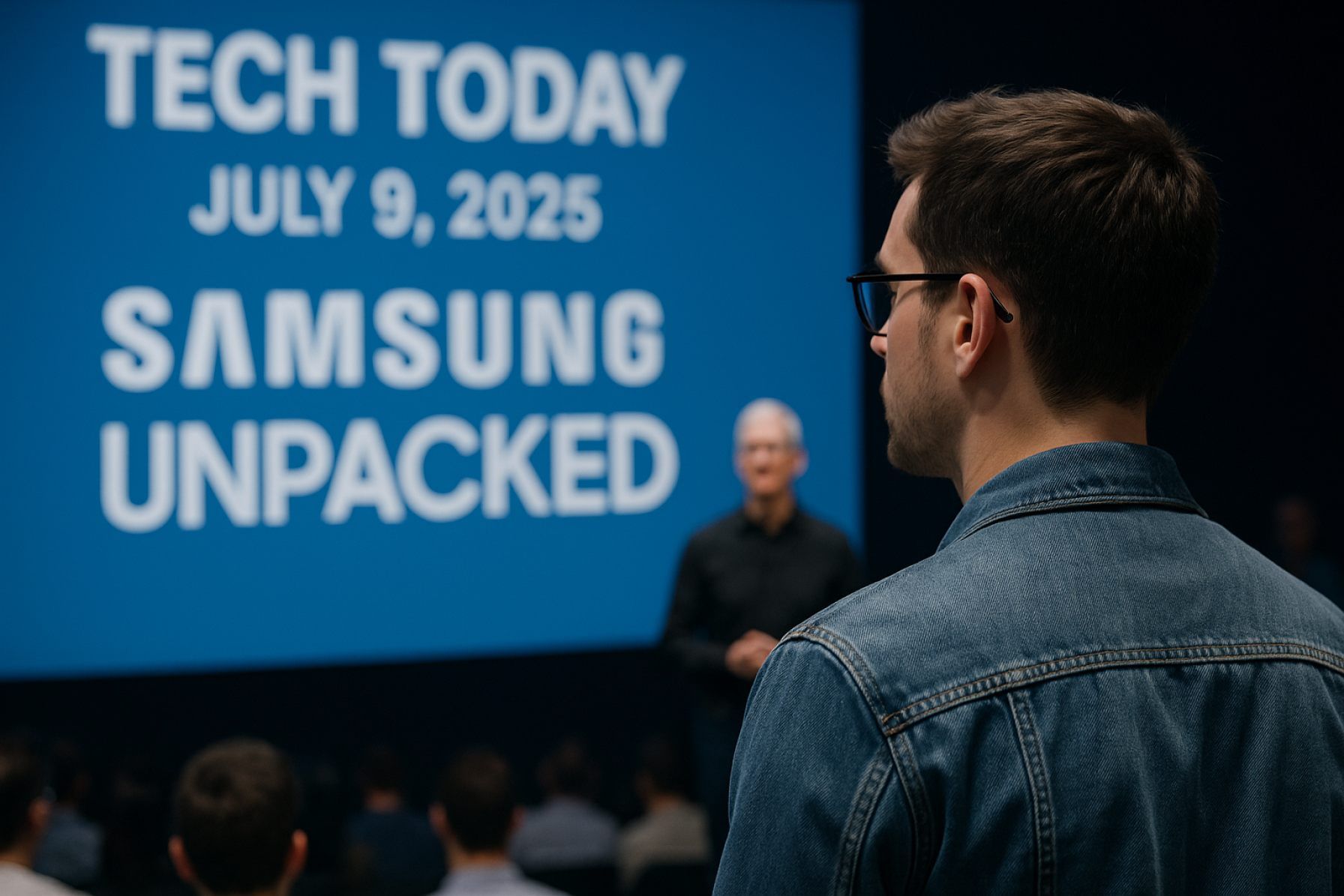
Tech Today: July 9, 2025 – Samsung Unpacked, Apple Leadership, AI Talent Wars, Gmail’s Inbox Revolution, and More / Updated: 2025, July 9th, 12:00 CET

Tech Today: July 9, 2025 – Samsung Unpacked, Apple Leadership, AI Talent Wars, Gmail’s Inbox Revolution, and More / Updated: 2025, July 9th, 12:00 CET

Samsung announced Galaxy Unpacked 2025 on July 9, 2025, unveiling the Galaxy Z Fold 7, Z Flip 7, and Galaxy Watch 8 with deeper Google Gemini AI integration. Apple disclosed COO Jeff Williams’s retirement after 27 years, appointing Sabih Khan as the new COO and moving the design group to report directly to Tim Cook. Gmail rolled out the Manage Subscriptions feature on the web, with Android support arriving on July 14 and iOS on July 21. OpenAI hired four top engineers from Tesla, xAI, and Meta to bolster its Stargate AI infrastructure. NVIDIA unveiled the DGX Spark mini supercomputer
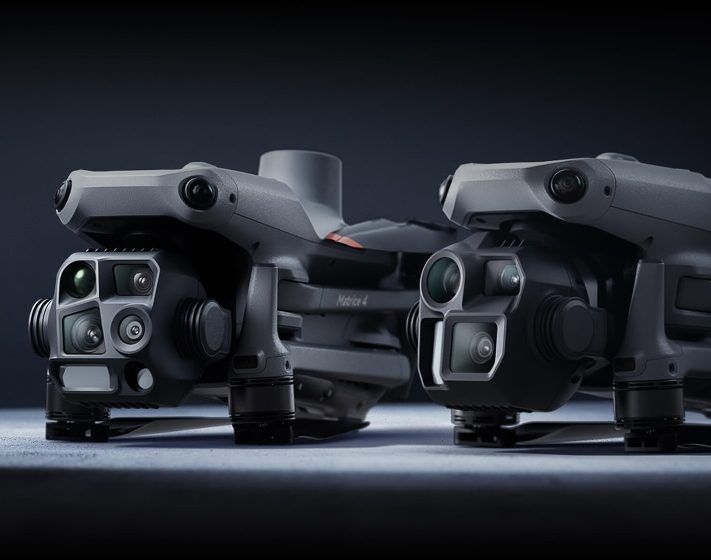
Ultimate DJI Enterprise Drone Comparison (2025): Matrice vs Mavic 3 Enterprise & Thermal Models

Ultimate DJI Enterprise Drone Comparison (2025): Matrice vs Mavic 3 Enterprise & Thermal Models

Introduction: DJI’s enterprise drone lineup has expanded into a versatile range of Matrice and Mavic Enterprise models, each tailored to specific professional needs. From heavy-lift platforms to portable thermal imaging drones, DJI offers solutions for surveying, industrial inspection, search and rescue, agriculture, and more. In this comprehensive 2025 guide, we compare all major DJI Enterprise drones – including the Matrice 300/350 series, Matrice 30 series, Matrice 4 series, and Mavic 3 Enterprise series – highlighting their core features, specs, use-case suitability, and pricing. Whether you need centimeter-accurate mapping or a rugged thermal drone for emergency response, this report will help you choose the right tool for the job.
9 July 2025
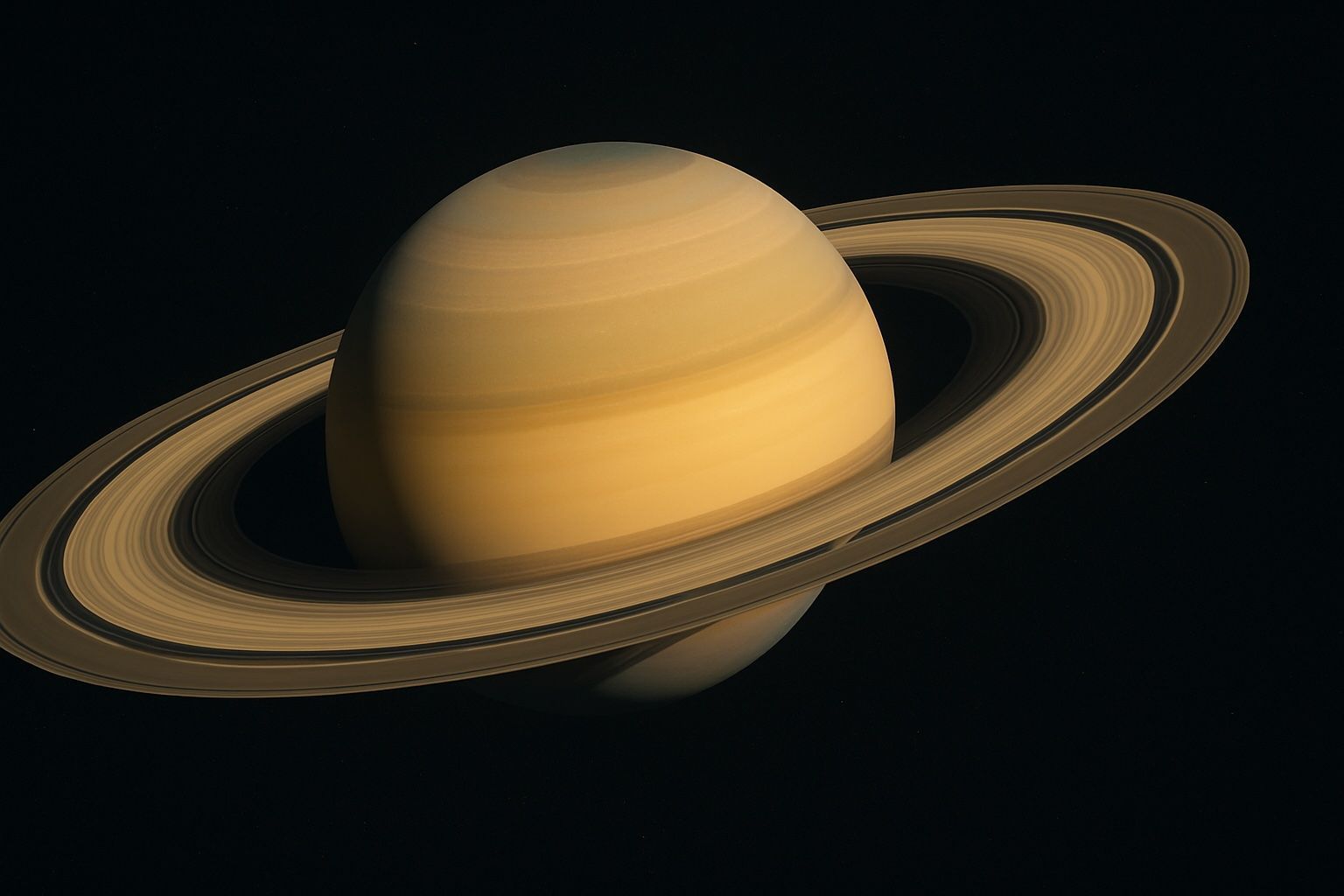
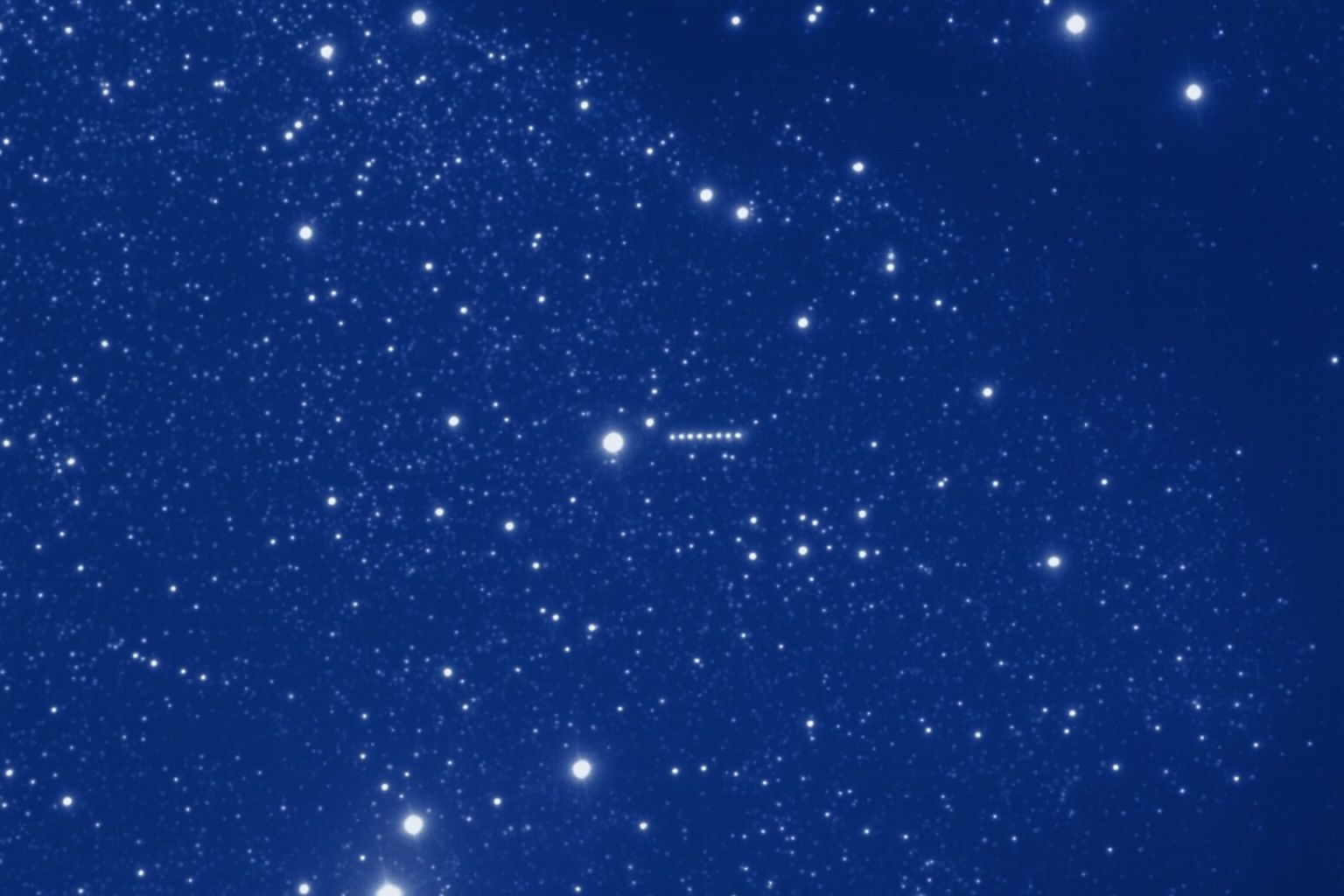
Did a Space Rock Just Slam Into Saturn? Inside the Global Race to Confirm the 5 July 2025 Flash

Did a Space Rock Just Slam Into Saturn? Inside the Global Race to Confirm the 5 July 2025 Flash

In the early hours of 5 July 2025, amateur astronomer Mario Rana recorded a brief, white flare on Saturn’s western limb. Within hours, the Planetary Virtual Observatory & Laboratory issued an international “all‑points bulletin,” asking observers to scour their own images for corroboration. So far, no second detection has surfaced, but a growing body of data and expert commentary suggests the flash could mark the first ever ground‑based confirmation of an impact on Saturn. Below is a deep‑dive into what we know, why the event matters, and how scientists plan to verify — or debunk — the claim.
9 July 2025
Tech News Today: The Biggest Stories in Technology, Science, and Innovation (July 9, 2025) / Updated: 2025, July 9th, 00:00 CET

Tech News Today: The Biggest Stories in Technology, Science, and Innovation (July 9, 2025) / Updated: 2025, July 9th, 00:00 CET

A new axion Dark Energy (aDE) model from Cornell and Shanghai Jiao Tong University predicts the universe will start contracting in about 7 billion years and collapse in roughly 33–34 billion years. Amazon Prime Day 2025 runs July 8–11, 2025, with US online sales forecast at $23.8 billion and record discounts on Apple, Samsung, Google, Lenovo, and OnePlus. OnePlus Nord 5 and Nord CE5 smartphones launch with the Nord 5 featuring Snapdragon 8s Gen 3, a 6.83-inch 144Hz OLED display, up to 12GB RAM, and a 5200mAh battery; the Nord CE5 uses the MediaTek Dimensity 8350. NVIDIA’s AI hardware leadership
Space in July 2025: Budget Battles, Scientific Breakthroughs, and the New Space Race / Updated: 2025, July 9th, 00:00 CET

Space in July 2025: Budget Battles, Scientific Breakthroughs, and the New Space Race / Updated: 2025, July 9th, 00:00 CET

The FY2026 NASA budget proposal would cut overall funding by 24.3%, with science funding slashed by nearly 47%. Congress moved to restore nearly $10 billion for NASA’s human spaceflight programs including Artemis, SLS, Orion, and the Gateway lunar station, while transferring Space Shuttle Discovery to Houston and upgrading the Stennis Space Center. SpaceX accounted for 83% of U.S. launches in 2024 and marked its 500th Falcon 9 launch, while Starlink now operates more than 7,900 active satellites. The TraCSS space traffic coordination system faces an 84% budget cut, with hundreds of companies urging Congress to restore funding. <li NASA's Perseverance
9 July 2025
AI News Today: Global Trends, Breakthroughs, and Controversies / Updated: 2025, July 9th, 00:00 CET

AI News Today: Global Trends, Breakthroughs, and Controversies / Updated: 2025, July 9th, 00:00 CET

An unknown actor used AI-generated voice and text to impersonate US Secretary of State Marco Rubio, contacting foreign ministers and senior officials via Signal, using as little as 15-20 seconds of audio to create a convincing deepfake. Meta hired Ruoming Pang, Apple’s head of AI models, for its new Superintelligence Lab, amid the AI talent wars where engineers command salaries in the tens of millions per year. OpenAI CEO Sam Altman warns millions of jobs—especially entry-level roles—could be automated within five years, as UK entry-level postings drop 32% since late 2022. The Velvet Sundown, an AI-generated indie band, amassed over
The Chatbot Revolution Nobody Saw Coming: How AI Assistants Took Over the World

The Chatbot Revolution Nobody Saw Coming: How AI Assistants Took Over the World

The story of chatbots began decades ago with simple, rule-based programs that could mimic conversation on a very limited scale. In 1966, ELIZA – often cited as the first chatbot – followed a script to simulate a psychotherapist, using pattern matching to reflect users’ inputs back at them. While groundbreaking for its time, ELIZA’s responses were obviously formulaic and it often fell into incoherence due to its hard-coded rules. Early successors like PARRY, which feigned the personality of a paranoid patient, expanded the script approach with more rules and even managed to fool some people in Turing Test-style experiments. By the 1980s and 90s, hobbyist chatbots like Jabberwacky and Dr. Sbaitso experimented with playful or “AI” responses, but they too were fundamentally rule or template-based systems with no real learning. These early bots were clever tricks, yet they lacked true understanding – their “conversations” often veered off-track or repeated canned lines.
How to Build Your Own AI: The Complete 2025 Guide to Costs, Tools, and Making Money

How to Build Your Own AI: The Complete 2025 Guide to Costs, Tools, and Making Money

Building your own artificial intelligence solution in 2025 is more achievable than ever – but it’s also a multifaceted challenge. This comprehensive guide will walk you through the key considerations: from choosing which type of AI to build and assembling the right tech stack, to understanding costs, selecting models, weighing build-vs-buy decisions, addressing legal/ethical issues, and ultimately monetizing your creation. Along the way, we’ll highlight expert insights and real-world examples of AI startups turning innovation into profit. By the end, you should have a clear roadmap for how to build your own AI – and how to make it both impactful and financially viable.
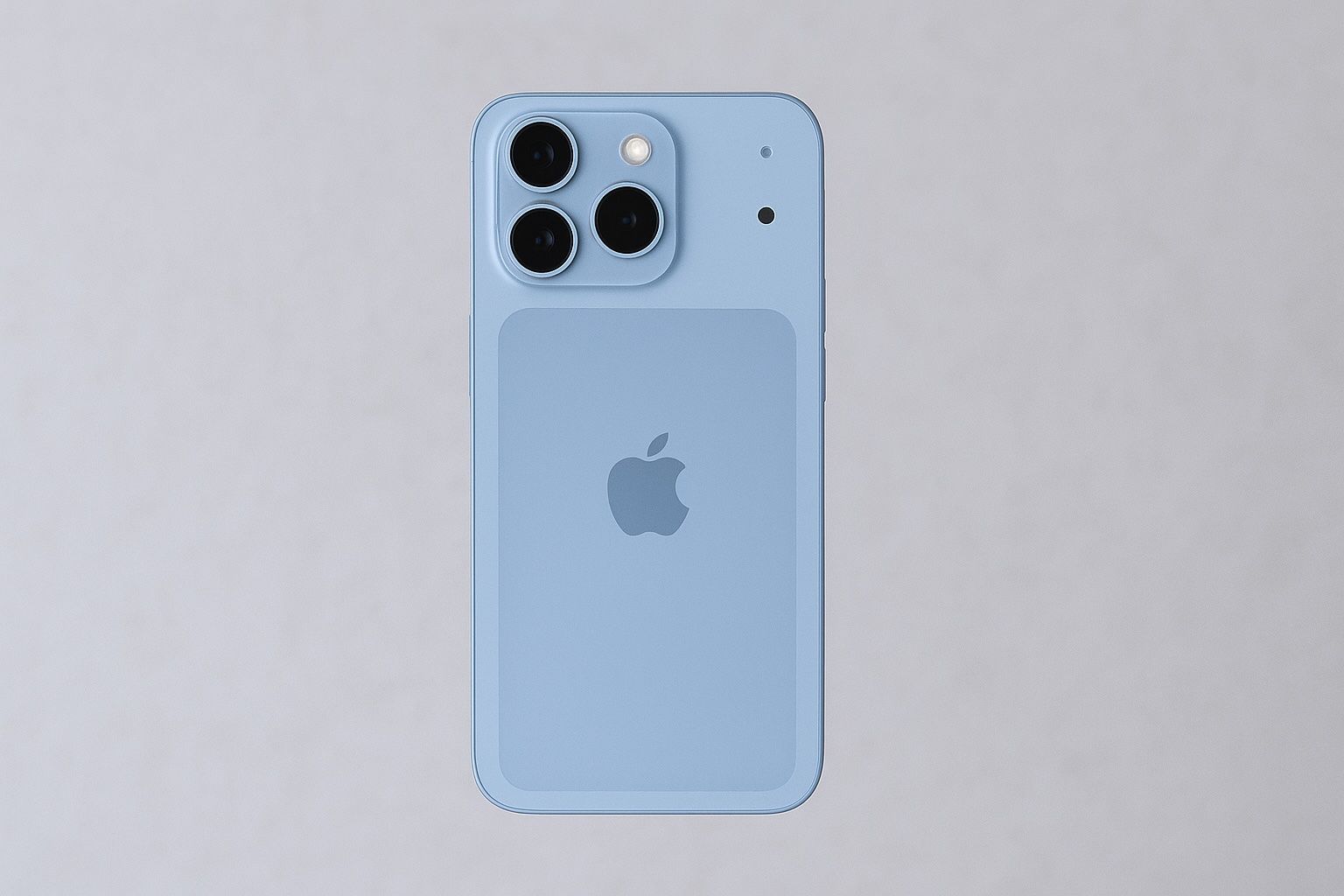
iPhone 17 Shockers: Ultra‑Thin “Air,” 120 Hz for Everyone & 24 MP Selfies — Here’s the 2‑Minute Cheat Sheet

iPhone 17 Shockers: Ultra‑Thin “Air,” 120 Hz for Everyone & 24 MP Selfies — Here’s the 2‑Minute Cheat Sheet

Industry leaks say Apple’s iPhone 17 lineup will shake things up. Expect four models – a base iPhone 17, a new ultra-thin iPhone 17 Air instead of a Plus, plus the Pro and Pro Max. The phones should largely follow Apple’s usual September launch schedule. The 17 Air is rumored to have a ~6.6″ display but an astonishingly slim 5–6 mm chassis. By contrast the base 17 and 17 Pro will have ~6.3″ screens, and the 17 Pro Max ~6.9″. AppleInsider notes the Pro models will use a new horizontal “camera bar” design on the back, whereas the standard 17 “will be virtually indistinguishable” from the iPhone 16.
8 July 2025
Interstellar Comet 3I/ATLAS: Origin, Trajectory and Scientific Stakes In 2025’s Third‑Ever Extrasolar Visitor

Interstellar Comet 3I/ATLAS: Origin, Trajectory and Scientific Stakes In 2025’s Third‑Ever Extrasolar Visitor

In early July 2025 astronomers using the NASA‑funded ATLAS telescope in Chile discovered a hyper‑fast object now designated 3I/ATLAS—only the third confirmed interstellar body to enter our Solar System after ’Oumuamua and Borisov. Follow‑up astrometry shows an inbound velocity of ≈58 km s⁻¹ and an orbital eccentricity of ≈6.1, values far in excess of anything gravitationally bound to the Sun, proving an extrasolar origin. First photometric estimates put the nucleus at 9‑20 km—an order of magnitude larger than Borisov—and early images already reveal a developing coma and tail. Dynamical modelling by Oxford–Canterbury researchers traces its trajectory back to the Milky Way’s thick disc, implying the ice‑rich body may be ≥7 billion years old—much older than the Solar System itself. Although 3I/ATLAS will dive just inside Mars’ orbit on 30 October, it never comes closer than 1.6 au to Earth and poses no hazard. Instead it offers an unprecedented laboratory for studying planet formation chemistry beyond our neighbourhood, and it is galvanising plans for rapid‑response spacecraft such as ESA’s 2029 Comet Interceptor.
1 390 391 392 393 394 411
AI PORTFOLIO

Top Stock Picks

Today’s highest-ranked model selections.

#1 STRONG BUY

Xylem

NYSE: XYL 94 / 100
#2 STRONG BUY

AerCap

NYSE: AER 92 / 100
#3 BUY ON WEAKNESS

Visa

NYSE: V 90 / 100
#4 BUY

Chevron

NYSE: CVX 86 / 100
#5 ACCUMULATE

UPS

NYSE: UPS 84 / 100
View full portfolio
Editorial model selection. Not personalised advice.