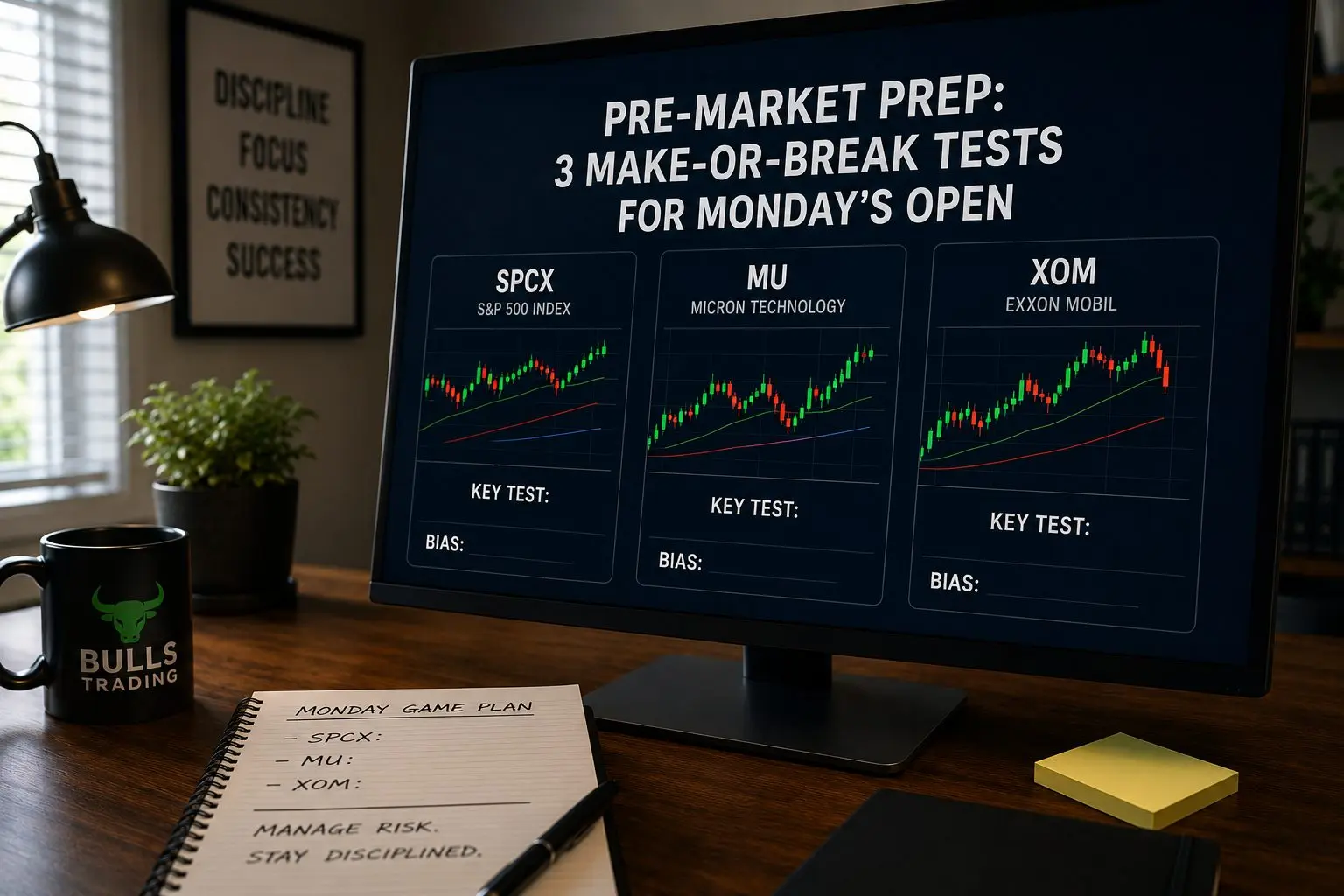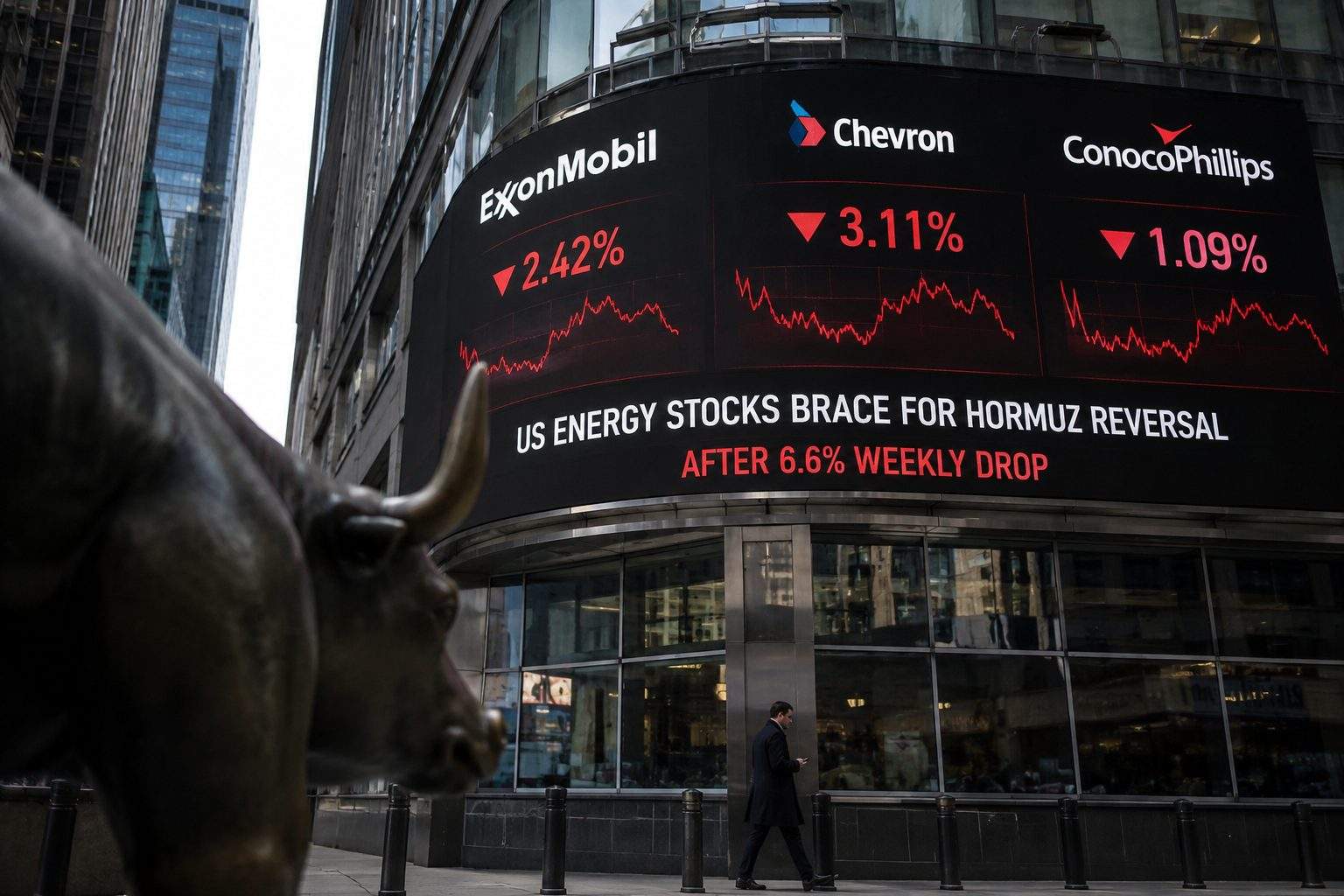
U.S. energy shares may see heavy swings at Monday’s open after Iran threatened again to block the Strait of Hormuz, a move that questions the basic reason for last week’s steep slide in oil stocks. Reuters, citing vessel tracking, reported no tankers passing the strait since Tehran’s statement on Saturday. The U.S. military, though, said the route is still open.
Exxon Mobil Corp. goes into Monday’s open on the defensive. Shares dropped over the holiday week, with investors cutting the stock as oil’s war premium eased and more crude flowed through the Strait of Hormuz.
Exxon Mobil shares slid Monday as oil prices sold off after the U.S. and Iran said they would end their war and reopen the Strait of Hormuz. Exxon last traded at $141.10, down about 4%. Shares hit a session low of $137.78. Brent crude dropped 5.02% to $82.95, while WTI lost 5.42% to $80.28 as of 10:54 a.m. EDT, according to Reuters.
Stocks jumped Monday, with investors turning to risk as a first-step U.S.-Iran deal took some pressure off Middle East oil worries. According to LSEG-delayed figures on Reuters, the Dow Jones Industrial Average added 648.99 points, or 1.27%, to 51,851.25. The S&P 500 was up 1.50% at 7,543.05, and the Nasdaq Composite ran ahead 2.35% to 26,496.47. Reuters said the Dow hit an intraday peak as gains spread out from tech shares.
Dow sets new intraday record, jumps 1.27% to 51,851.25 The Dow Jones Industrial Average hit an all-time intraday high Monday, up about 1.27% to 51,851.25, according to delayed LSEG figures reported by Reuters. Wall Street was higher as traders watched hopes for a U.S.-Iran deal that could reopen the Strait of Hormuz and potentially cool oil prices. The Dow is a price-weighted index of 30 major U.S. stocks, with higher-priced shares carrying more weight, S&P Dow Jones Indices says.
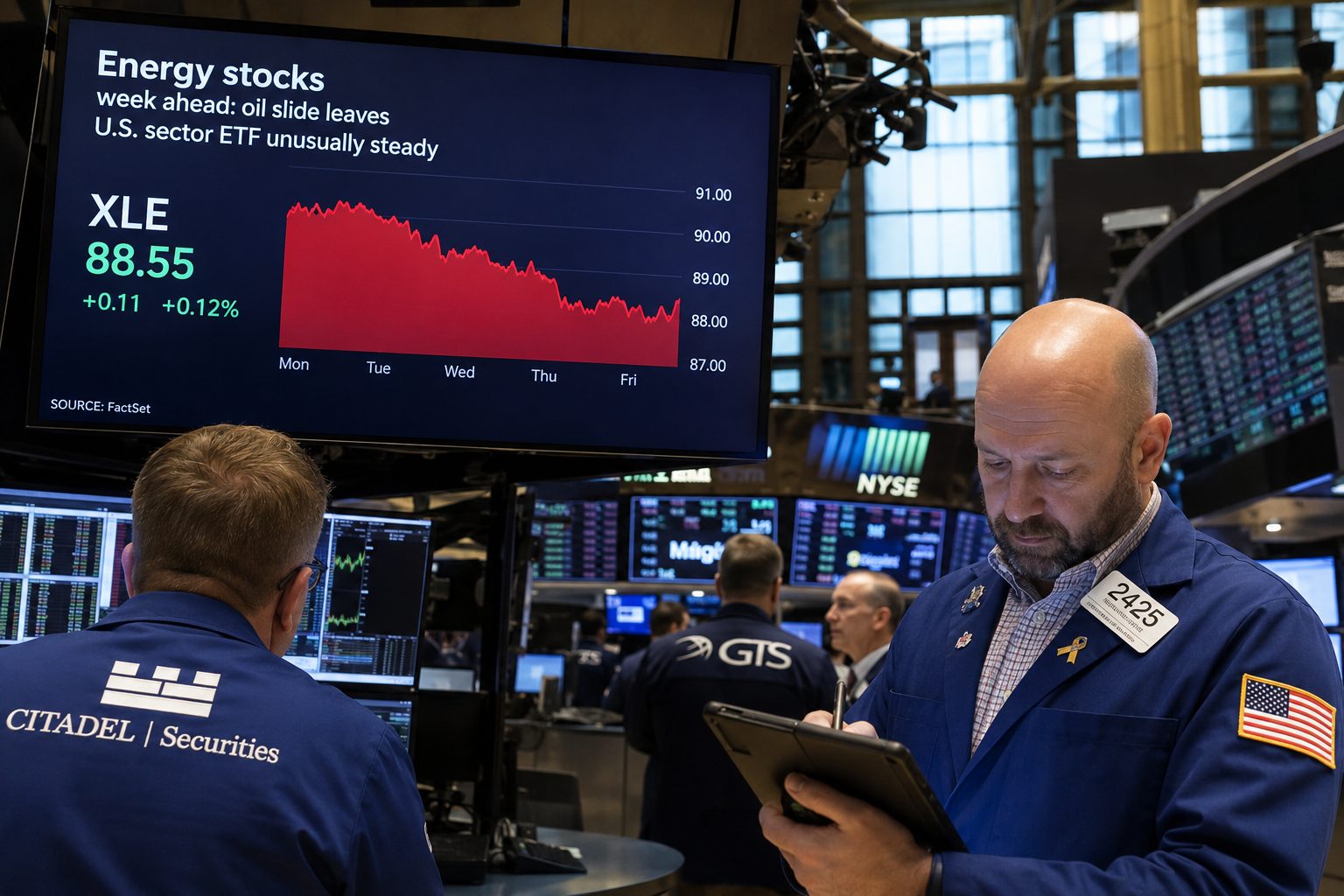
Energy names closed out the week in a tricky spot, with oil sharply lower but the group hanging on. Brent, the global benchmark, dropped 3.37% to $87.33 a barrel by Friday’s settlement. U.S. benchmark WTI fell 3.23% to $84.88, as markets started to consider the odds of a U.S.-Iran deal. Crude’s slump usually weighs on oil producers’ cash flow and share prices, while a higher oil price can help earnings and stocks.
Oil prices fell sharply on Friday as hopes for a U.S.-Iran agreement pulled some of the war premium out of crude. Brent crude, the global benchmark used to price much of the world’s oil trade, was down 3.7% at $87.04 a barrel, while West Texas Intermediate, the U.S. benchmark, dropped 3.55% to $84.60, according to Reuters. Both contracts were at their lowest levels since April 17 after U.S. and Iranian officials said they were close to an agreement to halt the war in the Middle East. “The market thinks we’re closer to the deal,” Phil Flynn, senior analyst with Price Futures Group, told Reuters.
Exxon Mobil heads into the new week with a stock that gave back ground on Friday but still finished higher for the week, leaving investors to weigh tight crude supplies against a broader market selloff and signs that high prices are starting to curb demand.
Oil dropped Friday, with Brent crude settling at $93.09 a barrel and West Texas Intermediate ending at $90.54. Traders bet the U.S.-Iran conflict probably wouldn’t escalate further. Brent gave up 2.04% and WTI slid 2.69%, according to Reuters.
Exxon Mobil senior vice president Neil Chapman told a Bernstein investor conference that crude prices could spike to $150-$160 a barrel in just weeks if global inventories drop to minimum levels. The warning adds pressure to the oil market, even as futures slipped on hopes for a U.S.-Iran ceasefire. “We’re approaching unheard of inventory levels,” Chapman said. Once stocks hit the bottom, prices can “shoot up.”
U.S. stocks traded mixed late Wednesday morning. The Dow gained, the S&P 500 hovered near flat, and the Nasdaq dipped as investors paused after setting new highs. Cheaper oil and uncertainty in the Middle East factored in. Reuters data from LSEG showed the S&P 500 at 7,521.43, up 0.03%, the Dow at 50,718.64, up 0.51%, and the Nasdaq at 26,638.26, down 0.07%. All values were delayed at least 15 minutes.
Exxon Mobil ended the session at $154.92, off 0.24% for the day and nearly 2% down for the week. Shares hit $163.68 earlier but slipped as investors watched talks of a Venezuela comeback and crude's swings.
Exxon Mobil and Chevron say oil markets aren’t factoring in the full impact from the shutdown of the Strait of Hormuz. Latest reserve and inventory numbers show governments are burning through stockpiles to keep fuel flowing.
Nissan has pulled back a bulletin about possible U.S. motor oil shortages, with the move putting a fresh spotlight on how the Middle East oil shock is filtering into service departments. The automaker told dealers that supplies are currently fine but said things could shift fast, Hearst Television’s Washington News Bureau reported Monday.
Exxon Mobil shares climbed Monday, tracking higher oil prices. The biggest U.S. oil company was back on traders’ radar ahead of a shareholder vote set for next week. Exxon was last at $160.97, up roughly 1.9%. Chevron and ConocoPhillips also traded higher.
Exxon Mobil goes into Monday trading close to last week’s highs. The stock got a boost Friday as crude oil climbed and energy names moved up. A Texas jury verdict also took one legal risk off the table for the largest U.S. oil producer.
Exxon Mobil heads into the weekend trading at $157.92 after shares got a boost Friday from higher crude prices and a Texas jury verdict in the company’s favor in a years-old investor lawsuit. Exxon’s stock price data shows gains every day this week, finishing up 5.5% from Monday’s close.
Energy shares in the U.S. surged to lead the market Friday, thanks to a more than 3% spike in oil prices. Exxon Mobil, Chevron, ConocoPhillips, Occidental Petroleum, SLB, and Halliburton all landed on the day’s watch list ahead of the New York session.
Late Wednesday, U.S. energy names split direction. Exxon Mobil managed a slight 0.4% gain, but Chevron dropped 0.5% and ConocoPhillips shed 0.6%. Oil stuck above $100 a barrel, but concerns about inflation and interest rates kept enthusiasm in check. The Energy Select Sector SPDR Fund slipped 0.1% as of 2:59 p.m. EDT.