Today: 1 July 2026
Browse Category

Space Exploration 26 October 2025 - 7 November 2025

Interstellar Comet 3I/ATLAS: A Visitor from Beyond the Solar System

Comet 3I/ATLAS Today (Nov 7, 2025): New Mars‑orbiter images, how to see it before dawn, and what scientists are learning about this interstellar visitor

Updated: November 7, 2025 — Interstellar comet 3I/ATLAS has re-emerged from behind the Sun and is back on astronomers’ morning watch lists. Fresh coverage today highlights new imagery from Mars orbit, public tools to follow its path, and why agencies are mobilizing to study only the third confirmed interstellar object ever seen. Space+2WIRED+2 The comet is again observable from Earth in the pre‑dawn sky, very low toward the eastern horizon. It remains a small‑telescope target, but experienced observers with a dark site and a clear low east can spot and image it as it brightens briefly post‑perihelion before fading through December. For coordinates and real‑time ephemerides, use JPL Horizons or public dashboards such as TheSkyLive and NASA’s Eyes. heise online+1
7 November 2025
Alien Probe or Cosmic Relic? Interstellar Comet 3I/ATLAS Baffles Scientists (updated 27.10.2025)

Comet 3I/ATLAS News Roundup (Nov. 6, 2025): China’s Mars Orbiter Images the Interstellar Visitor, JWST Chemistry Update, and How to See It

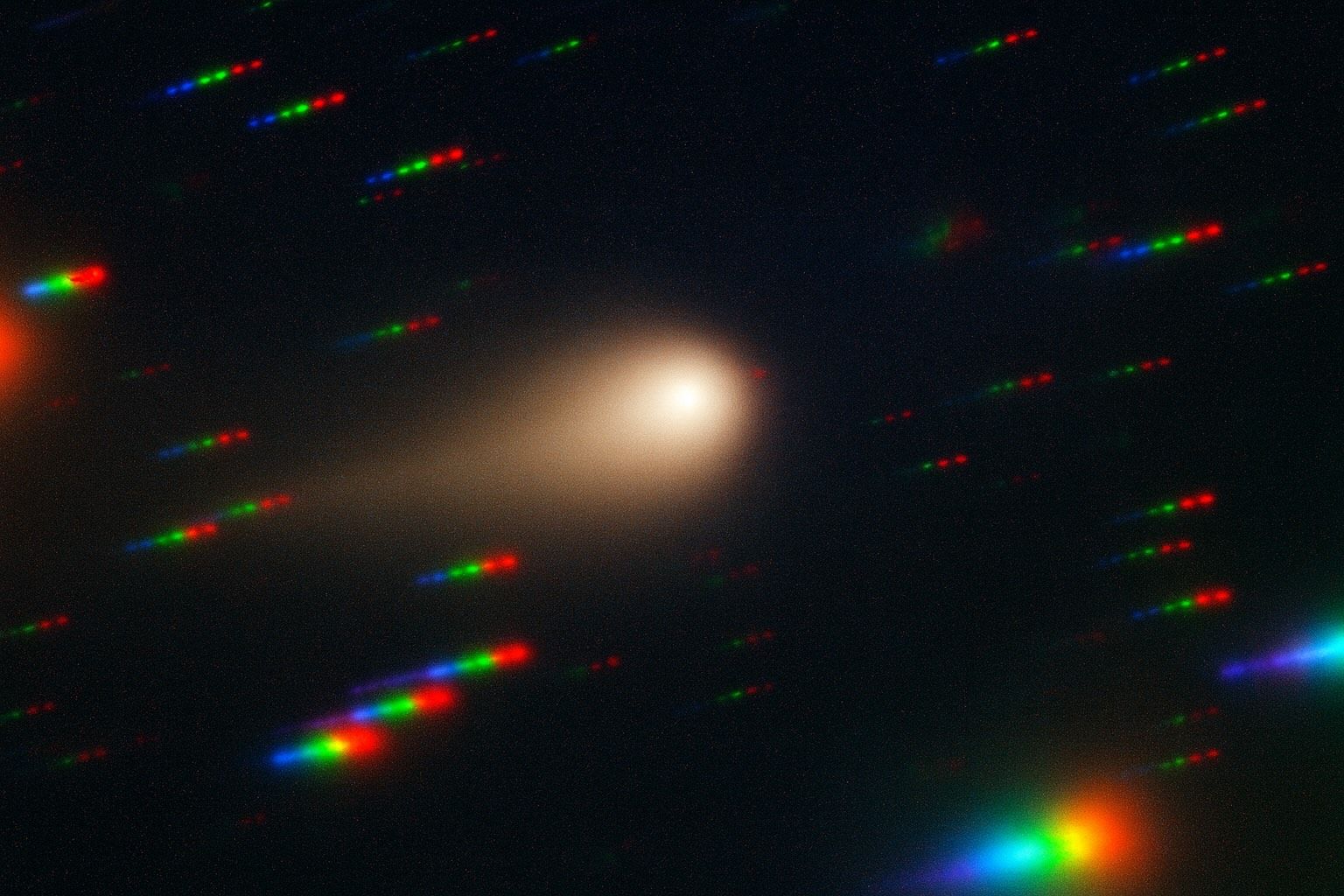
Today’s big development: China’s Tianwen‑1 Mars orbiter captured and released new images of the interstellar comet 3I/ATLAS, taken from roughly 30 million km away during the comet’s October 3 pass near Mars. China’s state outlets say the sequence shows clear cometary features and marks one of the closest probe‑based looks at the object to date. The observation doubles as a technology pathfinder for China’s upcoming Tianwen‑2 mission. State Council of China+2Xinhua News+2 Context: ESA’s TGO produced the closest European look on Oct. 3; the team emphasized just how challenging it is to resolve such a faint, fast‑moving target from Mars orbit. European Space Agency
6 November 2025
Interstellar Comet 3I/ATLAS: A Visitor from Beyond the Solar System

Comet 3I/ATLAS today (6 Nov 2025): China’s Mars orbiter snaps new photos as the interstellar visitor turns bluer and shows puzzling acceleration

Updated: 6 November 2025 — A rapid, reader-friendly briefing on the third interstellar object ever found, tailored for Google News & Discover. China’s space agency says the Tianwen‑1 Mars orbiter used its high‑resolution camera to observe 3I/ATLAS during the object’s close pass by Mars, when the spacecraft was ~30 million km from the comet—one of the nearest probe‑based looks so far. The agency released images and a brief 30‑second sequence showing the comet’s motion, adding that the observation also serves as a technical pathfinder for future small‑body missions. Xinhua News
6 November 2025
SpaceX launches 29 Starlink satellites from Florida; targets another 28 from Vandenberg today (Nov. 6, 2025)

SpaceX launches 29 Starlink satellites from Florida; targets another 28 from Vandenberg today (Nov. 6, 2025)

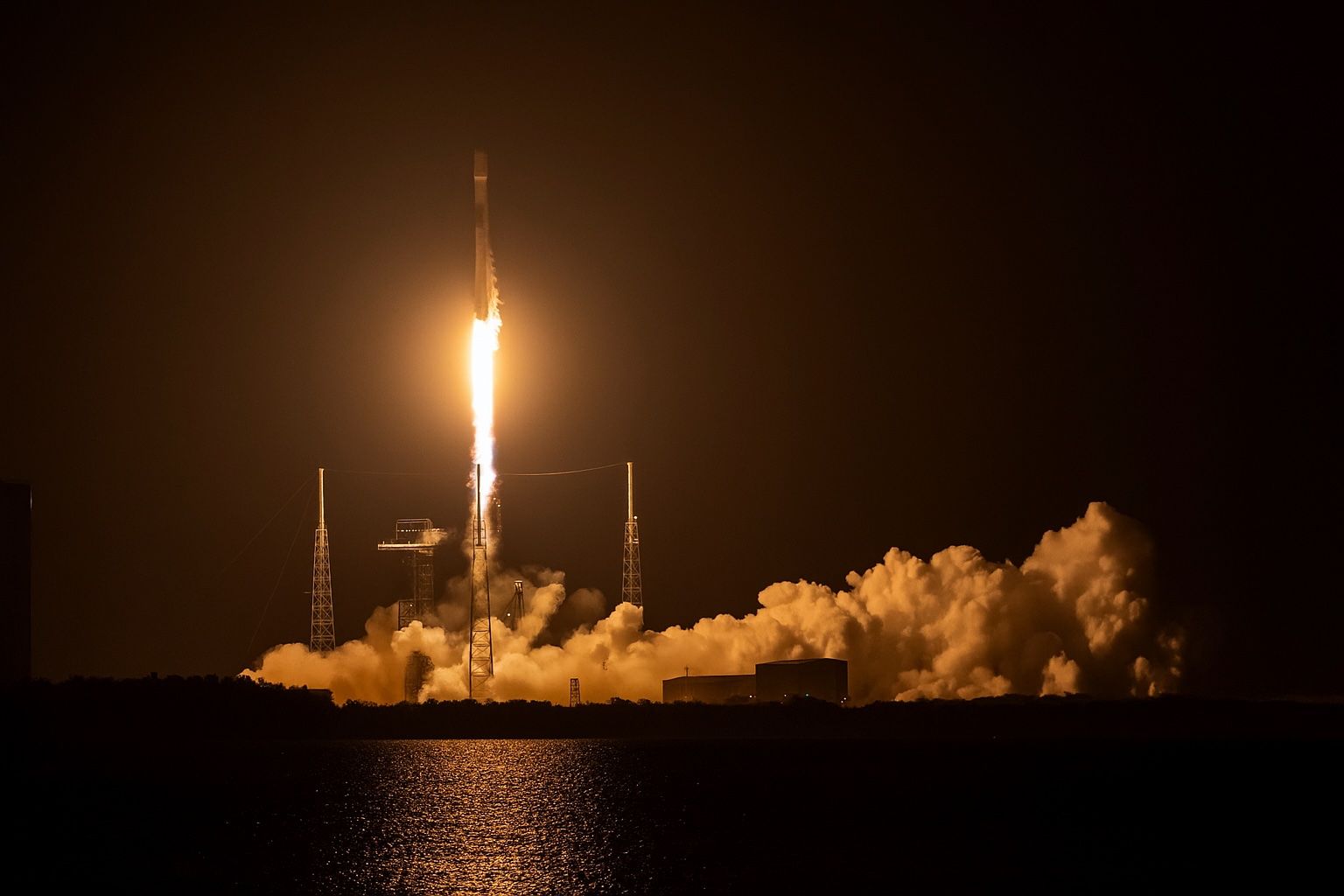
CAPE CANAVERAL, Fla., & VANDENBERG SFB, Calif. — Nov. 6, 2025. SpaceX capped Wednesday night with a successful Starlink liftoff from Florida and is aiming for a second Falcon 9 launch today from California—another rapid‑cadence one‑two that keeps the company on pace for a record year. Spaceflight Now+1 A Falcon 9 lifted off from Cape Canaveral Space Force Station’s SLC‑40 at 8:31:10 p.m. EST on Nov. 5, carrying 29 Starlink V2 Mini satellites on mission Starlink 6‑81. SpaceX confirmed the full batch deployed a little more than an hour after liftoff. Spaceflight Now
6 November 2025
‘Yeast Survives Mars’ & ESA’s ‘Protein Out of Thin Air’: How Biology Is Rewriting the Mars Menu — and What It Means for Investors

‘Yeast Survives Mars’ & ESA’s ‘Protein Out of Thin Air’: How Biology Is Rewriting the Mars Menu — and What It Means for Investors

Key facts: Europe’s HOBI‑WAN pilot is ESA’s clearest sign yet that microbial food production will be part of living off‑Earth. The agency says the demonstrator feeds a bacterial culture with stored gases to produce Solein, a protein‑rich powder that needs “neither farmland nor sunlight.” The ISS testbed will ride in a standard locker and includes safety‑critical gas‑injection cartridges because hydrogen/oxygen handling in microgravity must be fail‑safe. The first eight months build and validate a ground “science model,” then ESA aims to manufacture, test and launch a flight unit. European Space Agency
Space Junk Scare: China Delays Shenzhou‑20 Return After Suspected Debris Strike — What It Means for Astronaut Safety, Markets and the Space Race

Space Junk Scare: China Delays Shenzhou‑20 Return After Suspected Debris Strike — What It Means for Astronaut Safety, Markets and the Space Race

Key facts: China’s Manned Space Agency said Shenzhou‑20’s return, originally scheduled for Wednesday, Nov. 5, is postponed after the spacecraft was “possibly hit by tiny bits of space debris.” An impact analysis and risk assessment are in progress; no revised landing time has been announced. Reuters
Interstellar Comet 3I/ATLAS Stuns Scientists with Surprising Bright Outburst and Ancient Origins

Interstellar Comet 3I/ATLAS Stuns Scientists with Surprising Bright Outburst and Ancient Origins

In July 2025, astronomers discovered something extraordinary: a dim, fuzzy comet hurtling toward the inner solar system on a path not bound to the Sun. Follow-up observations confirmed this object – now named 3I/ATLAS – was on a hyperbolic trajectory, meaning it came from interstellar space and would soon depart forever Nasa Wikipedia. The “3I” designation marks it as the third interstellar object ever observed, after the asteroid-like 1I/ʻOumuamua and comet 2I/Borisov Nasa. Unlike ʻOumuamua, 3I/ATLAS immediately showed typical comet behavior – a diffuse cloud of gas and dust around an icy nucleus Nasa. This firmly categorized it as an interstellar comet, akin to Borisov Space. Why is 3I/ATLAS such a big deal? Interstellar objects are essentially alien visitors – formed around other stars and only passing through our solar system. They offer a unique chance to sample the chemistry and conditions of distant star systems without leaving home. “When we detect water – or even its faint UV echo, OH – from an interstellar comet, we’re reading a note from another planetary system,” said physicist Dennis Bodewits about 3I/ATLAS’s water detection Wired Wired. In other words, 3I/ATLAS is a messenger from another world, carrying clues about the ingredients and
Interstellar Comet 3I/ATLAS Stuns Scientists – Brightening, Blue Glow & Mystery Acceleration

Interstellar Comet 3I/ATLAS Stuns Scientists – Brightening, Blue Glow & Mystery Acceleration

When astronomers spotted a faint new object moving rapidly through the outer solar system in July 2025, they quickly realized it was not an ordinary comet. Its extra-high velocity and open-ended trajectory indicated it was an interstellar interloper – an object arriving from far outside the Sun’s domainscientificamerican.com. Officially designated 3I/ATLAS, this comet has since commanded the full attention of the astronomical community. “We’ve never had an object like this to study before,” as one scientist marveledtheguardian.com. 3I/ATLAS follows in the footsteps of two prior interstellar visitors: the cigar-shaped 1I/‘Oumuamua in 2017 and the comet 2I/Borisov in 2019scientificamerican.com. Each of these cosmic wanderers has “a different story to tell,” notes astronomer Quanzhi Yescientificamerican.com. Unlike ‘Oumuamua – which baffled scientists by accelerating without a visible coma or tail – 3I/ATLAS was quickly recognized as a bona fide comet, complete with a surrounding halo of gas and dust that began “coming to life” as it approached the Sunscientificamerican.com. In that sense it resembled Borisov, which looked and behaved much like a typical solar system comet. Yet 3I/ATLAS is proving that it has its own surprises in store for researchers.
Interstellar Comet 3I/ATLAS: A Visitor from Beyond the Solar System

Ancient Alien Messenger or Cosmic Time Capsule? Interstellar Comet 3I/ATLAS Stuns Scientists with Secrets

When astronomers spotted a faint new comet on July 1, 2025, they quickly realized it was no ordinary comet. Its official designation, 3I/ATLAS, tells the tale: “3I” means it’s the third interstellar object ever recorded, and “ATLAS” credits the Asteroid Terrestrial-Impact Last Alert System survey telescope that discovered itscientificamerican.com. In the days following discovery, observatories around the world rushed to calculate its orbit – and the results were stunning. Unlike normal comets bound in elliptical orbits around the Sun, 3I/ATLAS was on a one-way hyperbolic trajectory, unbound to our stareconomictimes.indiatimes.com. It was barreling into the inner solar system at nearly 137,000 mph relative to the Sunscientificamerican.com – far too fast to have originated here. Projecting its path backward revealed that it came from far outside the solar system, and once it swings past the Sun, it will escape back into interstellar space rather than looping back aroundeconomictimes.indiatimes.comnewsweek.com. “It’s only the third time in history we’ve witnessed an object from another star passing through our neighborhood,” notes a NASA scientist, emphasizing how special each interstellar visitor iseconomictimes.indiatimes.com. The first was the needle-shaped asteroid ‘Oumuamua in 2017, and the second was Comet 2I/Borisov in 2019. Now 3I/ATLAS “joins the ranks” of these
2 November 2025
Alien Probe or Cosmic Relic? Interstellar Comet 3I/ATLAS Baffles Scientists (updated 27.10.2025)

Ancient Alien Visitor? Interstellar Comet 3I/ATLAS Blazes Through Our Solar System

On July 1, 2025, astronomers in Chile spotted a faint, fast-moving object that immediately stood out. Follow-up measurements showed it was on a hyperbolic orbit – not bound to our Sun – confirming it came from interstellar spacets2.tech. The discovery was officially designated 3I/ATLAS, where “3I” denotes the third Interstellar object ever observed, and “ATLAS” credits the NASA-funded Asteroid Terrestrial-impact Last Alert System survey that found itts2.tech. This find electrified scientists. “This is only the third such interstellar comet we’ve ever been able to study, and planetary scientists are super excited to learn about what comets in other solar systems are like,” said Jason Wright, an astronomer at Penn Statenewsweek.com. Every planet, moon, and comet we’ve seen up to now originated in our Solar System – but 3I/ATLAS is a true outsider, carrying clues from a world beyond our ownesa.int. It offers a rare chance to sample material from another star’s planetary disk, essentially a frozen messenger from a far-off system.
1 November 2025
Comet 3I/ATLAS: The Interstellar “Ghost Comet” Haunting Our Solar System This Halloween

Comet 3I/ATLAS: The Interstellar “Ghost Comet” Haunting Our Solar System This Halloween

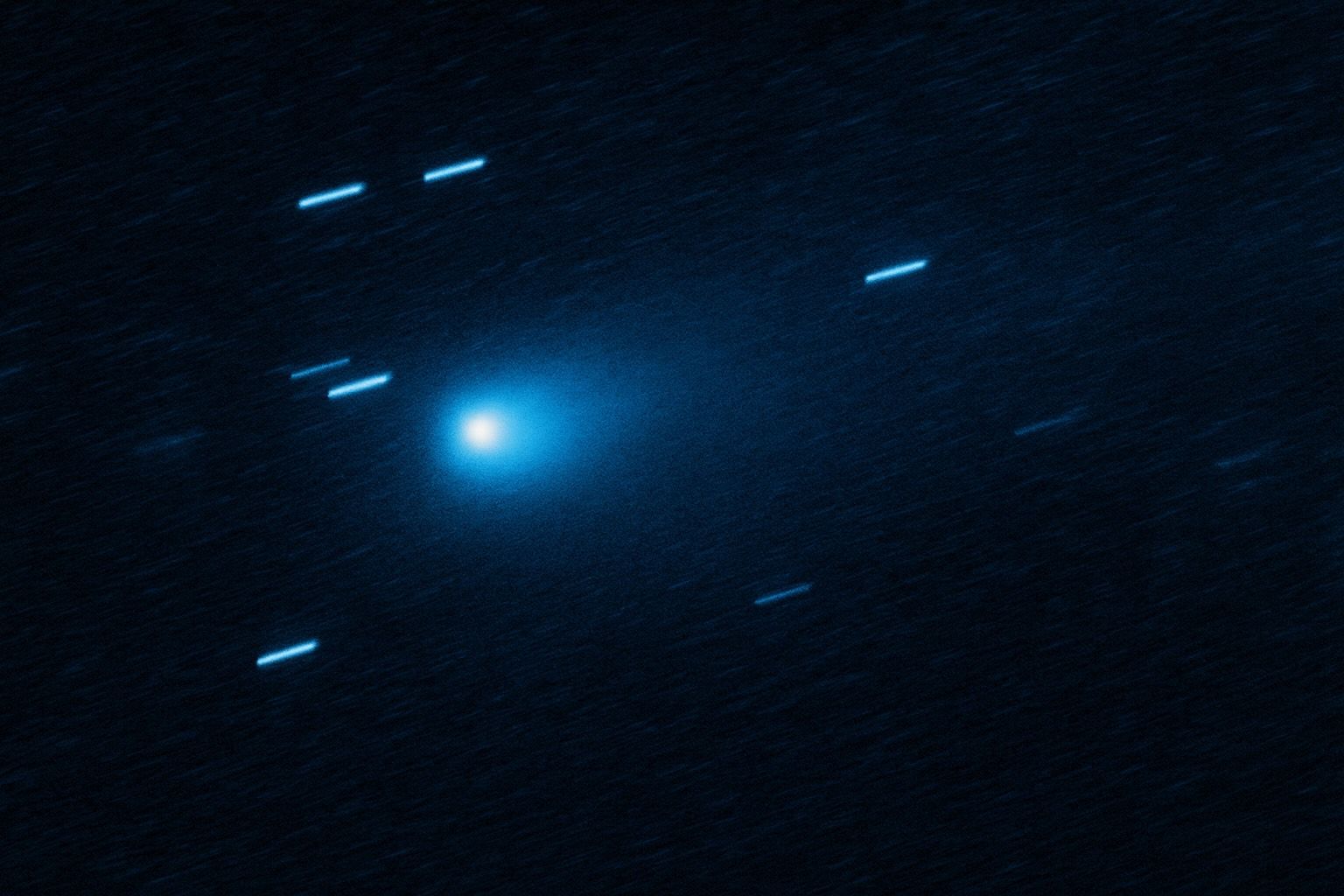
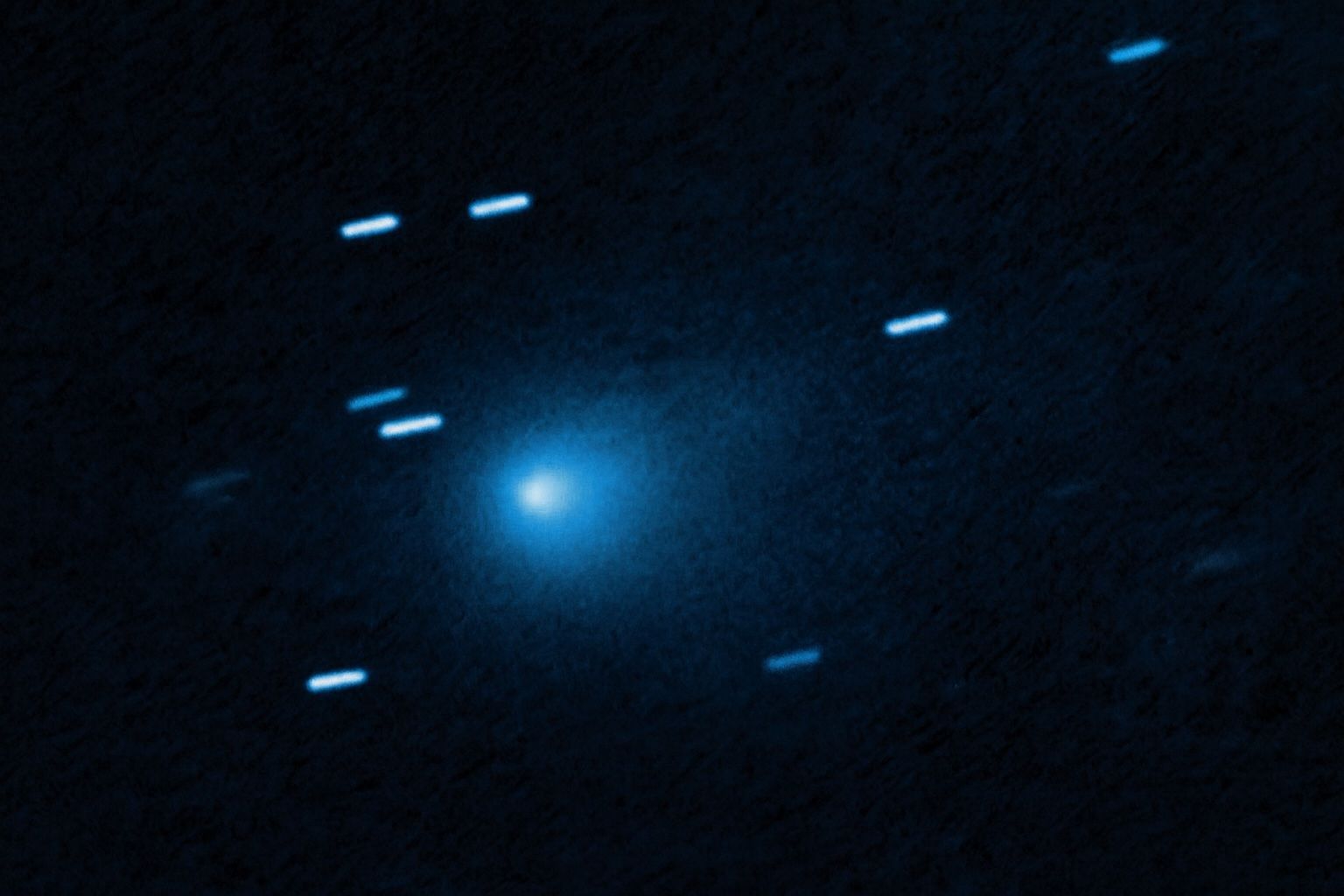
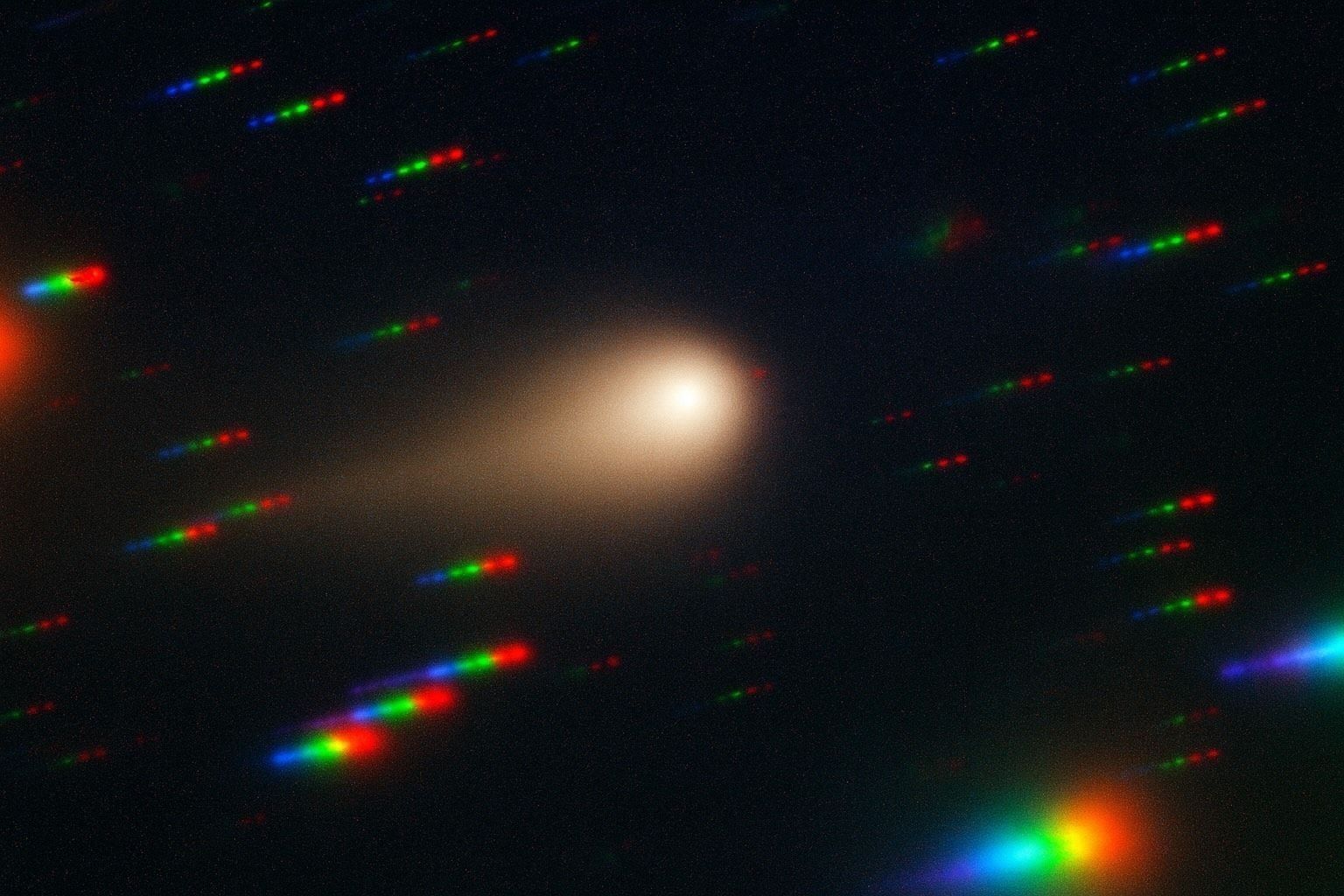
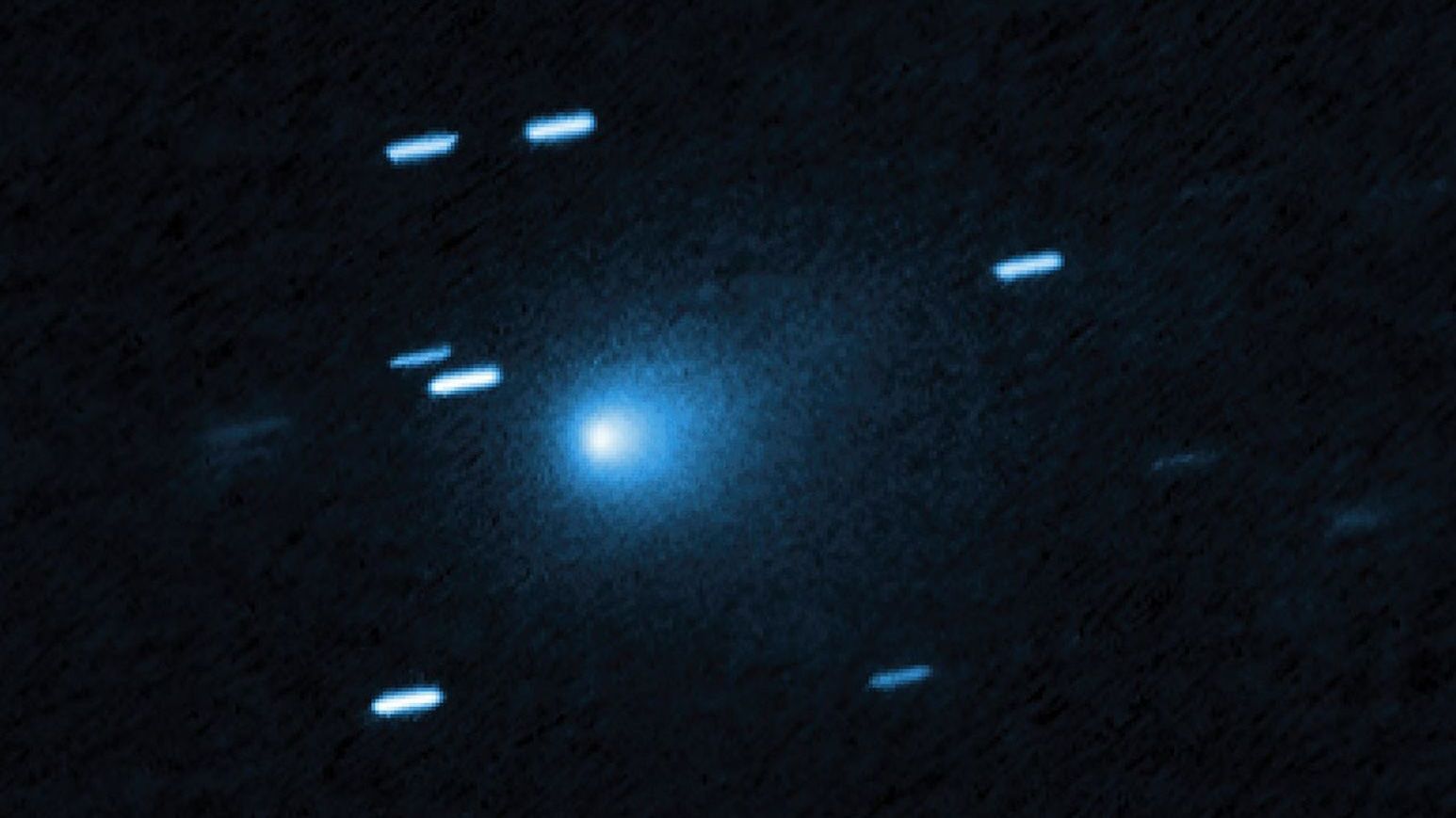
Image: Interstellar comet 3I/ATLAS, captured by the Gemini South Observatory in late 2025, showing a diffuse coma and tail against the stars. This “ghostly” haze of gas and dust confirms that 3I/ATLAS is an active comet venting material as it nears the Sun. Space Wikipedia Comet 3I/ATLAS is a rare celestial visitor that truly doesn’t belong in our solar system. Officially designated 3I/ATLAS, it was first spotted on July 1, 2025 by an ATLAS telescope in Chile Esa Wikipedia. Within days, astronomers realized this object was on a hyperbolic trajectory – in other words, it isn’t bound to the Sun by gravity and is just passing through our neighborhood Wikipedia. That immediately marked it as interstellar, originating from beyond the solar system. “This is an object from a part of the galaxy we’ve never seen up close before,” noted Oxford astronomer Chris Lintott, whose team studied 3I’s orbit Ras. Scientists estimate that 3I/ATLAS may have been traveling through interstellar space for billions of years, possibly formed around an ancient star long before our Sun existed ts2.tech Ras.
31 October 2025
Tech Roundup Oct 31, 2025: OpenAI’s $1T IPO, Moon Plans, AI Factories & Stock Surge

Tech Roundup Oct 31, 2025: OpenAI’s $1T IPO, Moon Plans, AI Factories & Stock Surge

Looking ahead, analysts expect Q4 tech spending to stay robust on AI and holiday demandreuters.comreuters.com. Nvidia’s booming deals and OpenAI’s funding plans suggest AI investment shows no letup. Intel’s progress and Samsung’s AI factories hint at continued chip innovation. In space, China’s moon ambitions keep pressure on NASA’s schedule. Regulators, however, warn of tech bubbles – the UK’s Bank of England even flagged AI-fueled stock valuations as a risktheguardian.com. For now, though, tech giants seem confident: higher guidance and big projects suggest more “engine for growth” on the horizonreuters.comreuters.com. Sources: Verified tech news from Reuters, CNBC, Apple and OpenAI releases, etcreuters.comreuters.comreuters.comtomsguide.comtheguardian.com. Market data from Oct 30, 2025 closesstatmuse.comstatmuse.com.
Alien Probe or Cosmic Relic? Interstellar Comet 3I/ATLAS Baffles Scientists (updated 27.10.2025)

Ancient Interstellar Comet 3I/ATLAS Nears Sun – A 10-Billion-Year Visitor Ignites Awe and Alien Speculation

Comet 3I/ATLAS was discovered on July 1, 2025 by the Asteroid Terrestrial-impact Last Alert System survey telescope at Río Hurtado, Chileesa.int. ATLAS – a NASA-funded sky survey designed to spot incoming asteroids – detected a faint magnitude ~18 object moving against the starry backgroundras.ac.uk. Initially catalogued as C/2025 N1 under comet naming conventions, the object raised immediate excitement because its orbit did not appear bound to the Sunts2.tech. Within days, astronomers determined the new comet was on a highly hyperbolic trajectory, not a closed ellipse like ordinary comets. In August 2025 the International Astronomical Union confirmed its interstellar nature and redesignated it 3I/ATLAS, marking it as the third interstellar object ever observeden.wikipedia.org. This celestial visitor is sometimes also referred to by its survey designation “A11pl3Z,” but the name 3I/ATLAS reflects its extraordinary status beyond the Solar System. “This is an object from a part of the galaxy we’ve never seen up close before.” – Astronomer Matthew Hopkins, University of Oxfordts2.tech
30 October 2025
Alien Probe or Cosmic Relic? Interstellar Comet 3I/ATLAS Baffles Scientists (updated 27.10.2025)

Mysterious Interstellar Comet 3I/ATLAS Nears Sun – 10-Billion-Year Visitor Sparks Alien Theories and Scientific Awe

In July 2025, astronomers spotted a faint newcomer inbound toward the Sun – one that was not gravitationally bound to our star at all. The object, now designated 3I/ATLAS, is only the third interstellar visitor ever detected in our solar systemts2.tech. It was first observed on July 1, 2025 by the ATLAS sky-survey telescope in Río Hurtado, Chile, and its discovery immediately caused excitement. The reason? Its orbit was hyperbolic, meaning it’s not a periodic comet from our Oort Cloud but rather an interstellar interloper on a one-way trip through our cosmic neighborhoodts2.tech. Previous interstellar objects – the enigmatic ‘Oumuamua in 2017 and comet 2I/Borisov in 2019 – were brief, tantalizing encounters. 3I/ATLAS offers scientists another rare chance to study a piece of a distant star system up close. “This is an object from a part of the galaxy we’ve never seen up close before,” noted astronomer Matthew Hopkins of Oxford, whose team predicted such thick-disk objectsras.ac.uk. In fact, based on its galactic orbit, 3I/ATLAS may have originated in the Milky Way’s thick disk – a halo of ancient stars high above the galactic planets2.tech. That would make it extraordinarily old. Statistical models suggest 3I/ATLAS is likely the oldest comet
Breaking: NASA’s X-59 Quiet Supersonic Jet Takes Off – Travel Times Could Halve

Breaking: NASA’s X-59 Quiet Supersonic Jet Takes Off – Travel Times Could Halve

Governor Newsom used the X-59 as a showcase for the state’s advanced manufacturing. In an Oct. 27 press release, he proclaimed the Lockheed-built jet the “Coolest Thing Made in California” for 2025 gov.ca.gov. He noted that this quiet supersonic aircraft “exemplifies” California’s “unmatched creativity, ingenuity and manufacturing excellence” gov.ca.gov. The state-sponsored contest was a public vote on October’s Manufacturing Month. Newsom’s announcement highlighted that the X-59 was “designed to separate shockwaves and quiet the disruptive sonic boom that has long limited supersonic travel”, saying the project “is shaping the future of aviation” gov.ca.gov. The release emphasized that quiet supersonic flights could one day let passengers reach any world destination in “half the time it takes today” gov.ca.gov – underscoring the economic and travel-time gains at stake. The X-59 is a unique aircraft. Its 99-foot-long frame and lengthened nose are carefully shaped to control how pressure waves form at supersonic speed. As NASA explains, when jets exceed Mach 1 they normally create two merged shock waves. The X-59’s shape “is designed to reduce these shock waves, so the perceived sound is little more than a thump – if you hear anything at all” nasa.gov. In other words, it should make a
SpaceX’s Starship Triumph Sparks Moon Race 2.0 with China – Stocks Take Off

NASA’s Epic Week: Moon Rocket Ready, Mars Life Clue, and an Interstellar Visitor

NASA’s Moon program reached a major milestone this week: engineers at Kennedy Space Center finished stacking the Space Launch System rocket for Artemis 2, placing the Orion crew capsule atop the boosterspace.com. “The towering rocket…has come together,” NASA announced, after hoisting Orion onto SLS inside the Vehicle Assembly Buildingspace.com. This completed rocket – set to launch four astronauts around the Moon – was even exempted from the ongoing federal shutdown, underscoring Artemis 2’s high priorityspace.com. The mission is targeting February 2026 for liftoff, which would mark the first crewed journey beyond Earth orbit since Apollo 17 in 1972space.comspace.com. Acting Administrator Sean Duffy confirmed Artemis 2 remains on schedule, but he acknowledged growing concerns about Artemis 3, the first lunar landing mission. In a candid CNBC interview, Duffy criticized SpaceX’s slow progress on its Starship lander: “I love SpaceX… The problem is, they’re behind. They’ve pushed their timelines out, and we’re in a race against China”space.com. China has announced plans for its own crewed Moon landing by 2030, and the White House has pressed NASA to beat that datets2.tech. “The president and I want to get to the Moon in this president’s term,” Duffy emphasizedspace.com.
27 October 2025
Rare Interstellar Comet 3I/ATLAS – a 10-Billion-Year-Old Time Capsule – Flies Past Mars

Interstellar Comet 3I/ATLAS Unleashes Bizarre Sunward Jet as Scientists Quash Alien Rumors Ahead of Solar Swing-By

An interstellar vagabond is currently streaking through our Solar System, and it’s making waves both in the scientific community and the public imagination. Officially designated 3I/ATLAS, this object is only the third interstellar visitor ever observed – a comet from another star now paying us a brief visitts2.tech. First detected on July 1, 2025 by the ATLAS sky-survey telescope in Chile, 3I/ATLAS immediately stood out: it was moving extremely fast on a one-way hyperbolic trajectory, meaning it is unbound to the Sun and came from far outside our Solar Systemts2.tech. Its inbound path traced back to no known origin within the Solar System, confirming that 3I/ATLAS originated in the depths of interstellar space. This discovery comes on the heels of two prior interstellar objects – the needle-shaped 1I/ʻOumuamua in 2017 and the icy comet 2I/Borisov in 2019ts2.tech. Each of these cosmic interlopers was unique: ʻOumuamua was small, tumbling and showed no cometary coma, whereas Borisov looked and behaved much like a typical small comet from our own Oort Cloud. 3I/ATLAS, however, is breaking the mold yet again. It is larger and far more active than ʻOumuamua, sporting a visible coma and tail, yet it also exhibits puzzling features that haven’t
26 October 2025
Interstellar Comet 3I/ATLAS Shoots Giant Sunward Jet — Experts Debunk Alien Probe Rumors

Interstellar Comet 3I/ATLAS Shoots Giant Sunward Jet — Experts Debunk Alien Probe Rumors

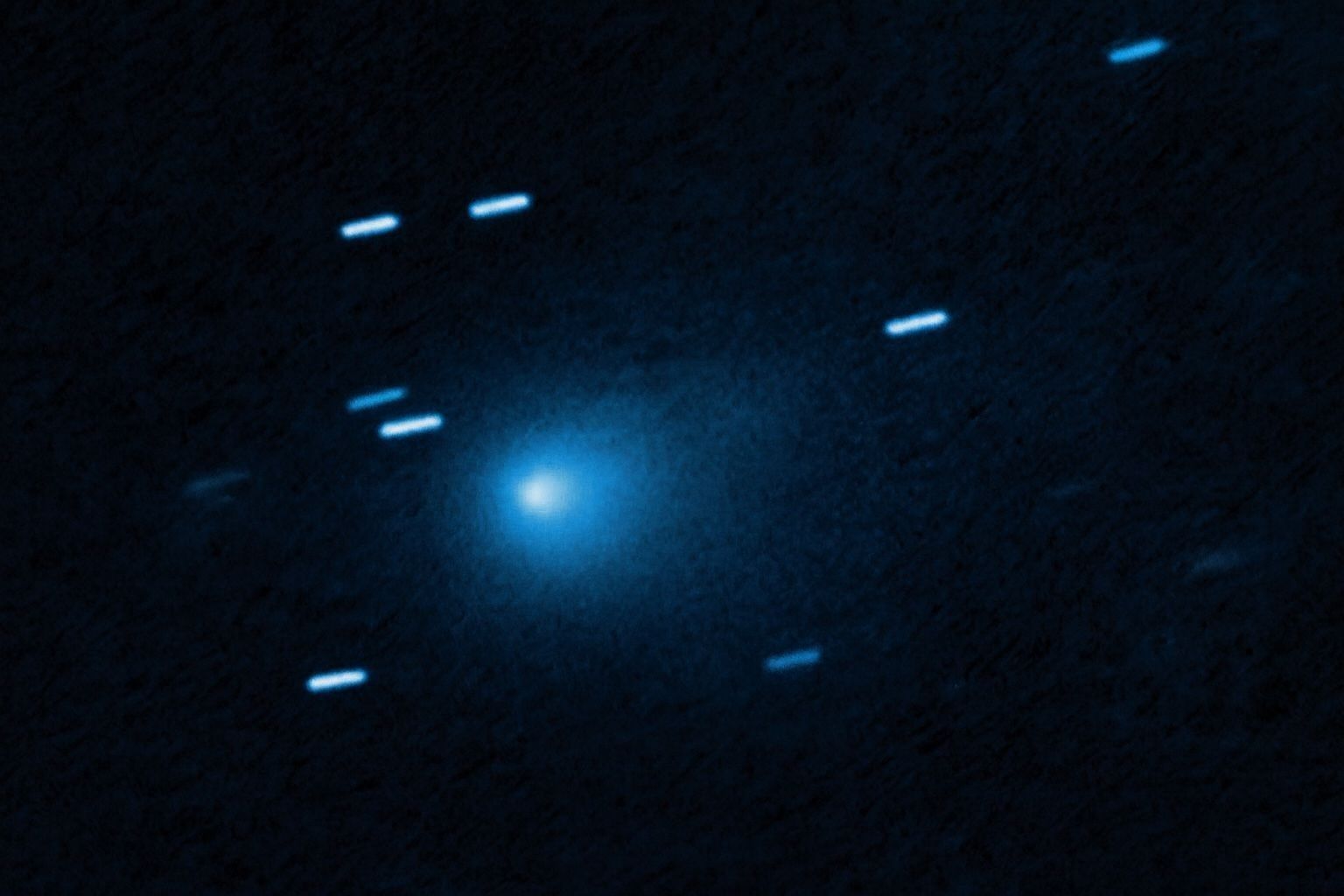
In recent weeks astronomers have been fascinated by the interstellar comet 3I/ATLAS as it rushes through the inner Solar System. First spotted by the ATLAS telescope on July 1 ts2.tech, it turned out to be moving so fast on a hyperbolic path that it could only have come from outside our solar neighborhood. Follow-up orbits confirm it is on a one-way trip, never to return ts2.tech. Importantly, orbital calculations show its minimum distance from Earth is about 1.8 AU ts2.tech, so it will not collide with us. In fact, the comet’s closest brush with any planet was on Oct. 3, 2025, when it passed ~30 million km from Mars. On that date ESA’s ExoMars Trace Gas Orbiter and Mars Express imaged 3I/ATLAS – despite its extreme faintness – giving the first close-up pictures of an interstellar comet Esa Esa. Ground-based telescopes have also captured 3I/ATLAS’s activity. New images released in mid-October show the nucleus surrounded by a large, fan-shaped coma, with a narrow jet of ice and dust erupting on the Sun-facing side Space Livescience. As Space.com reports, “an interstellar comet is dramatically jetting off ice and dust into space” in the direction of the Sun Space. The jet extends
26 October 2025
1 4 5 6 7 8 12

Stock Market Today

Go toTop