Houston, July 13, 2026, 11:13 (CDT)
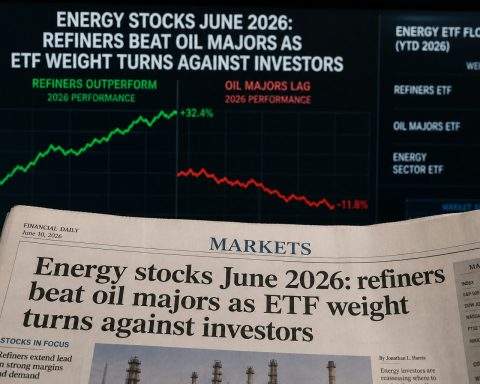
Marathon Petroleum NYSE:MPC and Valero Energy NYSE:VLO jumped about 3.8% each in late-morning trading on Monday. Exxon Mobil NYSE:XOM added 3.4%. Chevron NYSE:CVX was up 2.2%. Brent crude was up more than 4%, above $79 a barrel, after President Donald Trump said the U.S. is bringing back its naval blockade of Iran. The split in refiners and oil majors points to stronger fuel margins, not just the crude rally, as the key driver for earnings.
It’s important ahead of Q2 earnings. Analysts polled by LSEG expect Exxon and Chevron together to post $25.8 billion in adjusted net income. That strips out some one-offs. Both names are seen more than tripling what they posted in Q1. According to TPH, average U.S. gasoline crack spreads for the quarter were around $25 per barrel, up $16 over Q1. Diesel spreads jumped $15 to $45 per barrel.
Exxon’s headline net profit figure could need a closer look. The Financial Times put the estimate at about $19 billion in net profit. On an adjusted basis, that’s around $15.9 billion. An Exxon filing showed $2.2 billion to $3 billion in positive “timing effects” from energy products, which are partly offset by writedowns and other charges. These timing effects happen when derivatives are marked to market immediately but profits from the actual cargoes show up in earnings later. They tend to reverse over time. Financial Times
| Company | Second-quarter signal | Monday move | Main earnings lever |
|---|---|---|---|
| Exxon Mobil | Adjusted about $15.9 bln; FT says net looks closer to $19 bln | +3.4% | Crude, refinery ops, timing quirks |
| Chevron | Adjusted profit runs around $9.9 bln | +2.2% | Oil, gas prices and volume |
| Marathon Petroleum | Refining is the focus | +3.8% | Margins on fuel products |
| Valero Energy | Refining is the focus | +3.8% | Margins on fuel products |
Operating margin numbers tell a clearer story. The U.S. 3-2-1 crack spread, which tracks three barrels of crude turned into two barrels of gasoline and one barrel of diesel, set a record at $64.58 a barrel on July 8. European diesel margins also moved above $60. U.S. gasoline inventories are at their lowest for early July since 2021. “There’s just not enough refining capacity left globally to deal with all this,” said Neil Crosby, analyst at Sparta Commodities. Reuters
Physical bottlenecks are back in play. Kpler tracked just six vessels through the Strait of Hormuz on Sunday, the fewest in five weeks, and not a single LNG tanker came in over the weekend. Oil and gas tanker flows overall dropped to their lowest since May 25. Some tankers went dark, switching off their trackers.
But crude’s medium-term outlook is already slipping. OPEC trimmed its 2026 demand-growth call by 190,000 barrels a day to 780,000. OPEC+ output in June climbed by around 3 million barrels a day. The International Energy Agency said global supply grew by 4.1 million barrels and stocks rose by 21 million barrels. All this could mean that a steady reopening of Hormuz would drag crude prices lower, quicker than fuel margins, at least while product stocks are low.
| Pressure gauge | Latest reading | Comparison |
|---|---|---|
| U.S. regular gasoline | $3.872 a gallon | Up 7.5 cents from last week; 71.9 cents more than a year ago |
| U.S. petroleum-product exports | 8.7 mln bpd | Hit a weekly high |
| U.S. gasoline inventories | 212.1 mln barrels | About 10 mln under the five-year average |
| OPEC 2026 demand growth | +0.78 mln bpd | Forecast lowered by 0.19 mln bpd |
AAA gave the gasoline price for July 13. Export and inventory data is for the week ending July 3.
That’s the political risk, too. Pump prices stand at about $1.37 a gallon, 55% above Trump’s goal of $2.50, with U.S. refiners moving record export volumes. Trump on Monday floated a 20% reimbursement fee for all cargo going through Hormuz but didn’t say how it would be set. “Investors will see returns, governments will see red,” said Kevin Book at ClearView Energy Partners. Reuters
The refinery trade flips quick. If there’s a solid ceasefire, tankers move normal and late-summer demand drops, crack spreads could tighten. But if the closure drags on, crude supply to plants gets thin, shipping and insurance get pricier, and Gulf assets could take a hit. Both ways, fuel over $4 a gallon could push the U.S. closer to export limits or windfall taxes.
Earnings season will tell if the second quarter was just a one-off for cash returns or if it sticks. Exxon is expected to post adjusted profit of about $16 billion, though the headline could reach $19 billion. For Marathon and Valero, it’s all about how long the record fuel margins can hold out.
Related articles: NYSE:MPC