Browse Category

Internet News 17 June 2025 - 26 June 2025

Google Fiber Will Light Up Tempe in 2026: Everything Residents & Businesses Should Know

Google Fiber Will Light Up Tempe in 2026: Everything Residents & Businesses Should Know

Construction began June 18, 2025 in Tempe’s Warner Ranch neighborhood, with first activations slated for 2026. About 85,000 linear feet of fiber are under way in Warner Ranch. Tempe is Google Fiber’s fourth Phoenix-metro city, following Mesa, Chandler, and Queen Creek. Google Fiber’s Tempe service plans include Core 1 Gbps for $70, Home 3 Gbps for $100, Edge 8 Gbps for $150, and GFiber Labs 20 Gbps for $250. The 20 Gbps tier is part of GFiber Labs and relies on Nokia’s 25G PON technology to deliver 20 Gbps. GFiber is testing 50 Gbps services through GFiber Labs. Tempe’s 2024
Britain’s Broadband Battle: The Truth About Internet Access Across the UK (and Beyond!)

Britain’s Broadband Battle: The Truth About Internet Access Across the UK (and Beyond!)

By 2025, about 99.8% of UK households are within reach of a decent broadband connection (≥10 Mbps). About 97–98% of UK households have an active internet subscription. In 2024, the average fixed broadband speed was around 157 Mbps, up from just over 50 Mbps in 2022. Gigabit-capable broadband is available to about 84% of UK premises as of January 2025. Full-fibre FTTP coverage has reached roughly 73–74% of premises as of January 2025. The fixed broadband market is led by BT Group with about 8.8 million broadband customers, Sky Broadband with about 5.8 million, and Virgin Media with around 5.74
Why Luxembourg’s Internet Is Speeding Ahead—But Can It Reach the Stars?

Why Luxembourg’s Internet Is Speeding Ahead—But Can It Reach the Stars?

As of 2024, 94.7% of Luxembourg households are served by a Very High Capacity Network (approximately 1 Gbps or more), with coverage rising to 95.2% by 2025. Fiber-to-the-premises coverage is about 80% of households, with FTTH deployment underway since the late 1990s. Cable broadband via DOCSIS 3.1 from Eltrona/Telenet reaches about 90% of households, typically delivering 500 Mbps or higher. NGA availability (networks offering at least 30 Mbps) reaches 99% of households thanks to VDSL2 with fiber-to-the-cabinet and cable networks. Orange Luxembourg offers Livebox Fiber up to 8.5 Gbps down and 1.5 Gbps up for around €99.99 per month. Luxembourg
26 June 2025
Uzbekistan’s Internet Makeover: Blazing Speeds, New Satellites, and Lingering Barriers

Uzbekistan’s Internet Makeover: Blazing Speeds, New Satellites, and Lingering Barriers

Uzbekistan’s internet infrastructure has shifted from slow dial-up to fiber and 4G/5G networks, with Uztelecom expanding fiber backbones and boosting international capacity to 3.2 Tbps in 2022. As of 2022, 2G networks blanket 99% of the population, 3G covers about 90%, and 4G LTE reaches roughly two-thirds of residents. In 2023, Uzbekistan began rolling out 5G with thousands of base stations, with the first phase targeting full 5G coverage in Tashkent and partial coverage in provincial centers. Uztelecom dominates fixed broadband, carrying 98% of fixed connections, while private mobile operators include Ucell, Beeline Uzbekistan, Mobiuz, and Perfectum Mobile. There were
Fiber-Optic Odyssey: How Greece’s Internet Is Evolving from DSL to Starlink

Fiber-Optic Odyssey: How Greece’s Internet Is Evolving from DSL to Starlink

By mid-2023 FTTP availability was 38.4% of Greek households, with 0% rural fiber and over 60% of homes lacking fiber. By mid-2023 5G coverage reached 98.1% of the population, with about 59% of households having access to ultra-fast 5G mid-band (3.5 GHz) and just 6% of rural households covered by mid-band 5G. Starlink arrived in Greece in early 2022 and was fully available nationwide by March 2023, delivering typical speeds of 150–300 Mbps down and 20–40 Mbps up with latency about 30–50 ms. Starlink pricing fell from about €99/month to €60, then €40/month in late 2023, while hardware costs run
The High-Speed Secret: How Finland Quietly Built One of the World’s Best Internet Networks

The High-Speed Secret: How Finland Quietly Built One of the World’s Best Internet Networks

By September 2023, 71% of Finnish households had gigabit fixed broadband (1 Gbps) and 78% had 100 Mbps+ speeds, driven by 61% fiber access by end-2023. Finland aims for every household to have at least 100 Mbps connectivity (upgradeable to 1 Gbps) by 2025, with a national plan to reach full 1 Gbps nationwide by 2030. 4G coverage exceeds 99% of the population and 5G coverage reached about 88–90% by early 2023, with Elisa reporting 90% 5G home-area coverage by end of 2023 and DNA at 86% by March 2023. Starlink became available in Finland in late 2022, with a
24 June 2025
The Digital Desert Awakens: Inside Tunisia’s Expanding Internet Frontier

The Digital Desert Awakens: Inside Tunisia’s Expanding Internet Frontier

As of early 2024, about 9.96 million Tunisians were internet users, roughly 79.6% of the population. In January 2024, Tunisia had 16.73 million active mobile connections, equal to 133.7% of the population. 99.9% of the population is covered by mobile signals, with 4G reaching about 94.9% of inhabitants. Tunisie Telecom’s fiber backbone spans roughly 50,000 km, and late-2024 initiatives connected 2,900 homes in Tataouine (~7,000 users) via fiber at about $160,000. International bandwidth capacity grew from 82.5 Gbps in 2012 to about 1,710 Gbps in 2023. 5G licensing occurred in September 2024, initial licenses were granted in November 2024, and
Mauritius Online: How a Paradise Island is Beaming Broadband (Even from Space)

Mauritius Online: How a Paradise Island is Beaming Broadband (Even from Space)

As of early 2025, about 1.01 million Mauritians used the internet, representing roughly 79.5% of the population. By 2024 Mauritius had over 2.2 million internet subscriptions, about 178 per 100 inhabitants, indicating many people hold multiple connections. Mauritius completed 100% fiber‑to‑the‑home coverage in 2017, with 100% of households passed by fiber and fixed broadband speeds around 55 Mbps on average. The island is connected by five major undersea cables—SAFE, LION/LION2, METISS, MARS, and T3—with capacities including ~800 Gbps on SAFE, ~1.28 Tbps on LION, 24 Tbps on METISS, 8 Tbps on MARS, and 18 Tbps (upgradable to 54 Tbps) on
22 June 2025
The Real Wi-Fight: Romania’s Race to Connect Every Corner of the Country

The Real Wi-Fight: Romania’s Race to Connect Every Corner of the Country

Romania’s first Internet connection was established in 1993 via ici.ro. In the late 1990s and early 2000s, urban residents built “rețele de cartier” by stringing Ethernet cables between buildings, helping the country leapfrog DSL. By 2020 Romania ranked third in the world for fastest fixed internet speeds, behind Singapore and Hong Kong. As of 2024, 88.6% of Romanian households had internet at home, with 92.5% of urban and 83.2% of rural households online. Fiber dominates the fixed network, with about 93% of localities passed by FTTH/B and about 93% of localities able to access gigabit speeds. Digi (RCS&RDS) had about
Internet Access in France: From Fiber to Satellite and Everything In Between

Internet Access in France: From Fiber to Satellite and Everything In Between

By end-2024, fiber coverage reached about 91% of premises in metropolitan France, passing over 40.6 million homes and offices, with roughly 4 million still awaiting coverage. Fiber accounts for about 75% of all internet subscriptions in France. Plan France Très Haut Débit (PFTHD), launched in 2013, aimed to cover 100% of the country with at least 30 Mbps by 2022, later extended to 2025, using 55% private investment zones and 45% public initiative zones with total costs around €20–€30 billion and about €13–€14 billion in public funding (central government €3.3 billion). By end-2024, 5.8 million DSL lines remained active (about
21 June 2025
10,000 Satellites and 5 Million Users: Inside the Satellite Internet Revolution of 2025

10,000 Satellites and 5 Million Users: Inside the Satellite Internet Revolution of 2025

Starlink has launched over 8,000 satellites since 2019 and serves more than 5 million users across 125+ countries as of 2025. Amazon’s Project Kuiper launched its first 27 satellites in April 2025 on an Atlas V, aiming for a 3,236-satellite constellation with Ka-band and user terminals around $400. The EU’s IRIS² plan is a €10.6 billion multi-orbit network targeting about 300 satellites by 2030. China began launching the first of 13,000 Guowang satellites, with 64 craft launched by the end of 2024. OneWeb has about 650 satellites and merged with European operator Eutelsat in September 2023 to form a GEO-LEO
India Grants License to Starlink: A New Era for Satellite Internet Connectivity

India Grants License to Starlink: A New Era for Satellite Internet Connectivity

In mid-June 2025, India’s Department of Telecommunications granted Starlink a Global Mobile Personal Communications by Satellite (GMPCS) license, publicly confirmed by Communications Minister Jyotiraditya Scindia. Starlink becomes the third GMPCS licensee in India after Eutelsat OneWeb and Reliance Jio’s satellite venture. Starlink operates a Low-Earth Orbit constellation at about 550 km altitude, and globally has deployed nearly 7,000 satellites by early 2025, with about 4.6 million subscribers in 2024. The DoT license will be followed by spectrum allocation, with TRAI recommendations in May 2025 for a renewable 5-year license and 4% of AGR annual spectrum fee, plus a minimum ₹3,500
21 June 2025
Pentagon’s Space Internet Nightmare: Why the Unified Satellite Network Keeps Stalling

Pentagon’s Space Internet Nightmare: Why the Unified Satellite Network Keeps Stalling

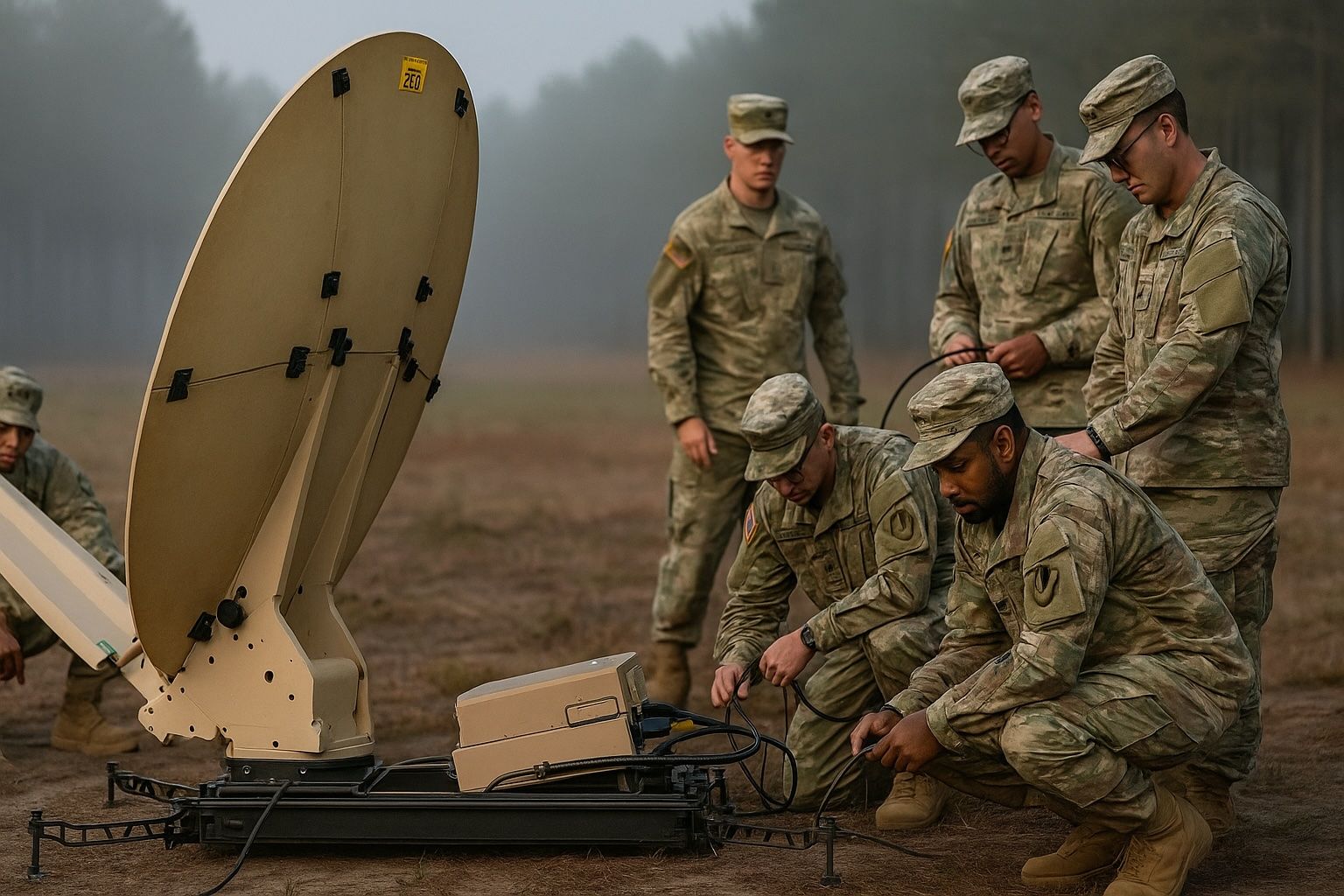
The Pentagon aims to field a software-defined, multi-layer Enterprise SATCOM network that seamlessly routes data across DoD, allied, and commercial satellites in LEO, MEO, and GEO to support Joint All-Domain Command and Control (JADC2). In 2020 the Space Force and DoD CIO committed to the shift, with the SDA launching the National Defense Space Architecture (NDSA), later renamed the Proliferated Warfighter Space Architecture (PWSA), to field hundreds of small satellites as a mesh-layer backbone. Interoperable Hybrid Terminals would allow a single device to talk to any authorized satellite by software, with the Air Force aiming to field its first multi-network
Internet Access in Peru: A Comprehensive Overview

Internet Access in Peru: A Comprehensive Overview

As of the end of 2024, Peru had over 4.06 million fixed internet connections, with fiber-optic accounts exceeding 3 million and about 73.8% of all fixed lines. Peru’s National Fiber Optic Backbone, Red Dorsal, is being expanded by Pronatel, with 11 regional fiber networks in operation and 8 under execution as of 2025–26, to connect about 3,070 villages and 5,171 public institutions. By late 2024, 4G LTE covered 93.85% of Peru’s population, with roughly 56,000 population centers served and about 3.7% of people (around 40,500 villages) still without 4G. 5G rollout is in early stages, reaching only about 15.5% of
Ireland’s Internet Revolution: From Rural Blackspots to Blazing Broadband in 2025

Ireland’s Internet Revolution: From Rural Blackspots to Blazing Broadband in 2025

As of early 2025, about 98–99% of Ireland’s population is online and roughly 94% of households have internet access. In 2025 the median fixed broadband speed was about 146 Mbps, with the 2024 average around 103 Mbps and Ireland ranking around 40th globally. Gigabit-capable broadband is available to about 86% of premises nationwide in 2025, and pure fiber FTTP coverage is roughly 76% of premises as of Q1 2025. Two-thirds of rural homes and businesses can access high-speed internet thanks to fiber rollouts between 2023 and 2025. Starlink entered Ireland in 2021 and by 2025 is widely used in rural
Kwangmyong: Inside North Korea’s National Intranet Service

Kwangmyong: Inside North Korea’s National Intranet Service

Kwangmyong is North Korea’s national intranet launched in the early 2000s, a closed network that provides email, websites, and digital resources only within North Korea to isolate citizens from the global Internet. <li North Korea's first internal email service, Sili Bank, was established in 2001 to enable internal electronic correspondence on Kwangmyong. The first intranet “internet café” opened in Pyongyang in 2002 with about 100 computers, marking the start of public access to Kwangmyong. Kwangmyong uses .kp domain names and private IP ranges such as 10.x.x.x, is not routable on the global Internet, and most access is via IP addresses
18 June 2025
Insane Internet Speeds: The Fastest Connections on Earth and What’s Coming Next

Insane Internet Speeds: The Fastest Connections on Earth and What’s Coming Next

In June 2024, a team led by Japan’s NICT and Aston University achieved 402 Tbps over a single standard optical fiber using six wavelength bands (O, E, S, C, L, and U). In March 2024, the same international team reached 301 Tbps by extending into E-band and S-band with a custom amplifier for those bands. In July 2021, NICT researchers transmitted 319 Tbps over 3,001 km using a 4-core optical fiber with 552 channels across a 120 nm spectrum. In August 2020, University College London set a then-record of 178 Tbps using geometric shaping constellations. In April 2025, NICT with
Slovenia’s High-Speed Makeover: From Fiber Frenzy to Starlink Skies

Slovenia’s High-Speed Makeover: From Fiber Frenzy to Starlink Skies

As of 2023, FTTP coverage reached about 78.5% of Slovenian households, well above the EU average of 64%. Telemach operates a hybrid DOCSIS 3.1 cable + XGS-PON fiber network, with its GIGA cable network covering over 350,000 households and delivering nearly ubiquitous 1 Gbps downloads, after a 600 Mbps top bundle in 2020. Telekom Slovenije (SiOL) fiber passes over 424,000 households as of 2024, offering up to 2 Gbps download and 100–200 Mbps upload, with DSL remaining in rural areas and 4G/5G fixed wireless for non-fiber zones. A1 Slovenija, with about 19% market share, provides up to 1 Gbps on
17 June 2025
Satellites, Submarine Cables & Cell Phones: Inside Haiti’s Battle for the Internet

Satellites, Submarine Cables & Cell Phones: Inside Haiti’s Battle for the Internet

As of early 2025, about 39.3% of Haitians—roughly 4.65 million people—were using the internet. By 2025 there were about 10.2 million active mobile connections in Haiti, equating to 86% of the population, with many subscribers holding multiple SIMs. Approximately 93.7% of mobile connections use 3G, 4G, or other broadband technologies, while only around 40% of Haitians are covered by 4G LTE networks. Fixed broadband uptake is extremely low, with well under 1% of residents subscribing to wired services. Digicel Haiti and Natcom are the two main mobile operators, with Digicel holding about two-thirds of subscribers and Natcom being the state-Viettel
17 June 2025
Internet Access in Macedonia: From Fiber to the Final Frontier

Internet Access in Macedonia: From Fiber to the Final Frontier

MakTel’s FTTH network passes over 270,000 households and offers up to 1 Gbps on fiber, with DSL available nationwide at about 50–60 Mbps where fiber is not yet present. A1 Macedonia (formerly One.Vip) operates a hybrid cable and fiber network and had 56% of the population with 5G-ready fiber or cable by 2022, with up to 200 Mbps symmetric fiber in bundles. Telekabel runs its own network in 17 cities and has 100% fiber coverage in at least four cities, offering fiber plans around 40 Mbps for MKD 600 per month. By 2022, about 75.6% of Macedonian households had access
17 June 2025
1 3 4 5 6 7 9

Stock Market Today

Go toTop